Expert Interviews
Reflux and Diaphragmatic Hernias—The New RefluxStop Surgical Method: An Expert Interview with Dr. Zehetner

Alexandra Pfitzmann ·
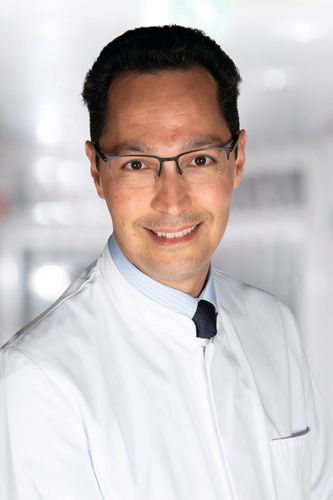
Prof. Dr. med. Jörg Zehetner is a highly qualified specialist in visceral surgery with a particular focus on upper abdominal surgery, bariatric surgery, and esophageal and gastric surgery. He has earned an excellent reputation for his expertise in the treatment of cancer, reflux diseases, and complicated hiatal and abdominal wall hernias. Prof. Dr. Zehetner was a long-time professor at the University of Southern California (USC) and brings his extensive knowledge and experience to his practice. Prof. Dr. Zehetner completed his medical training in Switzerland, Austria, and the United States.
He completed his residency in general surgery and visceral surgery at renowned hospitals in Switzerland and Austria before moving to the United States in 2008 to serve as a senior physician and researcher for seven years. During this time, he received numerous awards for his teaching and is an honorary member of the Society of Graduate Surgeons at USC in Los Angeles. Since 2015, Prof. Dr. Zehetner has run his own abdominal surgery practice in Bern and works as an affiliated physician at the renowned Hirslanden Beau-Site Private Clinic and Hirslanden Salemspital.
In 2017, he founded Swiss1Chirurgie AG, which now operates at several locations in Switzerland, including Bern, Solothurn, and Valais. Swiss1Chirurgie AG is the largest private practice in the field of bariatric and reflux surgery in Switzerland and works closely with the Center for Bariatric Surgery (ZfbC). Approximately 3,500 patients are treated here each year. Prof. Dr. Zehetner has many years of experience in minimally invasive surgery and robotic surgery. He specializes not only in initial surgeries but is also a European leader in revision surgeries and the treatment of complex cases in reflux surgery and bariatric surgery.
His expertise extends to the treatment of gastroesophageal reflux disease (GERD), for which he employs the latest techniques. He is the only surgeon in Switzerland who has mastered all established and new surgical methods in reflux surgery, enabling him to select the best method for each individual patient. Prof. Dr. Jörg Zehetner has many years of expertise at the highest level in laparoscopy—that is, keyhole surgery—and also utilizes state-of-the-art techniques such as robotic surgery. He is not only a specialist in initial surgeries but also a leader in the treatment of complicated cases and revision surgeries in reflux surgery and bariatric surgery.
Another advanced procedure is the RefluxStop surgery, which repairs all three components of the anti-reflux barrier. The editorial team of the Leading Medicine Guide spoke with Prof. Dr. Zehetner to learn more about this modern RefluxStop surgery.
Reflux, medically known as gastroesophageal reflux disease (GERD), is a common condition in which stomach acid—and sometimes stomach contents—flow back into the esophagus. This reflux often causes unpleasant symptoms such as heartburn, acid regurgitation, and chest pain. In severe cases, reflux can lead to inflammation of the esophagus, chronic bronchitis, and even esophageal cancer. The causes of reflux are varied and range from anatomical abnormalities such as hiatal hernias to lifestyle factors such as an unhealthy diet and obesity. Despite the prevalence and potential severity of the condition, there are now a variety of effective treatment options available, ranging from medication to innovative surgical procedures. Modern medicine has made significant progress, particularly in the surgical treatment of reflux, enabling many patients to experience long-term relief from their symptoms and an improvement in their quality of life.
Reflux occurs when stomach acid or other stomach contents flow back into the esophagus.
This happens due to a weakness or malfunction of the lower esophageal sphincter, a muscle at the junction between the esophagus and the stomach that normally prevents the backflow of stomach contents. Various factors can contribute to the development of reflux, including obesity, hiatal hernias, certain foods and beverages, smoking, and certain medications.
“Typical symptoms include heartburn, which is described as a burning sensation behind the breastbone and often occurs after eating or when lying down. Regurgitation—the rising of acidic stomach contents into the mouth—is also a common symptom. It’s important to note that the inside of the esophagus is structured like our mouth and isn’t designed to tolerate large amounts of acid, which is why excessive acid can cause chemical burns and pain. “In the worst-case scenario, excess acid can lead to chronic changes in the mucous membrane or even esophageal cancer,” explains Prof. Dr. Zehetner at the beginning of our conversation. Patients may also suffer from difficulty swallowing, which is experienced as pain or discomfort when swallowing. Other symptoms include chronic cough and hoarseness—especially in the morning—as well as sore throat or laryngitis, which can be caused by irritation of the airways from stomach acid.
Indications for Reflux Treatment
“Treatment should be considered if symptoms occur regularly, significantly impair quality of life, or do not improve despite over-the-counter medications. First, you can try certain lifestyle changes that may reduce reflux, such as avoiding garlic, onions, fried foods, carbonated beverages, and alcohol; not eating dinner too late; quitting smoking; and elevating the head of the bed while sleeping. How each person reacts to such behavioral changes varies from person to person. If symptoms are frequent and persistent, a doctor should be consulted. Why some people are more prone to reflux than others depends partly on their anatomy. Reflux occurs when the lower esophageal sphincter—which normally prevents stomach acid from flowing back into the esophagus—no longer functions properly. This ring of muscle normally opens only to allow food into the stomach but remains closed at other times. However, if it weakens or malfunctions, stomach acid can rise into the esophagus, leading to symptoms such as heartburn and acid regurgitation. A hiatal hernia exacerbates this effect. In this condition, part of the stomach protrudes through an opening in the diaphragm into the chest cavity, disrupting the pressure mechanism and further impairing the sphincter’s closing mechanism. “Especially in the most common type, the sliding hiatal hernia, the junction between the esophagus and the stomach is displaced upward, which promotes reflux,” explains Prof. Dr. Zehetner, adding:
“The likelihood of developing reflux is also partly hereditary. In addition, we are all getting older, heavier, and shorter, which contributes to a narrowing of the natural reflux valve. Depending on the symptoms, it may be sufficient for the affected person to take acid blockers. Of course, this does not treat the defective valve, but rather ‘neutralizes’ the acid in the stomach contents that come back up. “Those who have what’s known as ‘volume reflux’—that is, who actually notice stomach contents coming up in gushes—cannot treat this with medication.”
Diagnosis begins with a thorough medical history and a clinical examination, during which a detailed medical history is taken and the patient’s symptoms are assessed.
“Of course, a gastroscopy must be performed to examine the esophagus, the stomach, and the upper part of the small intestine. It’s important to examine the junction of the mucosa between the esophagus and the stomach to check for inflammation or mucosal changes. And the reflux valve can be assessed by looking into the stomach to see if the entrance to the stomach is as narrow as it should be. The second part of the diagnostic process involves a barium swallow to see if the esophagus is functioning normally. It allows us to check whether food and liquids move normally through the esophagus or whether there is reflux of stomach contents into the esophagus. Sometimes it is also necessary to measure acid levels and pressure in the esophagus—this is usually done in patients who are likely to require surgery,” explains Prof. Dr. Zehetner.
The reflux barrier consists of three main mechanisms that work together to prevent stomach contents from flowing back into the esophagus.
The lower esophageal sphincter, a ring of muscle at the junction between the esophagus and the stomach, acts as a crucial valve. Through its closing function, this sphincter ensures that stomach contents do not flow back into the esophagus. “The first important mechanism is therefore the diaphragm, which separates the chest cavity from the abdominal cavity and exerts additional pressure on the esophagus. This additional pressure helps keep the lower esophageal sphincter in position and ensures it closes effectively. A disruption in the function of the diaphragm, such as that which can occur with a hiatal hernia, can impair these protective mechanisms. The second important factor is the esophagus, which does not run directly into the stomach but at an angle, thereby forming a natural valve. However, if the esophagus and the entrance to the stomach are pulled upward, the valve no longer functions because everything runs in a straight line. The third factor is the sphincter at the end of the esophagus. “This must be located within the abdominal cavity in order to function properly,” explains Prof. Dr. Zehetner.
Stable, normal abdominal pressure also supports the lower esophageal sphincter and helps prevent stomach contents from being pushed back into the esophagus. Elevated abdominal pressure, which can be caused by factors such as obesity or pregnancy, can overload this mechanism and promote reflux. Together, these mechanisms form an effective barrier against reflux; any disruption to them can lead to reflux problems.
The RefluxStop method differs significantly from other reflux treatments.
While traditional methods often target only one of these components, the RefluxStop method offers a comprehensive restoration of the entire anti-reflux barrier. This method focuses on three key components: the lower esophageal sphincter, the diaphragm, and the anti-reflux valve.
“With the RefluxStop method, the first step is to release the esophagus and the hiatal hernia, reposition them correctly, and re-secure them. Then, the stomach is sutured laterally to the esophagus over a length of approximately 3–4 cm to restore the necessary valve. Finally, the RefluxStop implant—which consists of a small silicone ball with a diameter of 2 mm and five small components—is sutured into the upper part of the gastric pouch next to the suture line between the esophagus and the stomach. This keeps the esophageal sphincter in its natural position—approximately 3–4 cm inside the abdominal cavity—and restores its function. The advantage of the RefluxStop method is that the stomach is simply secured to the side of the esophagus and does not need to be wrapped around it (as with conventional methods), and the implant ultimately prevents everything from sliding back up. With this method, patients can definitely expect fewer swallowing difficulties, and belching or vomiting remain possible, which reduces feelings of fullness or bloating. “The results of other methods are similarly good; however, side effects are significantly lower with the RefluxStop method due to the aforementioned reduced postoperative difficulty swallowing and the continued ability to burp,” said Prof. Dr. Zehetner regarding the advantages of the RefluxStop method.
“The RefluxStop method has been available since 2018. I have been using it at the Beau Site Clinic since 2020, have successfully operated on 150 patients to date, and am the surgeon with the second-highest number of patients worldwide. In total, I have trained 35 surgeons in this method over the past few years, primarily in Spain, Italy, and the United Kingdom. The method is not yet firmly established in the U.S., but I have already trained 20 surgeons there as well. “The method will likely be available there in 2025 or 2026,” states Prof. Dr. Zehetner, thereby highlighting the outstanding significance of the RefluxStop method.
In the long-term management of reflux symptoms, the RefluxStop method offers the advantage of simultaneously addressing all relevant components of the anti-reflux barrier. This leads to a comprehensive improvement in barrier function and contributes to sustainable control of reflux symptoms. Patients frequently report a significant reduction in symptoms and an improved quality of life, as the method both effectively prevents reflux and minimizes the risk of long-term complications. Prof. Dr. Zehetner provides further details on the RefluxStop method:
“The entire procedure, which is performed laparoscopically, takes about an hour, and the patient stays in the hospital for 1–2 nights. After the surgery, the patient’s diet is gradually reintroduced relatively quickly: for one week, the patient is given food in the form of pureed meals, followed by one week of soft foods, after which they can resume eating normally. Additionally, about 2–3 months after this surgery, the patient can once again drink carbonated beverages without any problems. In principle, the RefluxStop method is suitable for any patient. However, this is not always the case for those who have already undergone a previous surgery. This method is also not always possible for patients with a very large diaphragmatic hernia, in which one-third or even half of the stomach has slipped upward, because the procedure requires sufficient esophageal length to be performed safely. In cases of a hiatal hernia larger than 8 cm, the method can only be performed to a limited extent, though this is very rare. As for possible complications, the situation is similar to that of other laparoscopic procedures in that bleeding may occur. Otherwise, no complications are to be expected. Even if the silicone implant were to grow into the stomach unintentionally, this is not a serious issue, since it consists of five small parts, breaks down into these five parts, and is naturally expelled.”
Surgical treatment of reflux requires an experienced center!
“Reflux is quite common. And if someone is considering surgical treatment for reflux because the symptoms are very severe, they should go to a center with extensive experience! At the Beau Site Clinic, for example, we perform approximately 150 reflux surgeries per year, 50 of which use the RefluxStop method. This requires the appropriate expertise, including the ability to determine which surgical method is best suited for each patient. “Patients shouldn’t go to a hospital where perhaps only five patients a year undergo surgery for reflux,” Prof. Dr. Zehetner emphasizes. At the end of our conversation, he offers some recommendations for preventing or minimizing reflux:
“People should take care of their own health in any case. It starts with the fact that there are people who smoke but don’t realize the harm they’re doing to themselves. Smoking also contributes to reflux. The next thing everyone can control themselves is potential excess weight. Here, you should assess whether you can manage the excess weight on your own or if you need professional help. It’s also about general lifestyle changes, whether it’s sleep habits or stress management. Because it must be made clear that reflux can severely limit one’s quality of life. Of course, quality of life also includes the occasional glass of wine or a barbecue. But as always, the rule is: everything in moderation. However, anyone who experiences persistent symptoms should see a specialist. Surgery is a sensible option because it restores a lost quality of life. Personally, I recommend that people suffering from reflux keep a record of how often they experience which symptoms. How often do they experience heartburn? How often do they wake up at night with the problem? And so on—to assess the frequency. For example, if someone only experiences reflux once every six weeks, surgery is probably not necessary. For many people, supportive medication also helps. However, if reflux occurs 3–4 times a week, then you should seek medical treatment to discuss the possibility of surgery.”
Thank you very much, Professor Dr. Zehetner, for this detailed explanation on the topic of reflux!
Share this article
Expert Interviews
Read next
- Expert interview
Expert interview with Professor Dr Elmar Herbst, PhD
Oct 15, 2026
Patient-centred and personalised knee surgery
Read more - Expert interview
Cardiogeriatrics: Significance and benefits in the context of hospital reform
Sep 21, 2026
Cardiogeriatrics: Significance and benefits in the context of hospital reform
Read more - Expert interview
Expert Interview with Professor Dr. Amadeus Hornemann, MPH
Sep 18, 2026
Prof. Amadeus Hornemann on Precision Medicine in Gynecology: Modern Surgery, New Techniques, Better Quality of Life
Read more