Expert Interviews
A New Approach to Ocular Prosthetics: The Profession of the Ocularist—At the Intersection of Precision Craftsmanship, Medicine, and Aesthetic Reconstruction

Alexandra Pfitzmann ·
What was once regarded primarily as the artisanal reconstruction of a lost eye has evolved into a highly specialized interplay of medicine, precision craftsmanship, and aesthetic design. Today, ocularists work at the intersection of these disciplines, creating custom prostheses that not only look natural but also function effectively.
An ocular prosthesis is considered when the natural eye can no longer be preserved or its form and function are so severely impaired that neither vision nor a harmonious appearance is possible. This applies to situations following severe injuries, tumors, chronic inflammation, or a painful, blind eye, as well as congenital malformations in which the eye is severely reduced in size or absent altogether.
“An ocular prosthesis becomes necessary whenever the natural eye has had to be removed or, although still present, is severely damaged, has lost its sight, and has shrunk over time.
Especially with such shrunken, unsightly eyeballs, a so-called bulb shell (a very thin, custom-made ocular prosthesis) can achieve a great deal: It covers the blind eye, compensates for lost volume, and often yields particularly natural-looking cosmetic results because the prosthesis moves in tandem with the remaining eyeball.
However, many affected individuals are completely unaware that this option exists—it’s not uncommon for people to go about their lives for years with a shrunken, blind eye without anyone ever explaining to them that a cosmetic solution is possible,” explains Jörg Schmidt at the start of our conversation, adding:
“An eyeball usually shrinks after severe injuries or when the organ has completely lost its function. It then often loses its central position, shifts slightly to the side, and continues to shrink over time. Although ophthalmologists generally try to preserve the natural eye—which is also in line with the wishes of many patients—the cosmetic result can later be very distressing. This is precisely where ocular prosthetics offer an effective way to restore appearance.
Many people also have a completely inaccurate idea of what an ocular prosthesis actually is. Instead of a rigid sphere, as seen in movies, it is a custom-made, shell-shaped structure that fits harmoniously into the eye socket. Most patients first learn from their treating ophthalmologists or specialized clinics that such a prosthesis is recommended—especially following an enucleation or evisceration.
In these cases, the patient is usually actively referred to a specialized institute or an ocularist who will fabricate and fit the prosthesis.”
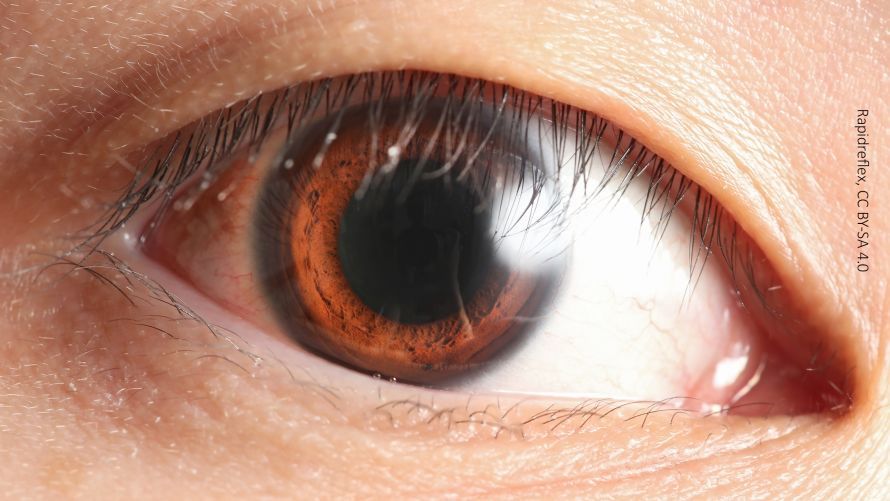
Eye with caption: The eye on the right side of the face reveals its visible components—a white sclera, a light brown iris, and the black pupil—in its eye socket, surrounded by eyelids and eyelashes.
Enucleation refers to the complete removal of the entire eyeball. Evisceration refers to the removal of the eye’s contents while preserving the outer membrane (sclera).
Although it is significantly less common overall than in adults, children may also require ocular prosthetic care. This applies primarily to cases in which an eye must be removed due to disease or injury, or fails to develop normally.
In such situations, prosthetics play an important functional role, as they not only harmonize the external appearance but also support the growth of the eye socket and surrounding structures.
“Accident-related injuries play a role here—especially during the typical ‘rowdy age,’ when rocks, sticks, or toys can quickly lead to serious eye injuries. The most common cause in childhood, however, is retinoblastoma, a rare malignant tumor that usually occurs between the ages of one and five. In many cases, the child’s life can only be saved by removing the affected eye, sometimes even during infancy.
After such a surgery, it is important to compensate for the missing volume with a prosthesis at an early stage so that the eye socket and face can continue to develop symmetrically. Since children are growing, the prostheses must be adjusted and replaced much more frequently than for adults—usually about every four months. These regular appointments serve not only to provide functional care but also to offer emotional support.
For the children themselves, but also for their parents, the situation is often a major psychological burden. The tumor, the surgery, and the visible loss of an eye present families with enormous challenges. Empathetic care, clear explanations, and a reliable schedule for care help provide a sense of security and bring stability back to everyday life,” explains Jörg Schmidt.
Today’s modern ocularist is far more than just a skilled artisan—he is a medically knowledgeable, aesthetically trained, and technically precise expert who combines functional reconstruction, anatomical understanding, and patient-centered care.
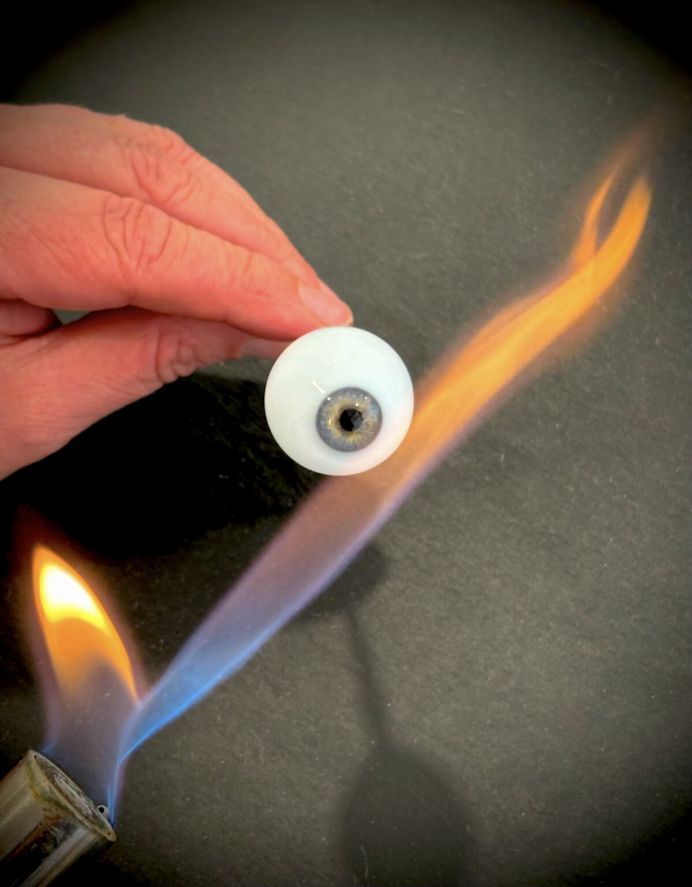
Eye Fabrication
“The path to ocularistry often stems from a very personal motivation. Many find their way to this profession through family connections or an interest in craftsmanship; others—as in my case—through a chance encounter or a recommendation. The fascination often begins when you see for the first time how a prosthetic eye is created from simple raw materials, how an iris is drawn layer by layer, and how artisanal precision yields a unique, lifelike result.
This blend of craftsmanship and medical care has an immediate impact on many—a profession that combines technical skill, aesthetic sensitivity, and empathy. Ocularistry is a highly specialized profession that requires an exceptionally good eye-hand coordination, spatial awareness, and drawing skills. A person’s iris is as unique as a fingerprint, and it is precisely this uniqueness that must be replicated in every prosthesis.
That’s why ocularists pay particular attention to whether new trainees enjoyed drawing from an early age or possess a natural flair for shapes and details. On the other hand, anyone who is literally “all thumbs” will find it nearly impossible to succeed in this profession. The training is correspondingly demanding and lengthy. It lasts seven years, and even after that, it takes several more years to truly master the technical precision required.
In this respect, the profession is similar to learning to play a musical instrument: only through constant practice, repetition, and refinement does the confidence necessary for crafting a high-quality ocular prosthesis develop. This long learning phase also explains why it’s so important for patients to be referred to an experienced ocularist—someone who not only masters the technique but also possesses the aesthetic and technical finesse that is crucial for a natural-looking result,” explains Jörg Schmidt, who has been working as an ocularist for 38 years.
Today, the quality of a modern ocular prosthesis can be assessed with great precision—and it depends on a combination of functional, aesthetic, and medical criteria that go far beyond traditional craftsmanship. What matters most is how well the prosthesis integrates with the individual’s anatomy, how natural it looks, and how reliably it can be worn over the long term.
“The quality of an ocular prosthesis is always reflected in the interplay of aesthetics, function, and medical compatibility. At first glance, of course, the reflection in the mirror is what matters: A well-crafted prosthesis blends harmoniously into the face, matches the opposite eye in color, shape, and the way it catches the light, and appears unobtrusive in everyday life. But the external appearance is only part of the overall quality. Equally important is how well the prosthesis fits in the eye socket, how it interacts with the mucous membrane, and whether it can be worn without causing irritation or pressure points.
Especially in cases of pre-existing conditions or radiation-treated eye sockets, shrunken eyelid pockets, or incomplete eyelid closure, comfort can be more important than perfect aesthetics. In such cases, the surface must be particularly smooth, the shape must be precisely customized, and the design must ensure that the prosthesis is easily tolerated in daily life. Functional aspects also play a role. Ideally, a high-quality prosthesis moves naturally with the eye without slipping or irritating the eyelid.
It should be neither too heavy nor too bulky and must be designed to optimally support the individual’s anatomy. It is therefore crucial for the patient to pay attention to subtle warning signs: Redness, a feeling of pressure, increased discharge, or a foreign body sensation can be signs that the shape or surface is not optimally suited. You can tell if you’ve found a good ocularist by how carefully these issues are discussed and addressed on an individual basis.
An experienced specialist takes the time to explain the unique characteristics of the patient’s eye socket, addresses any concerns, and adjusts the prosthesis until both function and aesthetics are in harmony. “In this field, quality always means a combination of technical precision, medical understanding, and the ability to respond to the patient’s individual needs,” Jörg Schmidt emphasizes.
Today, the fitting process in modern ocular prosthetics follows a clearly structured, medically coordinated procedure in which the ocularist plays a central, often leading role at every stage. From the initial consultation through long-term follow-up care, the ocularist supports patients professionally, technically, and emotionally—and ensures that function, aesthetics, and tissue compatibility are permanently maintained.
Jörg Schmidt explains the process for the patient: “The ocular prosthetic care process sometimes begins even before the actual fitting, as some patients first come in for a preliminary consultation to learn what to expect and what the next steps will be. After an enucleation or evisceration, the patient often comes in as early as the first day after surgery.
At this point, the eye socket is still significantly swollen, and the orbital implant must heal; nevertheless, it is important to insert a conformer—a type of placeholder—early on. This small molded piece holds the eyelid pouches in their natural position, prevents the structures from shrinking, and prepares the eye socket for the eventual prosthesis. The patient wears this conformer for about a week, depending on how quickly the swelling subsides. Afterward, an initial temporary ocular prosthesis is inserted. It serves less for aesthetic purposes than for functional preparation: the eye socket needs to become accustomed to the shape, volume, and range of motion.
This temporary prosthesis remains in place for about three weeks before the first permanent prosthesis is fabricated. By this point, the eye socket has already settled significantly, even though the complete healing process can take up to half a year. The first permanent prosthesis is worn for about three months, after which another adjustment is made because the anatomical conditions are still changing during this phase,” he explains, adding regarding the regularly required follow-up visits:
“After this healing period, the regular maintenance schedule begins. Approximately every nine to twelve months, the prosthesis is checked and, as a rule, replaced. There are two reasons for this: First, the fatty tissue in the eye socket changes over time, which can alter the fit and alignment of the prosthesis.
Second, the slightly alkaline tear fluid causes microscopic changes to the surface. A new prosthesis is smooth as glass, but over time, fine irregularities develop that can lead to irritation. To prevent this irritation, the prosthesis is replaced regularly—a procedure covered by insurance providers. In addition, lubricating eye drops or special ointments can help alleviate symptoms, but in the long term, only replacement ensures lasting comfort and a natural appearance.”
The loss of an eye or a significant change to a blind eyeball is a profound and psychologically distressing experience for many affected individuals. The situation is challenging not only medically but also emotionally, because one’s outward appearance changes visibly and a foreign body is inserted into the eye socket.
“Many people feel uncertain during this phase, are afraid of the next step, or feel left to cope with the situation on their own. That is why ocular prosthetic care always includes a psychological component: listening, explaining, providing emotional support, and offering guidance. Patients who have lost an eye as a result of a tumor or after multiple previous surgeries often need additional support.
For this purpose, there are specialized rehabilitation facilities such as the Henneberg Rehabilitation Clinic in Masserberg, Thuringia, which focuses on people with visual impairments or blindness. There, those affected can learn to cope with their new situation, use assistive devices, and regain confidence in their daily lives. Counseling centers such as the EUTB in Cologne (Supplementary Independent Participation Counseling—a federally funded counseling center) also play an important role because they provide information on topics such as mobility, leisure activities, and assistive technology, thereby helping patients regain a sense of self-determination.
At the same time, those affected must learn to handle the prosthesis themselves. Many are initially reluctant to even touch the prosthesis, especially if the loss of the eye is the result of a long history of illness. That is why the handling process is explained step by step: how to insert and remove the prosthesis, how to care for and store it, and how often it should be worn or cleaned. While it used to be recommended to remove the prosthesis daily, we now know that it can often remain in the eye for weeks without any problems, as long as no discomfort occurs.
Nevertheless, each patient must be instructed individually, as needs and sensitivities vary greatly. Some prefer to remove the prosthesis at night, while others wear it continuously—both approaches can be appropriate, as long as they are well tolerated.”
Today’s modern ocularists operate at the intersection of traditional craftsmanship, new materials, digital tools, and a strongly patient-centered care approach. What is crucial is that they do not simply juxtapose these elements, but rather combine them into an integrated process that unites functional precision, aesthetic naturalness, and medical safety.
“An ocular prosthesis can be made of two fundamentally different materials: glass or plastic, usually PMMA acrylic (polymethyl methacrylate, which is very smooth and highly malleable). Both variants have specific properties that are relevant to the fitting process. In ocular prosthetics, glass is often preferred in German-speaking countries, particularly so-called cryolite glass (a very pure specialty glass). This material is produced through melting and solidification, resulting in a perfectly mirror-smooth surface. Under a microscope, it is evident that the glass shows no grinding marks or micro-scratches whatsoever.
This smooth structure is crucial for comfort because it minimizes friction within the eye socket and protects the mucous membranes. In addition, glass has a hydrophilic surface, meaning it readily absorbs moisture. As a result, the tear film spreads evenly, blinking remains smooth, and irritation occurs less frequently. Plastic lenses, on the other hand, are polished, and even with very fine polishing, fine grinding marks are visible under the microscope. Plastic is also hydrophobic—that is, water-repellent—which makes it difficult for the tear film to wet the surface and can lead to a sensation of dryness or friction in some patients.
Nevertheless, plastic has advantages in certain anatomical situations. Depending on the shape of the eyelid pockets or the depth of the conjunctival sac, plastic may be more suitable because it can be shaped differently than glass. Plastic may also be a better option for patients whose prostheses frequently fall out, since glass can break,” states Jörg Schmidt.
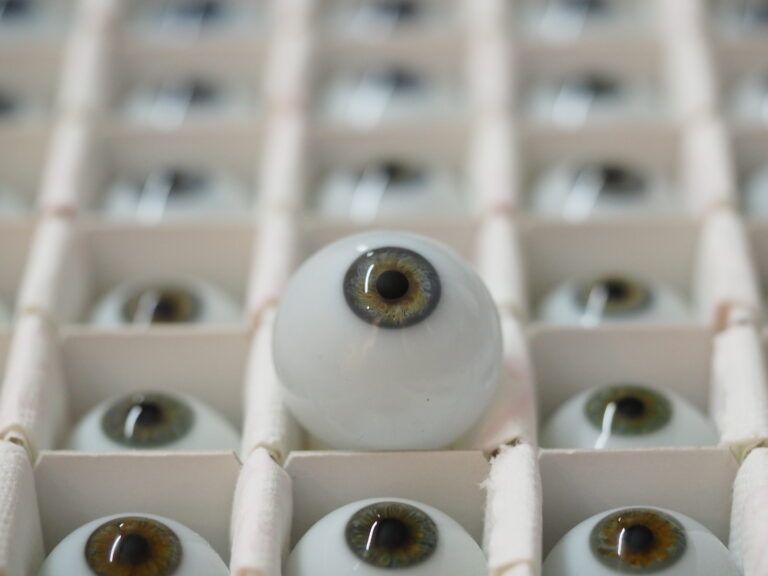
Glass Prosthesis
The decision between glass and plastic therefore depends on the individual’s anatomy, the shape of the eye socket, the patient’s ability to handle the prosthesis safely, and the functional requirements. Both materials are fully covered by health insurance, so the choice does not depend on cost but solely on medical and practical criteria.
Close collaboration between ocularists, ophthalmologists, and surgical teams is now one of the most important factors in providing ocular prosthetic care that is truly effective in terms of function, aesthetics, and medical outcomes. It is only through this collaboration that a care pathway emerges that covers the entire process—from the initial surgical situation through prosthetic reconstruction to long-term stability.
“In cases of tumor-related changes to the orbit, the collaboration between the ocularist and the ophthalmologist is particularly close, because functional, anatomical, and aesthetic aspects must all be considered simultaneously. The major advantage of an interdisciplinary center like ours is that, if problems arise, an experienced ophthalmologist can be consulted at any time to assess the situation directly. Especially after radiation therapy or surgery, changes in the lower eyelid area or shrinkage of the eyelid pouches often occur, which affect the fit and comfort of a prosthesis.
In such cases, treatment approaches are developed collaboratively, which may include both surgical corrections and prosthetic adjustments. This close integration is by no means a given. In fact, the combination of ophthalmological expertise and ocularistic expertise within a single institute is a rare exception and, in a sense, serves as a model. It enables short communication channels, rapid coordination, and care that seamlessly combines medical and technical requirements—an advantage that patients experience firsthand,” emphasizes Jörg Schmidt.
The future of the ocularist profession is shaped by developments that link medical requirements, aesthetic expectations, and international realities of care. Modern ocularists operate in a field that is evolving dynamically—and it is precisely here that both great opportunities and demanding challenges lie.
Jörg Schmidt comments: “A fundamental transformation has taken place in ocular prosthetics over the past 25 years. In the past, the fitting process was almost exclusively a craft-based process that took place largely independent of ophthalmological expertise. Collaboration between ocularists and ophthalmologists was minimal, and many decisions were made based purely on technical experience.
Today, prosthetic care is firmly embedded in a comprehensive medical approach. Ocularists work closely with plastic surgeons and ophthalmologists, coordinate treatment approaches, and systematically incorporate medical considerations—such as the effects of radiation therapy, eyelid changes, or anatomical limitations—into the planning process. This interdisciplinary collaboration has significantly improved the quality and safety of care. Technological advancements have also been substantial. While the fabrication of a prosthesis remains a craft-based process, the medical knowledge that ocularists acquire today is far more extensive than in the past.
Added to this are modern techniques such as standardized iris photography, which enables precise, reproducible documentation and significantly improves the customization of color. Whereas prefabricated irises were frequently used in the past, digital photography now allows for an exact artistic rendering of the natural iris—an advancement that noticeably enhances the aesthetic quality of the prostheses.
Looking ahead, it appears that the integration of medicine, craftsmanship, and technology will continue to grow. Research projects aimed at optimizing collaboration, improving anatomical fit, and advancing materials and documentation methods will further refine prosthetic care. Ocular prosthetics remains a specialized craft, but is increasingly evolving into a state-of-the-art, interdisciplinary field that combines medical knowledge and artisanal precision at a new level.”
In Germany, the profession of ocularist is well represented despite the low number of cases (approximately 60 ocularists for about 40,000 patients). The German Society of Ocularists provides a stable, nationwide network that ensures patients can find competent professionals. The demand is considered to be met, and care is generally provided reliably.
“At the same time, it is evident that the expertise of German ocularists is also in demand internationally. Time and again, patients come from other European countries or even from the U.S., and many ocularists themselves work regularly abroad—for example, in Israel or in regions where war casualties are being treated.
When compared internationally, it becomes clear that German training, with its clear structure and seven-year apprenticeship, is unique. In many other countries, such a training system does not exist; there, ocularists often teach themselves. For those affected, this can be a disadvantage because the quality depends heavily on the individual’s experience. German training, on the other hand, offers a high degree of safety and professionalism,” says Jörg Schmidt, adding at the conclusion of our conversation:
“One need that arises from clinical practice concerns collaboration with ophthalmologists. While this already works exceptionally well in specialized centers like Cologne, that is not the case everywhere. Some patients are not adequately informed after an enucleation and feel left to cope with the situation on their own. Closer cooperation between ophthalmologists and ocularists would significantly improve care and provide patients with more guidance and reassurance.”
- Lead ocularist at the Medical Center for Ocular Prosthetics in Cologne, specializing in custom-made, high-precision ocular prostheses.
- Custom prosthesis fabrication with a focus on natural reproduction of the iris and sclera, optimal fit, mobility, and high wearing comfort.
- Treatment of complex conditions following enucleation, evisceration, pthisis bulbi, and congenital malformations—including structured fitting and long-term follow-up care.
- Artistic precision combined with modern, patient-centered treatment approaches within an interdisciplinary team of ophthalmologists and other ocularists.
- Professional commitment as a member of the DOG Executive Board, actively shaping professional standards in ocularistics.
- International expertise gained through regular assignments in Luxembourg, the Netherlands, France, the Czech Republic, Slovakia, Armenia, Israel, Poland, and China—with a broad range of experience across various healthcare systems.
Share this article
Expert Interviews
Read next
- Expert interview
Expert interview with Professor Dr Elmar Herbst, PhD
Oct 15, 2026
Patient-centred and personalised knee surgery
Read more - Expert interview
Cardiogeriatrics: Significance and benefits in the context of hospital reform
Sep 21, 2026
Cardiogeriatrics: Significance and benefits in the context of hospital reform
Read more - Expert interview
Expert Interview with Professor Dr. Amadeus Hornemann, MPH
Sep 18, 2026
Prof. Amadeus Hornemann on Precision Medicine in Gynecology: Modern Surgery, New Techniques, Better Quality of Life
Read more