Expert Interviews
Robot-Assisted Cochlear Implantation for Severe Hearing Loss: An Expert Interview with Prof. Caversaccio

Alexandra Pfitzmann · March 28, 2025
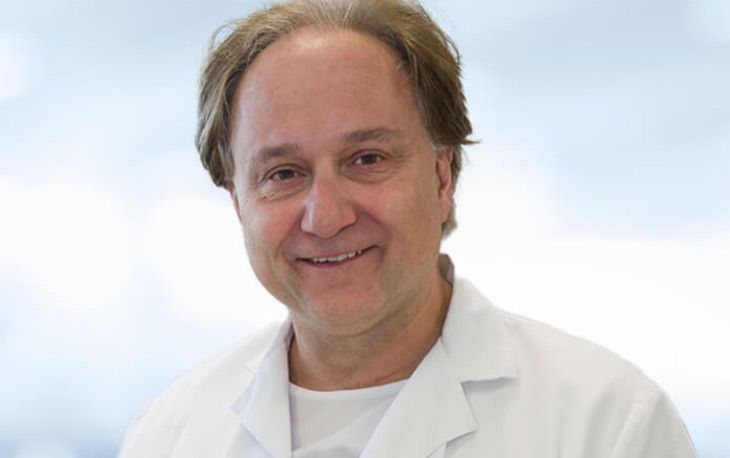
Professor Marco Domenico Caversaccio, M.D., is a highly qualified specialist in otolaryngology who focuses on head and neck tumors and the treatment of hearing loss. As Clinic Director and Chief Physician at the University Clinic for ENT, Head, and Neck Surgery at Inselspital Bern, he brings extensive expertise and experience in the fields of surgery and modern medical technology. With a particular focus on minimally invasive techniques and computer-assisted surgery, Prof. Dr. Caversaccio has gained international recognition.
He is known for his innovative methods, which address both the treatment of head and neck tumors and the improvement of hearing through cochlear and middle ear implants. Particularly noteworthy is his work in robot-assisted cochlear implantation, where he has achieved exceptional success in patients with severe hearing loss. In addition to general surgery, Prof. Dr. Caversaccio also performs specialized procedures, such as voice-preserving laryngeal tumor surgeries, and is committed to advancing ENT surgery in the field of endoscopic nasal and paranasal sinus surgery.
Through close interdisciplinary collaboration with other specialties, such as neurosurgery and ophthalmology, he ensures that his patients receive comprehensive, state-of-the-art care. With a strong commitment to research and development, Prof. Dr. Caversaccio has also contributed to the development of implants that improve the quality of life for many patients. The expertise and dedication of Prof. Dr. Caversaccio and his team provide patients at Inselspital Bern with outstanding medical care that reflects the latest advances in science and technology.
The editorial team of the Leading Medicine Guide learned more about “robot-assisted cochlear implantation for severe hearing loss” in a conversation with ENT specialist Prof. Dr. Caversaccio.
Robot-assisted cochlear implantation represents a significant advance in the treatment of severe hearing loss. This innovative method enables particularly precise and minimally invasive placement of the implant in the inner ear, thereby providing a lasting improvement in hearing for affected patients. Through the use of state-of-the-art robotic technology, procedures are performed with the highest precision, minimizing the risk of complications and maximizing the protection of sensitive structures in the ear. This technique opens up new possibilities in hearing rehabilitation and contributes significantly to improving the quality of life for patients with hearing loss.
A cochlear implant (CI) is a highly advanced hearing device that enables people with severe to profound inner-ear hearing loss to perceive sound again.
It is an option for patients for whom conventional hearing aids no longer provide sufficient benefit, as their hearing loss is so severe that sound amplification alone is no longer enough. “Suitable candidates for implantation include both adults and children who have significant difficulties understanding speech due to congenital or acquired inner-ear hearing loss. A cochlear implant is particularly beneficial for people who are severely hard of hearing or deaf in both ears. Then, of course, there is also hearing loss caused by an accident, when the cochlea has been damaged,” explains Prof. Dr. Caversaccio at the beginning of our conversation.
Eligibility for a cochlear implant is determined through comprehensive medical, audiological, and psychological evaluations. Various factors play a role in this process. First, it must be verified that the auditory nerve is intact, as it must transmit the implant’s electrical signals to the brain. Damage or malformations of the auditory nerve can prevent the implant from functioning effectively. The condition of the cochlea itself is also examined, since the implant’s electrode is inserted into the cochlea. “In cases of severe malformations or ossification of the cochlea, it can be technically difficult or even impossible to position the implant correctly. For example, if a patient has had meningitis, bilateral ossification of the inner ear can occur very quickly, making it impossible to implant a cochlear implant. Fortunately, this is becoming increasingly rare. In addition, there are neurofibromatosis types 1 and 2—genetic disorders that primarily affect the nervous system and lead to the formation of tumors along the nerves. For these patients, brainstem implants would be the preferred option to improve hearing. “And if people have a particularly severe malformation of the inner ear, or if newborns are born without the cochlear nerve, a brainstem implant is also more effective,” explains Prof. Dr. Caversaccio.
A brainstem implant, also known as an Auditory Brainstem Implant (ABI), is a specialized hearing implant that is implanted directly into the brain—more specifically, into the auditory nucleus in the brainstem. It is used when a conventional cochlear implant (CI) is not an option—for example, because the auditory nerve is missing, damaged, or not functioning. While a cochlear implant electrically stimulates the auditory nerves in the cochlea, a brainstem implant bypasses this nerve entirely. Instead, it is surgically implanted at the site where auditory information is processed in the brainstem. This allows the brain to receive electrical signals directly. Typical candidates for a brainstem implant are people with neurofibromatosis type 2, a condition in which tumors (known as vestibular schwannomas) develop on both sides of the auditory nerves and can destroy them. An ABI may also be an alternative for other congenital or acquired malformations of the inner ear or auditory nerve. However, the auditory experience provided by a brainstem implant is usually less nuanced than that of a cochlear implant. Speech comprehension may be limited, but many patients regain at least important environmental sounds or improve their lip-reading skills thanks to the additional auditory perception.
Children are a special patient group for whom a cochlear implant is often particularly promising. The earlier a hard-of-hearing or deaf child receives an implant, the better the chances of enabling normal speech development. Ideally, implantation is performed during early childhood, as the brain is particularly adaptable during this phase. However, intensive therapy is also required here, with speech-language pathologists and hearing specialists supporting the child and their family.
Robot-assisted cochlear implantation represents a significant advance in hearing implant surgery and offers several advantages over conventional surgical methods.
One of the most significant advantages is the extraordinary precision with which the robot inserts the implant into the delicate structure of the cochlea. Since the cochlea is an extremely small and delicate organ, even a minimally incorrect placement of the electrode can have long-term effects on hearing ability. “We have been conducting studies on this since 2016 and have been working with the so-called HEARO robot since 2020; we have, so to speak, pioneered robot-assisted cochlear implantation. The robot is used to perform a minimally invasive drilling procedure through the skull bone into the inner ear. It enables navigation with micrometer precision, allowing sensitive structures such as the facial nerve, blood vessels, or the vestibular system to be safely avoided. The goal is to insert the cochlear implant’s electrode array into the cochlea as gently as possible to achieve the best possible hearing outcome. “The surgery is a major challenge that requires the highest level of expertise and takes about three hours,” says Prof. Dr. Caversaccio, who also discusses new ways to preserve residual hearing in patients:
“Current efforts are focused on implanting cochlear implants—or the necessary electrodes—even in cases of residual hearing, for example, in patients who still have normal hearing in the low frequencies but experience a decline in the high frequencies. The goal is to preserve residual hearing, which is now possible thanks to advancements in cochlear implant technology, specifically the Otodrive procedure. This is a fully automated surgical process in which the robot, based on preoperative imaging data (e.g., CT scans) and a pre-planned drilling path to independently perform the precise drilling into the inner ear without the surgeon manually controlling the drilling. The HEARO robot uses this information to drill a hole with millimeter precision—in some cases even within the range of tenths of a millimeter—that leads precisely to the cochlea. In the process, critical anatomical structures such as the facial nerve, blood vessels, or the vestibular system are safely avoided.”
Switzerland—particularly the Inselspital in Bern—is among the world’s leading centers in the development and application of robotic microsurgery in the ear. The HEARO robot was developed in close collaboration with industry, and the first fully automated cochlear implantation using the Otodrive procedure was successfully performed. The Oto-Drive helps automatically insert the electrode 0.1 mm into the cochlea to preserve residual hearing and cochlear structures.
During traditional cochlear implantation, the surgeon must manually insert the electrode into the cochlea, which can place a certain amount of mechanical stress on the sensitive tissue. The robot-assisted technique uses high-precision algorithms to perform the insertion with controlled pressure and optimal speed.
“Using the robot, we perform what is known as tunnel surgery, in which a robot creates a small, precise borehole (tunnel) through the skull bone to the cochlea (inner ear). The tunnel runs directly from the skull bone to the cochlea, ensuring that no vital structures—such as the facial nerve, vestibular nerves, or blood vessels—are damaged—a tunnel-to-tunnel procedure. This is not possible with conventional surgery without a robot. However, there must be sufficient space between the sensitive structures to create the tunnel safely, so that the robot can drill with precision and without risk. We’re talking about millimeters—or even fractions of a millimeter. For the planned drilling, there must be at least 2.5 to 3 mm of space between the nerves, since the drill channel is 1.8 mm thick and requires a safety margin of 0.4–0.5 mm on either side. If the passage is too narrow, the minimally invasive method cannot be used—instead, a conventional surgery with a larger access site is performed to protect the nerves intraoperatively under direct visualization. “That’s why we perform what’s known as ‘staging’ with the patient to determine whether the procedure can be performed using a robot or not,” explains Prof. Dr. Caversaccio.
After a robot-assisted cochlear implantation, the postoperative healing phase often proceeds similarly to conventional methods, but there are some subtle yet significant differences that can ultimately influence the success of the procedure.
Following the surgical phase, an extensive rehabilitation phase typically begins, which is crucial for long-term success. During this phase, the implant’s function and auditory perception are regularly monitored and adjusted. Through individually tailored audiological follow-up care, including speech and hearing training, the brain can optimally adapt to the new electrical stimuli, which is particularly important for children and older patients.
“Following the implantation of a cochlear implant at Inselspital Bern, speech training begins—particularly for children born deaf—with the activation of the implant, which takes place a few weeks after surgery. In this initial phase, the device is adjusted to the child’s individual needs. This is followed by targeted auditory therapy, during which the child learns to perceive sounds and speech. Throughout the entire process, the implant is regularly checked and adjusted to ensure it functions optimally. Parents are actively involved in the training process and receive support on how to facilitate hearing and speech training at home. The goal of the entire training program is to help the child understand speech and speak for themselves so they can communicate in everyday life and at school. We have a speech therapy school near Bern for this purpose, where sign language can also be learned. We provide assistance with the entire organizational process,” explains Prof. Dr. Caversaccio, adding some details about the necessary rehabilitation for adults:
“About three weeks after surgery, the patient undergoes a ‘first fitting’ here at the clinic. After another 3–4 weeks, the second ‘fitting’ takes place here, during which the individual settings are adjusted. Many patients also take speech therapy or lip-reading courses at the same time. At the same time, they must practice using the new device. This requires some dexterity, and it depends entirely on the patient’s age and ability. People must be willing to put in the effort—the training is absolutely essential! “After all, the ultimate goal is for people to participate more fully and actively in life again, to no longer find themselves in a state of isolation, and thereby also to help prevent potential dementia,” urges Prof. Dr. Caversaccio, and with that, we conclude our conversation.
Thank you very much, Professor Dr. Caversaccio, for this important information on the use of cochlear implants!
Share this article
About the medical author
Alexandra Pfitzmann
Editor
Alexandra Pfitzmann – medical author: expert knowledge, professional articles and medical insights in the Leading Medicine Guide.
More about the medical author →Expert Interviews
Read next
- Expert Interviews
Expert Interview with Professor Dr. Konstantinos Anagnostakos
Sep 15, 2026
Prof. Anagnostakos on Painful Knee Replacements
Read more - Expert Interviews
Expert Interview with Professor Karl Philipp Kutzner, M.D.
Sep 11, 2026
Prof. Kutzner on Cutting-Edge Endoprosthetics at ENDOPROTHETICUM Mainz
Read more - Expert Interviews
Expert Interview with Dr. Emanuel Stutz, M.D.
Sep 9, 2026
Hyperthermia Treatment for Cancer
Read more