Expert Interviews
A Case for Short-Shaft Prostheses in Hip Replacement Surgery: An Expert Interview with Prof. Kutzner

Alexandra Pfitzmann ·
Professor Karl Philipp Kutzner, M.D., is a highly sought-after figure in the field of orthopedic surgery and enjoys an outstanding reputation as an expert in hip and knee joint replacement. His career, shaped by many years of clinical practice as a senior physician at the renowned Department of Orthopedics at St. Josef’s Hospital in Wiesbaden and his successful habilitation at Johannes GutenbergUniversity of Mainz in the field of orthopedics, attests to his exceptional professional competence and his tireless dedication to his calling: joint replacement surgery. Particularly noteworthy are his exceptional knowledge, his scientific publications, and his expertise in the field of short-shaft prostheses, which make him one of Germany’s leading experts in this area.
Since 2023, Prof. Dr. Kutzner has headed the renowned specialty practice for joint replacement, “Endoprotheticum Rhein-Main,” where he not only provides cutting-edge medical care but also places great importance on fostering an atmosphere of trust and personalized care. His focus is particularly on hip and knee arthroplasty, which has earned him a reputation as a sought-after specialist—even beyond the region—for patients with joint problems. Prof. Dr. Kutzner’s expertise ranges from minimally invasive procedures to revision surgeries and partial joint replacement, giving him a broad spectrum of treatment options.
Of particular note is Prof. Dr. Kutzner’s outstanding expertise in the use of short-stem prostheses in hip replacement surgery. Choosing the right hip prosthesis has a decisive impact on the outcome of the surgery as well as the well-being of patients. This specialized surgical technique requires extensive knowledge and significant experience in this field, combined with great precision and care.
The editorial team at Leading Medicine Guide wanted to learn more about this topic and had the opportunity to speak with Prof. Dr. Kutzner in an interview.

The idea—or concept—of short-stem hip prostheses in orthopedics emerged early in the development of hip replacement surgery but initially failed to gain traction. Over the past 20 years, however, there have been steady advancements, and the philosophy behind “calcar-guided” short-shaft prostheses ultimately led to success. Modern short-shaft prostheses are becoming increasingly established and are now responsible for significant progress in modern, minimally invasive hip replacement surgery.
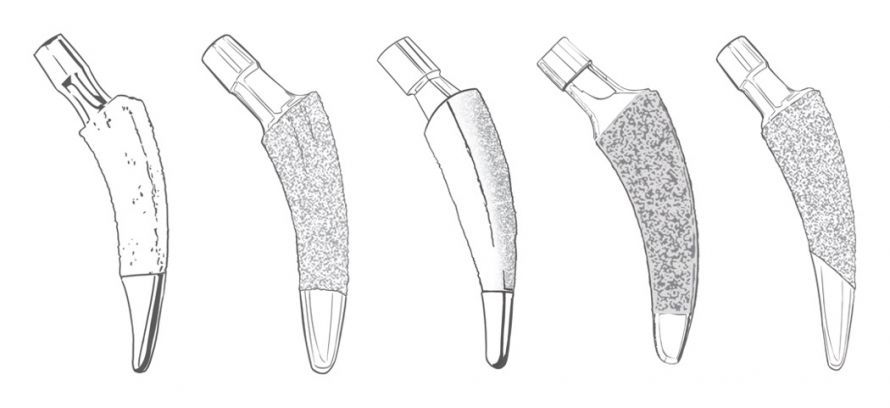
“The development of modern short-stem prostheses was aimed at addressing some of the challenges and concerns associated with conventional straight-stem prostheses. One of the main motivations for developing short-stem prostheses was originally to preserve more bone tissue than is possible with conventional implants. With conventional straight-stem prostheses, more bone often has to be removed to make room for the prosthetic stem. Short-stem prostheses are designed to be less invasive and to require the removal of less bone tissue during surgery. Even more importantly, however, the anchoring philosophy of modern short-shaft prostheses ensures a more natural load on the surrounding bone, which also helps preserve it better over the long term,” explains Professor Dr. Kutzner at the beginning of our conversation.
In addition to bone preservation, short-shaft prostheses also offer other advantages for patients—for example, in terms of postoperative recovery and mobility—compared to conventional straight-shaft prostheses.
“Developments in hip arthroplasty have been very successful over the past 20 years. In addition to design and material modifications to the implants, the surgical approaches to the hip joint have been significantly improved, particularly with regard to minimizing soft tissue and muscle damage. In particular, anterior approaches have proven to be advantageous (AMIS, ALMIS). One of the most important advantages of short-stem prostheses today is the ideal suitability of these approaches. While the use of conventional implants—due to their longer, straight design—is usually associated with muscle damage and requires greater soft-tissue trauma, an experienced specialist can implant a short-shaft prosthesis with virtually no soft-tissue trauma.
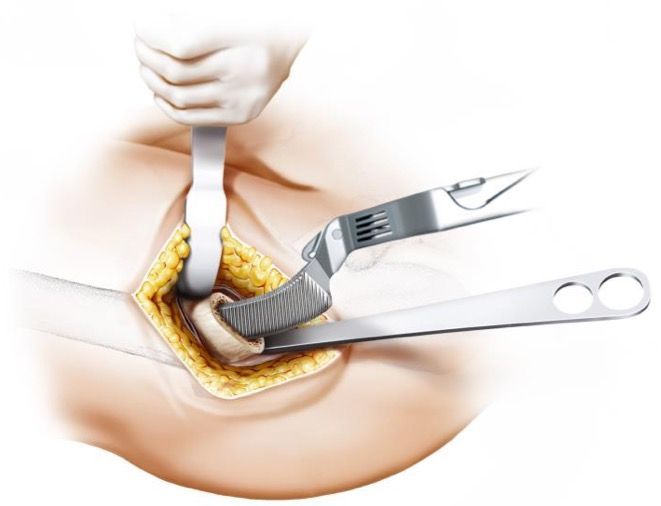
The short, rounded shape of the stem allows it to be inserted “around the curve,” bypassing the critical musculature.
“The great thing about short-stem prostheses is that you can, so to speak, operate ‘around the corner’ and thus treat the patient with extreme care. People have very different femoral neck curves, which can sometimes even reach 90 degrees. You have to imagine the short-shaft prosthesis as a short, round banana-shaped implant that’s easy to position, spares soft tissues, and offers high stability,” says Prof. Dr. Kutzner enthusiastically.
Since the procedure for implanting short-shaft prostheses is usually significantly less invasive, patients generally experience less postoperative pain and swelling. This often allows for a faster recovery and return to normal activities. The implantation of short-shaft prostheses can also generally be performed more quickly, which reduces the duration of surgery and the risk of complications.
One of the outstanding advantages of short-shaft prostheses is therefore the generally faster recovery after surgery. This has a positive effect on the length of the hospital stay and reduces the need for extensive rehabilitation.
“In the past, inserting prostheses required cutting through muscles and exposing bone. Blood transfusions were also often necessary. Overall, the surgery was much more complex, and patients had to expect a hospital stay of up to 10 days and a rehabilitation period of another 3 weeks,” says Prof. Dr. Kutzner, describing the previous procedure, and explains: “The main advantage of using short-shaft prostheses is the significantly shorter hospital stay. Patients can be put on their feet immediately after surgery and quickly regain their independence. Today, patients can often leave the hospital after just 2 days. I am increasingly recommending outpatient rehabilitation or individually tailored physical therapy follow-up care to my patients. In many cases, inpatient rehabilitation is no longer absolutely necessary.”
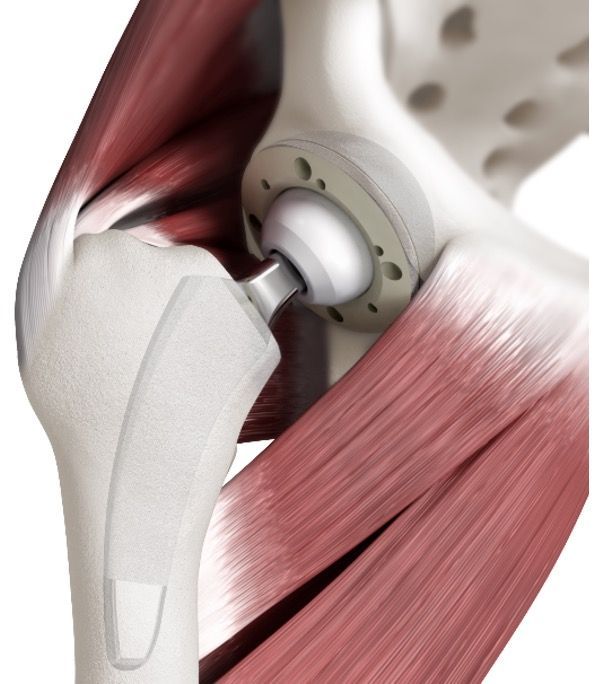
The patient’s anatomical characteristics—such as bone density, size, and shape of the joint—influence the choice of prosthesis. The condition of the joint to be replaced plays a decisive role in selecting the prosthesis. Patients with advanced joint degeneration or specific joint pathologies or deformities may require certain prosthesis models or designs. The patient’s age can also influence the selection. In younger patients in particular, bone preservation is crucial to simplify future revisions. The patient’s activity level is also an important factor. Patients with an active lifestyle may require prostheses that are particularly durable and can withstand high loads.
“Due to their less invasive nature, as well as their anatomical shape, short-stem prostheses are better able to reconstruct the natural anatomy of the hip joint. In other words, they more closely mimic the joint’s natural anatomy overall. Our experience over the past 10 years suggests that this can significantly reduce the risk of dislocations (complete dislocation of the joint). Short-shaft prostheses often offer better stability and natural joint mobility compared to conventional straight-shaft prostheses. For some hip joint malalignments, only a short-shaft prosthesis can be used, as other shafts are too long and, in the worst case, can cause bone fractures. “Our goal is always to implant the joint in such a way that patients do not notice they have an artificial joint in their daily lives,” says Prof. Dr. Kutzner.
While the use of short-shaft prostheses offers many advantages, specific risks and complications can also arise compared to conventional prostheses. It is important for patients to consult an experienced surgeon who is familiar with these potential risks and can make informed, responsible decisions.
With short-shaft prostheses, the placement of the implant is of crucial importance. Misalignment can lead to joint imbalance, instability, or problems with joint function.
The implantation of short-shaft prostheses often requires greater surgical skill and experience, as the prosthesis must be positioned individually and precisely to take advantage of the benefits of reduced invasiveness and bone preservation. In the hands of less experienced surgeons, this can lead to complications. “The use of straight-stem prostheses is still the standard today. Short-stem prostheses are used in only 13% of primary hip replacement surgeries in Germany, but the trend has been rising sharply in recent years. In Switzerland, the figure is already nearly 40% today, which clearly underscores the success of the concept. Many colleagues are reluctant to switch from straight-stem to short-stem prostheses and consequently have little experience with this approach,” said Prof. Dr. Kutzner, who presented the first results on the use of the short-stem prosthesis developed in Wiesbaden in 2012. At the time, he initially encountered skepticism—but the implant has since proven itself and ranks first in the German Endoprosthesis Registry (EPRD) in terms of complication rates.
“The city of Wiesbaden has been a stronghold for short-shaft prostheses for the past 20 years. So I came into contact with these specialized implants early on during my training. Most modern endoprosthetics clinics should offer short-shaft prostheses today,” explains Prof. Dr. Kutzner enthusiastically, adding: “At the Endoprotheticum Rhein-Main, we offer a 1–2-day observational training program for colleagues to learn the philosophy and technique. The first surgery a colleague performs using a short-stem prosthesis is then carried out only under the supervision of an experienced surgeon.”
Even when using short-stem prostheses, risks and complications—such as infections or fractures—can occur in rare cases during or after surgery. It is important to emphasize that most of these risks and complications are very rare and depend on various factors, including the surgeon’s experience, the patient’s individual anatomy, and the condition of the joint or bone. A thorough preoperative evaluation and careful surgical planning are crucial for minimizing risks and achieving the best possible outcomes.
The materials used for the bearing surfaces in modern hip prostheses have also undergone continuous development to reduce friction and wear. While just a few years ago metal was used for the prosthesis head and polyethylene for the insert, ceramic is now very commonly used for the head, as the wear properties of ceramic in combination with polyethylene are much better. “It is also possible to use ceramic for both the head and the inlay. This results in even lower wear, though this configuration can lead to squeaking noises, which can naturally be bothersome for patients. Additionally, the inlay may fracture under the load of the head. This would then result—in addition to the necessary revision surgery—in many ceramic particles being dispersed throughout the joint capsule. Today, the combination of a ceramic head and highly cross-linked polyethylene has essentially become the standard,” explains Prof. Dr. Kutzner regarding the different materials.
Improvements in the materials used to manufacture short-stem prostheses are a decisive factor in their performance and durability. Modern prostheses are often made of high-quality materials such as titanium alloys or ceramic materials, which are durable, corrosion-resistant, and biocompatible.
Technological advances have enabled the development of special surface coatings that promote the prosthesis’s integration into the bone and increase long-term stability. To date, short-shaft prostheses are generally implanted without the use of cement, a plastic material used for firm anchoring in the bone. However, in patients with osteoporosis, cement must often be used due to unstable bone conditions; therefore, short-shaft prostheses should not be the first choice in these cases to prevent fractures.
The cemented short-shaft prosthesis fills another gap.
“For over 8 years, I have been working with a Swiss company to develop and obtain certification for a cemented short-shaft prosthesis. Unfortunately, the testing requirements and regulations have become very strict, but I am confident that in the future we will be able to treat people with compromised bone quality more frequently with short-shaft prostheses. In the meantime, a German company has also brought a cemented short-shaft prosthesis based on the same philosophy to market, which is used from time to time.”
“Short-shaft prostheses make life easier!”
“Generally speaking, hip replacement surgery is already the most successful surgery of the century. I’m very pleased with the use of short-shaft prostheses, as they make everything easier. Patients recover and regain mobility much faster; drains are no longer necessary, and in most cases, opioids do not need to be administered. The required surgical incision is often only 7–8 cm, since the implants can be inserted right around the corner.
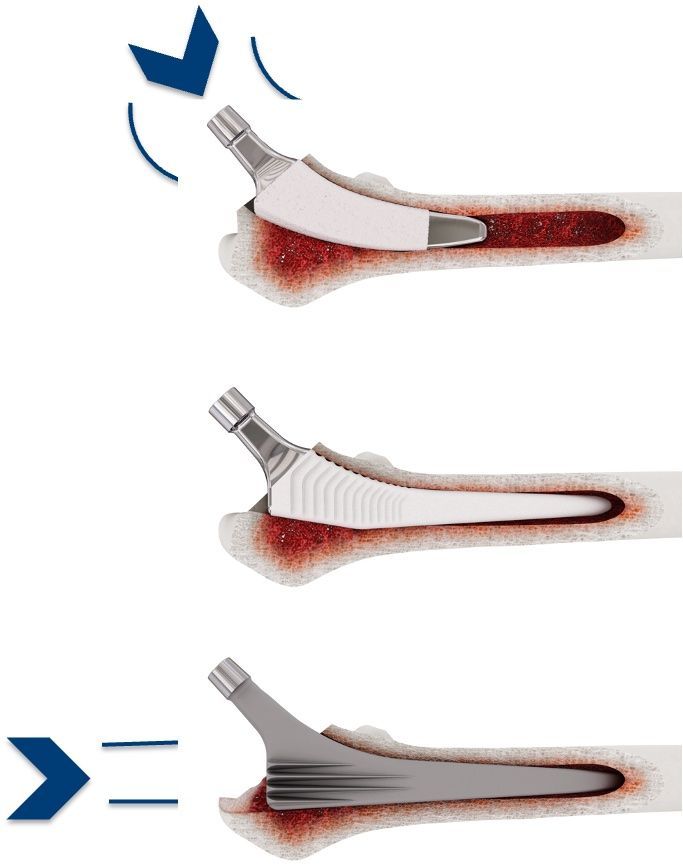
Overall, the development of short-shaft prostheses is expected to help these implants play an increasingly important role in joint replacement and further improve the quality of life for people with joint diseases. “In my view, short-stem prostheses will become the new standard in the near future,” explains Prof. Dr. Kutzner, bringing our conversation to a close.
Professor Dr. Kutzner—thank you very much for this fascinating explanation of the use of short-shaft prostheses!
Share this article
About the medical author
Alexandra Pfitzmann
Editor
Alexandra Pfitzmann – medical author: expert knowledge, professional articles and medical insights in the Leading Medicine Guide.
More about the medical author →Expert Interviews
Read next
- Expert interview
Cardiogeriatrics: Significance and benefits in the context of hospital reform
Sep 21, 2026
Cardiogeriatrics: Significance and benefits in the context of hospital reform
Read more - Expert interview
Expert Interview with Professor Dr. Amadeus Hornemann, MPH
Sep 18, 2026
Prof. Amadeus Hornemann on Precision Medicine in Gynecology: Modern Surgery, New Techniques, Better Quality of Life
Read more - Expert interview
Expert Interview with Professor Dr. Konstantinos Anagnostakos
Sep 15, 2026
Prof. Anagnostakos on Painful Knee Replacements
Read more