Expert Interviews
Shouldice Hernioplasty

Alexandra Pfitzmann ·
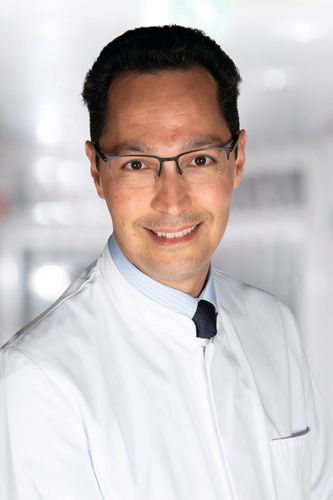
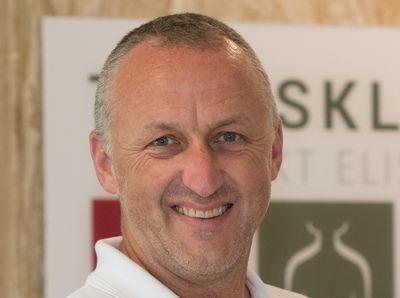
OA mag. dr. Jurij Gorjanc is a highly respected specialist in hernia surgery and a leading expert in the field of abdominal wall surgery. With an impressive international career and numerous awards to his credit, he has earned an outstanding reputation as a surgeon. After completing his training in Slovenia, Dr. Gorjanc moved to Austria in 2011, where he further deepened his expertise in hernia surgery as a board-certified specialist.
Not only was he admitted to the prestigious “Royal College of Surgeons of England,” but he also made significant contributions to the advancement of the specialty. Dr. Gorjanc served as president of the Slovenian Hernia Society for 15 years and has also made a name for himself at the European level, including through his appointment as a “Fellow of the European Board of Surgery – Abdominal Wall Surgery” (FEBS AWS). This distinction is awarded only to specialists who have made outstanding scientific contributions and can demonstrate a high number of successful abdominal wall surgeries.
In addition, Dr. Gorjanc volunteers in international medical aid missions and has already performed hernia surgeries on patients in countries such as Tanzania, Madagascar, Ghana, Liberia, Mongolia, and India. His expertise encompasses both open and minimally invasive surgical techniques, which he uses to treat a wide variety of abdominal wall hernias. He employs modern methods that accelerate healing and minimize complications. Dr. Gorjanc is not only an experienced surgeon but also a dedicated researcher who continuously works on developing new surgical procedures.
His high level of professional competence and the quality of his work are underscored by the “Quality-Assured Hernia Surgery” seal from the German Hernia Society. Anyone who places themselves in Dr. Gorjanc’s care can be certain they are in the best hands. With his in-depth knowledge, extensive experience, and international involvement, Dr. Gorjanc sets the standard in hernia surgery and offers his patients the best possible care. The editorial team at Leading Medicine Guide learned more about Shouldice hernioplasty in a conversation with Dr. Gorjanc.
An inguinal hernia occurs when a portion of the intestine or other tissue protrudes through a weak spot in the abdominal wall in the groin area. This condition can cause uncomfortable symptoms such as pain and a feeling of pressure, especially when lifting heavy objects or during physical activity. In most cases, an inguinal hernia should be treated surgically to prevent complications such as the strangulation of intestinal loops. There are various ways to treat an inguinal hernia, but one particularly proven method is the Shouldice hernioplasty. This surgical technique, which does not require the use of synthetic mesh, instead uses the patient’s own tissue to reconstruct and strengthen the abdominal wall. With a remarkably low recurrence rate and excellent long-term outcomes, the Shouldice method has established itself as one of the preferred procedures for treating inguinal hernias.
Shouldice hernioplasty is considered one of the most proven open surgical methods for treating inguinal hernias and offers several notable advantages over other procedures.
“Shouldice hernioplasty is an established open surgical method for treating inguinal hernias, characterized by a high success rate and a low recurrence rate (less than 1–2% in specialized centers). This method uses only the patient’s own tissue and does not require a synthetic mesh, thereby reducing the risk of mesh-related complications such as infections or chronic pain, which can occasionally be associated with synthetic meshes. Over the decades, the Shouldice technique has proven effective, particularly in younger patients under the age of 18, but also in older patients. It also offers specific advantages for patients with mesh allergies, concerns about foreign materials, or contraindications for minimally invasive procedures—such as due to general health status, pre-existing conditions, or prior surgeries. The method is also suitable for infected inguinal regions, for example, following intestinal incarceration and perforation. Furthermore, it is successfully used in countries where plastic meshes are not widely available or by surgeons with specialized experience, as they generally achieve exceptionally good results and further strengthen confidence in this method,” explains Dr. Gorjanc at the beginning of our conversation, adding:
“Despite the advantages of minimally invasive procedures such as TEP or TAPP—such as reduced postoperative pain and faster recovery—Shouldice hernioplasty has retained its firm place in hernia surgery. Minimally invasive procedures are technically demanding, require a longer learning curve, and carry specific risks such as injury to intra-abdominal structures. Furthermore, they are not ideal for patients with extensive prior abdominal surgery or those with limited tolerance for general anesthesia. Although cost is rarely a decisive factor in modern European medicine, the Shouldice method is significantly more cost-effective than laparoendoscopic procedures while still achieving excellent results. Shouldice hernioplasty remains a relevant method, particularly in specialized centers and for specific patient groups. It complements minimally invasive procedures and has not been completely replaced by them. The choice of the optimal treatment method always depends on the patient’s individual needs and circumstances. Every hernia surgeon should also be proficient in a mesh-free method for treating inguinal hernias, and the Shouldice technique is considered the gold standard in this field.”
Shouldice hernioplasty is an open surgical technique developed specifically for the treatment of inguinal hernias. The method focuses on using the patient’s own tissue to reinforce the abdominal wall, rather than using mesh material. The technique is characterized by its high success rate and low recurrence rate.
“The Shouldice hernioplasty is based on a reinforced layer-by-layer reconstruction of the abdominal wall with the goal of restoring anatomical integrity and minimizing the likelihood of recurrence. Local or regional anesthesia, such as spinal anesthesia, is typically used for this procedure, as it offers advantages such as faster recovery and a lower risk of systemic complications. The procedure begins with an incision over the inguinal canal, followed by step-by-step dissection of the tissue layers to expose the hernial orifice and the hernial sac. The hernial sac, which consists of the peritoneum, is isolated. In indirect hernias, the sac is ligated and removed, while in direct hernias, the hernial sac is reduced into the inguinal canal floor. Reconstruction of the posterior inguinal wall is performed using a continuous suture in four layers. In the first layer, the fascia transversalis is sutured to the so-called “conjoint tendon,” and in the second layer, it is plicated. Next, the internal abdominal muscle (musculus internus abdominis) is also fixed to the inguinal ligament in two layers. Finally, the aponeurosis of the external oblique muscle is closed over the spermatic cord, thereby restoring the inguinal canal. This procedure requires precise surgical skills and is more time-consuming than modern mesh procedures. The Shouldice method is preferred for slender patients and smaller inguinal hernias, as the procedure can be technically more challenging in obese patients or with large hernias. “Since only the patient’s own tissue is used, there is no risk of mesh rejection or infection,” explains Dr. Gorjanc, outlining the various steps of the operation. The recurrence rate after a Shouldice hernioplasty is generally very low and comparable to that of other methods, making this technique a preferred choice for many surgeons, especially for patients seeking a permanent solution without the use of foreign material.
Shouldice hernioplasty differs from minimally invasive techniques such as laparoscopic hernia repair in several respects, particularly in terms of pain and healing time.
Dr. Gorjanc comments: “Immediate postoperative pain is generally somewhat more severe with the Shouldice procedure, as it is an open surgery in which the tissue layers are directly dissected and sutured under slight tension. With laparoscopic hernia repair, there is less pain immediately after surgery because the minimally invasive method requires smaller skin incisions and is tension-free. The return to daily activities typically takes 1 to 3 weeks with laparoscopic procedures, whereas the Shouldice technique requires about 2 to 4 weeks.”
The Shouldice method for treating inguinal hernias is particularly suitable for certain patient groups and types of hernias where the surgical procedure is straightforward and there are no serious additional health problems.
“The Shouldice technique is particularly suitable for younger patients and those in good general health, as it requires good tissue quality and relies exclusively on the body’s own tissue. It is ideal for slim or normal-weight patients, as the anatomy in the surgical area is easily accessible and the tension of the sutures is less stressful. Obese patients or those with high abdominal pressure—such as from chronic coughing or ascites—are, however, considered less suitable candidates. The method is primarily preferred for small to medium-sized direct or indirect inguinal hernias where the hernial orifice is easy to reconstruct. Large or complex hernias with significantly weakened tissue may require a mesh, which is not used in the Shouldice technique. The Shouldice method is also appealing to patients who wish to avoid synthetic materials such as mesh, whether for personal or medical reasons, such as allergies or fear of foreign body reactions. It is particularly suitable for patients at increased risk of infection, since no synthetic materials are used, as well as for patients with contraindications for general anesthesia, since the procedure can be performed under local anesthesia. Bilateral or recurrent hernias following open procedures are better suited for laparoscopic methods such as TEP or TAPP. “The decision to use the Shouldice method should always be made on a case-by-case basis, based on the patient’s profile, the size and complexity of the hernia, and the surgeon’s experience,” explains Dr. Gorjanc, clarifying which patients are better suited for alternative techniques:
“The Shouldice method is less suitable for patients with very large or complex hernias, as the tension created by the suturing technique can increase the risk of recurrence. Obese patients, as well as those with chronic cough, heavy physical exertion, or high intra-abdominal pressure—such as from COPD or chronic constipation—may also benefit less from this method. Previous surgeries or scar tissue in the groin region further complicate the technique, as the local anatomy may be altered. In such cases, mesh-based procedures are often preferable. Similarly, bilateral or recurrent hernias are considered better suited for laparoscopic methods such as TEP or TAPP. The decision to use the Shouldice method should always be made on a case-by-case basis, based on the patient’s profile, the size and complexity of the hernia, and the surgeon’s experience.”
Shouldice hernioplasty is still considered one of the most effective and reliable methods for treating inguinal hernias, particularly with regard to long-term outcomes. Studies and clinical data show that the method has particularly low recurrence rates compared to other hernia surgeries.
Although there are now widely accepted and commonly used laparoscopic and endoscopic methods such as TAPP and TEP, as well as an excellent open method for inguinal hernia repair such as the Lichtenstein technique, the Shouldice procedure has by no means been forgotten. Recurrence rates with other techniques are comparable, but the surgeon should have expertise in the procedure. Dr. Gorjanc explains: “Studies show that the recurrence rate for the Shouldice technique is less than 2% in specialized centers where surgeons regularly perform this procedure, such as the Shouldice Clinic in Ontario, Canada. The best results are achieved with small to medium-sized indirect hernias. In less experienced hands, however, the recurrence rate can be higher and often ranges from 4–8%, as the method is technically demanding and requires a high degree of precision. By comparison, the Lichtenstein repair—an open procedure using mesh—is considered the gold standard for open inguinal hernia repair. It achieves a recurrence rate of 1–3% in most centers and is less technically demanding and universally applicable. The laparo-endoscopic methods TAPP and TEP also have a recurrence rate of 1–3%, which is comparable to the results of the Shouldice technique when performed by experienced surgeons.”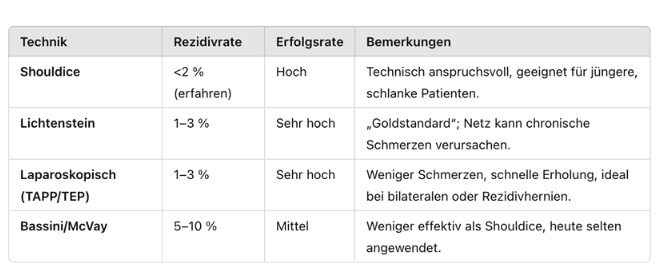
The Shouldice hernioplasty is one of the most effective methods for treating inguinal hernias; however, as with any surgical technique, certain risks and complications are possible. It is important to consider these in advance, even though they are generally rare.
“General, nonspecific risks such as infections, hematomas, and recurrences are similar to those of other methods and are shown in the table below. Specific risks associated with the Shouldice method include postoperative pain, which can occur in 10–15% of patients. Chronic pain affects up to 5% of cases in the long term and, in rare cases, requires repeat treatment. However, it is important to note that these risks occur significantly less frequently in specialized centers than in other clinics. Testicular complications such as testicular atrophy are rare (<1%), but must be taken into account with the Shouldice technique, as surgeons often perform a resection of the cremaster muscle, as described in the original technique. Further details can be found in the table below,” said Dr. Gorjanc.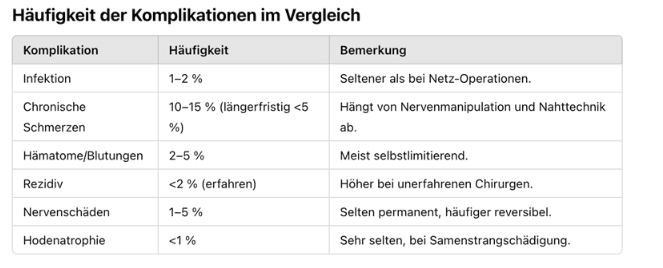
The risk of recurrence could be increased in some cases by inadequate suturing techniques or incomplete restoration of the abdominal wall structure after surgery. Hematomas (bruising) and serous collections (seromas) are other possible complications, as with any other surgery. A seroma occurs when fluid accumulates under the skin and often requires treatment via aspiration. These complications are also relatively rare but are possible if the healing process does not proceed optimally.
After a Shouldice hernioplasty, careful postoperative care is crucial to promote the healing process, prevent complications, and achieve the best possible results.
Most patients can return to their daily routines relatively quickly after surgery; however, it is important to consistently follow the recommended postoperative care instructions. “In the immediate postoperative phase, which spans the first few days up to two weeks after surgery, patients typically remain in the hospital for one to two days so that the healing process can be monitored. Particular attention is paid to signs of infection such as redness, swelling, or fever, as well as bruising, bleeding, and difficulty urinating. Pain relievers, usually nonsteroidal anti-inflammatory drugs (NSAIDs) such as ibuprofen or acetaminophen, are prescribed, and local cooling, such as with ice packs, helps reduce swelling. Early mobilization is essential; patients should get out of bed and walk around within 24 hours to promote blood circulation and prevent blood clots. Strenuous physical activity and sudden straining of the abdominal muscles should be avoided. The wound should be cleaned daily according to the doctor’s instructions, for example with antiseptic solutions. At the first follow-up appointment, which usually takes place 7–10 days after surgery, the doctor checks the wound healing. Non-absorbable sutures are removed approximately 7–14 days after surgery. During the medium-term follow-up period, which lasts about two to three weeks, light activities such as walks and everyday tasks are permitted. However, lifting or carrying loads exceeding 5–10 kg, as well as physical activities that strain the abdominal muscles—such as strength training or jogging—should be avoided. Depending on the patient’s recovery and following medical clearance, it is possible to resume physical activities after about four weeks. More intense activities or heavy lifting should also only be undertaken after consulting with your doctor. “For high-risk patients—such as those with high intra-abdominal pressure—additional follow-up examinations may be advisable to ensure optimal support for the healing process,” recommends Dr. Gorjanc, and with that, we conclude our conversation.
Thank you very much, Dr. Gorjanc, for this important information!
Share this article
About the medical author
Alexandra Pfitzmann
Editor
Alexandra Pfitzmann – medical author: expert knowledge, professional articles and medical insights in the Leading Medicine Guide.
More about the medical author →Expert Interviews
Read next
- Expert interview
Cardiogeriatrics: Significance and benefits in the context of hospital reform
Sep 21, 2026
Cardiogeriatrics: Significance and benefits in the context of hospital reform
Read more - Expert interview
Expert Interview with Professor Dr. Amadeus Hornemann, MPH
Sep 18, 2026
Prof. Amadeus Hornemann on Precision Medicine in Gynecology: Modern Surgery, New Techniques, Better Quality of Life
Read more - Expert interview
Expert Interview with Professor Dr. Konstantinos Anagnostakos
Sep 15, 2026
Prof. Anagnostakos on Painful Knee Replacements
Read more