Expert Interviews
Small Hepatocellular Carcinoma (HCC): Expert Interview with University Professor Dr. Dr. med. Thomas J. Vogl

Alexandra Pfitzmann ·
When it comes to diagnostic and interventional radiology, there is one outstanding specialist in the German-speaking world: Prof. Thomas Vogl, M.D., a specialist in radiology, interventional radiology, and neuroradiology at the University Hospital of Johann Wolfgang Goethe University in Frankfurt am Main, is known in professional circles as the author of standard reference works and groundbreaking publications, as well as a developer of new procedures. For example, he and his team have made decisive advances through the further development of an angiography robot and have earned an international reputation, particularly for their highly acclaimed work in the fields of interventional oncology and vascular procedures. The editorial team at Leading Medicine took the opportunity to speak with the radiology expert and was particularly interested in learning more about the diagnosis of “small hepatocellular carcinoma (HCC),” a specific form of liver cancer.
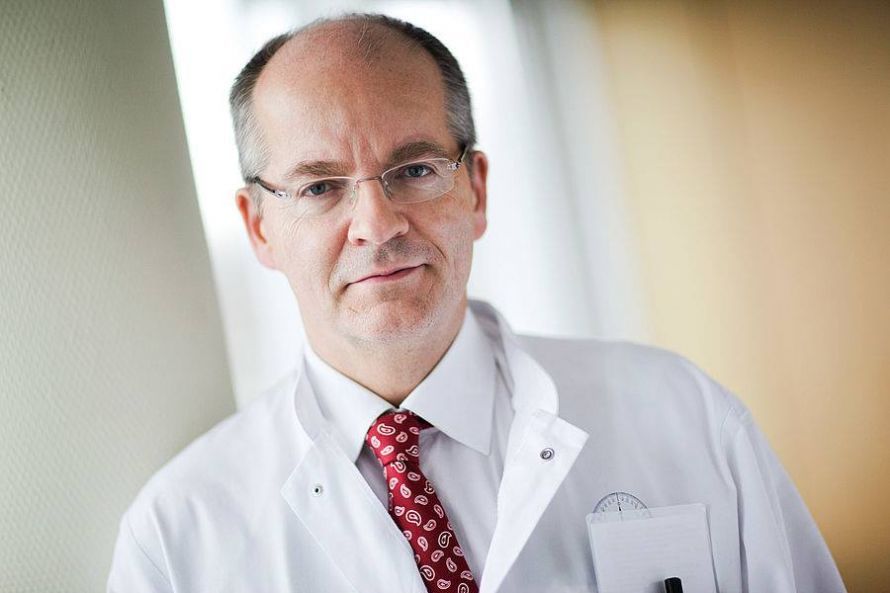
Above all, the angiography robot, which Professor Dr. Thomas Vogl co-developed with his team, offers hope to many cancer patients. This innovative device provides high-resolution images from inside the body, enabling the detection of previously undetected tumors. That is the key advantage of this fascinating development: even small tumors—which would otherwise be nearly impossible to detect—can be clearly identified and then directly treated with a therapeutic agent using a small catheter. The precise imaging also prevents additional injury and minimizes risks.
Prof. Thomas Vogl, M.D., regularly uses his angiography robot during procedures at Frankfurt University Hospital. This gives his patients the opportunity to watch their own surgery while fully conscious. The system makes this possible in a particularly fascinating way. For the director of the Institute for Diagnostic and Interventional Radiology at Frankfurt University Hospital, this brings things full circle: for Prof. Dr. Vogl, patient-centered care is always at the top of his priority list, from treatment planning to follow-up care.
Always Important: Interdisciplinary Exchange
As head of the Institute for Diagnostic and Interventional Radiology, Univ.-Prof. Dr. med. Thomas Vogl is always committed to professional exchange—including interdisciplinary collaboration. On the one hand, he emphasizes excellent communication within the team between radiology residents and specialists; on the other hand, he ensures that all staff members benefit from the expertise of other disciplines.
Since 2018, Frankfurt University Hospital, under the leadership of Prof. Vogl and his colleague Prof. Ingo Marzi (Director of the Department of Trauma, Hand, and Reconstructive Surgery), has been an official partner of the German Football Association (DFB). In implementing the “DFB Academy” project, Prof. Vogl and his team are focusing on medical care for professional athletes as well as on research, studies, and continuing education.
Small HCC is an aggressive form of liver cancer and is often not diagnosed until a late stage, which can make treatment difficult.
“Symptoms may include abdominal pain, weight loss, fatigue, jaundice, and nausea. Treatment depends on the stage of the cancer, but options always include surgery, chemotherapy, radiation therapy, or a liver transplant. It is important to note that liver cancer is generally a serious disease, and early diagnosis and treatment are crucial for improving survival rates. Regular screenings can help reduce the risk of liver cancer,” Prof. Dr. Vogl notes at the beginning of our conversation.
Some of the most common symptoms that can occur with HCC are:
- Abdominal pain or discomfort in the upper abdomen
- Weight loss for no apparent reason
- Loss of appetite and nausea
- Exhaustion and fatigue
- Jaundice (yellowing of the skin and eyes)
- Abdominal swelling or ascites (fluid accumulation in the abdomen)
- Increased tendency to bleed or bruising
People who experience the symptoms listed above are usually referred by their primary care physician. “Small hepatocellular carcinoma (HCC) is typically diagnosed using a combination of imaging tests and laboratory tests. Commonly used imaging techniques include ultrasound, computed tomography (CT), and magnetic resonance imaging (MRI). These techniques can reveal whether changes such as nodules or cysts have formed in the liver tissue. At the same time, the patient is screened for fatty liver and iron overload, and it is determined whether they generally consume excessive amounts of alcohol, which significantly contributes to liver disease,” explains Prof. Dr. Vogl, describing the diagnostic process.
As a rule, small hepatocellular carcinoma (HCC) occurs in patients who already have liver disease, such as cirrhosis or chronic hepatitis B or C.
“If, for example, tumor markers are elevated during the examination and a tumor is detected, a discussion takes place with the clinic’s interdisciplinary liver board following the examination to determine the best possible treatment for the patient. If the tumor is less than 3 cm in size, a minimally invasive procedure may be considered to remove it. If it is 3–5 cm or larger, open surgery is required. There is also the option of chemoembolization. In this method, a medication is injected directly into the bloodstream supplying the tumor, followed by the blocking of blood flow in the blood vessels that feed the tumor. This ensures that the tumor is directly exposed to the medication, and the blood supply to the tumor is cut off. If the tumor is larger than 5 cm, a liver transplant is the only option, as the risk of metastasis is otherwise too high. Unfortunately, many patients with larger tumors are not candidates for surgery and can only be treated with medication. A cure, however, is only possible with smaller tumors or through a transplant. Generally speaking, the survival rate for a smaller tumor of about 3 cm is 60%,” explains Prof. Dr. Vogl.
The survival rate for people with small hepatocellular carcinoma (HCC) depends on various factors, including the stage of the tumor, the presence of cirrhosis or other liver diseases, and the patient’s overall health. Early detection and treatment can improve the survival rate. Overall, the prognosis for HCC is generally poor, as it is often diagnosed at a late stage. The 5-year survival rate for advanced HCC is often less than 10%, while the 5-year survival rate for patients with early-stage HCC who have undergone surgery or a liver transplant is higher and can reach 70–80%. However, it is important to note that each person is unique and that the prognosis depends on many factors. Early diagnosis, proper management of complications, and appropriate treatment can improve survival rates and quality of life. “It is therefore important to undergo regular medical examinations and checkups to detect and treat HCC at an early stage,” warns Prof. Dr. Vogl.
There are several factors that can increase the risk of developing HCC, including:
Liver diseases: Chronic hepatitis B or C, cirrhosis, and alcoholic liver disease can increase the risk of developing HCC.
Age: HCC is more common in older adults.
Gender: Men have a higher risk of developing HCC than women.
Diabetes: People with diabetes have an increased risk of developing liver cancer.
Family history: A family history of liver cancer can increase the risk of developing HCC.
Alcohol consumption: Excessive alcohol consumption can increase the risk of developing HCC.
Fatty liver: A fatty liver can increase the risk of developing HCC.
Treatment options for small hepatocellular carcinoma (HCC) therefore depend on various factors, such as the size and stage of the tumor, the patient’s overall health, and the presence of impaired liver function.
There are several preventive measures that can help reduce the risk of small hepatocellular carcinoma (HCC).
“Take care of your liver!” urges Prof. Dr. Vogl during the interview. “Regular and heavy alcohol consumption is dangerous, puts a heavy strain on the liver, and often leads to life-threatening cirrhosis,” Prof. Dr. Vogl warns emphatically. “Regular screenings naturally facilitate early detection, which is crucial for providing patients with effective, long-term care,” he adds.
Vaccination against hepatitis B can also reduce the risk of infection with the hepatitis B virus and thus the risk of HCC.
Managing hepatitis infections through regular medical checkups and treatment for hepatitis B or C can reduce the risk of HCC. Being overweight or obese can also increase the risk of HCC. Therefore, people should maintain a healthy weight through a balanced diet and regular exercise. It is important to note that these measures can reduce not only the risk of HCC but also the risk of other liver diseases. A healthy lifestyle and regular medical checkups can help maintain liver health and reduce the risk of many liver diseases.
The progression of a small hepatocellular carcinoma (HCC) can be monitored through regular checkups and imaging.
The purpose of monitoring is to track the tumor’s growth and determine whether the patient’s condition is worsening. Ultrasound is a common method for monitoring HCC. It can be used to detect tumors and to determine their size and number. “A CT or MRI scan can, of course, always provide more detailed images of the tumor and offer information about the progression of the disease,” emphasizes Prof. Dr. Vogl. Blood tests can be performed to check for specific tumor markers such as alpha-fetoprotein (AFP) and des-gamma-carboxyprothrombin (DCP). An increase in these markers may indicate that the tumor is progressing. A biopsy can be performed to obtain a tissue sample of the tumor and examine its characteristics more closely. The frequency of monitoring depends on the size of the tumor and the patient’s risk. People at higher risk for HCC, such as those with hepatitis B or hepatitis C infection, should be monitored more frequently. Monitoring can also help determine the best time for treatment to slow or stop the progression of the disease.
Follow-up care is necessary for patients, even after successful treatment of a small hepatocellular carcinoma (HCC).
The type of follow-up care depends on the type of treatment the patient received. If the tumor was removed surgically, the patient usually needs to be monitored regularly for recurrence to ensure that the tumor does not return. This monitoring may include ultrasound or CT scans, as well as blood tests to ensure that tumor markers remain stable. The monitoring schedule depends on the size of the original tumor and other factors. In some cases, follow-up treatment with medication may be necessary to reduce the risk of recurrence. “It is important for patients to maintain a healthy lifestyle even after successful treatment of HCC to reduce the risk of recurrence. A healthy diet and regular physical activity can help strengthen the body and support the immune system, which can improve treatment outcomes,” Prof. Dr. Vogl concludes our conversation.
Thank you very much, Prof. Dr. Vogl, for these interesting insights into this very important topic, which ultimately affects—or could affect—so many people!
Share this article
About the medical author
Alexandra Pfitzmann
Editor
Alexandra Pfitzmann – medical author: expert knowledge, professional articles and medical insights in the Leading Medicine Guide.
More about the medical author →Expert Interviews
Read next
- Expert interview
Cardiogeriatrics: Significance and benefits in the context of hospital reform
Sep 21, 2026
Cardiogeriatrics: Significance and benefits in the context of hospital reform
Read more - Expert interview
Expert Interview with Professor Dr. Amadeus Hornemann, MPH
Sep 18, 2026
Prof. Amadeus Hornemann on Precision Medicine in Gynecology: Modern Surgery, New Techniques, Better Quality of Life
Read more - Expert interview
Expert Interview with Professor Dr. Konstantinos Anagnostakos
Sep 15, 2026
Prof. Anagnostakos on Painful Knee Replacements
Read more