Expert Interviews
Spinal Surgery in Older Adults—Exercise Instead of Surgery? An Expert Interview with Dr. Kügelgen

Sabine Schneider ·
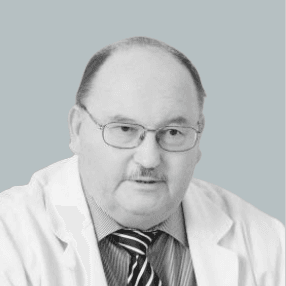
Dr. Bernhard Kügelgen, M.D., is an outstanding specialist in pain medicine and the chief physician at the Koblenz Therapy Center, as well as the medical director of the Koblenz Medical Care Center (MVZ). With extensive expertise in the fields of neurology, psychiatry, and physical and rehabilitative medicine, he offers a wide range of treatment options for patients with chronic pain conditions. He places particular emphasis on holistic therapeutic approaches that are individually tailored to the needs of his patients.
At the Koblenz Therapy Center and the MVZ Koblenz—both led by Dr. Kügelgen and physical therapist Cecilija Kügelgen—the comprehensive care of pain patients is the top priority. Both facilities work closely together to ensure seamless care that encompasses both outpatient and day-care treatment options. This integrative approach enables optimal patient care in a single location and from a single source. Dr. Kügelgen and his multidisciplinary team, consisting of a total of fifty staff members, place great emphasis on empowering patients and developing individualized treatment approaches. The Therapy Center offers multimodal treatment plans that ensure interdisciplinary care and are highly tailored to each patient’s needs.
His comprehensive expertise and many years of experience make Dr. Kügelgen a recognized expert in the treatment of pain conditions such as chronic back and headaches, migraines, tension headaches, post-traumatic pain, neuropathic pain, fibromyalgia, and somatoform pain disorders. In addition, he also treats complex regional pain syndrome (CRPS) and neurological conditions such as the aftereffects of stroke, multiple sclerosis, and other inflammatory diseases of the central nervous system.
Before joining the practice in Koblenz, Dr. Kügelgen gained valuable experience in leadership roles at several specialized clinics throughout Germany. As the author of numerous publications and educational videos, he has made significant contributions to the advancement of pain medicine and is also a founding member of Neuroorthopädie Deutschland and the Federal Working Group on Chronic Lower Back Pain (BAcK). Dr. Kügelgen is not only a highly qualified pain specialist but also a dedicated physician who is deeply committed to the well-being of his patients. His outstanding work and extensive knowledge make him a key figure in the medical community and a trusted point of contact for patients with chronic pain conditions.
The editorial team at Leading Medicine Guide had a fascinating conversation with Dr. Kügelgen, focusing on spinal disorders in older adults, in part to explain the rationale behind spinal surgery.
Spinal disorders in older adults are a common and complex health issue that can significantly impair the quality of life for many older people. As people age, age-related changes occur in the spine that can lead to pain, limited mobility, and other health problems. These changes affect the intervertebral discs as well as the vertebral bodies and the surrounding soft tissues. In addition to conditions such as osteoporosis, which weakens bone structure, other conditions such as spinal stenosis or spondylolisthesis may also occur. Treating these conditions requires an interdisciplinary approach that may include conservative measures such as physical therapy and pain management, as well as surgical interventions. The goal is to maintain or improve the mobility and quality of life of those affected while minimizing the risks and side effects of treatment.
Age-related changes in the spine: Not every change is a disease—structure and function must be considered separately.
Dr. Kügelgen would like to clarify one thing at the outset of our conversation: “Basically, when it comes to changes in the spine, there are two things to keep in mind. First, we’re talking about age-related changes that are clearly recognizable, such as the purely visual difference between a 20-year-old and a 60-year-old. In this case, we cannot speak of a disease. Then there are degenerative diseases of the spine. Although these are also age-related changes, they can lead to disease. In summary, we can conclude that not every age-related change is a disease. The second point is this: You have to distinguish between the structure and function of the spine, much like with a malfunctioning car or computer. If you turn off the car or the computer, it stops working, but the device itself isn’t broken. In medicine, it’s often assumed that if imaging—such as an MRI—shows that the structure of the spine has changed, this must also affect its function. That’s not entirely correct. Because if you send a patient with a spine that’s no longer functioning well to rehabilitation for a few weeks—and the patient learns to move again—then after rehabilitation, the structure of the spine will be exactly the same as before, but function will have been restored, and the patient will once again be able to participate actively and with less pain in daily life. The opposite can be observed in young people: Their spine shows no signs of aging, yet they still experience back pain after hours of cell phone use. Here, the structure is intact, but function has been compromised. This distinction between function and structure is a key factor in resolving many back problems. Impaired function leads to a reduced quality of life, even to the point of losing the ability to participate in daily activities—and, of course, to pain. So-called conservative therapies or assistive devices do not alter the structure, but by improving function, they can lead to better mobility and less pain—without causing any structural changes.”
Age Is Not the Main Factor: Why a Lack of Exercise and Misconceptions About Spinal Surgery Do More Harm Than Good.
“Of course, you see things in older patients that younger people don’t have yet—just as there are few 15-year-olds with gray hair. When it comes to the spine, the term ‘degenerative changes’ is fundamentally misleading. Degeneration means wear and tear. However, the spine does not wear out; it ages. And with age, certain functional changes occur. But such changes also occur in young people. Take young floor gymnasts, for example: they are extremely hypermobile, but this is not a disease. Similarly, there are many young people with extreme flexibility—but that alone is not a disease. There are also many young people with a completely healthy spine who nevertheless experience back pain because they often spend hours looking down at their cell phones. In this respect, it can be concluded that it is not age that more or less inevitably causes the spine to become diseased. Therefore, it can be concluded that it is not age that inevitably causes the spine to become diseased. The National Care Guideline (AWMF S3) lists tumors, fresh fractures, and chronic inflammatory processes as causes of chronic back pain. Otherwise, soft-tissue issues are the primary cause—particularly a lack of endurance and coordination, meaning a lack of harmony in movement. This is precisely why regular exercise is so important. However, imaging procedures are one of the most common causes of misdiagnosis in cases of chronic back pain. Many patients also have the misconception that spinal surgery works like a visit to the dentist—that something is removed or replaced and everything works perfectly afterward. But that’s not how spinal surgery works. Of course, a patient is operated on immediately in the case of an unstable vertebral fracture—no question about it. But with other possible causes, surgery isn’t necessarily the first option,” explains Dr. Kügelgen, before posing the crucial question:
“Why should older people undergo spinal surgery? The primary symptom here is pain. One must then ask: What is actually done to address this? Typically, spinal fusion is performed. This is based on a pathological mechanism that is by no means proven—namely, a pain-inducing pathological movement disorder known as the ‘pincer mechanism.’ This hypothesis has not been proven. If this assumption were correct, such surgeries would have to be much more successful, and conservative therapies would have to be significantly less effective. However, the spine is a highly complex structure. While spinal fusion does lead to reduced function in the operated segment, it does not necessarily result in the elimination of symptoms. At the same time, the adjacent areas of the spine are overloaded, as they must now compensate for the increased movement. This is why many patients experience more symptoms after surgery than before. The main reason for such surgeries, however, is pain. Yet the pain is caused by a lack of movement. Older people often move less than younger people. When pain sets in, medications are prescribed. This leads to a vicious cycle: more pain → more medication → less movement → even more pain. As a general rule, painkillers should not be taken for longer than three months! Furthermore, pain-relieving measures do not help with tumor-related pain (see S3-AWMF Guideline LONTS). However, consistent conservative therapy in accordance with guidelines—if necessary in the form of rehabilitation—can achieve significant success.
A special case is the so-called narrow lumbar spinal canal. This is a common justification for surgery, although it has never been clearly established when this diagnosis is actually warranted. It is easy to understand that specifying a particular millimeter value for the internal diameter of the spinal canal is unacceptable if I assess a giant standing 2 m tall in the same way as a petite woman who is 1.60 m tall. Furthermore, the clinical symptoms must clearly correspond to the described morphological changes. In this case, conservative treatment would always have to fail before surgery is considered. In fact, the clinical picture of a functionally narrow lumbar spinal canal was described in 1982 by the Swiss neurosurgeon Benini—albeit in a different context. Especially after prolonged periods of rest, such as those that occurred more frequently during the COVID-19 pandemic, affected patients complain of radicular pain that increases with activity and eventually radiates. The pain radiates from the lumbar spine distally, and in some cases, neurological deficits may also begin distally. Many patients report that their pain disappears quickly when they bend forward, sit down, or raise one leg. The cause of the condition lies in weakness of the lumbar back muscles, which normally maintain the lumbar lordosis. When these muscles become fatigued, the lordosis increases slightly—especially in patients with weak ligaments. This narrows the intervertebral foramina, the openings between two adjacent vertebrae. This leads to compression of the nerve roots. As soon as the lordosis is reduced through the measures described above, the pain disappears immediately. Treatment is always conservative: the affected muscles must be specifically trained—with a focus on endurance and coordination. “As soon as the described symptoms occur, the patient should immediately assume a posture that relieves the strain. This usually leads to relief from symptoms within a few seconds and restores functional capacity,” explains Dr. Kügelgen.
The most important thing is: Move, move, move!
“Exercise helps! The recommendation to exercise 150 minutes per week also applies to older adults (if spread over 6 days, that would be 6 times 25 minutes). Those who do so will find that the pain subsides. Unfortunately, too few people put this into practice; instead, they get caught in a cycle of medication and perhaps do a little physical therapy once a week. Sadly, systematic conservative therapy is often not provided today. Yet the guideline mentioned above describes briefly and clearly what matters:
Overview of Key Points from the National Care Guideline on “Nonspecific Low Back Pain”
- Cautious Diagnosis
- Consider psychological and social factors
- Exercise instead of bed rest
- Pain medication: As much as necessary, as little as possible
- Chronic Pain: Combined Treatment
Coordination and perseverance are key here. In fact, we should be rewarding all older adults who exercise regularly, just as we would in behavioral therapy. A survey once revealed that many typical office workers walk an average of only 300 meters a day. “That’s alarming, and it’s no surprise that these people develop back pain,” warns Dr. Kügelgen.
The WHO’s recommendation that adults engage in at least 150 minutes of moderate physical activity per week comes from the “Global Recommendations on Physical Activity for Health,” published by the WHO in 2010. These guidelines emphasize the importance of regular exercise for promoting health and preventing disease.
“It’s really a big mistake to think that you can change the structure of the spine to restore its function. There’s no evidence to support this. When you intervene in the spine—which is a highly complex kinetic chain—you ultimately disrupt the harmony of movement. Guidelines specify when surgical intervention is necessary. First and foremost is an unstable fracture—which can result from a fall, for example—that requires immediate surgery. Tumors must also be surgically removed. In this context, metastases are more common than tumors that originate in the bone. “Surgical intervention may also be necessary in cases of chronic inflammation,” says Dr. Kügelgen, referring to the three classic indications for necessary spinal surgery.
There is no reason to operate on older people more frequently!
“Older people often experience more pain because they don’t get enough exercise. They then go to the doctor because of the pain, have an MRI done, for example, and are told about all the problems with their spine. Unfortunately, they’re often advised to rest, which is exactly the wrong approach. This isn’t wear and tear, but rather normal aging. And older adults, too, need to be encouraged to stay active. Once they start doing so, they’ll notice a significant improvement after just three weeks. For acute pain, pain relief is helpful. However, if pain medication is taken for more than three months, its effectiveness diminishes, and in fact, pain medication can actually intensify the pain. What really helps reduce pain are endurance and coordination. But you can’t build muscle while on painkillers. The reality is that spinal surgery for older adults is generously reimbursed, and the need for surgery is easy to justify. A good and truly consistent rehabilitation program is highly recommended—especially before any planned surgery. In many cases, it becomes clear that surgery isn’t necessary at all because the pain improves significantly through the activity and exercises in rehabilitation. I had a 93-year-old patient who was already in a wheelchair due to severe pain and had been recommended for surgery. However, she did not want to undergo surgery and completed a 6-week rehabilitation program. Today, she is pain-free and walks ten kilometers a day. “What helps people with severe back pain the most is a well-trained, enduring, and well-coordinated musculature to compensate,” Dr. Kügelgen emphasizes.
The hospital reform enacted for the state of North Rhine-Westphalia will have a lasting impact.
In Germany, criticism is growing over the high number of surgeries performed in hospitals, as many procedures are considered unnecessary or superfluous. Studies show that financial incentives within the healthcare system may play a role, since hospitals are paid per procedure under the flat-rate payment system. This creates economic pressure that may contribute to more surgeries being performed than are medically necessary. And particularly for procedures such as back or joint surgeries, there is evidence that conservative treatments could often be an equally effective alternative.
The hospital reform in North Rhine-Westphalia, which was adopted in July 2024, aims to streamline the range of services offered by hospitals and focus them on essential areas. Many hospitals must prepare for significant cutbacks, as numerous requests—such as those for continuing cancer treatments or orthopedic procedures like hip and knee surgeries—are being denied. According to State Health Minister Karl-Josef Laumann, this reform is intended to improve the quality of medical care by having specialized hospitals perform complex procedures, while smaller hospitals remain focused on less specialized services. In this way, the state government aims to ensure that patients receive the best possible treatment and that hospital structures are organized more efficiently. At the same time, emergency care is to remain locally accessible. Critics fear, however, that hospitals could suffer financial losses without these lucrative procedures. The reform is set to take effect in 2025, though changes may still be made during the ongoing consultation process.
“Due to the approved hospital reform, many hospitals are fearing for their very existence, as requests for surgeries are being denied. But it is unacceptable for people to undergo surgery for supposedly ‘degenerative’ spinal conditions—often resulting in worsening symptoms, more pain, reduced mobility, and less ability to participate in daily life—simply so that these hospitals can survive. That is why this hospital reform is long overdue! And one thing will then become clear: If people undergo fewer spinal surgeries in particular, there will not be more sick people. “Hospitals that do good and meaningful work should also be well compensated. But it is unacceptable for spinal surgery to be performed in hospitals with single-digit case numbers per year just so they can stay afloat financially,” Dr. Kügelgen sharply criticizes.
Finding Joy in Movement: The Path to Lasting Health.
“It’s important for patients to receive support in making the necessary behavioral changes to reintegrate exercise into their daily lives. You have to take them by the hand and guide them so they understand and stick with it. Patients need to learn to enjoy exercise; they need to hear praise. I’m always delighted to hear from my older patients who are deeply grateful because I’ve introduced them to exercise, because they feel so much better, and because they experience genuine moments of happiness. Of course, everyone should figure out for themselves what they enjoy most. Some people like group sports, others prefer to go for a walk in the woods, and so on. Ultimately, the goal is to motivate people to exercise to such an extent that they actually feel unhappy if they’re unable to follow through with their new exercise routine even once. It has to become second nature and an integral part of everyday life. And it usually takes 6 to 24 months to achieve a lasting change in behavior. If people spent half the time they use to harm their health on improving their health instead, we’d need far fewer doctors. “Everyone should set aside 150 minutes a week for exercise!” Dr. Kügelgen advises repeatedly, and with this urgent advice, we conclude our conversation.
Share this article
Expert Interviews
Read next
- Expert interview
Expert interview with Professor Dr Elmar Herbst, PhD
Oct 15, 2026
Patient-centred and personalised knee surgery
Read more - Expert interview
Cardiogeriatrics: Significance and benefits in the context of hospital reform
Sep 21, 2026
Cardiogeriatrics: Significance and benefits in the context of hospital reform
Read more - Expert interview
Expert Interview with Professor Dr. Amadeus Hornemann, MPH
Sep 18, 2026
Prof. Amadeus Hornemann on Precision Medicine in Gynecology: Modern Surgery, New Techniques, Better Quality of Life
Read more