Expert Interviews
"The Engine of Our Body!" Professor Albert and the Heart

Sabine Schneider ·
No heart, no life—it’s that simple! As the organ responsible for supplying oxygen and nutrients, this central pump—the engine of our body—keeps the blood circulating. The human heart, about the size of a fist, beats sixty to eighty times per minute, pumping approximately 7,000 liters of blood through the body each day. This fascinating hollow organ is divided into two halves by a septum, with each half consisting of an atrium and a ventricle. Oxygen-rich blood is pumped into the circulatory system on the left through the aorta, the main artery; on the right, the used, oxygen-poor blood is returned via the right ventricle to the pulmonary circulation, where the blood is reoxygenated and flows back to the heart through the pulmonary veins. It is a sophisticated system that tolerates no interruptions. And the best person to consult about it is a proven specialist with extensive experience: Prof. Dr. Alexander Albert.
An interview by Alexandra Pfitzmann
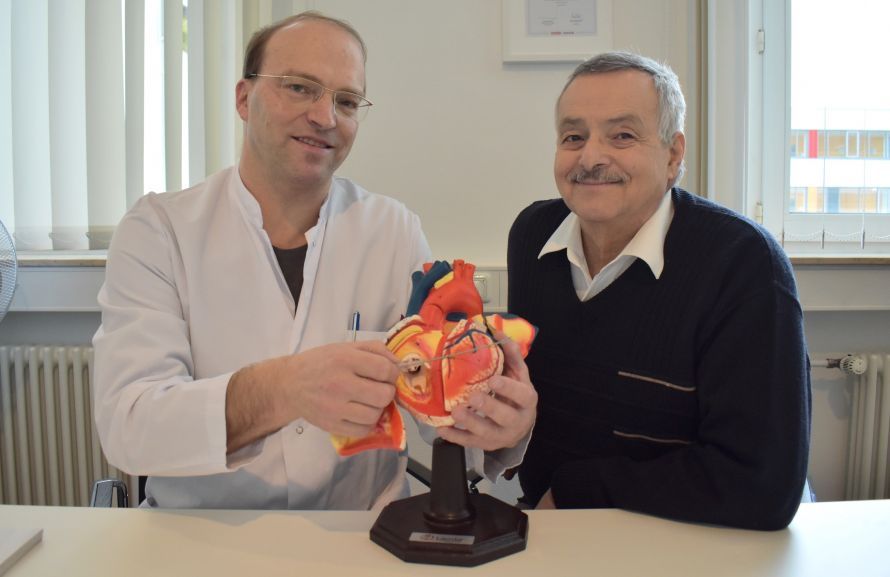
There are a multitude of conditions that can put a strain on our heart. Fortunately, medical progress in the fields of cardiology and cardiac surgery has been enormous. The editorial team at Leading Medicine Guide had the honor of speaking with one of the world’s leading cardiac surgeons. Professor Dr. Alexander Albert is one of the world’s most renowned specialists and offers a fascinating insight into the impressive possibilities of cardiac surgery. Since fall 2019, he has served as director of the Heart Clinic in Dortmund, North Rhine-Westphalia, and has over twenty years of professional experience.
For many people, heart surgery is still one of the most feared types of surgery of all, just like brain surgery, for example. One of the most common heart surgeries performed is bypass surgery, which becomes necessary when there are life-threatening narrowings of the blood vessels. Only then can the heart’s oxygen supply be ensured. The most common reason for bypass surgery is coronary heart disease, which affects approximately one million people in Germany. Metabolic disorders, high blood pressure, or atherosclerosis are among the causes.
Open-Heart Surgery vs. Minimally Invasive Surgery
In bypass surgery, a distinction is made between open-heart surgery and minimally invasive surgery, in which the procedure is performed through very small incisions using the so-called keyhole technique. “The decision regarding the surgical approach depends heavily on the anatomy of the coronary arteries,” explains Professor Dr. Alexander Albert, adding immediately: “Diagnostic and therapeutic approaches are always discussed within our interdisciplinary team to meet the individual needs of each patient. Personally, I perform minimally invasive surgery on ninety percent of my patients.” Now, imagine this: In open-heart surgery—regardless of the reason—the patient’s entire sternum must be opened. This is a major procedure in itself, and the recovery period for the patient is lengthy—lasting several weeks—and is also associated with some pain. Minimally invasive heart surgery is much gentler on the patient, but it requires a high level of expertise and dexterity. “Many surgeons achieve poorer results with minimally invasive procedures than with open-heart surgery, simply because they lack the experience. After all, minimally invasive surgery is performed on a beating heart. It pulsates and moves, and yet every movement and subsequent suture must be executed cleanly and precisely using the correct suturing technique—a particular challenge,” explains Prof. Dr. Albert, who spent a year in 2004 working with the “pope” of “off-pump” surgery, the Belgian cardiac surgeon Prof. Dr. Paul Sergeant, who perfected this surgical method. “Off-pump” refers to heart surgery performed without the use of a heart-lung machine.
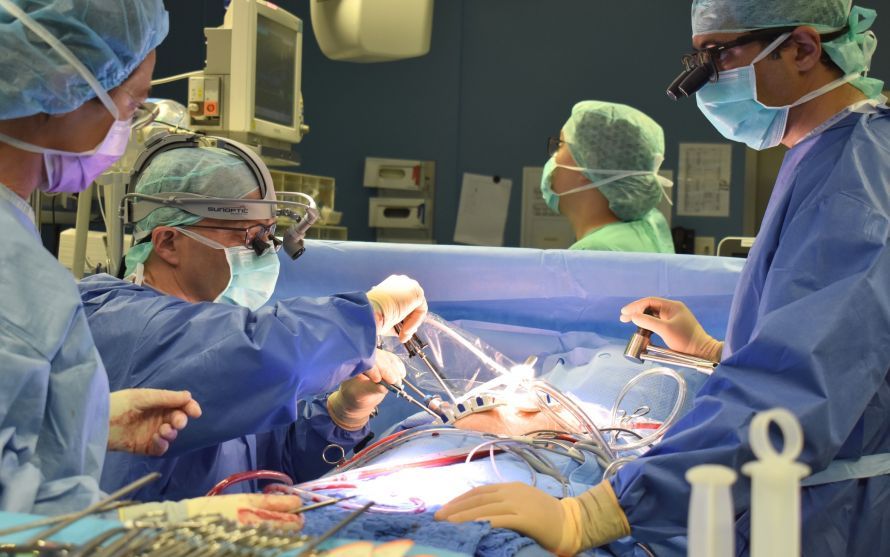
Practice makes perfect!
“Most patients are relieved when I explain that we’re performing the procedure without using a heart-lung machine. After all, in surgeries with a heart-lung machine, the heart is stopped—a rather unsettling thought. The fact that only small incisions are needed to access the surgical site is also a positive aspect. Ultimately, this significantly shortens the healing process, and the entire procedure is less traumatic for the patient because there’s no need to open the chest,” comments Prof. Dr. Albert on the procedure. “The subsequent stroke rate, which occurs after the use of bypass grafts, also drops to below 0.2% with minimally invasive surgery. However, the right technique is crucial in minimally invasive heart surgery. And here, the saying ‘practice makes perfect’ certainly applies!” says Prof. Dr. Albert, highlighting the challenge of the surgical technique.
Of course, you don’t practice on live patients. He himself has conducted veritable “suturing courses” using simulators at his living room table. He has repeated suturing techniques up to 1,000 times. “Today, I operate on patients two to three times a week using minimally invasive surgical techniques. These are mostly bypass and mitral valve surgeries,” says Prof. Dr. Albert, who is one of the world’s most renowned specialists in off-pump surgery and minimally invasive bypass surgery, continues to refine surgical techniques, and heads Medtronic’s European Training Center for Minimally Invasive Bypass Surgery in Dortmund.
Each half of the heart has a sail-shaped valve (atrioventricular valve) and a pocket-shaped valve (semilunar valve). The atrioventricular valves are located between the atrium and the ventricle and are called the bicuspid valve or mitral valve (left) and the tricuspid valve (right). The semilunar valves are located between the ventricle and the outflow tract and are called the pulmonary valve (right) and the aortic valve (left).
In a single day, the four valves open and close a total of about 100,000 times, with the volume of blood pumped amounting to approximately 7,000 liters in 24 hours. Nevertheless, the valves generally withstand this strain, provided they have not been altered or previously damaged by additional medical conditions.
After the surgery is before the surgery
Prof. Dr. Albert places particular emphasis on providing good follow-up care for his patients, who come to his office for a “quality-of-life checkup” approximately two months after heart surgery. “For many patients, it’s very important to speak with their surgeon again after surgery and rehabilitation. Many still have questions and need an empathetic and knowledgeable person to talk to. They can get further advice and reassurance that everything is okay. Some also need emotional support, especially if their social circle is small or nonexistent, or if they’re still experiencing pain or shortness of breath,” explains Prof. Dr. Albert, who always treats his patients with great empathy. “I’m always thrilled when I hear about my patients’ successes—for example, when a patient for whom I performed a double bypass successfully completed an Ironman triathlon,” says Prof. Dr. Albert enthusiastically.
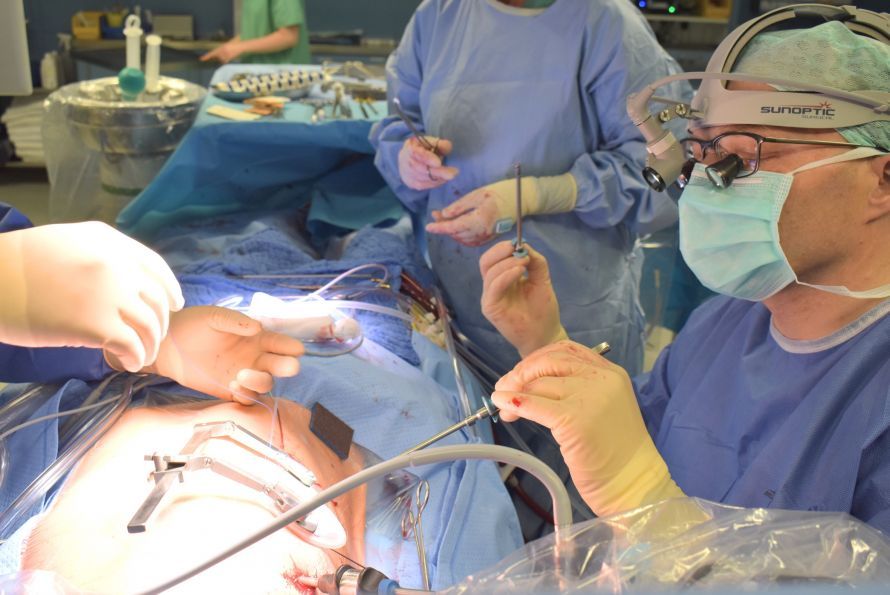
Sustainability Matters for the Heart, Too
Human natural tissue is always the better choice, especially when it comes to treating heart valve diseases. It is part of Prof. Dr. Albert’s philosophy to preserve the heart’s biological and natural structures rather than using prostheses. “Prostheses are always inferior to natural tissue and can cause side effects,” explains Prof. Dr. Albert, adding: “At the Dortmund Heart Clinic, for example, heart valves are ideally repaired. This is successful in nearly 100% of all cases, especially for mitral and tricuspid valve insufficiencies. And in nearly 100% of these cases, the procedure is naturally minimally invasive.”
Help Even in the Final Stages of Heart Disease
Prof. Albert and his team also seek solutions for patients whose heart function has become so weak that neither medication nor conventional procedures can help. For example, he implants mechanical cardiac assist devices such as the Heartmate III LVAD or performs total heart replacement using Syncardia here in Dortmund as well. “However, we always try first to avoid these invasive therapies, which are intended as a bridge to heart transplantation or as a permanent solution. All options are always discussed within our interdisciplinary team, and we have our own outpatient clinic for patients with heart failure. We are open to innovative methods. For example, together with the cardiologists, we recently succeeded in restoring the shape of a deformed heart with advanced heart failure—without using a heart-lung machine—using a novel procedure (Revivent ventricular plasty) involving wires. “This means we sutured the diseased areas on the beating heart, thereby sparing the patient the need for an artificial heart,” recalls Prof. Dr. Albert with well-deserved pride.
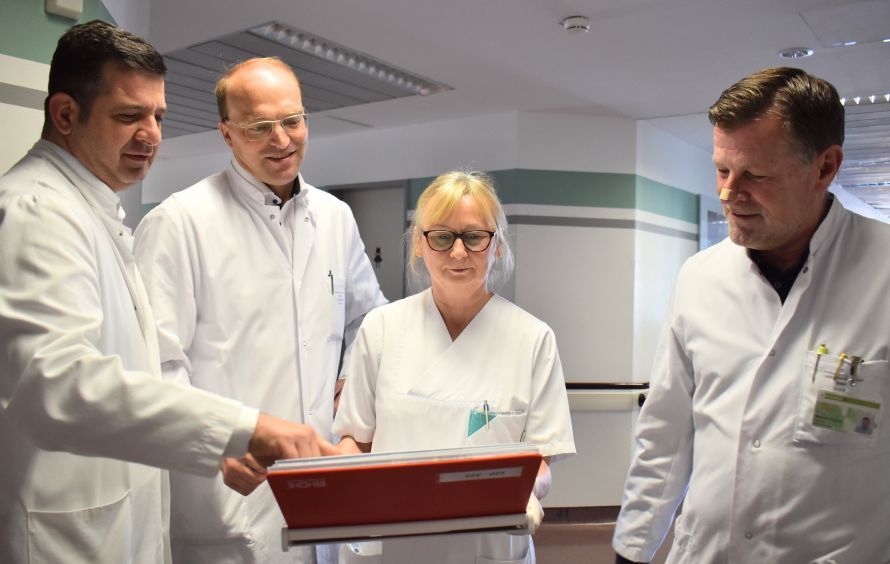
Dortmund Mobile ECMO Team
When heart failure occurs suddenly, swift action is always required. Sometimes a patient suffers a sudden cardiovascular collapse that can no longer be resolved using the conventional means available at a standard hospital; in which case transport to a larger cardiac center is usually no longer possible due to the shock that has already set in, or the chance of survival is very low. Cardiac arrest is imminent, and organ failure begins.
Together with the Dortmund Emergency Medical Service, Prof. Dr. Albert founded the so-called “Dortmund Mobile ECMO Team.” ECMO stands for Extracorporeal Membrane Oxygenation, which refers to an intensive care technique in which a machine takes over the patient’s respiratory and/or cardiac function. This innovative service saves lives. “Approximately 40% of affected patients have survived without subsequent complications thanks to this 24-hour service,” emphasizes Prof. Dr. Albert, who has published his experiences with “extracorporeal life support” in high-impact journals. So, for example, if a patient suffers acute cardiovascular failure at home and the ECMO team is alerted, a cardiac surgeon, accompanied by a cardiac technician, immediately drives directly to the patient’s location in a car equipped with a mobile heart-lung machine. Because only if action can be taken quickly is there a chance of survival. “Thanks to the mobile interventions performed on-site to stabilize the patient, we’ve gained ‘bridge-to-decision’ time, which allows us to then initiate the appropriate therapies in the hospital. Upon arrival at the Heart Center, everything is already prepared for the patient,” explains Prof. Dr. Albert.
The team led by Prof. Dr. Albert offers an exceptionally broad range of services by international standards, enabling them to provide each patient with an individually tailored, personalized treatment plan. The team possesses outstanding expertise in minimally invasive bypass and heart valve therapy, complex aortic and aortic valve surgery (endocarditis surgeries, Ross procedures), and mechanical cardiac support using artificial hearts. The management of defective pacemaker leads or the removal of infected ones is also a challenging procedure, but it is performed successfully and with care in Dortmund.
Vision with a Heart
Professor Dr. Albert stands out not only for his immense expertise in the field of cardiac surgery. He is also endowed with what may be an innate, artistically inclined dexterity. Whether this has to do with growing up in a family of artists—his father was a music professor—remains to be seen… The prudence that always characterizes Prof. Dr. Albert is also evident in his unconventional and personal decisions. He recounts the story of a patient with a serious heart condition. “The patient weighed 180 kg and has diabetes. That’s a lot. He had been trying to lose weight for a long time, but he never got below 160 kg. With that much excess weight, bypass surgery doesn’t make sense in the long run. So, together with the bariatric surgeons, we performed a minimally invasive bypass surgery and, during the same hospital stay, a gastric reduction. Just three weeks after the procedure, he weighed 140 kg—already 20 kg less—and no longer needed insulin. “Being overweight and having diabetes always pose an additional risk for heart patients,” explains Prof. Dr. Albert, who literally has a heart for his patients and always focuses on further progress. The meticulousness he brings to cardiac surgery sets him apart. “As the head of the department, you have a lot of leeway,” he says, laughing, and is already on his way to his next appointment.
Professor Dr. Albert, thank you very much for this interesting conversation and the deeper insight into the fascinating world of cardiac surgery!
Albert A et al. (eds.) Operative Techniques in Coronary Artery Bypass Surgery – An Illustrated Guide to Personalized Therapy, Springer International, London
ISBN: 978-3-030-48496-5
To be published in fall 2020
Share this article
Clinic of Dortmund gGmbH - Clinic for Heart Surgery
ProfileExpert Interviews
Read next
- Expert interview
Expert interview with Professor Dr Elmar Herbst, PhD
Oct 15, 2026
Patient-centred and personalised knee surgery
Read more - Expert interview
Cardiogeriatrics: Significance and benefits in the context of hospital reform
Sep 21, 2026
Cardiogeriatrics: Significance and benefits in the context of hospital reform
Read more - Expert interview
Expert Interview with Professor Dr. Amadeus Hornemann, MPH
Sep 18, 2026
Prof. Amadeus Hornemann on Precision Medicine in Gynecology: Modern Surgery, New Techniques, Better Quality of Life
Read more