Expert Interviews
The Fascinating World of Hormones: An Interview with Dr. Saada

Alexandra Pfitzmann ·
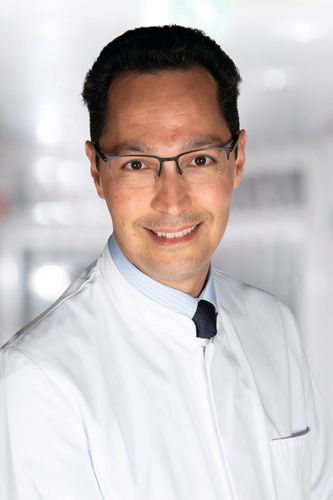
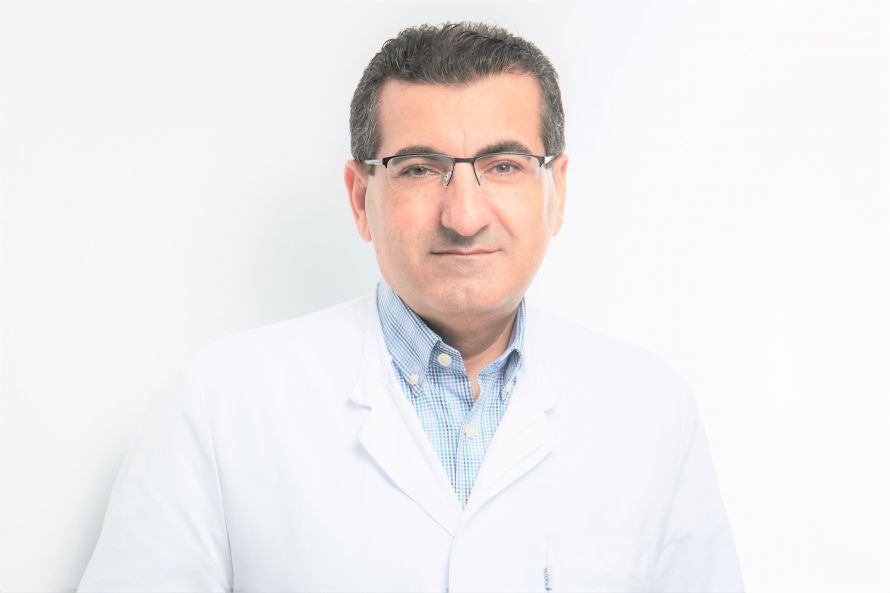
Dr. George Saada, M.D., is exactly the right specialist when it comes to hormones, metabolism, and the thyroid gland. So anyone dealing with tumors or recurrent cancer—including in the parathyroid glands—can confidently rely on the extensive expertise of this renowned specialist at the Stadt Soest Hospital and his surgical skill. As an experienced visceral surgeon, Dr. George Saada is familiar with all types of surgeries throughout the abdominal cavity—whether involving the stomach, abdominal wall, liver, pancreas, adrenal glands, spleen, intestines, or esophagus. However, one area clearly stands out as the focus of Dr. Saada’s work: endocrinology, which fascinates him in all its facets.
Endocrinology? What exactly is that? To better understand this, it’s worth taking a look at the word’s Greek etymology. Endocrinology comes from Ancient Greek: ἔνδον (endon), “inside,” and κρίνειν (krinein), “to secrete, to release”—it is thus the “study of the morphology and function of glands with internal secretion (endocrine glands) and of hormones.” Endocrine glands are those that release their secretions inward—that is, directly into the bloodstream—and, unlike exocrine glands such as salivary or sebaceous glands, do not have an excretory duct.
Hyper and Hypo: Hyperthyroidism and Hypothyroidism
Hormones are chemical messengers that determine a person’s rhythm and cycle. They regulate, for example, breathing, metabolism, salt and water balance, sexual functions, and pregnancy. Many people are affected by hormonal fluctuations and changes, for example during menopause; some experience unusual weight loss or gain.
However, a genetically caused condition is also possible. “Patients with overt hyperthyroidism lose weight unintentionally. This leads to an increase in basal metabolic rate, accompanied by a decrease in fat mass, eventually muscle wasting, and ultimately a reduction in bone mass, leading to osteoporosis,” Dr. Saada begins his explanation of the topic. “Being overweight can often be a symptom of hypothyroidism. The main cause of weight gain in hypothyroidism is a slowed metabolism due to a lack of hormones. The body requires less energy—that is, fewer calories. If a person continues to eat the same amount as before the condition developed, this excess energy is not utilized. It is then stored as fat, which leads to weight gain and, not infrequently, to being overweight,” explains the specialist.
One might conclude from this that an underactive thyroid always causes weight gain. However, that is not the case, Dr. Saada clarifies: “Studies have shown that in patients with overt hypothyroidism, the administration of thyroid hormones initially led to the elimination of excess water. However, fat mass remained more or less unchanged. In overweight children, it has been shown that the hormones TSH (thyroid-stimulating hormone) and free T3 (triiodothyronine) also rise in proportion to the increase in BMI, the so-called body mass index. The hormone T4 (thyroxine) remains the same. It is therefore being debated whether an increase in fat mass also leads to thyroid hormone resistance, similar to insulin resistance in patients with diabetes.”
Fortunately, thyroid function can often be managed with medication alone, so that levels at least stabilize. But it doesn’t stop there—the patient has to put in a little effort. “Once thyroid function has normalized—which is achieved by administering L-thyroxine in adequate doses—effective weight-loss measures such as diet and exercise can begin to take effect. That’s why you should wait until your thyroid levels have normalized—which usually takes four to six weeks—before starting these measures; otherwise, you’ll just end up frustrated before you even begin,” Dr. Saada advises his patients.
When the thyroid gland must be removed …
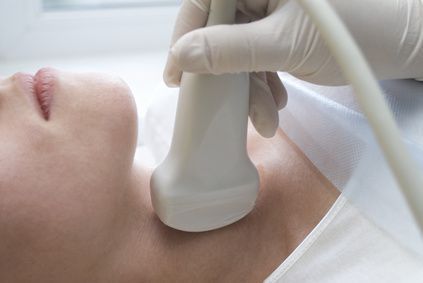
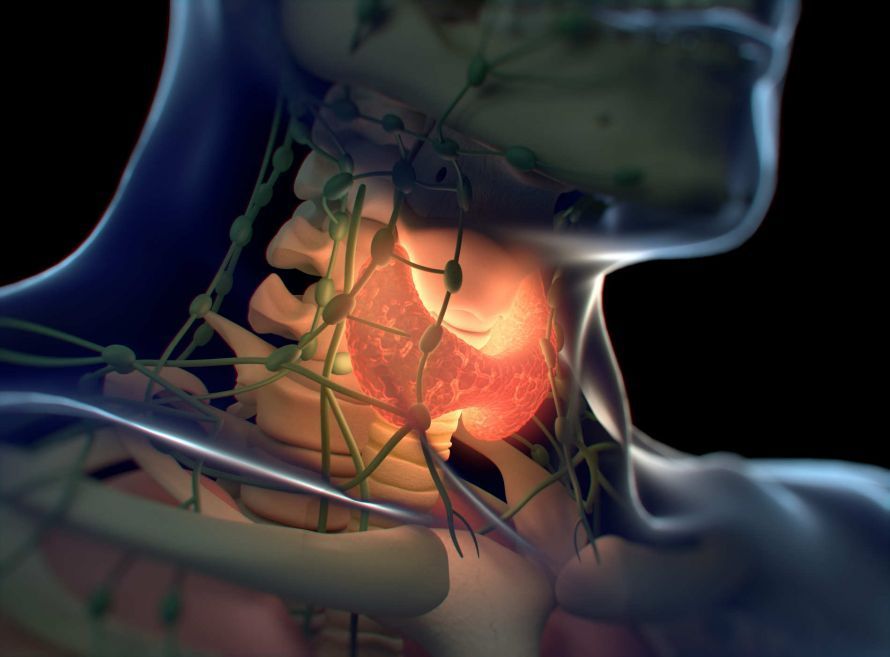
Unfortunately, there are also thyroid conditions for which complete removal is the only option. This is the case, for example, with nodular changes in the thyroid, so-called “cold nodules,” which can be malignant—when a malignant thyroid condition is suspected or when a malignant thyroid tumor has been confirmed. Even in cases of hyperthyroidism—such as with an autonomous adenoma or Graves’ disease—where medication is no longer effective or radioiodine therapy is not feasible or not desired, complete removal is often the only solution.
One special case, however, is what is known as a thyrotoxic crisis. This refers to a life-threatening exacerbation of hyperthyroidism. If the thyroid gland is significantly enlarged and is compressing neighboring organs, surgery is also necessary: this can lead to difficulty swallowing or breathing, as well as a feeling of pressure or tightness in the throat.
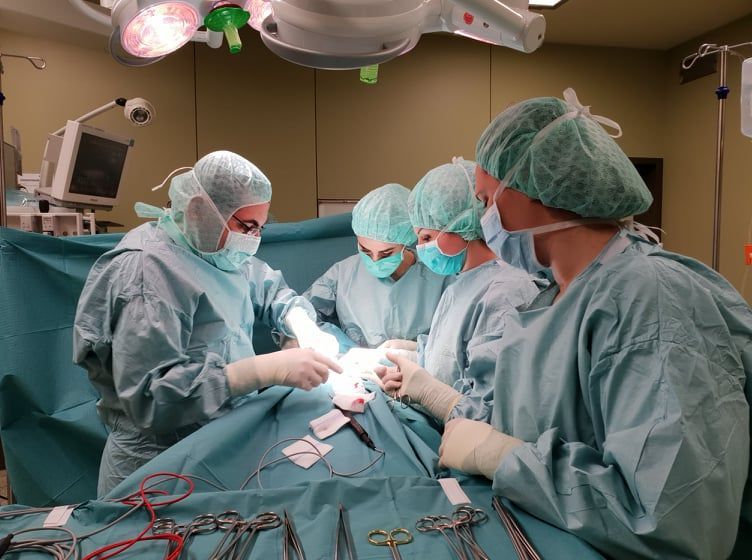
Dr. Saada first explains the preparatory steps for surgery: “After appropriate preoperative preparation, patients are admitted to the hospital on the day of the operation. The incision in the lower neck—the cervical incision—is marked while the patient is standing. The surgery, which can take one to two hours, is performed under general anesthesia. After exposing the entire organ, the diseased tissue is removed on one side or both sides. In doing so, I take great care to preserve the vocal cord nerves and the parathyroid glands.”
Dr. Saada explains the rest of the procedure in the operating room step by step: “To minimize complications as much as possible, I use fine instruments, magnifying glasses, and a special neuro-monitoring device. This device is used to monitor and check the function of the vocal cord nerves throughout the entire operation. Because of the precise dissection, bleeding during the operation is minimal, and a transfusion of donor or autologous blood is not necessary. The wound is closed with a self-dissolving suture that does not need to be removed.”
The recovery process is generally quick, which is encouraging. Patients are allowed to eat and drink again on the very day of the surgery. “On the first day after surgery, a blood sample is taken to check calcium levels, and an ENT specialist examines vocal cord function. One to three days after surgery, following a final consultation regarding the histological findings, patients can be discharged home,” says Dr. Saada, describing the postoperative course.
“How much thyroid tissue needs to be removed depends on the specific condition. The extent of the surgery can therefore range from the partial removal of a thyroid lobe to the complete resection of the entire thyroid gland. In general, an extensive surgery is necessary if malignancy is suspected. In some cases, the pathologist examines the removed tissue for malignancy during the surgery using a frozen-section analysis,” adds Dr. Saada.
If the thyroid gland is removed, a replacement is needed
Of course, thyroid function must be replaced in the event of a total or partial removal. “After a complete bilateral removal of the thyroid or if the remaining parenchyma—that is, cells of the connective tissue—is less than two milliliters, we recommend replacement therapy with the medication L-thyroxine. The dosage depends on body weight, and the medication is taken daily early in the morning on an empty stomach,” explains Dr. Saada, continuing: “Following unilateral thyroidectomy and residual parenchyma of less than eight to ten milliliters, we recommend replacement and growth-inhibiting therapy with Thyronajod, a combination of levothyroxine sodium and potassium iodide. The dosage is also adjusted according to body weight. Following a sparing resection of the thyroid or when residual parenchyma exceeds ten milliliters, therapy with iodide alone to inhibit growth is generally recommended. Here, too, the dosage is adjusted according to body weight.”
It is recommended to have an initial laboratory follow-up six weeks after surgery. During this visit, the patient’s metabolic status is assessed in order to adjust the dosage of the replacement hormones accordingly. Subsequent hormone checks should take place at three-month intervals during the first year after surgery.
Cause of Hyperthyroidism: Graves’ Disease
The autoimmune disease Graves’ disease causes hyperthyroidism. This means that antibodies are produced that target the thyroid cells. These antibodies are therefore also called autoantibodies, since they are directed against the body’s own cells. Symptoms include weight loss, rapid heartbeat or arrhythmia, insomnia, and general nervousness. At the same time, eye problems and the formation of a goiter may occur. In some patients, there is also a visible change in the area around the eyes. If you think of the famous comedian Marty Feldman, for example, you might picture his strikingly protruding eyes.
Fortunately, Graves’ disease responds well to medication. “In general, when treating hyperthyroidism, a conservative approach using antithyroid medications is often recommended and preferred over surgery or radioiodine therapy for a period of twelve to about eighteen months,” explains Dr. Saada, sharing his experience.
“Thionamides are most commonly used; they inhibit thyroid peroxidase and, consequently, thyroid hormone synthesis. Thyroid peroxidase is important for the production of thyroid hormones, as it controls the oxidative iodination of tyrosine residues in thyroglobulin. The therapeutic effect of thyrostatic agents—also known as thyroid blockers—does not occur until the body has broken down the hormones, with a latency period of at least six to eight days. An initial laboratory assessment of thyroid function parameters, with a possible dose adjustment of the antithyroid drugs, should take place approximately two weeks after the start of therapy. The intervals between subsequent laboratory assessments depend on the therapeutic effect and the course of treatment. “Once euthyroidism—that is, normal thyroid function—has been achieved, the maintenance dose should be gradually reduced,” says Dr. Saada, describing the not-quite-so-simple course of treatment.
Graves’ disease is the most common cause of hyperthyroidism worldwide; it primarily affects middle-aged people, with women being diagnosed significantly more often than men.
Unfortunately, side effects are often unavoidable
“In addition to allergic skin reactions, changes in liver function and blood counts are also observed. Therefore, liver function tests and blood counts should be routinely monitored during metabolic checkups. Due to their significant potential for side effects, thyrostatic agents are only suitable for long-term therapy to a limited extent. In cases of cardiac reactions such as tachycardia or arrhythmias—and especially in patients with relevant risk factors and pre-existing conditions—additional treatment with beta-blockers is recommended,” says Dr. Saada, highlighting the specific considerations in treatment.
This is because, following drug therapy, symptoms of Graves’ disease spontaneously subside in up to half of all cases. Dr. Saada makes a distinction regarding the prognosis for a cure: “In cases of large Graves’ goiters exceeding forty milliliters, a high level of TSH receptor antibodies —the so-called TRAK levels, which occur in young patients up to about twenty years of age and in smokers—the likelihood of a long-term remission is low. Therefore, in such cases, the question of early definitive treatment arises. This is generally indicated even in cases of intolerance to thyrostatic therapy, severe side effects, and recurrent hyperthyroidism that can no longer be treated with conventional methods. Ablative therapy is performed through surgery or radioiodine therapy. When performed correctly, both radioiodine therapy and surgery are highly effective.”

Another unique condition in the world of hormones: Cushing’s syndrome
Cushing’s syndrome, also known as hypercortisolism, is a condition characterized by a complex of various symptoms. What these symptoms have in common is that they are influenced by an excess of the hormone cortisol. Cortisol is produced in the adrenal cortex—it is known as a stress hormone that the body produces in high amounts, especially when a person is exposed to extreme stress. Typically, patients develop a “moon face” and a “buffalo hump” as symptoms. Susceptibility to infections increases, as does blood pressure, and muscle weakness and a constant feeling of thirst may occur.
Doctors refer to this as a “syndrome” when multiple symptoms are present at the same time.
“With Cushing’s syndrome, a distinction must be made between secondary and primary forms, with eighty percent of all patients suffering from secondary Cushing’s disease. The main symptoms of Cushing’s syndrome are: a red, rounded face, excessive fat accumulation in the abdominal area, high blood pressure, low testosterone levels, osteoporosis, muscle weakness, and hirsutism—which is the term for excessive hair growth,” Dr. Saada explains the main symptoms. There are 80 to 240 new cases per year in Germany, with women developing the condition about three times as often as men. The disease usually appears around the age of 40.
There are two different ways to diagnose Cushing’s syndrome. Dr. Saada mentions diagnosis through laboratory tests and through imaging—such as ultrasound, CT, and MRI of the adrenal glands, and, if necessary, a cranial MRI to rule out a tumor on the pituitary gland.
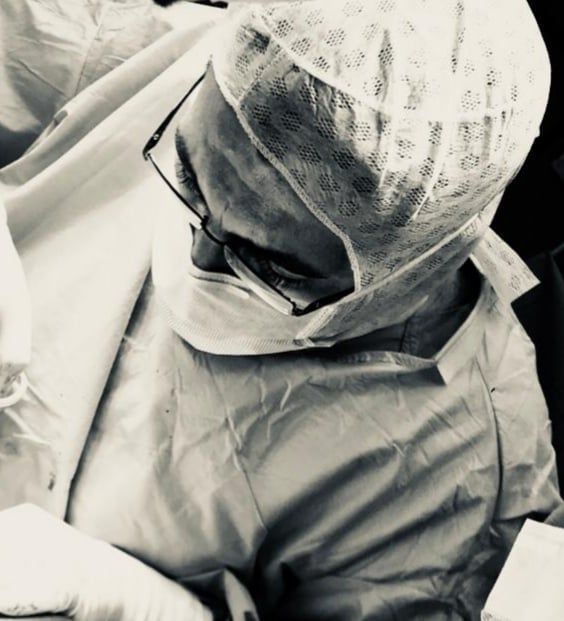
Surgery for Cushing’s syndrome is performed when the excessive cortisol secretion stems from an adrenal adenoma that produces cortisol—or from both adrenal glands. If an adrenal gland must be removed due to Cushing’s syndrome, medication with hydrocortisone is required. Following bilateral adrenalectomy—the surgical removal of both adrenal glands—additional fludrocortisone must be administered.
Hormones are therefore vital for our bodies. Thank you very much, Dr. Saada, for the interview and the insight into the various treatment options for this condition. It’s encouraging and very informative!
Share this article
About the medical author
Alexandra Pfitzmann
Editor
Alexandra Pfitzmann – medical author: expert knowledge, professional articles and medical insights in the Leading Medicine Guide.
More about the medical author →Expert Interviews
Read next
- Expert interview
Cardiogeriatrics: Significance and benefits in the context of hospital reform
Sep 21, 2026
Cardiogeriatrics: Significance and benefits in the context of hospital reform
Read more - Expert interview
Expert Interview with Professor Dr. Amadeus Hornemann, MPH
Sep 18, 2026
Prof. Amadeus Hornemann on Precision Medicine in Gynecology: Modern Surgery, New Techniques, Better Quality of Life
Read more - Expert interview
Expert Interview with Professor Dr. Konstantinos Anagnostakos
Sep 15, 2026
Prof. Anagnostakos on Painful Knee Replacements
Read more