Expert Interviews
The Marvel of the Knee: Dr. Alfred Tylla on Our Largest Joint

Alexandra Pfitzmann ·
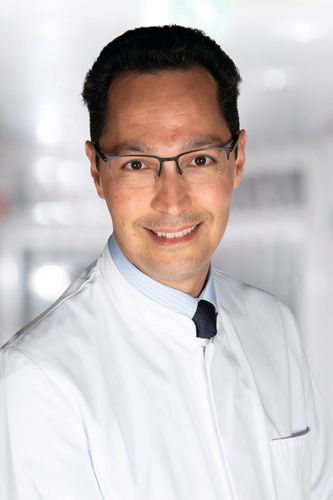
As the largest joint in our body, the knee has to withstand a great deal. After all, our entire body weight rests on the complex structure of the knee, where numerous ligaments, tendons, and bones come together. To be precise, the knee has to bear about four times our body weight—and if we stumble, it can even be eight times as much! In order for us to walk, run, and turn properly, the individual components of the knee must work together like clockwork. If one component fails or is compromised, it immediately causes pain—and our mobility is restricted. Knee specialist Dr. Alfred Tylla explains exactly what happens in this expert interview. As Senior Attending Physician of the Knee Section at Rummelsburg Hospital, Dr. Tylla has dedicated himself entirely to the knee joint—and is jointly responsible for the outstanding reputation that the Knee Center enjoys far beyond the region. In fact, in 2019, it became the first specialized clinic in the entire Nuremberg metropolitan region to be certified by the German Knee Society.

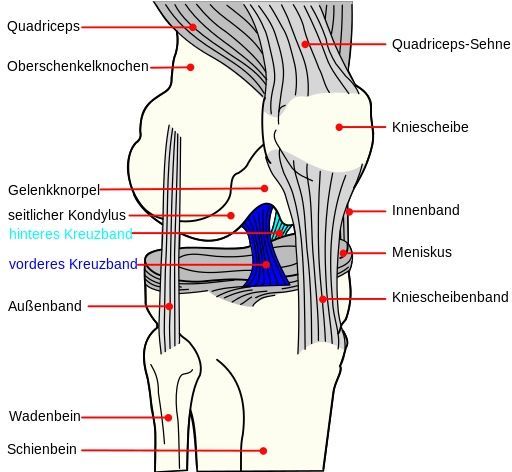
To ensure that everything in the knee runs like clockwork—in the truest sense of the word—there must be effective coordination between the patella, cruciate ligaments, lateral ligaments, medial ligaments, and the meniscus, which acts like a shock absorber to cushion and dampen all the movements we make. Unfortunately, meniscus injuries are quite common. While athletes are often affected—for example, when they make an incorrect twisting motion while playing tennis—the meniscus is also quite vulnerable in everyday life.
“The meniscus works like a shock absorber in a car,” Dr. Tylla begins our conversation and explains: “If it’s damaged, it can lead to severe pain, impair mobility, and cause the joint to swell. If left untreated, the damage will eventually lead to osteoarthritis, which cannot be cured but can only be managed.”
Osteoarthritis is a degenerative disease in which the joint cartilage gradually wears away. This wear and tear is accelerated by a lack of exercise, since the synovial fluid necessary for smooth joint movement is only pumped through the cartilage when the joint is used. Without synovial fluid, bone eventually rubs against bone.
These days, sports are also becoming increasingly extreme. “Faster, farther, higher” is the motto for many athletes. “Unfortunately, people repeatedly underestimate just how much strain is placed on their knees. Those who go skiing in the winter often haven’t really trained at all throughout the year. The muscles around the knee aren’t as strong as they need to be for skiing. People often simply don’t prepare adequately, and then it doesn’t take much—a single careless movement—for the meniscus to be damaged, resulting in a tear, or even a complete tear.” “As a rule, the meniscus is injured during a rapid twisting motion because, during such movements, it gets caught between the joint surfaces and can tear or even rupture completely,” explains Dr. Tylla, describing the problem of overexertion.
Each knee has a meniscus, a crescent-shaped piece of articular cartilage located between the joint surfaces of the thigh bone (femur) and the shinbone (tibia). It is divided into an outer and an inner meniscus. Menisci consist of ninety percent collagen fibers, which can absorb shear and tensile forces. Squats, for example, place significant tensile stress on the meniscus.
Meniscus damage does not always require surgical treatment
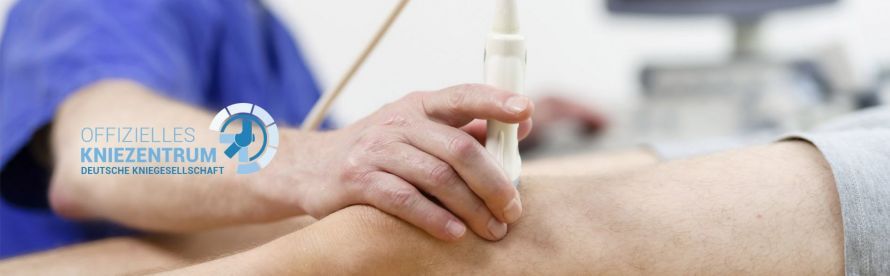
“If someone comes to me with severe knee pain, the first step is to determine whether something acute has happened, such as a fall. An MRI ultimately provides a clear picture. Conservative treatment involves icing the knee, resting it, and elevating it. Then we move on to building muscle strength. Stable thigh muscles are extremely important for the meniscus, so they are strengthened with targeted exercises,” says Dr. Tylla, describing the possibility of conservative treatment.
Age also plays a major role in deciding whether surgery is necessary or not. “For younger people who are still very active, it usually makes sense to suture the meniscus. This can generally be done arthroscopically. To do this, I make two small incisions on the inner and outer sides of the knee joint to then suture the meniscus back together. The suturing techniques used here are well-established, and the entire procedure takes between half an hour and an hour. Only tiny scars remain, and the patient is back on their feet more quickly due to the short wound healing time,” says Dr. Tylla, describing the surgery.
Like cartilage, the meniscus has no nerve fibers, so a meniscus tear or rupture does not cause pain in and of itself. Pain occurs when torn pieces become trapped in the joint, causing the joint capsule to stretch.
If the meniscus injury occurred some time ago and the patient only begins to experience limited mobility and pain later on, then only the frayed or torn parts of the meniscus are removed during surgery. Only the absolute minimum is removed, as otherwise the risk of developing osteoarthritis later on increases. “I want to emphasize that before any surgical procedure, we carefully assess whether the surgery is actually necessary and makes sense. Conservative treatment is always considered first,” explains Dr. Tylla.
“Of course, there are also implants that can be used, but this is usually only done for young patients. That’s because the bureaucratic hurdles for this are very high in Germany. Some companies no longer offer their implant systems because their CE certification has expired,” the knee specialist explains, highlighting the difficulties with implants.
As a preventive measure, everyone can do something to strengthen their knees
“Most people are too gentle on their knees. Many knee surgeries could be avoided if people were more active and exercised. After all, only through movement is blood circulation stimulated. Many of my patients suffer from functional instability of the knee and, in some cases, are no longer able to perform simple squats. Of course, you shouldn’t overdo it with sports or overestimate your abilities. This can lead to improper strain—that is, when exercises aren’t performed correctly and with proper form—which in turn damages the knee. It’s a good idea to consult a fitness trainer at the beginning, for example, if you’ve decided to join a gym. “But healthy knee muscles generally improve stability and prevent injuries,” Dr. Tylla advises his patients.
Problems Caused by Bowlegs and Knock-Knees
Knees are also quickly affected when there is a bow-legged or knock-kneed misalignment. This is often caused by genetic predisposition. “However, such a misalignment can also result from trauma—for example, if a leg injury did not heal properly,” explains Dr. Tylla. A misalignment of the legs places a particularly high strain on the knee.
“With bowlegs, there is constant inward pressure on the meniscus, causing it to wear down more quickly. With knock-knees, the opposite is true. Here, the pressure is on the outer side of the meniscus.” Bowlegs are more common than knock-knees and can be corrected through a minimally invasive surgery known as a corrective osteotomy. The entire axis of the leg can be surgically realigned in a minimally invasive procedure that takes no longer than 45 minutes. Unlike in the past, the legs are no longer broken during surgical correction but are instead bent, which allows for faster healing. The straightened leg is fixed in place with a titanium plate. The goal is for bone tissue to regrow. The patient is usually back on their feet after four to six weeks and can put full weight on the leg. After the surgery, the patient receives a motion splint and must be prepared to only bear partial weight on the leg for the next three to four weeks. After about six weeks, another three weeks of rehabilitation or physical therapy should follow, and nine weeks after the procedure, the patient will be able to walk normally again,” explains Dr. Tylla.
Orthoses are used in the conservative treatment of bowlegs or knock-knees
“The orthoses then push the legs into the desired position. This is done over a period of about ten to twelve weeks. A simulation is then used to check whether the treatment was successful or not. If the patient benefits from this form of therapy, realigning the leg is also a sensible treatment option,” says Dr. Tylla. Naturally, the chances of correcting the leg alignment using orthoses decrease the more severe the misalignment is. Of course, a certain amount of patience is also required. However, these options should be exhausted before deciding on surgical correction.
The high quality of care in knee surgery at the certified Knee Center at Rummelsburg Hospital is evident in sports orthopedics, traumatology, and osteotomy. Anyone undergoing knee surgery here can rest assured: At the Rummelsburg Clinic for Trauma Surgery, the minimum requirements are not only met but significantly exceeded, with at least six hundred complex, high-quality procedures performed annually.
“For the future, I hope we can improve cartilage regeneration so that surgery can be avoided with certainty. Healing with stem cells should also be optimized,” Dr. Tylla explains at the end of our conversation.
Thank you very much, Dr. Tylla, for this informative conversation! You can contact our expert directly via his profile page on the Leading Medicine Guide.
Share this article
About the medical author
Alexandra Pfitzmann
Editor
Alexandra Pfitzmann – medical author: expert knowledge, professional articles and medical insights in the Leading Medicine Guide.
More about the medical author →Expert Interviews
Read next
- Expert interview
Cardiogeriatrics: Significance and benefits in the context of hospital reform
Sep 21, 2026
Cardiogeriatrics: Significance and benefits in the context of hospital reform
Read more - Expert interview
Expert Interview with Professor Dr. Amadeus Hornemann, MPH
Sep 18, 2026
Prof. Amadeus Hornemann on Precision Medicine in Gynecology: Modern Surgery, New Techniques, Better Quality of Life
Read more - Expert interview
Expert Interview with Professor Dr. Konstantinos Anagnostakos
Sep 15, 2026
Prof. Anagnostakos on Painful Knee Replacements
Read more