Expert Interviews
The Marvel of the Knee: Dr. De Rosa Offers Insights

Alexandra Pfitzmann ·
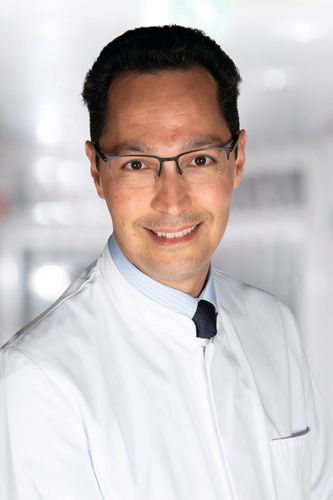
As the largest joint in the human body, the knee has to withstand a great deal of stress. It is heavily strained during all the movements we perform every day. In the process, synovial fluid is produced in the knee, which supplies nutrients to the articular cartilage and acts to reduce friction and absorb shock within the joint. Adequate muscle strength is also important for stabilizing the knee, as it relieves pressure on the joints and protects them from overuse or improper loading. If signs of wear and tear appear in the knee and it no longer functions properly, it is essential to consult a qualified specialist—such as Dr. Giovanni De Rosa, who has already performed well over 500 highly complex surgeries at Sana Hospital in Düsseldorf. The Leading Medicine Guide spoke with this accomplished specialist in orthopedics and trauma surgery, who, as a certified knee surgeon with the German Knee Society (Deutsche Kniegesellschaft e.V.), has made a name for himself far beyond the region. In this expert interview, he sheds light on fascinating details about the knee, its treatment options—and the quality of rehabilitation measures.
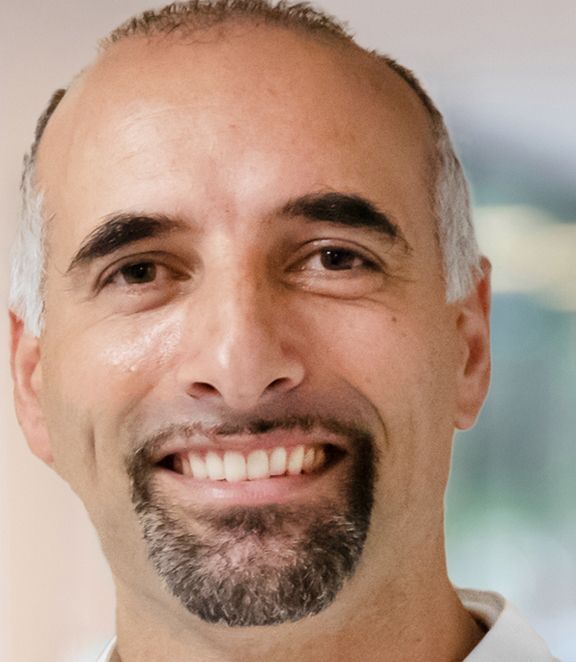
Signs of wear and tear due to the aging process are completely normal. As a result, the knee also loses stability, since the cartilage in the knee gradually breaks down over the course of our lives. This form of wear and tear is known as knee osteoarthritis, also called gonarthrosis, and is often exacerbated by misalignment, such as bowlegs or knock-knees. In such cases, the cartilage wears down on one side. “There are many causes of knee joint wear and tear. The natural wear and tear of the cartilage over the course of a lifetime is due to the abrasive effects of the articulating joint surfaces, similar to a car tire that wears down through constant contact with the asphalt and loses its tread depth over time. For some people, this happens sooner; for others, later. Genetic factors play a decisive role in this,” Dr. De Rosa begins our conversation.
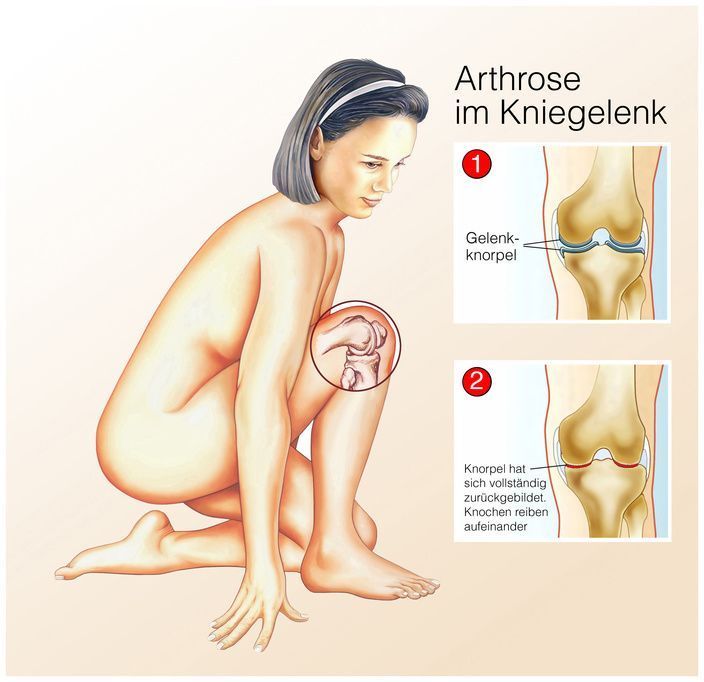
Knee osteoarthritis—a rather painful condition
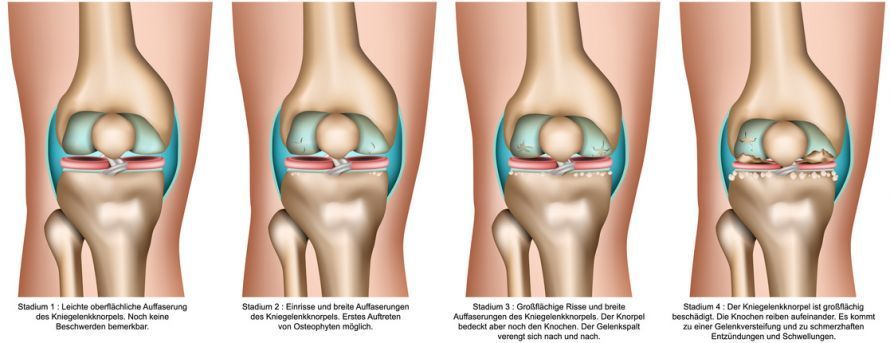
“Unfortunately, by the time the first symptoms of pain appear, the progression of osteoarthritis is already well underway. This is because cartilage itself has no nerve cells. It’s only once bone remodeling has already taken place that you notice you’re having more and more trouble walking and that climbing stairs is difficult. When osteoarthritis is already very advanced, nighttime pain sets in even at rest,” explains Dr. De Rosa, describing the progression of the disease. Some people notice their knee crunching and cracking from time to time. “I don’t generally read too much into that, since many younger people with healthy knee joints also report such phenomena,” comments Dr. De Rosa, “but when osteoarthritis is truly very advanced, you can indeed hear a distinct cracking or grinding sound.”
Many people with knee osteoarthritis have hyaluronic acid injected into the joint to provide more lubrication. However, this should be viewed with a critical eye. Health insurance companies, for example, do not cover this type of treatment because it is not recognized due to a lack of scientific evidence. One injection then costs the patient between 80 and 100 euros. “There is also always a risk of bacterial contamination when injecting into the knee. This should not be underestimated, as the consequences for those affected can be protracted and severe,” warns Dr. De Rosa. Ultimately, hyaluronic acid can, at best, only provide short-term relief; it does not cure osteoarthritis.
Osteoarthritis is a progressive condition that gets worse over time
Dr. Giovanni De Rosa continuously pursues continuing medical education to provide his patients with the best possible care. For example, in cases of damage to the articular cartilage, he uses a new form of cartilage transplantation called AutoCart™ when necessary. “In this procedure, the patient’s own tissue is removed from the knee on the operating table using a minimally invasive technique with a so-called shaver—a medical instrument designed to remove fine soft tissue or cartilage. This cartilage is cut into tiny pieces using the so-called cartilage chip technique. Blood is then drawn from the patient and placed in a centrifuge to generate plasma. The collected plasma is then mixed with the harvested tissue—the cartilage chips—resulting in a sticky, paste-like mass that is subsequently implanted back into the patient’s damaged knee. As a result, healthy cartilage cells form from the transplanted cartilage chips in the treated areas of the knee. The filled-in former cartilage defects are stable enough to allow the knee joint to once again withstand the desired level of stress. “The procedure using the body’s own tissue is characterized by particularly good tolerability,” says Dr. De Rosa, describing this still relatively new treatment method, which unfortunately cannot be used for all patients. “This form of cartilage transplantation is only possible for limited cartilage defects. If the cartilage is missing over a large area, then it doesn’t work,” the knee specialist laments. The major advantage of this cartilage transplantation is that the entire procedure can be performed in a single operation, which typically takes only thirty minutes.
 © bilderzwerg / Fotolia
If a cartilage transplant isn’t possible, a knee replacement can help
There is a wide range of different knee replacements available. “The type of prosthesis chosen for the patient is determined on a case-by-case basis. The technical differences are immense. The cause of the cartilage degeneration must also always be taken into account—whether it’s due to wear and tear, a past accident, or, for example, a deformity in the lower leg or thigh,” says Dr. De Rosa. The bicondylar surface-replacement prosthesis is the most commonly implanted knee prosthesis. In this procedure, the knee-facing articular surfaces of the femur and the articular surface of the tibial plateau are covered with a surface replacement. The back of the patella can also be replaced. “The prerequisite for this type of prosthesis is that the medial and lateral ligaments of the knee joint are intact. This is because they must then take over the guidance of the artificial knee joint,” explains Dr. De Rosa.
Another type of prosthesis is the medial or lateral sled prosthesis, a unilateral knee prosthesis for partial joint replacement on the inner or outer side of the knee. This means that only the affected sections of the joint are replaced, and the majority of the knee joint is preserved. “Many criteria must be met for this type of prosthesis. Stability factors play a major role here,” explains Dr. De Rosa. Compared to a total knee replacement, sled prostheses usually offer better mobility and give the patient a more natural feeling in the knee. The surgery is also less invasive because the cruciate ligament structures and the healthy parts of the joint are preserved.
The Surgery—Planning and Procedure
“Before I enter the operating room, I already know exactly what needs to be done, since every step is specified in the preoperative imaging. Nevertheless, you have to be prepared for anything during the surgery, since you might discover, for example, that the posterior cruciate ligament is also torn or unstable—something that isn’t always apparent beforehand,” emphasizes Dr. De Rosa. The duration of the procedures varies. For conventional total knee replacements, the surgery typically takes one hour. The implantation of a sled prosthesis also usually does not exceed one hour. “If a revision prosthesis is to be implanted—that is, replacing an old prosthesis with a new one—then two to three hours must be scheduled in the operating room, as this is a more complex procedure. Such a replacement surgery is performed when a prosthesis becomes loose or simply wears out, which can happen after about ten to fifteen years,” explains Dr. De Rosa, adding: “The loosening of a prosthesis can, for example, have a purely mechanical cause. It is usually implanted using bone cement, which is initially very stable, but over time, mechanical loosening can occur at the interfaces between the bone and the cement. Even if a patient falls, for example, the prosthesis can be damaged, or if infections occur—such as from bacteria that enter the knee joint during surgery, during wound healing, or systemically via the bloodstream.”
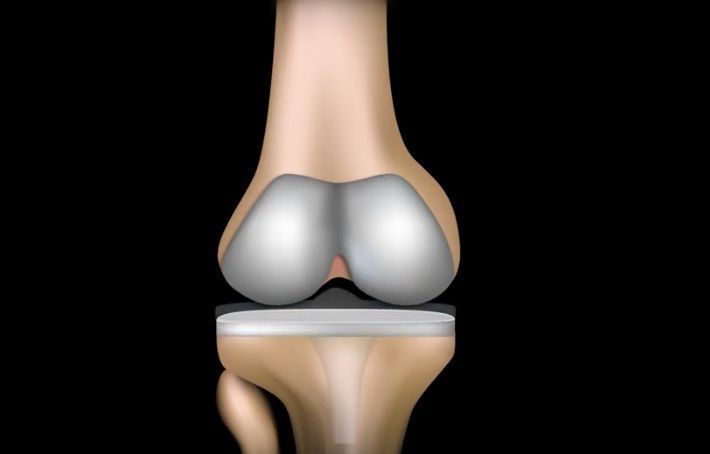
Fortunately, the length of hospital stay following knee replacement surgery is becoming shorter and shorter
“Of course, this also varies from person to person. A young person in their mid-twenties will naturally recover faster than an 89-year-old patient, who simply needs more time to be able to walk safely with the prosthesis. Generally speaking, our patients at the Sana Clinic should expect a hospital stay of about six days. On the day of the surgery, we allow the patient as much rest as possible so they can recover from the procedure. It is not until the second day that a physical therapist arrives to assist the patient with their first steps using the artificial joint and to fit a motion splint that passively and repeatedly moves the knee through a predetermined range of motion. “Mobilization so soon after surgery is no problem at all, as the prosthesis’s extremely stable fixation technique allows for full weight-bearing on the operated leg, adjusted for pain,” says Dr. De Rosa, describing the initial period following the procedure.
Rehabilitation—whether outpatient or inpatient—is recommended following prosthetic implantation and typically lasts about three weeks. “However, I am often surprised and perplexed by the rehabilitation measures offered when my patients tell me about them. They often say that, in principle, not much was done there. The difference in quality seems to be enormous here, although there are, of course, very good and well-established rehabilitation clinics. Yet follow-up care is at least as important as the proper implantation of the prosthesis. Given the negative rehabilitation experiences reported by patients, seeing a trusted physical therapist would often have been the better choice,” notes Dr. De Rosa.
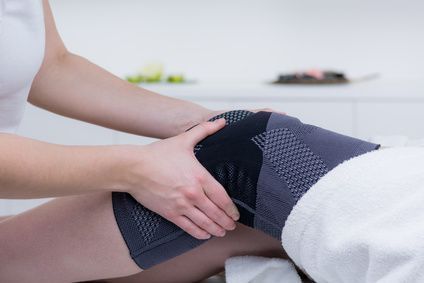
© Picture-Factory / Fotolia
“As good as prostheses are today—they’re still only an imitation of nature”
Anyone who has been very active in sports throughout their life naturally wonders whether this will still be possible with a prosthesis. “Those who want to can do it, and they’re usually in good shape. Many of my patients send me pictures from their vacations where I can see them hiking, skiing, or playing tennis. Sometimes, however, there are also reports of extreme sports, which make me cringe a little inside, since artificial joints aren’t actually designed for such excessive strain. But since a patient has their own ideas anyway—with or without medical advice—I’m ultimately at ease as long as things are going well for these patients too,” says Dr. De Rosa, pleased with the development.
Is there anything I can do preventatively to better protect my knee?
“Most people today lack a healthy body awareness. If you no longer understand that the body is a temple that should be cared for, then you’ll usually end up having problems one day. Unfortunately, people often put their own health on the back burner. Instead of getting enough exercise, eating a healthy diet, and living in harmony with oneself, smartphones or other distractions often seem to take precedence,” criticizes Dr. De Rosa, adding: “Of course, being overweight—which, unfortunately, many people suffer from, especially in our Western world—also plays a role when it comes to stress on the knee. Physically demanding jobs, such as those in nursing, naturally put more strain on the body than spending the whole day in a sedentary position.”
A knee functions well when the rest of the body is functioning well, too. Regular exercise or going to the gym definitely helps strengthen the muscles surrounding the knee. “Personally, I prefer to recommend holistic movement sequences, such as those found in yoga or Pilates; trampoline jumping also yields amazing results,” encourages Dr. De Rosa.
Further advances in joint replacement are still possible
Looking to the future, Dr. De Rosa remarks: “We now know a great deal at the molecular level, for example when it comes to the regeneration of cartilage tissue. But that’s still a long way off, and as a practicing physician, I probably won’t see these innovative procedures put into clinical use during my active career, since they’re still in the early stages,” Dr. De Rosa concludes our conversation.
Dr. De Rosa, thank you very much for these interesting and insightful perspectives on the marvel that is the knee!
Anyone wishing to contact our specialist directly can do so via his profile page on the Leading Medicine Guide.
Share this article
About the medical author
Alexandra Pfitzmann
Editor
Alexandra Pfitzmann – medical author: expert knowledge, professional articles and medical insights in the Leading Medicine Guide.
More about the medical author →Expert Interviews
Read next
- Expert interview
Cardiogeriatrics: Significance and benefits in the context of hospital reform
Sep 21, 2026
Cardiogeriatrics: Significance and benefits in the context of hospital reform
Read more - Expert interview
Expert Interview with Professor Dr. Amadeus Hornemann, MPH
Sep 18, 2026
Prof. Amadeus Hornemann on Precision Medicine in Gynecology: Modern Surgery, New Techniques, Better Quality of Life
Read more - Expert interview
Expert Interview with Professor Dr. Konstantinos Anagnostakos
Sep 15, 2026
Prof. Anagnostakos on Painful Knee Replacements
Read more