Expert Interviews
Prof. Dr. Clément Werner: Pain in the Sacroiliac Joint—An Underdiagnosed Problem

Claudia Dechamps ·
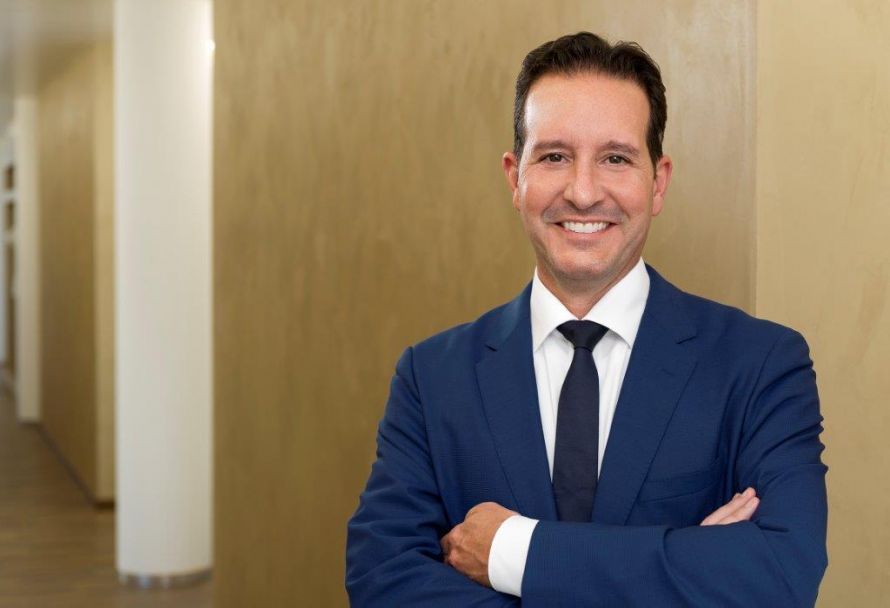
As head of Spine and Pelvic Surgery at the etzelclinic in Pfäffikon, Prof. Clément Werner, M.D., began specializing some twenty years ago in a particular joint that can cause a great deal of pain but is nevertheless rarely the focus of orthopedic care: the sacroiliac joint. Through countless scientific publications, he has earned a distinguished reputation in research and teaching in this field. Prof. Clément Werner developed his own implant to stabilize the sacroiliac joint. Researching, teaching, and ensuring the well-being of his patients through the best possible treatment methods—that is what drives this renowned physician and experienced specialist. Leading Medicine Guide spoke with him about the sacroiliac joint and its arthropathy.
Leading Medicine Guide: Today we’re talking about pain in the sacroiliac joint. You describe it as “an underdiagnosed problem.” In practice, that likely means many people are living with this type of back pain and struggling to find help. Could you first explain to us what the sacroiliac joint is and where it’s located?
Prof. Dr. med. Clément Werner: The sacroiliac joint is also called the sacroiliac joint, and the name gives a clue as to where it’s located. Where the lumbar vertebrae transition into the sacral vertebrae, the sacroiliac joint connects the spine to the pelvic bones. It is not a joint like all our other body joints because it has only minimal mobility. But it represents a complex and important connection point because it stabilizes the entire back—and thus our upright posture—while simultaneously transferring force from the upper body to the legs. When walking, for example, the joint moves in very small motions—in fact, there are actually two joints, one on each side of the spine. The sacroiliac joint is held in place by large, strong ligaments and many smaller ones.
Leading Medicine Guide: When you describe it that way, one can imagine how easily incorrect movements, minor anatomical imbalances, poor posture, one-sided strain, or poor sitting posture can become a problem here over time.
Prof. Dr. med. Clément Werner: Exactly. The symptoms usually appear later in life; those affected describe them as deep-seated back pain that can occur on one side or both sides and may radiate from the buttocks to the thigh or even down to the calf. With an incidence of 70 percent, this deep lumbar back pain is a very common condition. In one-third of cases, the cause lies in the sacroiliac joint. Sacroiliac joint osteoarthritis or arthropathy is among the most commonly overlooked conditions, which are treated incorrectly or not at all in the long term—because their cause goes unrecognized.
Leading Medicine Guide: Whatever you call it, it’s an underdiagnosed problem. Sufferers often go through an odyssey of back pain, going from specialist to specialist, and no one can really help them. Sometimes, psychological treatment becomes the last resort. Why is that?
Prof. Dr. med. Clément Werner: Basically, the reasons are almost trivial: spine specialists only cover the area up to the sacrum. The sacroiliac joint isn’t discussed in medical school, nor is it covered in specialty training. Young doctors don’t learn about the typical pain patterns and aren’t familiar with this specific phenomenon. The cause of the pain is assumed to be in the spine, but that’s not where it’s located.
Leading Medicine Guide: This pain phenomenon deep in the back has, so to speak, captivated you; you’ve studied it intensively and were able to learn a great deal about this unique joint through international continuing education programs and several fellowships in the U.S.
Prof. Dr. med. Clément Werner: In the U.S., the approach to pelvic surgery is quite different; I learned a great deal there about the sacroiliac joint complex. And there’s also a different training system in the renowned hospitals and clinics—they take pride in passing on their knowledge. I don’t see that to the same extent here. I trained at the largest trauma center in the U.S. and then at two spinal centers.
Leading Medicine Guide: And then you conducted research on a specific procedure to reliably detect sacroiliac joint symptoms clinically.
Prof. Dr. med. Clément Werner: The complex anatomy and the diverse pain patterns often lead to misinterpretation. Unfortunately, patients with sacroiliac joint (SIJ) disorders exhibit a very broad pain pattern, which often leads to inadequate diagnoses and treatments. X-rays do not provide clear evidence of sacroiliac arthropathy. All diagnostic tests commonly used to date have only limited diagnostic value. Based on existing approaches, we have therefore developed a new test, the PSIS distraction test (posterior superior iliac spine). It is quite simple in principle but has reliable clinical significance. Patients, whether standing or lying on their stomachs, are asked which localized, central, or lateral forces trigger pain or cause it to increase. The test is considered positive if it reproduces the typical pain. Compared to traditional provocation tests, the PSIS Distraction Test demonstrates superior accuracy of 94 percent.
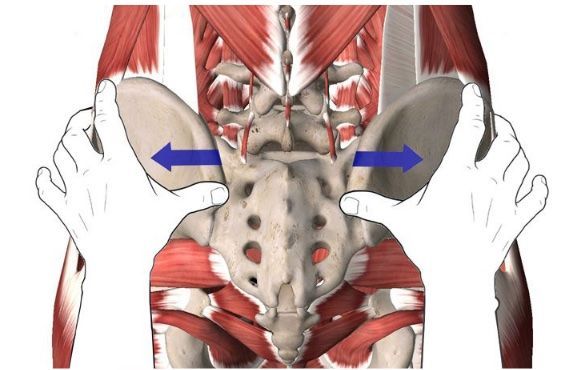
PSIS Distraction Test
Leading Medicine Guide: Are there specific pain symptoms that patients themselves might be able to use to determine whether they are experiencing sacroiliac joint pain?
Prof. Clément Werner, M.D.: There are criteria such as morning stiffness that lasts longer than 30 minutes; pain relief through movement but not at rest; waking up during the second half of the night due to back pain; alternating pain in the buttocks; and pain radiating laterally down the thigh to the knee or the lateral calf.
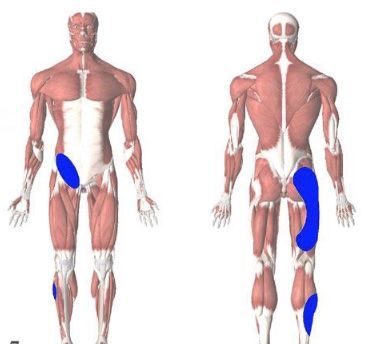
Biosacral arthropathy with characteristic sparing of the lateral knee joint
Leading Medicine Guide: There are now many osteopaths and physical therapists who specialize in the sacroiliac joint and have developed numerous exercises for it. What should we make of this?
Prof. Dr. med. Clément Werner: Treating sacroiliac joint blockages with physical therapy or manual therapy is, of course, beneficial and helps for a certain period of time or in specific anatomical cases—unfortunately, not in all cases. For example, a chronically unstable sacroiliac joint cannot be effectively treated in this way. However, specific stretching and strengthening exercises, an ergonomically sound sitting posture, avoiding certain movements, and possibly pain relievers can help.
Leading Medicine Guide: Unfortunately, we know from those affected that the pain is quite persistent. Why is that?
Prof. Dr. med. Clément Werner: We physicians still have a lot to learn about this. It’s likely due to the fact that the entire ligamentous apparatus surrounding the sacroiliac joint(s) is irritated and inflamed. Healing takes time; the body must also be given the opportunity to do so.
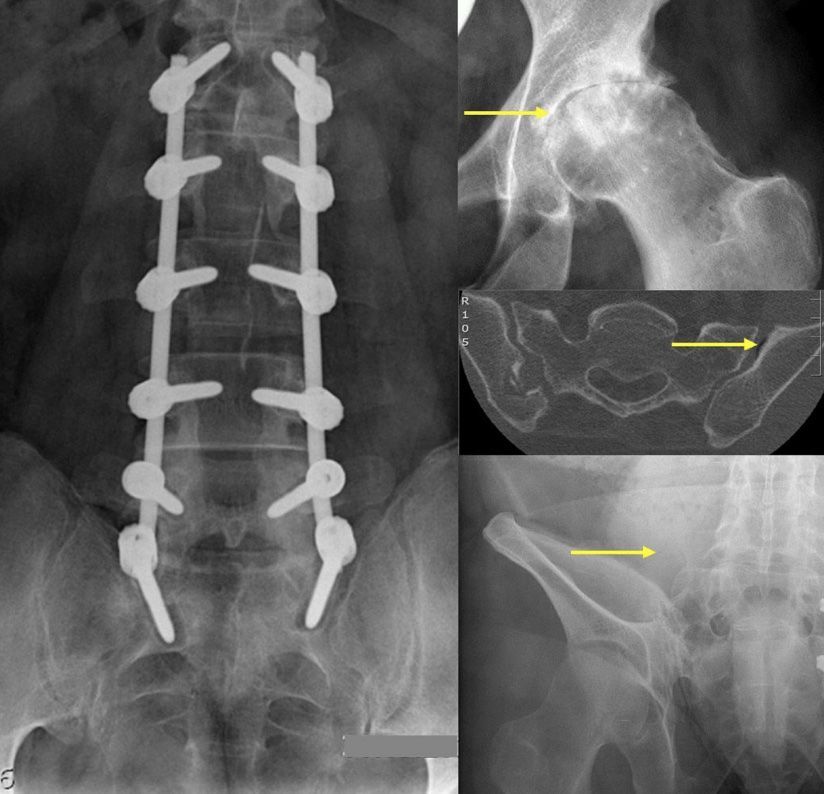
Left: hidden cause of sacroiliac joint arthropathy. Right, from top: coxarthrosis, air in the sacroiliac joint, mammillary body
Leading Medicine Guide: With the PSIS test, you can precisely diagnose sacroiliac pain. What happens next for people who have finally received a diagnosis for their previously unexplained back pain?
Prof. Dr. med. Clément Werner: Acute pain is initially treated with cold therapy, then heat therapy, and pain relievers. If the patient has legs of different lengths—which is actually not that uncommon—then special shoes are prescribed. Physical therapy and specific stretching exercises provide relief. If the pain pattern does not change, we administer a depot cortisone injection combined with a local anesthetic into the joint and the ligamentous apparatus. This soothes the entire affected area. About 80 percent of patients are symptom-free afterward and don’t return for several years. Unfortunately, we see 20 percent of those affected again soon—these are usually the ones with an unstable joint.
Leading Medicine Guide: To address this, you developed a special implant many years ago that is inserted via a minimally invasive procedure. You’ve already performed over 500 SI joint surgeries, and your pioneering work has made you a sought-after speaker at scientific conferences.
Prof. Dr. med. Clément Werner: You have to imagine it like the dowels from a well-known Swedish furniture brand—it’s the same principle. We insert three of these, which then fuse with the sacrum and ilium to stabilize the joint. For the patients we treat, the pain level typically drops from about 8 to about 2.5 on a scale after the procedure. In addition, I often go a step further and perform sclerotherapy on specific pain fibers; this has a lasting effect, and we’ve found that it leads to better results.
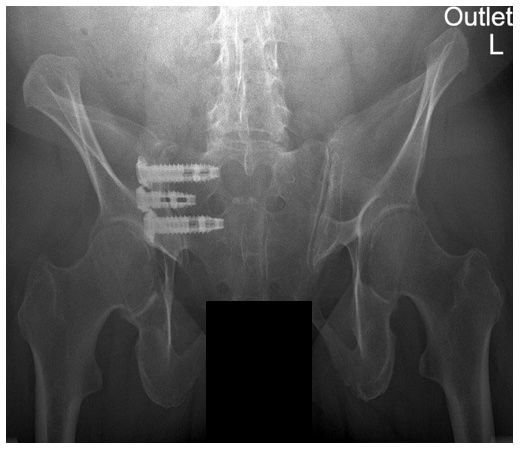 Example of a sacroiliac joint fusion
Leading Medicine Guide: You share your extensive knowledge of the sacroiliac joint and its osteoarthritis or arthropathy with joy and enthusiasm in continuing education courses. In the German-speaking world, you are, in a sense, regarded as the “pope” of the sacroiliac joint.
Prof. Dr. med. Clément Werner: The anatomy of the sacroiliac joint is very complex, and sacroiliac joint arthropathy does not fall within the normal scope of practice for spinal specialists, orthopedists, rheumatologists, or chiropractors. This subject area should therefore be taught in orthopedic residency programs, and young physicians need to become familiar with the typical clinical presentation and appropriate treatment options. Only in this way can we help many people suffering from chronic lower back pain.
Professor Werner, thank you for these extremely interesting insights into your field. The profile page on the Leading Medicine Guide provides direct contact information for our specialist.
Share this article
About the medical author
Claudia Dechamps
Editor
Claudia Dechamps – medical author: expert articles, professional insights and medical knowledge in the Leading Medicine Guide.
More about the medical author →etzelclinic - Center for Minimally Invasive Surgery
ProfileExpert Interviews
Read next
- Expert interview
Cardiogeriatrics: Significance and benefits in the context of hospital reform
Sep 21, 2026
Cardiogeriatrics: Significance and benefits in the context of hospital reform
Read more - Expert interview
Expert Interview with Professor Dr. Amadeus Hornemann, MPH
Sep 18, 2026
Prof. Amadeus Hornemann on Precision Medicine in Gynecology: Modern Surgery, New Techniques, Better Quality of Life
Read more - Expert interview
Expert Interview with Professor Dr. Konstantinos Anagnostakos
Sep 15, 2026
Prof. Anagnostakos on Painful Knee Replacements
Read more