Expert Interviews
Urology – An Interview with Dr. Robert Hefty, M.D.

Alexandra Pfitzmann ·
The editorial team of the Leading Medicine Guide spoke with Dr. Robert Hefty, Chief of the Department of Urology and Pediatric Urology at Kliniken Heidenheim, which is conveniently located in the Stuttgart-Munich-Frankfurt triangle. You’ll be surprised at just how diverse and fascinating urology is—a medical specialty that is completely underappreciated by the general public!
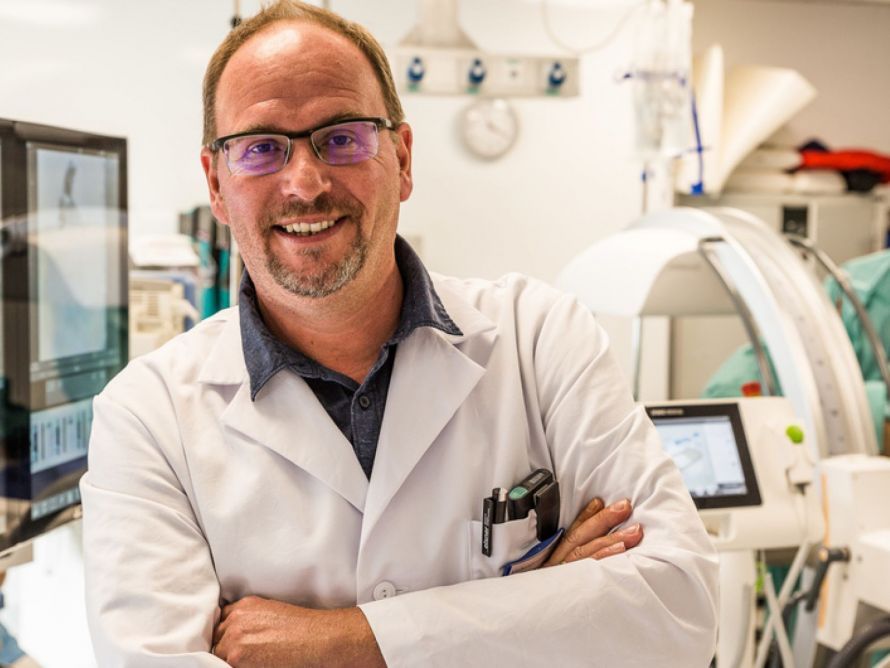
Urology—An Underappreciated Diversity in Medicine
The term “urology” derives from the Greek word οὖρον (pronounced “ouron”), meaning “urine.” A urologist deals with diseases of the kidneys, bladder, ureters, and urethra in both women and men. In men, this also includes disorders of the testicles, epididymis, vas deferens, seminal vesicles, penis, and prostate. This means that urology also covers areas of andrology, the male counterpart to gynecology.
When we look at the history of urology, we have to go back a long way, because bladder catheters were already in use in Egypt around 1000 B.C. And while there was almost a standstill in the further development of urology during the Middle Ages, progress accelerated significantly in the early modern period, really gaining momentum in the 19th and 20th centuries.
“Today, of course, we’re talking about entirely different dimensions when it comes to urology. Innovative laser procedures and a focus on minimally invasive techniques are setting the tone and paving the way for much more comfortable treatments for patients,” explains Dr. Hefty, who gained experience with laser methods in Wrocław as early as the 1990s as part of his training.
“Major prostate surgeries, for example, which used to be performed via an abdominal incision and required the patient to stay in the hospital for ten days or longer, are a thing of the past. Now, only a tiny puncture in the skin is needed to perform such a procedure, and the patient is ready to be discharged after three days,” says Dr. Hefty with pride in his voice.
From Urge to Urinate to Incontinence: “No Diagnosis Through Your Pants!”
Many people suffer from bladder problems and cope with daily life using all sorts of tricks to manage them. Bladder infections or stress incontinence (where those affected involuntarily leak urine as soon as they put pressure on their abdomen through physical exertion such as coughing, laughing, or heavy lifting) make life difficult.
Going to the bathroom becomes torture with bladder infections because the few drops of urine that are passed cause pain in the urethra, and there’s a constant feeling of needing to go. Incontinence turns many people—both men and women—into experts on panty liners, pads, or adult diapers. Certain items of clothing, such as short skirts or tight pants, are avoided.
“Women are affected significantly more often when it comes to urinary tract infections or bladder weakness. On the one hand, because their connective tissue is generally weaker than that of men, and on the other hand, because the pelvic floor muscles are heavily strained—for example, as a result of childbirth—and can no longer optimally support the urethral sphincter. Age-related weakening of the tissue and muscles is also among the causes,” explains Dr. Hefty. Most people find incontinence embarrassing. They feel ashamed and try to hide their problem for as long as possible. Yet many patients can help themselves through targeted pelvic floor exercises and regain—or at least improve—control over their urge to urinate.
Men, in general, react with even greater embarrassment and put off seeing a doctor for as long as possible, since examinations “down there” are usually more unfamiliar to them and their sense of shame gets the better of them. Dr. Hefty’s motto here is: “No diagnosis through your pants!” and, with his humorous manner, he tries to allay people’s fears about the examinations and help them overcome their embarrassment.
“There’s hardly a man over sixty who doesn’t experience slight urinary leakage,” Dr. Hefty states. Many men suffer from stress incontinence, meaning they leak urine when they laugh or lift something heavy. No man should be ashamed of this. In addition to weakened pelvic floor muscles, the prostate can also be responsible for this, as this organ continues to grow throughout a man’s life and can eventually press on the bladder. “In men, if in doubt, one can always consider an artificial sphincter,” explains Dr. Hefty, adding: “The advantage of necessary procedures on the urethra in men is essentially that the urethra is many times longer than in women. While the urethra in women measures only about 3.5 cm, a man’s is around 12–15 cm long.”
The New Urolastic Therapy for Women
Women for whom pelvic floor exercises are not sufficient can now be helped with a new therapy known as the “Urolastic procedure.” “The Urolastic procedure is a minimally invasive procedure performed under local anesthesia that takes only about 15 minutes,” says Dr. Hefty, adding: “A two-component filler is injected into four small deposits around the urethra. Within just a few minutes, these form flexible implants, which in turn cause the urethra to narrow, thereby stabilizing it and thus stabilizing the closure mechanism.” The “cough test” performed after the procedure demonstrates immediate success.
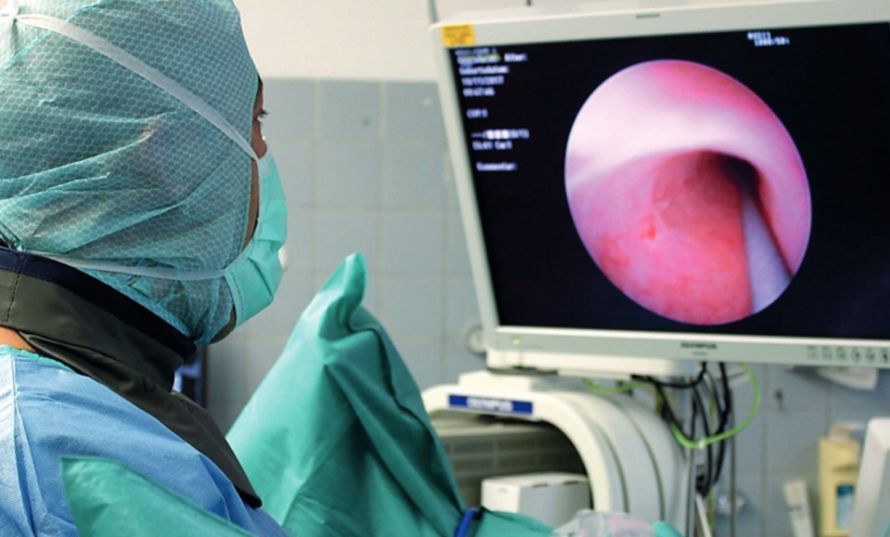
State-of-the-art technology is essential for examination and diagnosis
“For stress incontinence, there is also the method of placing slings under the urethra to stabilize it. However, our new method has the clear advantage of not causing a foreign body sensation,” says Dr. Hefty, adding: “Tapes are inserted via surgery under general anesthesia. The new method requires only local anesthesia. And the only reason the patient has to be admitted for one night is that outpatient approval has not yet been granted,” he adds. This new procedure is particularly exciting for patients who wish to have children in the future. This is because the filler used is long-lasting, does not fuse with the tissue, is easily replaceable, and does not cause pain during sexual intercourse—a complaint frequently voiced by patients who have had slings inserted.
“Keep the focus on the genital area!”
Cystitis has a bacterial origin. When it comes to cystitis, the cause is often excessive hygiene involving harsh soaps in the genital area. “The environment inside the bladder offers protection.
If the bladder lining is compromised, chronic resistance can develop,” explains Dr. Hefty, adding: “Urine and stool should be checked regularly. Blood in the stool or urine should always prompt a visit to the doctor. In such cases, women should see a gynecologist, as the presence of blood in the urine is often treated solely as an infection. However, a referral to a urologist makes sense here, since only a urological examination can detect conditions such as bladder cancer.”
If a bladder infection is present, a fluid regimen—involving drinking three to four liters of water a day—often helps flush out as many bacteria as possible. A quick tip: After sexual intercourse, women should always empty their bladder, as this helps flush many bacteria out of the body.
Bladder cancer grows slowly at first after exposure
Don’t panic—if you have blood in your urine, you don’t necessarily have to think of bladder cancer right away. To definitively diagnose bladder cancer, a cystoscopy is necessary. “In most cases, these are flat tumors that can only be detected during a cystoscopy. An ultrasound, CT scan, or MRI may be necessary to determine the stage,” reports Dr. Hefty.
However, it’s important to know that bladder cancer develops very slowly. “It can take between 15 and 18 years for a cancerous tumor to form in the bladder,” explains Dr. Hefty, adding reassuringly, “The success rate of treatment and the chances of a cure are very high.” Most tumors—about 75%—are superficial in nature and can be removed endoscopically. The challenge here is that with bladder cancer, we’re dealing with tumors that recur quickly, so regular follow-up exams are essential.”
If bladder tumors are very deep-seated, a cystectomy is often unavoidable. “The potential for metastasis with bladder tumors is quite high. Imagine a rampant plant that can attach itself to blood and lymph vessels. That’s why the risk of metastasis is high,” explains Dr. Hefty, who therefore advises taking follow-up examinations seriously.
The Neobladder—A Lifesaving Solution
If the bladder can no longer be treated endoscopically, it must be removed. However, without a bladder, urination is not possible. Fortunately, there is a replacement option here as well: the neobladder. This is an artificial bladder formed from the patient’s own small intestine tissue. This allows urine to flow from the kidneys into the replacement bladder via the ureters, which are connected to the neobladder. It is connected to the urethra above the sphincter muscle that was preserved during surgery, enabling normal urination.
“Neobladder surgery is a major challenge and requires a high level of expertise,” explains Dr. Hefty, who performs many of these surgeries himself and criticizes the lack of surgical training within urology. “As chief physician, it is therefore important to me to pass on my experience to my younger colleagues and to train them in performing these surgeries,” says the renowned specialist in urological surgery. “In many hospitals, bladder-preserving surgery is performed simply because the expertise is lacking, even though removal and the use of a neobladder would make more sense,” says Dr. Hefty.
A Positive Outlook on the Future of Urology
Dr. Robert Hefty, a native of Heilbronn with family roots in the U.S., lives by the motto: Information – Innovation – Motivation. “I am very optimistic about the future of urology. The treatment of kidney stones, urethral strictures, or prostate conditions, as well as surgery for urological tumors, is performed at a high level, thanks in large part to the use of modern laser technology. Drug therapies will certainly become more prevalent in the future, and cell structure analysis will also increase, allowing for even more personalized treatment plans for patients,” he explains optimistically.
He advises young medical professionals not to lose sight of urology. “There is hardly any other specialty in medicine that is as versatile as urology. Urology encompasses, among other things, andrology, radiology, proctology, and cancer therapy,” he enthuses. Urology is indeed a key discipline when one considers demographic trends. “In the future, we’ll need twenty to thirty percent more urologists than we do today, since people are simply living longer and many urological conditions don’t appear until later in life,” Dr. Hefty emphasizes in conclusion. A specialty with a bright future!
We thoroughly enjoyed this informative and refreshing conversation, which gave us a completely new perspective on the field of urology. Thank you very much, Dr. Hefty! Would you like to learn more about Dr. Hefty? Then visit the Leading Medicine Guide profile of urology specialist Dr. Hefty—with a direct and secure way to contact him!
Share this article
About the medical author
Alexandra Pfitzmann
Editor
Alexandra Pfitzmann – medical author: expert knowledge, professional articles and medical insights in the Leading Medicine Guide.
More about the medical author →Expert Interviews
Read next
- Expert interview
Cardiogeriatrics: Significance and benefits in the context of hospital reform
Sep 21, 2026
Cardiogeriatrics: Significance and benefits in the context of hospital reform
Read more - Expert interview
Expert Interview with Professor Dr. Amadeus Hornemann, MPH
Sep 18, 2026
Prof. Amadeus Hornemann on Precision Medicine in Gynecology: Modern Surgery, New Techniques, Better Quality of Life
Read more - Expert interview
Expert Interview with Professor Dr. Konstantinos Anagnostakos
Sep 15, 2026
Prof. Anagnostakos on Painful Knee Replacements
Read more