Expert Interviews
“You Don’t Have to Put Up With Pain!” Dr. med., Dipl. Psych. Simone Heymann on multimodal pain management

Claudia Dechamps ·
When it comes to pain, you have to look at the whole person, says Dr. med. Dipl. Psych. Simone Heymann, a neurosurgeon, pain specialist, and licensed psychologist. The body and the mind cannot be separated; they influence each other. That is why Dr. Simone Heymann studied both medicine and psychology. In her own practice for neurosurgery and pain management in Rothrist, Switzerland, she treats “the phenomenon of pain” in her patients as comprehensively as she believes is necessary—and that is precisely what sets this versatile specialist apart.
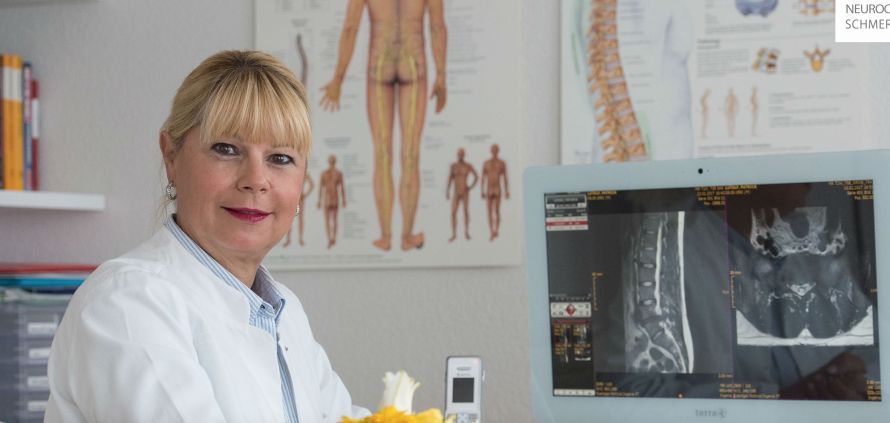
Leading Medicine Guide: How did you come to have, so to speak, a triple specialization? You are a neurosurgeon, a trained pain therapist, and a psychologist.
Dr. Simone Heymann: As a neurosurgeon, I naturally always dealt extensively with the issue of pain in my patients in addition to my surgical work. This led me to gradually specialize professionally in the field of pain. In the past, there was little awareness of pain in medicine. “You just have to put up with it” is a phrase I really don’t like to hear. After working in the Neurosurgery Department at the Westpfalz-Klinikum in Kaiserslautern, I established my own practice as an independent physician in Switzerland. In my practice, I can now treat my patients as comprehensively and holistically as I deem appropriate and necessary. The body and mind influence each other; we still don’t know exactly to what extent. In any case, however, both must be treated if we want to support patients effectively and help them—that is my deep conviction.
Leading Medicine Guide: Acute and chronic pain—what’s the difference?
Dr. Simone Heymann: Acute pain has a specific trigger; it is a sudden onset of pain that does not last for a long time and serves as a warning signal: it indicates that irritation has occurred somewhere in the body, such as from cuts, bruises, or nerve injuries. Once the underlying cause has been eliminated, this pain subsides.
Pain is considered chronic when it lasts longer than three to six months. In this case, the pain has lost its useful warning function; it has itself become a disease—because when nerve cells are repeatedly exposed to pain impulses over an extended period—for example, following an injury or in cases of inadequately treated acute pain—they alter their structure, and the nerve impulses take on a life of their own: They send pain signals to the brain even in response to weak stimuli or even without any stimulus at all. This means the cell can no longer shut down; it has developed what is known as a “pain memory.” Often, no clear physical cause for the prolonged pain can be found, leading the patient’s social circle to react with a lack of understanding as the condition progresses. The patient’s mental well-being suffers as well; they withdraw from activities and their circle of friends, and their quality of life diminishes. Pain always has multimodal components; it affects the body, the psyche, and the mind. So I have to address it on many levels.
Leading Medicine Guide: Who is the right person to consult for a patient with chronic pain?
Dr. Simone Heymann: There are specially trained pain therapists who work in private practice or at pain clinics and are familiar with the multimodal approach. Some general practitioners are also trained in this field. A good pain therapist should take as many components into account as possible: conventional medicine, including interventional procedures; alternative medicine approaches; physical therapy; and various forms of psychological therapy.
Leading Medicine Guide: When is multimodal pain therapy the right choice for me as a patient?
Dr. Simone Heymann, M.D.: With this form of therapy, I can meet all patients where they are right now. Since the therapy takes a holistic approach, it is very versatile and can address issues on various levels.
Leading Medicine Guide: Does it make sense to undergo multimodal pain therapy as an inpatient, or is outpatient treatment more appropriate?
Dr. Simone Heymann, M.D.: Both have their advantages and disadvantages: In a pain clinic, patients are shielded from their everyday lives, their daily routines are restructured, and they receive intensive daily care. In outpatient treatment, the patient lives in a familiar environment and can continually test how the therapeutic personal and physical restructuring is working: How do stressful situations play out, and how do family members cope with the situation? In my opinion, outpatient therapy can contribute significantly to long-term success in ultimately coping with everyday life.
Leading Medicine Guide: What conditions fall within your area of expertise as a neurosurgeon and multimodal pain specialist, and what is your stance on alternative or esoteric approaches?
Dr. Simone Heymann: In my practice, I treat a wide range of pain conditions: for example, back pain, postoperative pain, headaches, muscle pain, joint pain, rheumatic pain such as fibromyalgia, nerve pain, and pain associated with cancer. I have definitely observed that religiously oriented people often cope better with pain. Faith instills confidence, positive energy, and motivation. The mind can certainly intensify pain through negative energy. That’s why I have no objection to esoteric and alternative approaches. We’re all familiar with the placebo effect. I think that if it helps to boost positive life energy and the body’s self-healing powers, then a combined treatment approach always makes sense.
Leading Medicine Guide: How long does multimodal pain treatment last?
Dr. Simone Heymann: Treatment durations range from about four months to one year. During this time, as part of their personalized treatment plan, patients learn what they need to do to improve their quality of life. Even though the underlying cause often cannot be eliminated, it is very often possible to achieve a satisfactory long-term improvement in the patient’s symptoms.
Multimodal Pain Treatment
The goal of multimodal pain therapy is to sustainably improve the quality of life of a patient with chronic pain. Physically, the goal is to increase the patient’s tolerance for physical exertion, improve their fitness, body awareness, and coordination, and enable them to better manage their personal limits. Their behavior, which tends to be focused on rest and self-preservation, and their fears of physical exertion should change over the course of therapy.
Multimodal treatment involves doctors specializing in pain, psychologists, nurses, physical and sports therapists, occupational therapists, and social workers. According to the German Pain Society, interdisciplinary multimodal pain therapy is, unfortunately, still the exception rather than the rule in healthcare.
Leading Medicine Guide: That brings us to the next question: What are the prospects for success with multimodal pain treatment?
Dr. Simone Heymann: A lot depends on how actively the patients cooperate. And, of course, the clinical picture also plays a role. Pain therapy is a team effort. The patient’s goals are important. If they say, “I want to ride a bike again, I want to hang out with my friends again, play soccer with my sons, I want to do this or that”—then the prognosis looks very good. If the patient cooperates to the best of their ability, then their chances of regaining a good quality of life are high. However, if I notice that someone, for example, isn’t attending their therapy appointments regularly or isn’t following the treatment plan we discussed together, then I stop my efforts. In that case, we—as a doctor-patient team—won’t achieve our goal.
Leading Medicine Guide: How much time do you set aside for a consultation with a patient?
Dr. Simone Heymann: My pain patients are always very surprised and relieved: “Finally, someone is listening to us,” they say. These people need this very urgently. Unfortunately, most doctors are often overwhelmed by chronic pain cases due to a lack of time. Yet these patients especially need someone to talk to them in detail, take their concerns seriously, make time for them, and listen to them. That’s why the combination of medicine and psychology is so important to me. Only in this way can I truly provide comprehensive care for a patient. A consultation with me lasts at least half an hour; if there are additional psychological concerns, I set aside an hour. In addition, I’m available for consultation—as a “second opinion,” as they say—when patients would like to seek a second opinion regarding their case.
Dr. Heymann, we’d like to thank you very much for this insightful and encouraging conversation and for the interesting details about your field of expertise! Anyone wishing to contact our specialist directly can do so on the profile page of the Leading Medicine Guide.
Share this article
About the medical author
Claudia Dechamps
Editor
Claudia Dechamps – medical author: expert articles, professional insights and medical knowledge in the Leading Medicine Guide.
More about the medical author →Expert Interviews
Read next
- Expert interview
Cardiogeriatrics: Significance and benefits in the context of hospital reform
Sep 21, 2026
Cardiogeriatrics: Significance and benefits in the context of hospital reform
Read more - Expert interview
Expert Interview with Professor Dr. Amadeus Hornemann, MPH
Sep 18, 2026
Prof. Amadeus Hornemann on Precision Medicine in Gynecology: Modern Surgery, New Techniques, Better Quality of Life
Read more - Expert interview
Expert Interview with Professor Dr. Konstantinos Anagnostakos
Sep 15, 2026
Prof. Anagnostakos on Painful Knee Replacements
Read more