News
Long COVID: Persistent Symptoms Following a Coronavirus Infection

Melanie Al Tikriti, BSc ·
How Fatigue, Difficulty Concentrating, and Physical Limitations Can Affect Daily Life in the Long Term
After contracting the coronavirus, many people recover completely within a few days or weeks. Some people, however, continue to experience persistent health issues even months after the initial illness. Medical professionals refer to these long-lasting symptoms collectively as “Long COVID.” This condition varies widely in its presentation and often affects multiple organs simultaneously.
Many patients find the situation extremely stressful, as the symptoms often begin after a mild course of the infection. Some patients experienced hardly any limitations during the acute phase of the illness and are now struggling with long-term health problems. Others, following a severe course of the illness, require oxygen for months while walking or complain of persistent tingling in their limbs.
Recently, medical understanding of Long Covid has expanded significantly. In current studies, doctors are increasingly pointing to inflammatory processes.
Symptoms That Can Occur with Long COVID
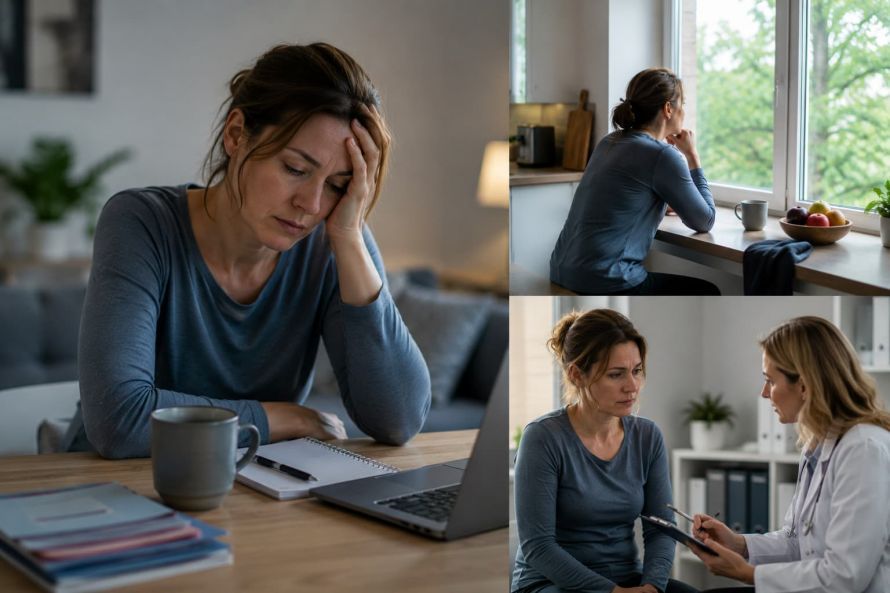
Long COVID can cause a wide variety of symptoms. Some symptoms are persistent, while others occur in episodes or worsen after physical or mental exertion.
Those affected particularly often report:
- severe fatigue
- difficulty concentrating
- breathing difficulties
- rapid heartbeat
- Muscle pain
- Sleep disturbances
Many patients experience this exhaustion differently than normal tiredness. However, they are growing weaker and weaker. Everyday activities such as grocery shopping, going for walks, or cleaning are now more difficult to manage. They also have trouble concentrating and experience memory problems. Those affected think more slowly, lose their train of thought during conversations, or struggle to complete tasks. Doctors refer to these neurological changes in the brain as “brain fog.”
Breathing difficulties are also among the common symptoms. Even with minimal exertion, those affected gasp for air or feel a tightness in their chest. Even normal lung test results do not guarantee normal physical performance. Problems with the cardiovascular system often accompany these symptoms. The pulse races, blood pressure drops, and physical strength fluctuates greatly from day to day.
What changes in the body are currently being discussed
The exact causes of Long COVID continue to be the subject of intensive research. It is likely that several mechanisms are at work simultaneously.
Among the key areas of research are:
- persistent inflammatory processes
- dysregulation of the immune system
- Changes in small blood vessels
- Disorders of the autonomic nervous system
- Consequences of acute viral infection
The immune system, in particular, is thought to play a central role. In some patients, inflammatory reactions appear to remain active even after the actual infection has subsided. This could have long-term effects on various organs and tissues. In addition, scientists are investigating changes in blood flow. The smallest blood vessels could be impaired by inflammatory processes or changes in vascular function. This would make it more difficult for certain tissues to receive oxygen.
The autonomic nervous system is also increasingly coming into focus. Among other things, this system regulates heart rate, blood pressure, breathing, and digestion. In some Long COVID patients, there are indications of impaired regulation of these processes.
This can lead, for example, to:
- Heart palpitations
- Circulatory problems
- severe fatigue after exertion
- Disruptions in temperature regulation
Modern research is also exploring whether certain viral components might remain in the body for longer periods or permanently alter immune responses.
Why physical or mental exertion often worsens the condition
Many Long COVID patients report that their symptoms worsen significantly after physical or mental exertion. This phenomenon is often described as exertion intolerance.
Even mild activities can sometimes lead to:
- severe exhaustion
- muscle pain
- difficulty concentrating
- circulatory problems
.
Some patients do not feel the first symptoms until hours or a day after exertion. This makes it difficult to recognize one’s own physical limits in a timely manner. For this reason, consciously managing the level of exertion is particularly important. New approaches to rehabilitation tailor exercise and rest periods to the individual to prevent chronic fatigue. In addition, nighttime restlessness, stress, and emotional tension often noticeably affect the recovery process. Many patients become doubtful or irritable because the limitations persist for months and restrict their daily routines and work.
Modern Diagnostics and Treatment Options
The diagnosis is primarily based on the symptoms and their temporal association with a COVID-19 infection. At the same time, other conditions that can cause similar symptoms must be ruled out.
Depending on the symptoms, various tests are used:
- Lung function tests
- Cardiovascular diagnostics
- Neurological examinations
- Blood tests
- Stress tests
Since Long COVID can affect various organ systems, multiple medical specialties often work together. It is particularly important to assess each patient’s individual exercise tolerance. There is currently no standard treatment. Treatment is tailored to the patient’s specific symptoms and limitations.
Possible treatment approaches include:
- Respiratory therapy
- Adapted exercise training
- Rehabilitation
- Sleep regulation
- Symptom-targeted medications
In addition, interdisciplinary approaches are becoming increasingly important. The goal is not only to treat individual symptoms but also to achieve long-term stabilization of physical and mental resilience. Psychological support can also be helpful, as chronic symptoms and uncertainty often have a significant impact on quality of life.
Conclusion: Better Understanding the Long-Term Consequences of a COVID-19 Infection
Long COVID can cause physical, neurological, and psychological symptoms for months on end and significantly limit the daily lives of many affected individuals. Modern research is increasingly demonstrating just how complex the effects on the immune system, the nervous system, and the body’s resilience are. This is precisely why individualized diagnostics, tailored treatment approaches, and long-term care are becoming increasingly important in modern medicine.
Share this article
News
Read next
- News
Scabies: A contagious skin disease that is easily treatable
Oct 26, 2026
Severe itching and minor skin changes should be taken seriously
Read more - News
Heat Rash: What's Behind the Itchy Blisters
Oct 23, 2026
Heat Rash: Heat and Sweat Can Disrupt the Skin's Balance
Read more - News
Enlarged Prostate – When Medication Is Sufficient and When Surgery Is Recommended
Oct 21, 2026
Why Many Men Ignore Urinary Problems for Too Long
Read more