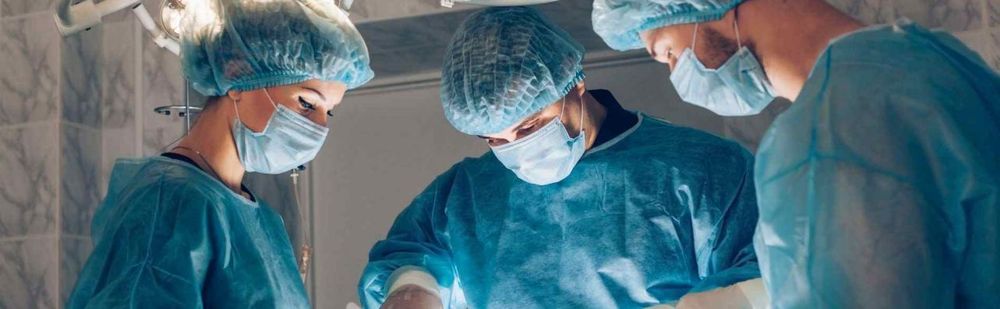
Plastic surgery involves procedures that alter the shape or restore visible tissues, body parts, and organs.
The goal of reconstructive surgery is to restore the original condition for medical reasons. Aesthetic surgery, on the other hand, aims to improve a person’s appearance for non-medical reasons.
This article focuses on surgical procedures to restore function and/or appearance following injuries, burns, and tumor surgeries.
A Brief History of Plastic Surgery
Plastic surgery is almost as old as medicine itself. For example, reconstructive nose surgeries were already being performed in India as early as 1200 B.C. For this procedure, a flap of tissue was removed from the forehead and transplanted. The ancient Egyptians were also skilled in such complex procedures, as evidenced by mummy findings.
At the end of the 16th century, an Italian physician described a surgical technique that laid the foundation for modern plastic surgery.
The two world wars, with their dramatic injuries, drove massive advances in reconstructive surgery. Another milestone in the field was the introduction of silicone implants in 1962.
What are the responsibilities of a plastic and reconstructive surgeon?
Reconstructive surgery focuses on restoring tissue and organs that have been damaged or disfigured.
This can occur as a result of:
- Accidents
- Removal of tumors and
- injuries
As a result of accidents or surgery, bodily functions may no longer work properly or may cease to function altogether. In most cases, the patient’s appearance is also disfigured. This places a significant psychological burden on the patient and often leads to social withdrawal.
Therefore, the goal of experienced surgeons is to restore bodily functions and physical appearance as much as possible. This improves the quality of life for those affected.
Hand surgery, in particular, focuses on restoring important functions of the upper extremity. Surgeons reconstruct ligaments, muscles, tendons, bones, and soft tissues so that the patient can use their arm and hand again.
 Reconstructive Surgery: Hand Surgery @ Chinnapong /AdobeStock
In burn surgery, doctors alleviate the effects of severe burns—including chemical burns—through skin grafts.
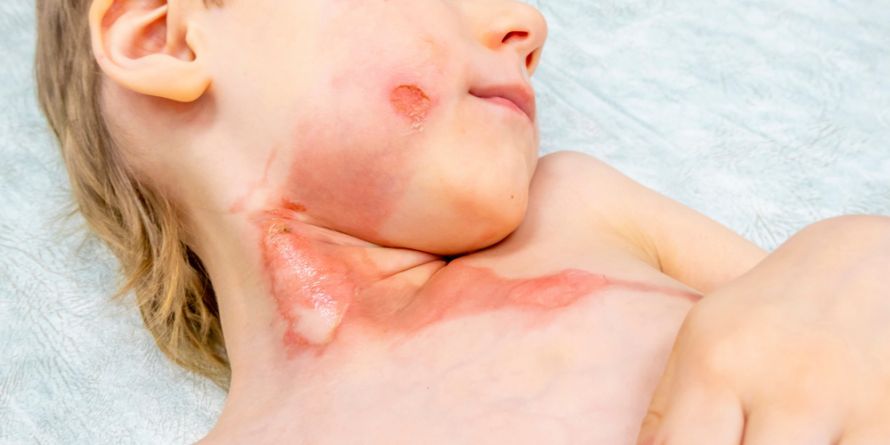 Reconstructive Surgery: Burn Surgery @ kajasja /AdobeStock
A common procedure is breast reconstruction, for example, following breast cancer surgery. However, gynecomastia (enlarged breasts in men) in adulthood is also a condition treated by experts in reconstructive surgery.
Other areas of application include:
- Tissue reconstruction after tumor removal
- Scar revision
- Treatment of lipedema (abnormal fat distribution) and lymphedema (impaired drainage of interstitial fluid)
- Treatment of the consequences of accidents
- Treatment of wound healing disorders, such as those associated with diabetic foot
- Aesthetic and functional facial reconstructions following surgery and accidents
- Reimplantation of severed limbs
A common method in reconstructive surgery is autologous fat grafting. In this procedure, doctors remove fat tissue from one area of the body and transplant it to another (damaged or disfigured) area.
This procedure is used, for example, in:
- Mastectomy (breast removal)
- Breast-conserving therapy
- Congenital or acquired breast malformations
- Chronic wounds
- Genital surgery/transsexuality
- Localized (limited) scleroderma (proliferation of connective tissue)
- Soft tissue defects and
- Aesthetic procedures, such as hand rejuvenation, breast corrections, nasal reshaping, and contour irregularities following liposuction
 Reconstructive surgery also focuses on improving the shape and function of the breast @ nenetus /AdobeStock
Reconstructive surgeries often involve microsurgical procedures in which doctors also connect blood vessels.
Plastic and reconstructive surgeons work closely with experts from other fields, such as:
- Dermatologists
- Oncologists
- Vascular surgeons
- Orthopedic surgeons
- Trauma surgeons
- Anesthesiologists and
- Radiologists
Breast reconstruction using the patient’s own tissue or implants
Most breast reconstructions are performed using artificial materials, such as implants, expanders, or meshes.
In addition, doctors can harvest the patient’s own tissue in the form of a skin flap from the lower abdomen, buttocks, or back. They then transplant this tissue to create a new breast.
There are essentially two options for this autologous tissue transplant:
- The skin flap still contains the blood vessel that supplies it (known as a pedicled flap), or
- the blood vessel requires a microsurgical anastomosis with a new blood vessel (known as a free flap)
Training to Become a Plastic Surgeon
Experts in reconstructive surgery are specialists in plastic and aesthetic surgery (plastic and aesthetic surgeons).
Specialty training begins after completing medical school. It requires six years of training: two years of basic surgical training and four years of training to become a specialist in Plastic and Aesthetic Surgery. During this time, the physician must perform a specified number of diagnostic procedures and treatments.
Through this process, the aspiring plastic surgery specialist gains the knowledge, experience, and skills needed to address visibly impaired bodily functions and physical forms.
Aesthetic and plastic surgery is constantly evolving. Therefore, even after completing their training and gaining years of practical experience, doctors must regularly pursue continuing education and exchange ideas with other specialists.

About the medical author
Dr. Claus Puhlmann
Medical Author · Medical journalist
Dr. Claus Puhlmann – medical author: expert articles, professional insights and medical knowledge in the Leading Medicine Guide.
More about the medical author →Sources
- Bundesärztekammer (2013) (Muster-)Weiterbildungsordnung 2003 in der Fassung vom 28.06.2013. https://www.bundesaerztekammer.de/fileadmin/user_upload/downloads/20130628-MWBO_V6.pdf
- Deutsche Gesellschaft der Plastischen, Rekonstruktiven und Ästhetischen Chirurgen (DGPRÄC) et al. (2015) Autologe Fetttransplantation. S2k-Leitlinie. AWMF-Leitlinien-Register Nr. 009/017. https://www.dgpraec.de/wp-content/uploads/2018/03/S2k_Leitlinie_Fetttransplantation.pdf
- Deutsche Gesellschaft der Plastischen, Rekonstruktiven und Ästhetischen Chirurgen (DGPRÄC) et al. Leitlinien. https://www.dgpraec.de/aerzte/leitlinien/
- Deutsche Gesellschaft für Gynäkologie und Geburtshilfe e.V. (DGGG) et al. (2015) Brustrekonstruktion mit Eigengewebe. AWMF-Leitlinien-Register Nr. 015/075. https://www.awmf.org/uploads/tx_szleitlinien/015-075l_S3_Brustrekonstruktion_Eigengewebe_2015-04.pdf
- Deutsche Krebsgesellschaft e.V. (DKG) Deutsche Gesellschaft für Gynäkologie und Geburtshilfe (DGGG) (2012) Plastisch rekonstruktive Eingriffe; Brustrekonstruktion: Möglichkeiten, Indikationen. In: Interdisziplinäre S3-Leitlinie für die Diagnostik, Therapie und Nachsorge des Mammakarzinoms. Leitlinienprogramm Onkologie. AWMF-Leitlinien-Register Nr. 032/045OL. https://www.dgpraec.de/wp-content/uploads/2018/03/S3_Leitlinie_Brustkrebs_Diagnostik.pdf