The single-port technique in gallbladder surgery refers to a minimally invasive procedure performed through a single incision in the abdominal wall. Currently, there are four single-port systems or techniques available that are suitable for removing the gallbladder using keyhole surgery. Here you will find further information as well as a selection of specialists and centers for the single-port technique in gallbladder surgery.
Definition: Single-port technique for gallbladder surgery
Gallbladder removal using the single-port technique refers to the laparoscopic removal of the gallbladder through a single small incision. This eliminates the need for either a long abdominal incision or multiple small incisions.
Laparoscopy is a form of minimally invasive surgery using the “keyhole” technique. In gallbladder removal via single-port surgery, this incision is typically located near the navel.
The so-called NOTES technique (“natural orifice transluminal endoscopic surgery”) should be distinguished from the group of single-port techniques. This technique leaves no external scars at all, as the surgeon uses a natural body orifice as the access point. However, it requires the perforation of a healthy organ, with all the associated risks.
With this technique, surgical access is gained through
- the mouth,
- the anus,
- the vagina, or
- the urethra.
Anatomy of the Gallbladder
The gallbladder is nestled in a hollow on the underside of the liver. The main function of the gallbladder is to store and concentrate the bile produced by the liver. Bile is primarily used to aid in the digestion of fats in the intestines.
The gallbladder is divided into several parts:
- the fundus of the gallbladder,
- the body of the gallbladder, and
- the neck of the gallbladder.
The neck of the gallbladder leads into the cystic duct (ductus cysticus). In the transition area, there is a spiral-shaped mucosal fold (Heister’s valve). It acts as a valve, particularly when pressure in the abdominal cavity increases (e.g., during a bowel movement).
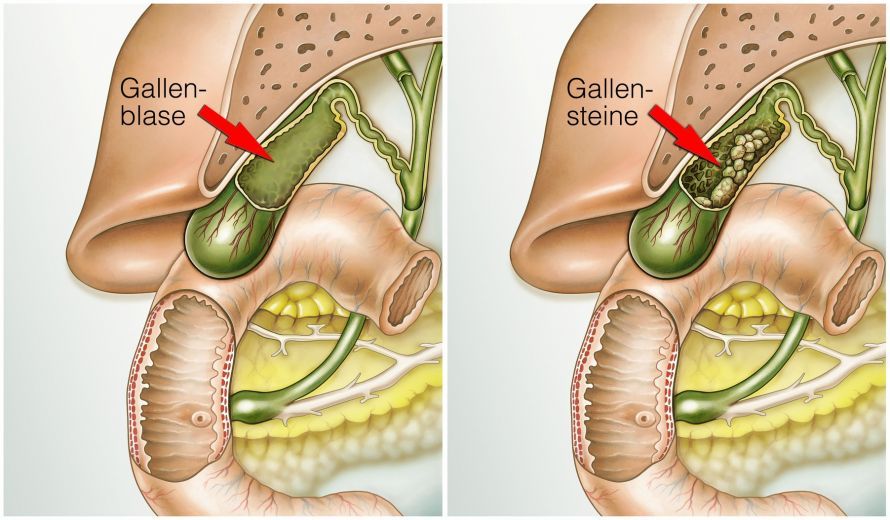
The cystic duct joins the common hepatic duct (ductus hepaticus communis) to form the common bile duct (ductus choledochus). The common bile duct runs alongside the major blood vessels (portal vein and hepatic artery) within a common ligament (ligamentum hepatoduodenale). These two vessels supply the liver with blood.
The common bile duct usually empties into the duodenum together with the main pancreatic duct (ductus pancreaticus).
The gallbladder is supplied with blood via the cystic artery (Arteria cystica). It branches off from the right branch of the hepatic artery.
Indications for Single-Port Gallbladder Surgery
The main indications for gallbladder removal using the single-port technique are symptoms caused by gallstones, such as
- pain in the right upper abdomen,
- biliary colic, and
- a sensation of pressure.
Other reasons for gallbladder removal may include
- acute inflammation of the gallbladder with or without gallstones,
- a so-called atrophic gallbladder, and
- a gallbladder polyp
. In cases of pancreatitis or gallbladder cancer, removal of the gallbladder is rarely necessary.
Currently Available Single-Port Systems
Currently available single-port techniques include:
- Triport (Olympus)
- SILS-Port (Covidien)
- X-Cone-Port (Karl Storz)
- TULC technique (Total Umbilical Laparoscopic Cholecystectomy)
Triport Single-Port System (Olympus)
To insert this single-port system, an incision approximately 15 mm long is required just below the navel.
After making the skin incision and opening the peritoneum, the system’s flexible tubular membrane is inserted into the abdominal cavity. The surgeon secures the system to the inner surface of the peritoneum using a flexible rubber ring by pulling the membrane back. A special retaining ring is also used for fixation. The Triport system is now fully installed.
It features one 10 mm and two 5 mm trocar channels with attached valves, as well as a connection for gas supply. A trocar is an instrument used in minimally invasive surgery to keep a created access point open for the duration of the operation.
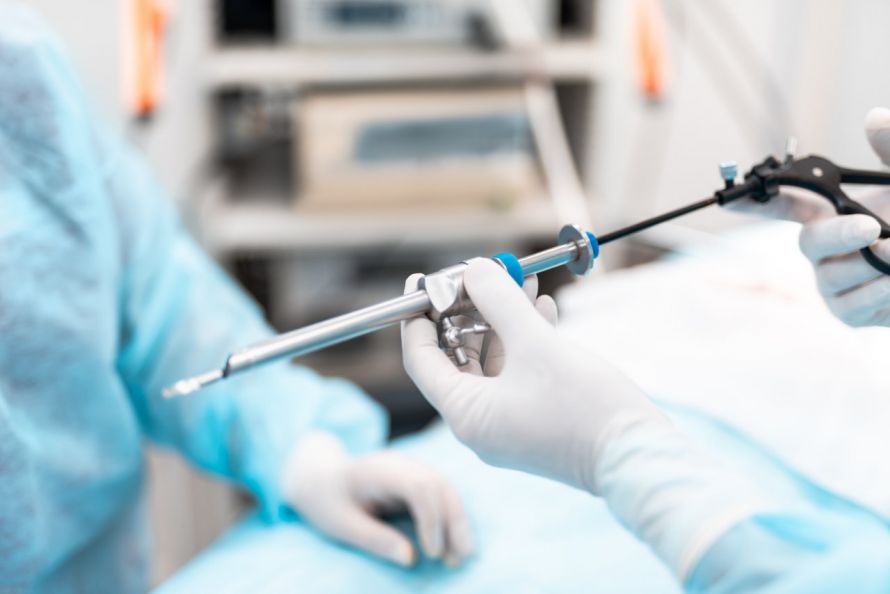
This single-port system is a single-use product. Special straight or curved surgical instruments are required for the procedure.
SILS-Port Single-Port System (Covidien)
Inserting this single-port system requires an incision approximately 20 mm long below the navel. The SILS-Port is a soft yet dimensionally stable single-port device that resembles a wide, short dumbbell.
After making an incision in the skin and opening the peritoneum, the lower part of this single-port is compressed and inserted into the abdominal cavity. Due to its dumbbell shape, the single-port system automatically anchors itself to the inner peritoneum and the outer abdominal wall.
The SILS-Port does not have built-in valves; therefore, the three openings must be fitted with 5-mm or 10-mm valve sleeves.
Both straight and curved standard instruments can be used with this single-port system. This system is also a single-use product.
Single-Port System X-Cone-Port (Karl Storz)
Insertion of this single-port system requires an incision approximately 20 mm long below the navel. It consists of a reusable metal instrument made up of two conical half-shells. Each half-shell has a semicircular, angled hook at its lower end.
After making an incision in the skin and opening the peritoneum, the two hooks—placed against each other—are inserted into the abdominal cavity like a trocar. Bringing the half-shells together spreads the hooks apart, holding the X-Cone in place.
To create a seal, a rubber cap is then placed over the abdominal wall. It has five valve-equipped ports and a lateral gas connection.
Straight or curved standard instruments can also be used with this single-port system.
TULC Technique (Total Umbilical Laparoscopic Cholecystectomy)
TULC is also a single-port technique. It does not require any special single-port systems. A skin incision of approximately 20 mm is made. A so-called Verres needle is inserted through this incision, and the abdominal cavity is then inflated with carbon dioxide. This creates more space for the surgery and allows the surgeon to see more clearly.
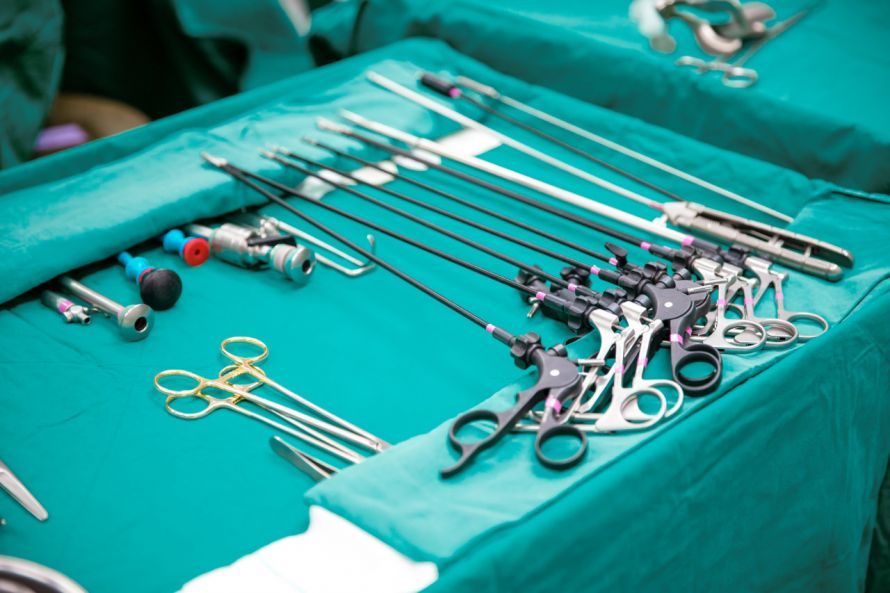
A standard 12-mm safety trocar and a 5-mm working trocar are then inserted into the abdominal cavity through the Verres needle. The safety trocar is a single-use device, while the working trocar is reusable.
Complications Associated with Single-Port Surgery for Gallbladder Removal
Gallbladder removal using the “keyhole technique” (laparoscopic cholecystectomy) is currently the gold standard in Germany. The procedure is very safe and has a very low complication rate.
The potential complications of gallbladder removal using the single-port technique depend largely on various factors, such as
- the patient’s comorbidities,
- complications resulting from gallbladder disease, and
- whether the surgery is elective or emergency.
In addition to general surgical risks such as
- bleeding,
- postoperative bleeding,
- infections,
- wound healing complications, or
- thromboembolism
Injuries to the bile ducts or adjacent organ structures occur extremely rarely. In very rare cases, potential intraoperative complications may necessitate a switch to an open surgical procedure.
The complication rate for single-port cholecystectomy is comparable to that of laparoscopic cholecystectomy. However,
- wound healing complications,
- postoperative pain, and
- potential incisional hernias
are less common.
It is entirely possible to live a normal life without a gallbladder. The quality of life without a diseased gallbladder is higher than with a diseased gallbladder.
Conclusion on the Single-Port Technique
All four single-port systems or techniques listed are suitable for gallbladder removal using the “keyhole” technique.
Due to their different functions and designs, the individual systems have specific advantages and disadvantages. All of the surgical methods listed here for gallbladder removal are safe procedures that yield the best possible postoperative and cosmetic outcomes.
About the medical author
Dr. med. Denis Ehrl
Medical writer