Expert Interviews
Dental Implants, Aligners (Invisible Braces), and CEREC (Ceramic Reconstruction): Expert Interview with Dr. Philipp Kaiser, MMSc, LLM

Alexandra Pfitzmann ·
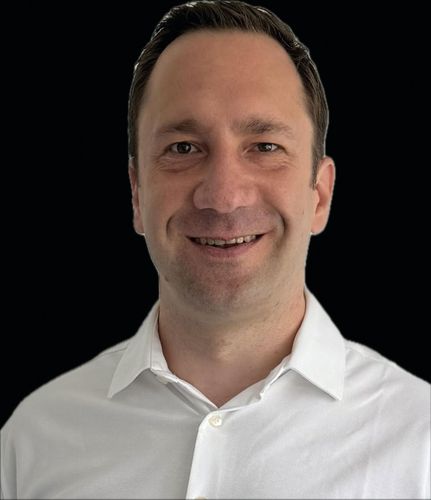
Dr. Philipp Kaiser, MMSc, LLM, is a specialist dentist focusing on cosmetic dentistry, implantology, and invisible orthodontics. At his practice in Draßburg, Burgenland, he offers comprehensive dental care together with an experienced team of dentists and dental technicians. The practice is distinguished by its modern equipment and high level of professional expertise, which enables personalized and resource-efficient treatment right on-site.
Since taking over the family-run practice in 2020, Dr. Kaiser has placed particular emphasis on detailed consultations and personal discussions with his patients to ensure optimal care. The practice’s core areas of expertise include cosmetic dentistry, implantology, orthodontics, periodontology, oral hygiene, and preventive care. Of particular note is the use of CEREC technology, which allows for the immediate fabrication of ceramic restorations, as well as the use of invisible braces (aligners).
Dr. Kaiser completed his dental studies at the Medical University of Vienna and specialized early on in implantology and digital processes. He expanded his expertise through several master’s programs in the fields of oral implantology, medical law, orthodontics, and digital dental technology. He has published numerous national and international professional articles and works as a freelance author for the Austrian journal “ZahnArzt.”
At the dental practice of Dr. Philipp Kaiser, MMSc LLM & Associates, patients benefit from modern technology such as digital impressions, 3D printing, and the practice’s own ceramic milling machine. Dr. Kaiser is known as a trustworthy and dedicated dentist who cares for his patients’ dental health with both passion and expertise. Invisible braces offer a high-quality and aesthetic solution for orthodontic treatment, and CEREC technology enables the rapid fabrication of ceramic restorations.
The editorial team at Leading Medicine Guide had the opportunity to speak with Dr. Kaiser about exactly that.

Orthodontic treatment and dental restorations are central aspects of modern dentistry that offer both aesthetic and functional benefits. Invisible braces and CEREC technology have established themselves as advanced methods in this field. Invisible braces make it possible to correct misaligned teeth discreetly, allowing patients to maintain a natural appearance during treatment. CEREC technology makes it possible to fabricate ceramic restorations precisely and efficiently in a single visit, which significantly improves patient comfort and reduces treatment time. These innovative techniques play a key role in optimizing oral health and meeting patients’ aesthetic expectations.
Invisible braces, such as clear plastic aligners or lingual braces, offer several advantages over traditional metal braces in terms of comfort and aesthetic results.
“Clear plastic aligners offer a virtually invisible solution for correcting misaligned teeth. At our specialized practice in Burgenland, we custom-make aligners to optimally and individually correct each misalignment. The clear aligners fit precisely to the patient’s teeth, ensuring a high level of comfort. Compared to fixed braces, aligners offer numerous advantages in everyday life. The aligners can be easily removed for eating and brushing teeth, which means that no food particles get stuck and brushing doesn’t become more difficult. Furthermore, the aligners are virtually invisible, so no one will notice that you’re undergoing orthodontic treatment,” explains Dr. Kaiser regarding the invisible aligners, adding:
“The aligners are custom-made, and the patient replaces them with a new pair every one to two weeks. Check-up appointments take place every two months at our office in Draßburg, which is ideally located between Mattersburg and Eisenstadt. The aligners needed for this period are available directly from us and can be conveniently taken home. Thanks to modern 3D technology, we can simulate the exact course of treatment in advance. This computer simulation allows us to see the final result of the aligner therapy even before treatment begins and to closely track how the teeth will change step by step.”
Invisible braces, such as clear aligners, offer an attractive option for correcting misaligned teeth.
Clear aligner systems are particularly effective for mild to moderate misalignments. These include crowded teeth, small gaps between teeth, or moderate corrections of crossbites or overbites. Computer-aided planning enables precise, step-by-step movement of the teeth using a series of custom-made aligners.
“In the past, invisible aligners could only be used to treat mild to moderate dental and jaw misalignments. Thanks to advanced technical developments, however, it is now possible to successfully correct even complex dental and jaw misalignments—in children, adolescents, and adults alike. Invisible aligners now offer a wide range of applications, even for difficult malocclusions such as crossbite, gaps between teeth, overbite, underbite, or severe crowding. Additionally, other dental issues such as periodontal disease or the presence of crowns and wisdom teeth can be taken into account. However, the success of the treatment depends largely on wearing the aligners regularly and consistently. Only then can optimal correction be achieved. “To determine whether invisible braces are the best solution for an individual’s specific situation, a personal consultation is essential. During this consultation, specific needs and conditions are carefully analyzed to assess whether another treatment method might be more appropriate,” explains Dr. Kaiser.
The treatment process and duration of treatment with invisible aligners differ in several ways from treatment with conventional fixed braces.
“The duration of treatment with invisible aligners varies primarily depending on the complexity of the misalignment of the teeth and jaws. In general, however, the treatment time is no longer than with conventional fixed braces. During an initial consultation, we can provide an initial estimate of the expected treatment duration, which may vary depending on the individual case. After the aligners are fitted, you may experience a slight feeling of pressure, especially at the start of a new treatment phase. This sensation is completely normal and indicates that the aligners are working correctly and applying force to the teeth. The discomfort usually subsides after a few days, once the teeth have adjusted to the new aligners. To ensure that the desired correction is achieved as planned, it is crucial to wear the aligners nearly around the clock, except for the time needed for daily oral hygiene and eating. The recommended wearing time is 22 hours a day, and this time should not be reduced if possible. Food and beverages can be consumed as usual, including alcohol, tea, and sugary drinks. The aligners should be removed while eating, chewing gum, or consuming alcohol and sugary drinks, and reinserted after meals. The aligners can also be worn comfortably in everyday life, whether during sports or in the sauna. Wearing makeup, such as lipstick, is also not a problem. “The aligner method is suitable for patients of all ages and can even be used during pregnancy,” Dr. Kaiser explains.
On average, treatment with invisible aligners takes about 6 months to 2 years, while treatment with conventional fixed braces typically lasts 1.5 to 3 years. While both methods offer effective options for teeth straightening, the treatment process differs in terms of comfort, flexibility, and time commitment. Invisible aligners offer greater aesthetics and comfort but require active cooperation from the patient. Conventional fixed braces are less flexible but are often the more robust option for complex misalignments. The choice of method should be tailored to each individual patient, taking into account the misalignment, lifestyle, and aesthetic preferences.
CEREC technology (Chairside Economical Restoration of Esthetic Ceramics) is an innovative procedure used in dental practices for the rapid and precise fabrication of ceramic restorations.
Dr. Kaiser explains this modern technology as follows: “CEREC technology represents an advanced solution that makes dental treatment both more efficient and more comfortable through the use of modern software, taking dental restorations to a new level. CEREC, which stands for “Chairside Economical Restoration of Esthetic Ceramics” (or “Cerec Reconstructions”), is a computer-assisted process for the digital fabrication of dental restorations such as crowns, bridges, inlays, and onlays. This technology allows us to fabricate high-quality, tooth-colored dental restorations right in our office—all in just one visit. At the start of the process, we take digital impressions of the teeth, eliminating the need for traditional impression materials. For the digital impression, we use a modern intraoral scanner, a highly advanced system for digital impression-taking. This scanner allows us to capture precise and rapid impressions of the dentition. A small, hand-held camera is positioned inside the patient’s mouth, using high-resolution imaging technology to provide detailed images of the teeth, gums, and other oral structures. This information is transmitted in real time to our computer system, where it can be processed immediately. The entire process is fast, precise, and completely painless.”
In the next step, a 3D model of the dental restoration is created using CAM (Computer-Aided Manufacturing) technology.
“Based on this digital model, a precisely fitted restoration is designed, which is then milled from a high-quality ceramic block. The milling process allows us to faithfully reproduce the natural tooth color and structure in great detail. The advantage of this method is that the restoration can be placed during the in-office procedure immediately after it is fabricated. The patient therefore leaves the office after just one visit with an aesthetically pleasing and functional dental restoration,” says Dr. Kaiser, highlighting the convenience of this solution.
CEREC is ideal for dental restorations following caries treatment, for example, in cases of larger cavities that can be treated with CEREC inlays or onlays. The fabrication of crowns and partial crowns, especially for damaged teeth, is also quick and precise. Furthermore, CEREC technology is ideally suited for cosmetic treatments, such as the fabrication of veneers, which improve the shape and color of the teeth. In acute cases, such as tooth fractures, the technology offers a quick and permanent solution. Replacing old fillings, such as amalgam fillings, with aesthetic and durable ceramic restorations is also easily possible with CEREC.
CEREC ceramic restorations are characterized by a range of material properties that significantly influence both their durability and their aesthetic quality.
One of the key advantages of CEREC ceramic is its high strength, which is achieved through the use of a special ceramic block. This ensures that the restorations remain resilient even under heavy chewing forces and intense pressure—such as those experienced in the molar region—and do not break or chip easily. The special composition of the ceramic plays a central role here: it contains a combination of crystalline and amorphous components that optimizes both the hardness and the flexibility of the restorations. Another important aspect is the high biocompatibility of CEREC ceramic. The material is well-tolerated and generally does not trigger allergic reactions, making it an ideal choice for patients with sensitive periodontal tissue or allergies to other materials, such as metals. This property helps ensure that CEREC ceramics remain stable in the mouth over the long term and promote healthy oral flora. Aesthetically, CEREC ceramic restorations deliver excellent results because they are translucent and thus blend perfectly with the natural tooth color. The material has high translucency, which reflects light similarly to natural enamel, resulting in a particularly natural appearance. This property makes it possible to perfectly restore both front teeth and visible areas of the molars without the restoration standing out from the natural teeth. In addition, CEREC ceramics can be precisely customized in shape and size to ensure the patient’s individual aesthetic needs are met. Compared to many other dental filling materials, this material is less susceptible to changes caused by daily wear and tear such as chewing, brushing, and contact with staining foods and beverages. This durability and the aesthetic benefits make CEREC ceramics an excellent choice for long-term dental care.
Why implants are also a good alternative.
A dental implant is a modern and durable solution for replacing missing teeth. It consists of an artificial tooth root that is surgically placed into the jawbone to support a dental crown or other types of dental restorations. Dental implants offer an aesthetically pleasing and functional alternative to traditional dental restoration methods such as bridges or dentures, as they integrate seamlessly into the natural dentition and significantly improve patients’ comfort and quality of life.
“As a practice specializing in dental implants, our goal is to provide dental restorations that fully replicate the function of natural teeth and positively impact the patient’s quality of life. Once the implant has fused with the jawbone, a custom dental crown is fabricated in our in-house dental laboratory and attached to the implant. This provides the patient with a dental restoration that feels like a natural tooth, both functionally and aesthetically. Compared to other dental restoration solutions, implants offer numerous advantages. They not only close gaps between teeth for aesthetic reasons but also provide a secure hold that remains stable while eating, speaking, and laughing. A key advantage of dental implants is that they do not need to be anchored to adjacent teeth, as is required with bridges. This means that healthy teeth are fully preserved and do not need to be ground down. Implants are firmly anchored in the jawbone and provide a secure hold. The implant also helps stabilize the jawbone by supporting the natural chewing process and counteracting bone loss, which often occurs after tooth loss. “Implants are also a good solution for gaps at the ends of rows of teeth,” emphasizes Dr. Kaiser.
Thank you very much, Dr. Kaiser, for providing insight into these special treatment options for orthodontics and dental prosthetics!
Share this article
Expert Interviews
Read next
- Expert interview
Expert interview with Professor Dr Elmar Herbst, PhD
Oct 15, 2026
Patient-centred and personalised knee surgery
Read more - Expert interview
Cardiogeriatrics: Significance and benefits in the context of hospital reform
Sep 21, 2026
Cardiogeriatrics: Significance and benefits in the context of hospital reform
Read more - Expert interview
Expert Interview with Professor Dr. Amadeus Hornemann, MPH
Sep 18, 2026
Prof. Amadeus Hornemann on Precision Medicine in Gynecology: Modern Surgery, New Techniques, Better Quality of Life
Read more