Expert Interviews
Spinal Surgery

Alexandra Pfitzmann ·
Spinal surgery focuses on the treatment of diseases and injuries of the spine that can cause pain and/or neurological deficits, thereby significantly impairing quality of life.
It is used when conservative treatments are no longer sufficient or when there is an acute risk to the nerves. In Germany, back and spinal problems are among the most common health issues: About 70–80 % of the population is affected at some point in their lives, many of them repeatedly or chronically.

“When you look at the entire process, spinal surgery essentially deals with four major groups of conditions. First and foremost are degenerative changes—that is, classic signs of wear and tear. Due to demographic trends, these are now the most common reason patients seek treatment. While trauma continues to play a role, its overall incidence is declining.
If we exclude osteoporotic fractures in older adults—which are technically classified as trauma but are treated according to different criteria—this trend becomes even more pronounced. Another area is inflammation, which has been on the rise again in recent years. This is due in part to the fact that people are living longer and becoming sicker, and in part to specific patient groups: people with immunosuppression, chronic diseases, inadequate care, or open wounds.
Such inflammation can also occur following conservative treatments such as injections. Ultimately, however, it is usually a matter of a weakened immune system, which makes the body more susceptible to invading bacteria. The fourth major area is spinal tumors. Their prevalence has hardly changed, but treatment has become more aggressive because modern implants and surgical techniques allow for more stable and minimally invasive surgical options—for example, in cases of tumor-related fractures. Overall, however, the focus of spinal surgery remains clearly on degenerative diseases, as they affect the most people and offer the widest range of treatment options.
“In cases of tumors, inflammation, or acute trauma, on the other hand, the scope for action is usually more limited, and the treatment pathways are more clearly defined,” said PD Dr. Brenke at the beginning of our conversation.
Modern imaging techniques have fundamentally changed the way indications are determined in spinal surgery, as they now allow for a significantly more precise assessment of anatomical structures than was possible just a few years ago.
“When a patient comes in for a consultation, they usually already have various previous test results with them. Today, magnetic resonance imaging—or MRI—is crucial for further diagnosis. It forms the basis of the diagnostic process, provided it is possible—which is not the case, for example, with certain pacemakers or metal implants in the body. When evaluating a case, it is important not to consider either the image alone or the patient alone. The decision on treatment always arises from a combination of both factors. The better the imaging, the more precisely treatment can be planned, because it provides an increasing amount of detail. For the most common conditions—degenerative changes—the question arises as to when conservative treatment is appropriate and when it is not.
Professional societies have established guidelines and recommendations for determining indications: Conservative treatment—for example, for a herniated disc—should be pursued for about six weeks, provided there is no paralysis, no bladder or bowel dysfunction, and no severe spinal cord symptoms. “If such warning signs appear, surgery is indicated,” explains PD Dr. Brenke, adding:
“In practice, however, pain is the most common reason patients seek care—and pain is subjective. Some patients can barely tolerate six weeks of symptoms, cannot tolerate medication, or do not want to wait that long. This plays a major role in cases of acute herniated discs. In cases of chronic symptoms, such as those seen in older adults with spinal stenosis, the primary concern is quality of life. If someone says they can no longer walk, can no longer go for a stroll, and that this is impairing their life, then that is a strong argument for surgery.
If, on the other hand, someone has been living with stenosis for years and is managing well, surgery is not performed. Conservative treatment makes sense in such cases—even though studies show that it has little effect on spinal stenosis in the medium term. Most patients eventually undergo surgery or adjust their activity levels. In addition, expectations have changed. Today, 70- or 75-year-olds come to my office who still want to be active, travel, hike, and play sports. Twenty years ago, that wasn’t a given at this age.
At the same time, the surgical landscape has expanded significantly. In the past, there were one or two surgical methods; today, there is a whole range of procedures and implants. The appropriate method must be selected individually for each patient—and that is precisely what makes modern spinal surgery complex.”
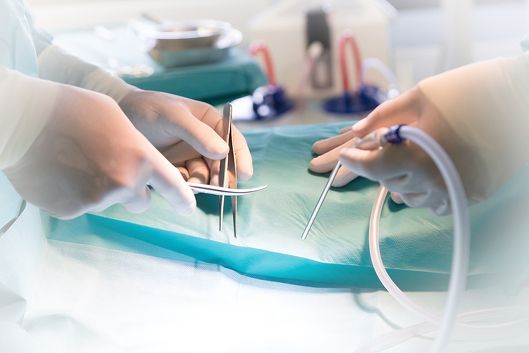
Minimally invasive spinal surgical techniques are characterized by keeping access to the affected area as small as possible, leaving surrounding muscles and soft tissues largely intact, and treating the sensitive nerve structures under optimal visibility and control. In recent years, these techniques have advanced significantly, enabling doctors today to perform surgeries with much greater precision, while minimizing tissue damage and ensuring greater safety.
 Neurosurgery II
“A look at the evolution of spinal surgery shows just how much the field has changed. In the late 1980s, there were essentially one or two surgical methods used for nearly all patients. Today, there is a wide variety of different procedures and implants, and the appropriate combination must be selected for each individual case. This makes treatment more challenging, as a decision must be made on a case-by-case basis for each patient regarding which procedure and which implant are best suited to achieve the goal—an improvement in quality of life.
This involves precise imaging, usually an MRI, supplemented by a CT scan or X-ray if necessary. In a way, this individualized treatment approach is reminiscent of personalized medicine in oncology, even though the mechanisms are different. The goal is to find the optimal procedure for each patient. At the same time, there are significantly fewer high-quality studies in spinal surgery than in other medical fields. The reason is simple: such studies are extremely complex and expensive.
University hospitals would be ideally suited for this, but they are not necessarily representative of general healthcare practice, and as soon as a study has methodological weaknesses—e.g., lack of randomization, no independent imaging lab, insufficient sample size—its validity is called into question. As a result, much of what is done in spinal surgery is based more on experience than on traditional evidence. This places considerably higher demands on the treating physicians. It is not enough to simply evaluate images; one must see the patient, speak with them, and understand the overall situation. Complex cases, in particular, cannot be decided based solely on MRI images.
In addition, the consultations themselves are time-consuming. In specialized clinics, 20 to 30 minutes are allocated per patient—a timeframe that is simply not feasible in many practices. At the same time, spinal surgery is associated with significant anxiety for many people. The idea of undergoing spinal surgery immediately brings to mind thoughts of paralysis, nerve damage, or paraplegia. That is why the psychological aspect plays an important role: risks must be communicated openly, but so must the fact that modern techniques significantly reduce these risks.
“Standardized procedures, clear processes, and well-coordinated teams play a decisive role in minimizing complications and ensuring a smooth process from the initial consultation through follow-up care,” emphasizes PD Dr. Brenke.
Microneurosurgery enables millimeter-level precision under the surgical microscope, for example in cases of herniated discs or narrow spinal canals. Navigation- and robotics-assisted systems improve the placement of screws and implants, while neuromonitoring tracks nerve function during the procedure. This combination makes procedures safer and more targeted—especially for clearly localized conditions. However, open access remains necessary for very large tumors, severe instabilities, or complex deformities.
PD Dr. Brenke provides an example: “When a patient comes to the clinic with a diagnosis of spinal canal stenosis and surgery is necessary, the procedure can be easily explained using a simple case example. In cases of uncomplicated stenosis—that is, without spondylolisthesis, misalignment, or additional instability—the condition is usually an age-related narrowing of the canal. Many patients first try conservative treatments for a few months, but if their quality of life remains significantly impaired, surgery becomes an option. For a single vertebra, the procedure takes about 45 minutes, and the hospital stay is usually three days these days.
Patients from the local area can arrive on an empty stomach on the day of surgery, as all preparations are done on an outpatient basis. In advance, they receive a detailed schedule explaining what the first few days will look like, how soon they’re allowed to get out of bed—namely, immediately after surgery—how to walk while managing pain, how thrombosis prevention is handled, and what to expect once they return home. The question of rehabilitation often comes up. Rehabilitation is possible, but not strictly necessary. Many people have a different idea of what it entails than what it actually is.
Studies show that the educational aspect—that is, understanding one’s own condition and appropriate activity levels—is often more important than purely physical exercise. Tissue healing takes four to six weeks. After that, the patient can usually resume normal physical activity. A follow-up examination is offered but is not mandatory. Whether the stenosis recurs at the same site depends on the underlying condition. In a straight spine without spondylolisthesis, the likelihood that surgery will be required at exactly this same site is extremely low.
Herniated discs tend to occur between the ages of 40 and 50; as people age, the intervertebral discs dry out, so herniations become less common and stenosis becomes the predominant condition. Therefore, once stenosis has been surgically treated, that section is generally considered permanently resolved.”
Another point is the question of spinal fusion. Many people associate this with the idea of being barely able to move. In fact, spinal fusion is a procedure that is only used when there is instability that cannot be controlled by other means.
“Essentially, it accelerates a process that the body would undergo naturally at a very advanced age anyway. The degree of restricted movement depends on the extent of the fusion. Ideally, only one pair of vertebrae is fused. Longer fusions are only necessary in cases of misalignment, fractures, or poor bone quality. It’s important to understand that surgery never makes the spine ‘as good as new.’
It improves the situation, but always at a certain cost—whether through residual limitations or potential complications down the line. There are also motion-preserving procedures such as intervertebral disc prostheses, but here too, the belief that everything will be as it was before rarely comes true. “It is precisely here that adequate patient education must take place,” says PD Dr. Brenke.
There are no areas of the spine where there is absolutely no risk to nerve tissue. A distinction is made between the cervical and thoracic spine, where the spinal cord plays a central role, and the lumbar spine, where the spinal cord anatomically ends and only nerve fibers emerge.
“The dreaded term ‘paraplegia’ is, strictly speaking, not applicable to the lumbar spine. Nevertheless, complications—such as postoperative bleeding—can lead to significant neurological deficits even there, because pressure is exerted on the nerve structures. This is particularly important to note in patients taking blood thinners or with pre-existing clotting disorders. Thanks to modern techniques, direct nerve paralysis caused by the surgery itself has become very rare today.
However, there is no such thing as zero risk. A key factor in ensuring safety is that the surgeon knows exactly what to expect. That is why precise imaging is so important. “One should never perform surgery without knowing the anatomical situation in detail. Anatomy varies from person to person, and the more precisely one knows in advance where specific structures are located, the safer and more successful the procedure can be,” emphasizes PD Dr. Brenke.
When it comes to robotic assistance in spinal surgery, the reality currently plays a much smaller role than many assume. There was an initial robot hype about 20 years ago, but little came of it at the time, and the systems disappeared from the market again.
PD Dr. Brenke explains: “Now robots are reappearing, being promoted by companies, but so far they play hardly any role in actual clinical practice. What does, however, have real significance are modern assistance systems such as navigation. They work similarly to a car navigation system: When placing implants, computer-assisted imaging provides precise guidance, allowing screws and instruments to be positioned much more accurately than in the past.
This technology is now standard—unlike full-fledged robots, whose cost-benefit ratio is not yet convincing. Comparisons with systems like the Da Vinci robot from other medical specialties do not apply here. Spinal surgery has historically evolved from several disciplines—neurosurgery, orthopedics, and trauma surgery—and to this day is not recognized as a separate medical specialty. As a result, different ways of thinking and technical developments converge, which further influences the evaluation of new technologies. The demands for precision, safety, and anatomical understanding are high, and not every innovation from other surgical fields can be meaningfully applied.”
The risk of postoperative complications in complex spinal procedures can be reduced primarily through careful preoperative planning, precise surgical technique, and close follow-up care. First and foremost, it is crucial that patients undergo a comprehensive examination before the procedure to identify comorbidities, individual risk factors, and the exact anatomical condition of the spine.
“When discussing the quality of outcomes, it quickly becomes clear that this area remains a major challenge in spinal surgery. Process quality is now easily measurable and largely standardized through certifications such as KTQ, DIN-ISO, or the guidelines of the Spinal Society. These standards ensure clear procedures and a high level of process reliability. But when it comes to outcome quality—that is, the question of whether a treatment was truly successful—everyone reaches their limits.
Although various scales exist, they are rarely collected systematically. A technically successful operation says little about whether the patient has achieved their personal goal. For one person, success means being able to play competitive sports again; for another, it simply means crossing the street without pain. The only criterion that is truly recorded across the board is mortality. The § 21 data that hospitals report to health insurance companies allows for a precise understanding of how many patients die, where, and from what causes. For spinal surgery, however, this is of little help, since mortality rates for disc surgeries, for example, are practically zero.
Reliable data is lacking for all other aspects of outcome quality—in Germany as well as in many other countries. Case volumes play a role in this context but are often discussed in a misleading way. A hospital performing 700 procedures, carried out by five surgeons, is not automatically better or worse than a hospital performing 400 procedures carried out by two surgeons. Specialized clinics where a small number of surgeons have been performing exclusively spinal surgeries for years cannot be compared to teaching hospitals where procedures are distributed among many surgeons.
At our own clinic, just under 1,000 spinal surgeries are performed annually, of which over 750 are for degenerative conditions. Interdisciplinary care at the clinic is clearly structured. Only one surgical department is involved, supplemented by the anesthesia team. “We are currently establishing a pain management program, including invasive procedures, and we have external partnerships for anything not available in-house,” explains PD Dr. Brenke.
People rarely change their lifestyles—those who were active before surgery usually remain so, and those who did little before are unlikely to start afterward. Exceptions exist for severely obese patients, who can benefit significantly from bariatric procedures or modern weight-loss injections. Back pain associated with severe obesity often cannot be resolved surgically and requires other therapeutic approaches. Acute conditions such as a herniated disc are, of course, treated surgically; technically, this is easily feasible. However, in cases of complex spinal fusion, the risk of complications increases significantly in patients with obesity, which is why these cases must be weighed particularly carefully.
Spinal surgery has reached a point where medical progress, structural challenges, and individual patient factors are more closely intertwined than ever before. While surgical techniques and therapeutic approaches are constantly evolving, fundamental questions remain unresolved—such as those regarding a genuine concentration of care or reliable quality of outcomes.
“First and foremost, we need a hospital reform that truly makes a difference—and in its original, unadulterated form. The market remains overcrowded; there are too many providers with too few cases,” states PD Dr. Brenke, adding:
“What patients can do on their own to keep their spine healthy is relatively clear. Degenerative changes are largely genetically determined; many changes cannot be prevented, even with the best of efforts. But what has been proven to help is exercise: sports, weight management, and regular physical activity. General recommendations, such as two workout sessions per week, make sense. Strength training is particularly important—especially as we age. It preserves muscle mass, protects against falls, and stabilizes the body’s overall posture.
The spine should not be viewed in isolation: the hips, knees, shoulders, and leg muscles are always part of the picture. Nutrition also plays a role, especially with regard to prehabilitation before major surgeries. Many overweight people are also malnourished. While some factors, such as osteoporosis, are difficult to improve in the short term, others can be addressed. One example is blood management, which originated in religious contexts but is now an important component of modern surgery.
The goal is to avoid transfusions, reduce complications, and better prepare patients for surgery. For severely obese patients, weight loss prior to surgery can be crucial. Modern weight-loss injections have opened up new possibilities in this area. In such cases, collaboration with the primary care physician is essential to finding a solution together. After successful weight loss, surgery can be performed much more safely. This demonstrates how important an individualized approach is—one-size-fits-all recommendations fall short.”
The range of services offered by the Knappschaftkliniken Gelsenkirchen-Buer covers nearly the entire spectrum of spinal surgery, with the exception of the treatment of juvenile scoliosis, which is traditionally part of orthopedics. The clinic has particular expertise in the upper cervical spine as well as in the field of trauma, which is closely related to neurosurgical practices.
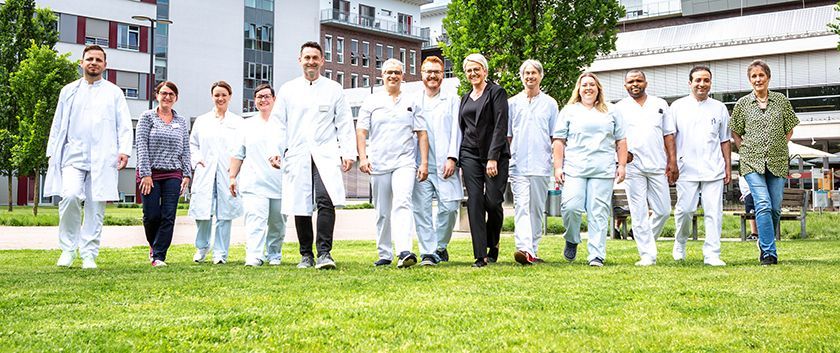 Photo: Team
“The greatest challenge in everyday surgical practice remains giving 100 percent every day. Every operation—whether minor or major—must be performed with the same standards of precision and quality. Younger colleagues, in particular, must learn that a few successful procedures do not yet mean they’ve mastered the routine. Every operation must be perfect, time and time again. That is precisely the crux of the challenge,” emphasizes PD Dr. Brenke at the end of our conversation.
Thank you very much, PD Dr. Brenke, for this informative conversation about spinal surgery!
- Chief of Neurosurgery and Spinal Surgery with extensive surgical expertise
- Specializes in spinal surgery, neuro-oncology, vascular neurosurgery, and peripheral nerves
- Responsible for the comprehensive neurosurgical care of the brain, spinal cord, and spine
- Director of the certified specialized spine center
- Many years of experience at leading neurosurgical clinics; habilitation in 2016
- Additional qualification in sports medicine, expanding the diagnostic and therapeutic spectrum
Share this article
Expert Interviews
Read next
- Expert interview
Expert interview with Professor Dr Elmar Herbst, PhD
Oct 15, 2026
Patient-centred and personalised knee surgery
Read more - Expert interview
Cardiogeriatrics: Significance and benefits in the context of hospital reform
Sep 21, 2026
Cardiogeriatrics: Significance and benefits in the context of hospital reform
Read more - Expert interview
Expert Interview with Professor Dr. Amadeus Hornemann, MPH
Sep 18, 2026
Prof. Amadeus Hornemann on Precision Medicine in Gynecology: Modern Surgery, New Techniques, Better Quality of Life
Read more