Expert Interviews
Dr. Garri Tchartchian on Fibroids: Success Through a Special Surgical Technique

Claudia Dechamps ·
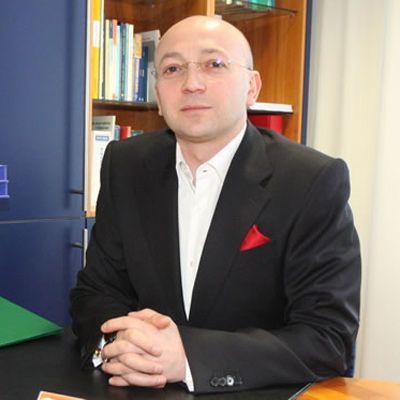
Many women suffer from fibroids—up to fifty percent. The figures cited by experts vary widely because many women are unaware they have fibroids. Fibroids are benign tumors in the muscular layer of the uterus—that is, growths that, depending on their location and size, can cause quite severe symptoms. Dr. Garri Tchartchian, an experienced specialist, is a leading expert in minimally invasive fibroid treatment: As the director of the Fibroid Center at the Clinic for Minimally Invasive Surgery (MIC) in Berlin, he performs more fibroid procedures than anyone else in Germany. Year after year, this amounts to around a thousand minimally invasive surgeries—an impressive number! Dr. Tchartchian has also published numerous scientific papers on the subject and developed a special surgical technique named after him: the “Change over according to Tchartchian” method. We spoke with the fibroid specialist about modern treatments for this condition.
 Leading Medicine Guide: Many women are affected by fibroids. When is treatment necessary?
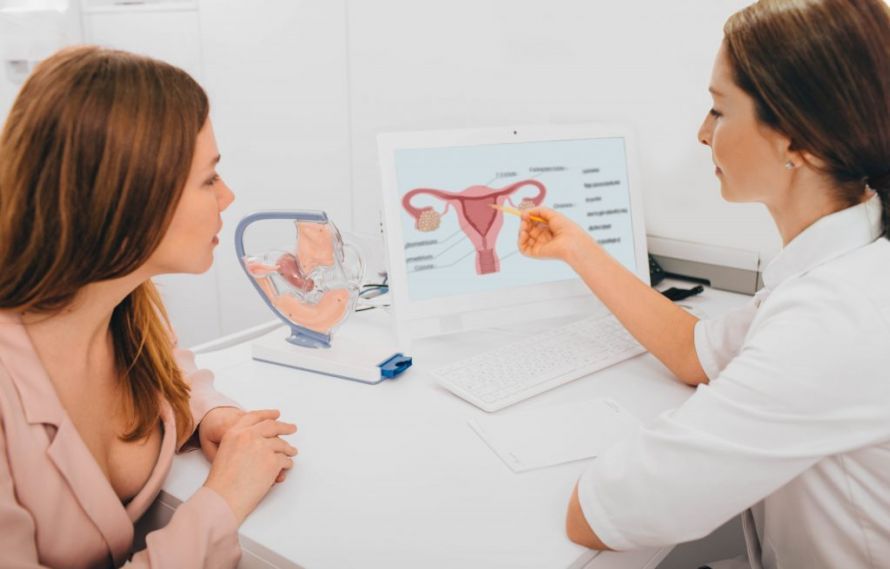
Dr. Garri Tchartchian, M.D.: 99.94 percent of fibroids are benign tumors in the muscular wall of the uterus. In most cases, fibroids do not cause any symptoms. However, depending on their location and size, medical intervention may be necessary. Some fibroids are located in such an unfavorable position that we take action even when they are only one to two centimeters in size. Others we can continue to monitor even when they reach six to eight centimeters in size. However, if the fibroids cause heavy bleeding or if the patient is unable to conceive, then we intervene medically.
Leading Medicine Guide: Are there any other methods besides surgical treatment?
Dr. Garri Tchartchian: Yes, we have conservative alternatives available. The first is embolization—the occlusion of blood vessels. However, this method has the disadvantage of potentially causing severe pain. The second option is MRgFUS treatment: This is a magnetic resonance-guided, focused ultrasound treatment. In this procedure, the fibroid is treated with ultrasound waves, causing it to shrink. This method does not cause pain, but the fibroids can regrow after a year. And we do not recommend this method if you still wish to have children. The third method is hormonal therapy with Esmya. There have been serious complications in the past, which is why we do not use this method at the MIC.
Leading Medicine Guide: You are a leading specialist in Germany for minimally invasive myoma surgery. There is even a surgical method named after you!
Dr. Garri Tchartchian: At MIC Berlin, we perform around 1,500 fibroid surgeries annually; I personally perform about a thousand. As a result, I now have many years of experience in this specialty and have continuously improved and refined my own surgical techniques over time. 99.7 percent of the fibroid surgeries we perform at MIC Berlin are minimally invasive procedures. We can even operate on large fibroids using the “Change over according to Tchartchian” method—that’s the name of the procedure, which is now also used internationally. The uterus containing the fibroid, which we removed via minimally invasive surgery without complications, weighed over 4065 grams.
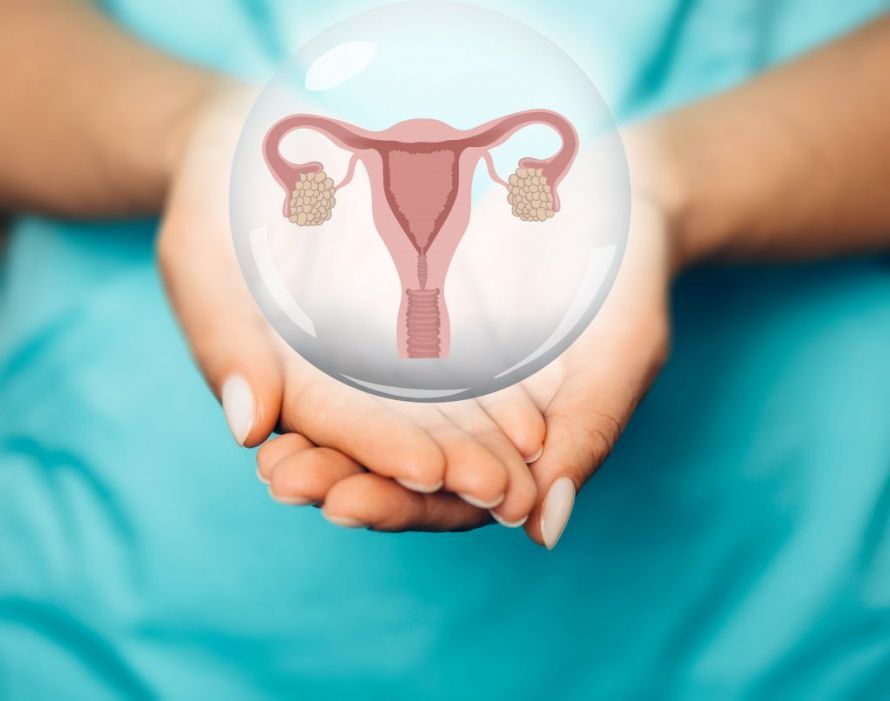
Leading Medicine Guide: We’ve done our homework: Fibroids develop in the muscular layer of the uterus. So they can’t simply be cut out. Can you explain the procedure in more detail?
Dr. Garri Tchartchian: Depending on the location of the fibroid, surgery can be performed through the vagina. However, most fibroids are treated using minimally invasive techniques. We call this “plastic uterine reconstruction” (PUR), because it takes into account the specific characteristics of the uterine muscle layers—especially when treating patients who wish to have children. The surgical field is accessed through two small incisions in the lower abdomen and one incision in the navel. The uterus is then opened layer by layer, and the fibroid is exposed. The uterine layers are preserved as much as possible and remain intact. The layers are sutured one by one using absorbable suture material, which dissolves over time.
Leading Medicine Guide: So patients can still become pregnant after this procedure, right?
Dr. Garri Tchartchian, M.D.: With our procedure, the supporting, functional layers of the uterus—which are essential for pregnancy—are damaged as little as possible. The scars are kept very small, so that the uterine wall is certainly capable of withstanding the stresses of pregnancy. If we were to examine the surgical site again via laparoscopy about six months after the procedure, the treated areas would be virtually invisible.
Leading Medicine Guide: Couldn’t women still have a child even if they have fibroids?
Dr. Garri Tchartchian, M.D.: This carries various risks: fibroids can cause bleeding, trigger premature contractions, and lead to a preterm birth or miscarriage. We recommend that patients with fibroids contact us so that we can discuss all possible treatment options together.
Leading Medicine Guide: If a patient is diagnosed with fibroids, what should she do? Does it make sense to simply go to the nearest hospital, or should she seek care at a specialized center?
Dr. Garri Tchartchian, M.D.: I strongly advise going to a specialized center, as that’s where the most experience lies. Every center in Germany has its own area of focus. Our fibroids center specializes in minimally invasive procedures for fibroids.
Leading Medicine Guide: Can patients with public health insurance also come to your center, MIC Berlin?
Dr. Garri Tchartchian: Of course—we accept all health insurance plans, and we have dedicated consultation hours for complex cases—what we call “Difficult Cases.” We can also be consulted for a second opinion on a diagnosis and treatment plan—that is, as a “second opinion.” As a result, we see many patients from outside the region. This includes about 400 patients annually who were initially offered an open abdominal incision—but whom we are then able to treat using minimally invasive techniques. A large transverse incision in the lower abdomen or a large longitudinal incision severely damages the abdominal wall and is extremely taxing on the patient. With our small incisions, the risk of adhesions is significantly reduced; patients experience less pain, recover more quickly, not to mention the cosmetic benefits.
Leading Medicine Guide: In the past, the entire uterus was often removed during myomectomy procedures. What is your view on this?
Dr. Garri Tchartchian, M.D.: Fortunately, those days are over for us. I believe we should treat a woman’s wish to keep her uterus—even as she ages—with the utmost respect. We were the first to perform organ-preserving surgery even for large fibroids and older patients. This keeps the pelvic floor and genital area intact, allowing women to recover more quickly.
Dr. Tchartchian, thank you for this interesting interview!
What is a fibroid?
Fibroids are benign tumors that can form in the muscular layer of the uterus. They usually go unnoticed. It’s only when they cause symptoms such as heavy bleeding or persistent infertility that they come to light. Through a physical examination and ultrasound, the doctor can determine their location and size. Fibroids can only be completely removed through surgery. The risk of recurrence is about fifteen percent.
Uterine Fibroids: Decision-Making Resources
If you have been diagnosed with fibroids and are unsure about what treatment decision to make, this page may be helpful:
You can contact Dr. Tchartchian directly via his profile page.
Image sources: nerudol, Erica Smit, Tierney – Adobe Stock.
Share this article
MIC – Minimal Invasive Surgery Clinic
ProfileExpert Interviews
Read next
- Expert interview
Expert interview with Professor Dr Elmar Herbst, PhD
Oct 15, 2026
Patient-centred and personalised knee surgery
Read more - Expert interview
Cardiogeriatrics: Significance and benefits in the context of hospital reform
Sep 21, 2026
Cardiogeriatrics: Significance and benefits in the context of hospital reform
Read more - Expert interview
Expert Interview with Professor Dr. Amadeus Hornemann, MPH
Sep 18, 2026
Prof. Amadeus Hornemann on Precision Medicine in Gynecology: Modern Surgery, New Techniques, Better Quality of Life
Read more