Expert Interviews
Peritoneal and Ovarian Cancer

Alexandra Pfitzmann ·
Ovarian cancer is one of the most aggressive malignant diseases of the female reproductive tract. Peritoneal carcinomatosis usually occurs as a consequence of ovarian cancer or as a primary disease in its own right.
These two tumor entities are closely intertwined: they exhibit similar molecular alterations and are often not clinically detected until advanced stages because early symptoms remain nonspecific. This close biological relationship explains why the diagnosis, treatment, and prognosis of both diseases are now largely considered together—and why a deep understanding of their pathophysiology is crucial for early detection and optimal treatment of affected patients.
To learn more about this, the editorial team of the Leading Medicine Guide spoke with Dr. med. Dipl.-Mus. Zaher Halwani.

Peritoneal and ovarian carcinomas arise from a biological network that is far more complex than was long assumed.
“Peritoneal carcinoma is often a consequence of advanced cancer, particularly ovarian or tubal carcinoma—the tumor cells ‘send’ metastases into the peritoneum, which then manifests as peritoneal carcinomatosis. However, peritoneal carcinomatosis can also be seen in other types of cancer, such as colorectal or appendiceal cancer, and in rare cases, it even arises directly from the peritoneum itself—in which case it is called peritoneal carcinoma.
“In gynecologic oncology, we most commonly encounter the form that originates in the ovary or fallopian tube. A typical feature of this is the accumulation of fluid in the abdominal cavity, medically known as ascites,” explains Dr. Halwani at the beginning of our conversation.
Genetic factors play a decisive role. Reproductive factors such as childlessness, late menopause, or long-term hormone therapy increase the risk, while pregnancies and the use of hormonal contraceptives tend to offer protection.
Peritoneal and ovarian cancers result from an interplay of genetic susceptibility, the biological vulnerability of fallopian tube tissue, and the unique anatomy of the abdominal cavity. Their close relationship explains why they are considered together clinically and why a deep understanding of their development is so crucial for earlier detection and more effective treatment.
Peritoneal and ovarian cancers are considered particularly dangerous because several unfavorable factors converge, complicating their development, spread, and treatment.
“Many patients initially hardly notice that something is wrong—which is why ovarian cancer is often referred to as a ‘silent killer.’ The early symptoms are nonspecific: the abdomen swells, something feels ‘off,’ and sometimes bowel habits change. It’s only when the symptoms become more pronounced that many seek medical attention—and by then, doctors often find either a tumor or fluid in the abdominal cavity, known as ascites.
That is precisely what makes the disease so dangerous: it remains undetected for a long time and is often not discovered until it has reached an advanced stage. Why some women develop the disease and others do not is only partially understood. Genetic factors play an important role, especially BRCA mutations, which are also associated with breast cancer—the most prominent example being Angelina Jolie.
About 20% of patients with ovarian cancer carry such a mutation. That is why family history is so important: if there is a cluster of breast or ovarian cancer cases in the family, genetic testing or more frequent monitoring should be considered. “Generally speaking, the disease occurs more frequently in older women, typically starting around age 68. However, in cases of a genetic predisposition, it can also occur earlier, though only very rarely before the age of 40,” explains Dr. Halwani.
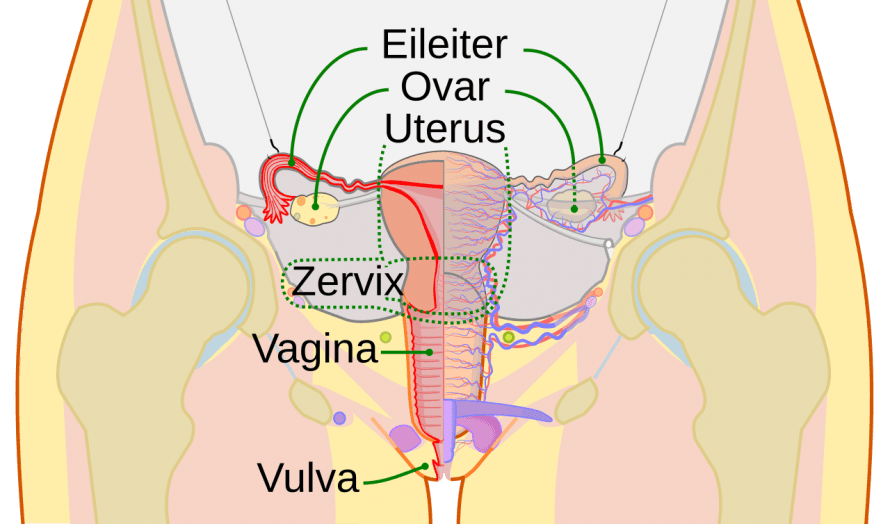
The diffuse spread of the disease makes it difficult to detect and even more difficult to remove completely. In addition, the aggressive form—high-grade serous carcinoma—almost always carries a mutation in the TP53 gene. This gene normally serves as a key protective mechanism for the cell. When it fails, malignant cells can divide and mutate extremely rapidly.
This explains the rapid growth and high tendency to metastasize. At the same time, while these tumors initially respond well to chemotherapy, they often develop resistance. As a result, many patients experience a recurrence after successful initial treatment, which is often more difficult to control than the original disease. Another factor is the anatomy of the abdominal cavity itself. The abdominal cavity provides tumor cells with a sort of “sliding surface” on which they can easily spread.
Unlike tumors that grow in solid organs, there are no natural barriers here to slow their spread. This often results in numerous small tumor foci that are difficult to remove completely through surgery. However, the prognosis depends crucially on how much tumor tissue remains after surgery.
Finally, late diagnosis also plays a major role. Because the early symptoms—bloating, flatulence, and mild abdominal pain—are nonspecific, they are often not taken seriously or are attributed to other causes. By the time the disease is detected, it is usually already at an advanced stage. At this stage, treatment is complex, protracted, and associated with considerable strain.
The close biological relationship between peritoneal and ovarian carcinomas stems from their shared origin in the fallopian tubes. For diagnosis, this means that the focus shifts away from the ovaries and toward the fallopian tubes—and that the challenge of early detection remains significant.
Regarding the diagnosis, Dr. Halwani comments: “When a patient comes to see me, the diagnostic process always begins with a thorough clinical examination, followed by an ultrasound and blood tests, including tumor markers. At the same time, other causes must be ruled out—such as diseases of the intestines, stomach, or liver, which can also lead to abdominal fluid.
Only once these differential diagnoses have been clarified and all the information fits together can we narrow down what the problem is. Then comes the actual diagnostic confirmation: either through a tissue sample or an analysis of the abdominal fluid. “If the findings are very clear, surgery can sometimes be scheduled immediately,” she explains, and goes on to discuss treatment:
“Once it has been established that the condition is advanced ovarian cancer, we discuss the treatment together, which is always based on three pillars: surgery, chemotherapy, and adjuvant therapy. These components should be implemented as fully as possible, even if the order may vary. For some patients, for example, we start with chemotherapy and perform surgery afterward; both approaches have advantages and disadvantages, but the key is that all three steps are completed.
How quickly this must be done depends on the patient’s condition. If there are no acute symptoms, one should not act hastily, but rather first establish a clear diagnosis and then choose an experienced center. The surgery should be performed by teams that frequently perform such procedures—because complete tumor removal significantly improves the chances of survival. To achieve this, all visible tumor components must be removed, regardless of whether they are located in the intestine, the spleen, or the diaphragm.”
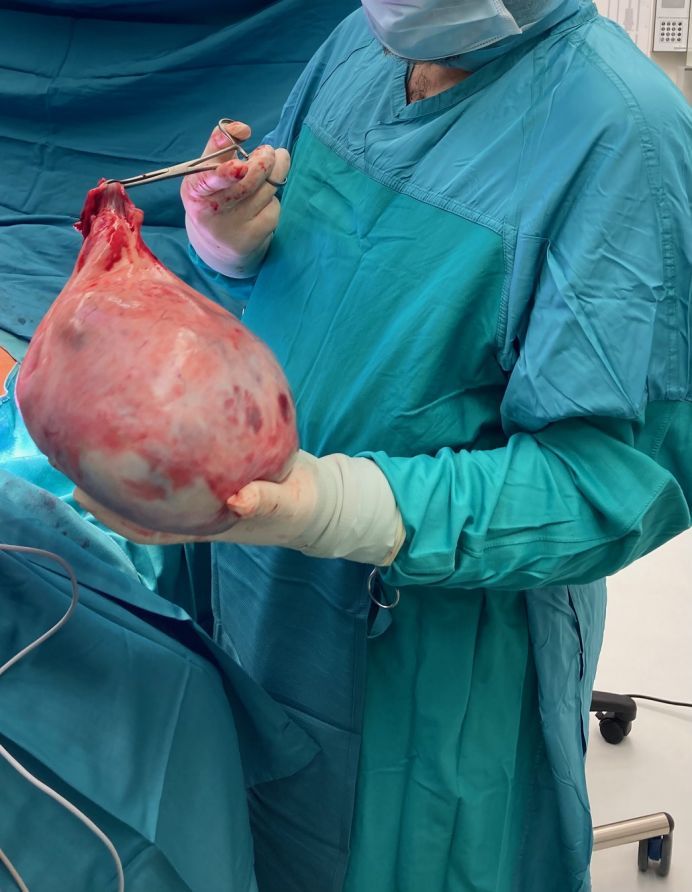
If the tumor’s distribution is so complex that primary surgery would very likely leave too much residual tumor behind, neoadjuvant chemotherapy is sometimes chosen. Its purpose is to reduce the tumor mass, limit its spread, and improve the chances of removing the tumor as completely as possible during a subsequent surgery.
The patient’s overall health also plays a role: For patients who are severely weakened by the disease or have comorbidities, immediate major surgery may be too risky. In such cases, chemotherapy offers a way to stabilize the patient first. However, this should be discussed in detail with the patient and her family, and the current data should be communicated openly and honestly. There is a wealth of new and well-established published research on this topic.
“Whether surgery, chemotherapy, and adjuvant therapy can actually lead to a cure depends heavily on the stage of the disease—but the outcomes are improving, especially since effective adjuvant therapies have become available. These additional medications, taken during or after chemotherapy, are intended to prevent the tumor from returning.
Nevertheless, the risk of relapse remains high depending on the initial situation. However, a recurrence does not mean that there are no more options: Clear guidelines exist for these situations, specifying when surgery should be performed again and when chemotherapy alone followed by adjuvant therapy is more appropriate. “Such decisions are always made in a tumor board meeting so that all specialties can jointly determine the best course of action for the patient,” explains Dr. Halwani.
The decision on whether a patient should undergo surgery first or receive chemotherapy initially is one of the key decisions in the treatment of advanced ovarian cancer with peritoneal carcinomatosis. It is not based on a single factor, but rather on a careful overall assessment of the disease status, tumor distribution, and general health, as well as informing the patient about the advantages and disadvantages.
In the past, it was more common for surgery to be incomplete; today, many patients are better informed, and specialized clinics have significantly more experience. The number of cases plays a major role: those who perform only a few such procedures per year cannot develop a routine. The situation is different at specialized centers with experienced surgeons.
“In advanced stages, surgery should always be followed by chemotherapy, because microscopic cancer cells may remain in the body even after complete tumor removal. Chemotherapy is administered as an intravenous infusion, not into the abdominal cavity. The hospital stay usually lasts five to ten days, depending on the clinic and the patient’s condition. The first round of chemotherapy should begin no later than six weeks after surgery.
In total, the treatment consists of six cycles, usually administered every three weeks. For many patients, this means a period of reduced physical capacity—not least because these are often major surgeries and many patients are older. Younger patients often recover more quickly, but generally speaking, the body needs time to regain its stability. When it comes to fertility, much depends on the stage of the tumor.
If the cancer is in its very early stages and affects only one ovary, fertility-preserving measures—such as cryopreservation—can be considered for young patients. However, if more tissue is already affected or both ovaries have been destroyed, there is no realistic way to preserve fertility.
“Even if healthy tissue can be preserved, the whole thing remains rather theoretical, because later reimplantation always carries the risk of reintroducing tumor cells,” states Dr. Halwani.

Cryopreservation involves freezing cells or tissue at very low temperatures—usually in liquid nitrogen at about -196°C—to preserve them long-term.
A deeper understanding of tumor development makes it possible to identify at-risk women not only once the disease has already progressed, but at the very moment the tumor process first begins. This is precisely where the potential lies for identifying high-risk patients earlier and protecting them effectively.
“Family and personal medical histories play a central role in screening. Gynecologists and primary care physicians should take a very detailed family history, as this is precisely how risks can be identified early—for example, if there is a cluster of breast or ovarian cancer cases in the family. For women who have developed breast cancer at a young age, a genetic test should also be performed to rule out possible BRCA mutations, which significantly increase the risk of ovarian cancer.
Another key component is transvaginal ultrasound. Although it is classified as an “IGeL” service in Germany—meaning it is not covered by health insurance—it can help detect changes in the ovaries at an early stage. It is not a substitute for true early detection, but it provides a useful supplementary assessment. Many patients hesitate due to the cost; nevertheless, the examination can be valuable as part of a routine checkup.
It is also important to watch for subtle changes—such as an unexplained increase in waist circumference or changes in bowel habits. If such signs are ignored, they can, in the worst case, lead to complications such as an intestinal obstruction, which may then require emergency surgery. In addition to genetic factors, there are also external influences that are being discussed: for example, previous exposure to radiation or—historically—the use of certain talcum powders.
For occupational groups with increased radiation exposure—such as those in aviation or radiology—regular ultrasound screenings may therefore be advisable. Diet or fertility treatments, on the other hand, do not appear to play a clear role,” notes Dr. Halwani.
The Johnson & Johnson Case
For years, women in the U.S. have filed lawsuits against Johnson & Johnson, suspecting a link between talc-based baby powder and ovarian cancer. The allegation: talc may have been contaminated with asbestos or may increase the risk due to long-term use in the genital area. The scientific evidence remains inconclusive to this day. Some courts awarded damages, while other rulings were overturned. Johnson & Johnson denies any link but has withdrawn talc-based powder from the market worldwide.
The non-profit Waldfriede Hospital in Berlin-Zehlendorf is an academic teaching hospital affiliated with Charité – Universitätsmedizin Berlin and HMU Health and Medical University Potsdam. Each year, the hospital treats approximately 15,000 inpatients and about 100,000 outpatients. As a community hospital, Waldfriede is responsible for serving the population of Steglitz-Zehlendorf, as well as people from all over Berlin, Brandenburg, and beyond.
“My move to Waldfriede Hospital was a deliberate decision, driven by the combination of its location, structure, and interdisciplinary strength. Its location in Berlin’s Zehlendorf district offers a quiet, pleasant environment that creates a special atmosphere for both patients and the medical team. However, the medical infrastructure is crucial: Waldfriede Hospital has proven experts in upper abdominal surgery and coloproctology—a key advantage for complex oncological procedures, which often require collaboration across multiple specialties.
Even though the majority of surgeries are performed in-house, it is a great asset to be able to immediately call upon specialized colleagues when needed, such as for procedures involving the pancreas, liver, or colon. The hospital’s manageable size also facilitates the establishment of new structures and enables a focused, calm work environment without excessive administrative burden.
Overall, this creates an environment that is professionally challenging yet noticeably more relaxed—a place where modern gynecologic oncology care can thrive,” Dr. Halwani emphasizes at the conclusion of our conversation.
Thank you very much, Dr. Halwani, for this important information!
- Specialist in gynecologic oncology, particularly ovarian, peritoneal, uterine, and cervical cancers
- Over 1,000 surgeries; high level of expertise in complex tumor surgery
- Minimally invasive and robot-assisted surgery (da Vinci), even for advanced tumors
- Director of the certified dysplasia clinic (AG-CPC) and the OnkoZert Cancer Center
- Laser surgery for dysplasia; surgical treatment of vulvar and vaginal cancer
- Chemotherapy, including clinical trial treatments
- Specialist in complex endometriosis surgery (MIC/da Vinci)
- Treatment of benign conditions (cysts, fibroids, uterine anomalies)—including on an outpatient basis
- Nationally and internationally sought-after speaker; active member of numerous professional societies
- Renowned surgeon providing highly patient-centered, trusting care
Share this article
Expert Interviews
Read next
- Expert interview
Expert interview with Professor Dr Elmar Herbst, PhD
Oct 15, 2026
Patient-centred and personalised knee surgery
Read more - Expert interview
Cardiogeriatrics: Significance and benefits in the context of hospital reform
Sep 21, 2026
Cardiogeriatrics: Significance and benefits in the context of hospital reform
Read more - Expert interview
Expert Interview with Professor Dr. Amadeus Hornemann, MPH
Sep 18, 2026
Prof. Amadeus Hornemann on Precision Medicine in Gynecology: Modern Surgery, New Techniques, Better Quality of Life
Read more