Expert Interviews
Pelvic Vein Syndrome: When the veins in the pelvis block blood flow

Alexandra Pfitzmann · February 18, 2026
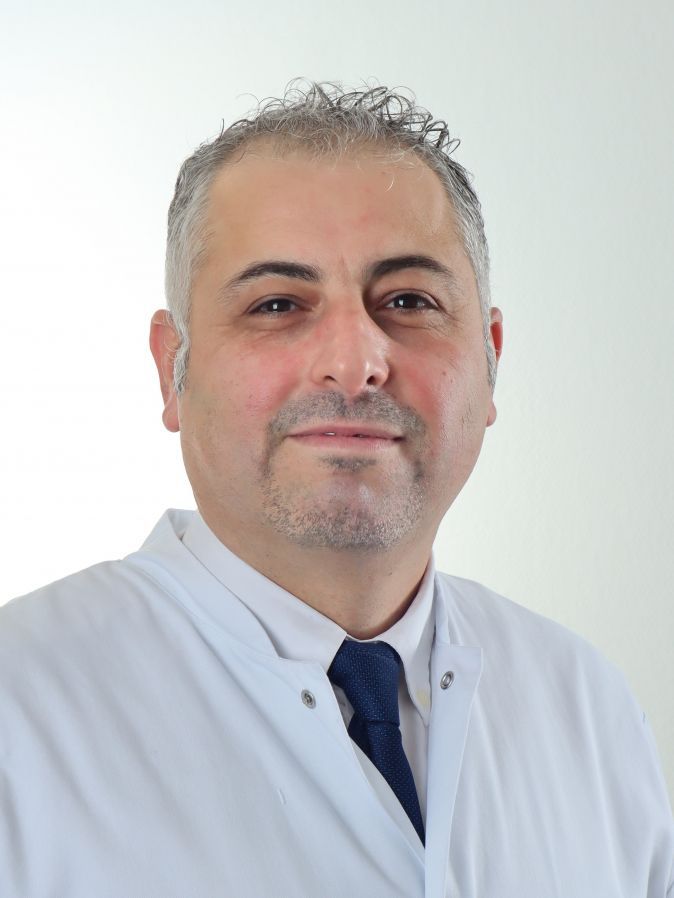
Pelvic vein syndrome is a condition that often goes unnoticed. Many people affected initially think it is just temporary muscle tension—yet an early diagnosis can significantly alleviate symptoms. The editorial team at Leading Medicine Guide spoke with vascular surgery specialist Dr. med. (syr) Amer Jomha about this.
In pelvic vein syndrome, blood in the veins of the pelvis does not flow freely back to the heart but instead pools. In a healthy body, venous valves ensure that blood flows in only one direction—toward the heart. “Pelvic vein syndrome is the second most common cause of chronic lower abdominal pain in women of childbearing age, after endometriosis. The condition often goes undiagnosed for a long time because the symptoms are nonspecific and are not always clearly attributed to a venous problem,” Dr. Jomha notes at the beginning of our conversation.
Endometriosis is the growth of uterine lining tissue outside the uterus, usually in the pelvis. It causes pain during menstruation, during sex, or chronic lower abdominal discomfort and can contribute to infertility. It is usually diagnosed via ultrasound, MRI, or laparoscopy; treatment involves pain relievers, hormones, or surgery.
The symptoms of pelvic vein syndrome usually develop gradually and may remain difficult for those affected to pinpoint for a long time. A key characteristic is dull, pulling pain in the lower abdomen or pelvic area, which is often described as a feeling of pressure or tightness.
“The symptoms of pelvic vein syndrome are often nonspecific and can manifest in a wide variety of ways. Typical symptoms include lower abdominal pain, which worsens especially after physical exertion or during prolonged standing or sitting. Many affected individuals also report pain during sexual intercourse (dyspareunia) as well as increased pain during menstruation (dysmenorrhea). Bladder irritation with an increased urge to urinate may also occur. In some cases, visible varicose veins may also be present, for example in the area of the vagina or labia, and sometimes in the buttocks or thighs. More than ten percent of patients in gynecological practices suffer from chronic, nonspecific lower abdominal pain. If a gynecological examination does not reveal any clear findings that can explain these symptoms, further diagnostic evaluations often follow—for example, in urology, gastroenterology, neurology, or even in the psychosocial field. In such cases, the actual cause often remains undetected for a long time. However, the symptoms are often caused by dilated veins in the pelvis, particularly the ovarian veins. These lead to venous congestion, which in turn causes pain in the lower abdomen. In some cases, so-called dependent varicose veins may also develop, for example on the thighs, in the vaginal area, or on the labia. “The pain typically worsens with prolonged standing or sitting, during or after sexual intercourse, and during menstruation,” says Dr. Jomha, explaining the patients’ symptoms.

The development of pelvic vein syndrome is facilitated by a number of risk factors and lifestyle conditions that primarily affect blood flow and the stability of the veins in the pelvis.
Dr. Jomha explains: “The most common cause of pelvic vein syndrome is a pathological dilation of the ovarian veins, usually on the left side. From there, the increased venous pressure can continue along the ovarian vein. As a result, dependent varicose veins form, spreading around the uterus and potentially extending into the vagina, the labia, or even the thigh area. This venous drainage disorder leads to chronic congestion in the pelvis and plays a major role in the development of the typical pain. Risk factors include a genetic predisposition to venous diseases as well as hormonal influences that can further affect the vessel walls. Certain anatomical abnormalities also play a role, including May-Thurner syndrome, which involves a narrowing of the pelvic veins, and so-called nutcracker syndrome, a narrowing of the left renal vein that impedes venous return. Another important risk factor is multiple pregnancies, as these promote the development and progression of varicose veins due to hormonal changes and increased pressure in the pelvic area,” and he continues:
“Varicose veins in the area of the labia or in atypical locations—such as the buttocks or the inner thighs—which are not typical of classic varicose veins in the legs, can be another important indication of the presence of female pelvic vein syndrome. Such conspicuous veins often result from increased venous pressure in the pelvis and are therefore easily misinterpreted or viewed in isolation, without recognizing the actual cause. Diagnosis typically begins during a gynecological examination. Even during an ultrasound examination—particularly a transvaginal ultrasound—unusually large, dilated veins in the area of the ovaries and uterus may be noticeable. If pelvic vein syndrome is suspected at this stage, further imaging is performed, usually in the form of a computed tomography (CT) scan or magnetic resonance imaging (MRI). Invasive phlebography of the pelvic veins remains the gold standard for diagnosis, as it allows for direct visualization of venous outflow patterns. Alternatively, magnetic resonance angiography (MRA) can be performed. “This typically shows a significantly dilated left ovarian vein (vena ovarica) with pronounced dependent varicose veins in the inner pelvis, particularly on the left side and in the area around the uterus,” Dr. Jomha explains.
In addition, laboratory tests can be performed to rule out other causes of pain or swelling, such as inflammation or hormonal imbalances. The diagnosis of pelvic vein syndrome is thus based on a combination of medical history, physical examination, and targeted imaging, with imaging techniques being crucial for accurately identifying venous stasis and possible narrowings.
Women with known venous insufficiency or a family history of the condition should be mindful of hormonal factors and consult a doctor early on if they experience symptoms. An early diagnosis offers the best chance of relieving pain, preventing varicose veins, and avoiding long-term complications.
Treatment of pelvic vein syndrome depends on the severity of symptoms, the extent of venous dilation, and individual risk factors. Generally, a distinction is made between conservative measures, medication, and minimally invasive or surgical procedures.
Dr. Jomha explains the treatment methods: “Conservative therapy for pelvic vein syndrome primarily involves symptomatic treatment of pain, for example with pain relievers such as ibuprofen. Hormone therapy is used only very sparingly today and is generally not recommended due to potential long-term side effects, particularly an increased risk of osteoporosis. Surgical procedures now play only a minor role and are used only in rare, exceptional cases. Interventional therapy has established itself as a modern and effective treatment option. This is performed as part of a phlebography and allows for the targeted occlusion of the pathologically dilated pelvic veins. The procedure is performed under local anesthesia. A catheter is inserted through a vein in the right upper arm. Through this catheter, the varicose veins in the pelvis are treated with sclerosing foam, while the ovarian veins are additionally and permanently occluded with small metal coils. In over 90 percent of cases, this method successfully eliminates the dilated veins. In 70 to 80 percent of patients, this leads to a significant and lasting improvement in symptoms. During the procedure, X-ray contrast dye is used to visualize the pathologically dilated left ovarian vein and the varicose veins extending from it around the uterus and into the internal pelvic veins. The affected vein is then selectively occluded using metal coils and a sclerosing agent to permanently eliminate venous stasis.”
If pelvic vein syndrome remains untreated, the symptoms can become chronic over time and worsen significantly. A key problem is the persistent venous congestion, which continuously increases pressure in the veins.

“Untreated pelvic vein syndrome can lead to chronic pain in the pelvic region or in the legs. There is also an increased risk of blood clots (thrombosis) forming in the pelvic veins. The quality of life for those affected can be severely limited, as daily activities are impaired by the symptoms. A healthy lifestyle—including a balanced diet and regular exercise—plays a key role in promoting venous health. Taking regular breaks when sitting or standing for long periods is also important to support venous circulation and prevent symptoms,” Dr. Jomha recommends at the conclusion of our conversation.
Thank you very much, Dr. Jomha, for these helpful insights on pelvic vein syndrome!
- Dr. med. (syr) Amer Jomha, Chief Physician of the Department of Vascular Surgery and Phlebology at Bad Hersfeld Hospital.
- Trained at the University Hospitals of Damascus and Giessen; board-certified specialist in vascular surgery and phlebology, endovascular specialist.
- Treatment of aneurysms, circulatory disorders, varicose veins, and diabetic foot syndrome.
- Use of modern minimally invasive and open surgical techniques, radiofrequency therapy for varicose veins, and stage-appropriate wound care.
- Areas of focus: endovascular treatment of aortic aneurysms, peripheral arterial disease, and comprehensive vascular care at the certified Hersfeld-Rotenburg Vascular Center.
- Director of the clinic since 2023, part of the medical team since 2011; interdisciplinary and patient-centered.
- Many years of experience, commitment to the advancement of vascular medicine, and a recognized specialist in the region.
Share this article
About the medical author
Alexandra Pfitzmann
Editor
Alexandra Pfitzmann – medical author: expert knowledge, professional articles and medical insights in the Leading Medicine Guide.
More about the medical author →Expert Interviews
Read next
- Expert Interviews
Expert Interview with Professor Dr. Amadeus Hornemann, MPH
Sep 18, 2026
Prof. Amadeus Hornemann on Precision Medicine in Gynecology: Modern Surgery, New Techniques, Better Quality of Life
Read more - Expert Interviews
Expert Interview with Professor Dr. Konstantinos Anagnostakos
Sep 15, 2026
Prof. Anagnostakos on Painful Knee Replacements
Read more - Expert Interviews
Expert Interview with Professor Karl Philipp Kutzner, M.D.
Sep 11, 2026
Prof. Kutzner on Cutting-Edge Endoprosthetics at ENDOPROTHETICUM Mainz
Read more