Expert Interviews
Penile Curvature

Alexandra Pfitzmann ·
In Germany, Austria, and Switzerland, an estimated several thousand men are affected by penile curvature. According to studies, approximately three to eight percent of men exhibit typical symptoms such as palpable plaques or a noticeable curvature, with the prevalence increasing with age. However, many affected men do not seek medical help due to shame or a lack of knowledge, so the actual number of cases is likely to be significantly higher. The editorial team of the Leading Medicine Guide spoke with Dr. med. univ. Franklin Kuehhas about this topic.
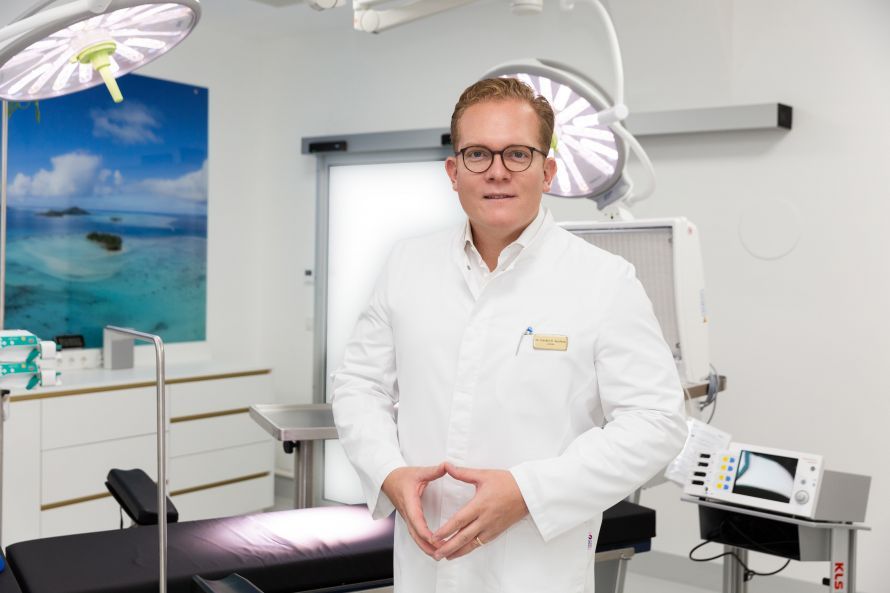 Penile curvature can be either congenital or acquired over the course of a person’s life and often has both functional and psychological effects. A closer look at the causes, progression, and treatment options reveals just how different the two forms are.
“Penile curvatures can be divided into two main categories: congenital and acquired penile curvature. The congenital form, as the name suggests, is present from birth but is usually not discovered until puberty, when boys begin to take an interest in their penises. This type of curvature affects about 0.2 to 2 percent of the male population. Problems often arise when affected boys begin to become sexually active, typically between the ages of 18 and 25. Typically, the curvature in the congenital form is downward; more rarely, it is upward or to the side. In contrast, acquired penile curvature—also known as Induratio Penis Plastica (IPP) or Peyronie’s disease—usually develops over the course of a lifetime as a result of microtraumas. These injuries are often not attributable to a specific event but result from repeated, minor injuries, frequently in men who are already experiencing a decline in erectile function. This can lead to a cascade of changes that results in the formation of scar tissue, causing the penis to curve over time. Acquired penile curvature affects nearly 10 percent of all men. Both forms of penile curvature can cause significant problems, particularly when it comes to sexual activity,” explains Dr. Kuehhas at the beginning of our conversation, adding:
“Many men struggle with congenital or acquired penile curvature, but they do so in silence because the topic is uncomfortable. Regardless of the cause, the more pronounced the curvature of the penis, the more difficult penetration becomes. This leads to functional problems: kinks may form, certain positions are impossible, and pain during penetration can occur for both the man and his partner. Such negative experiences with sexuality often lead to an aversion to intimacy, as they result in embarrassing situations. For men with congenital penile curvature in particular, this can intensify feelings of insecurity regarding their sex life. They often lack the confidence to fully express their sexuality and maintain close relationships with their partners. Interestingly, the curvature is usually only noticeable when the penis is erect, which places an additional psychological burden on many patients. Men often seek treatment for the first time between the ages of 18 and 25, after they have had their first sexual experiences during this period and noticed that something is apparently different from others. In acquired forms of the condition, there are two phases: an acute phase and a chronic phase. The acute phase is critical, as it marks the onset of the curvature. In two-thirds of cases, the curvature may worsen over time, while in one-third it remains stable or improves by a few percentage points. This phase can last between three and 24 months. If no further changes are observed after three months, this is referred to as the chronic phase, during which effective correction options can be discussed with the patient. Surgery during the acute phase should be avoided, as there is a risk that the curvature will continue to worsen. Although early surgery could straighten the penis, there is a possibility that it will become curved again.”
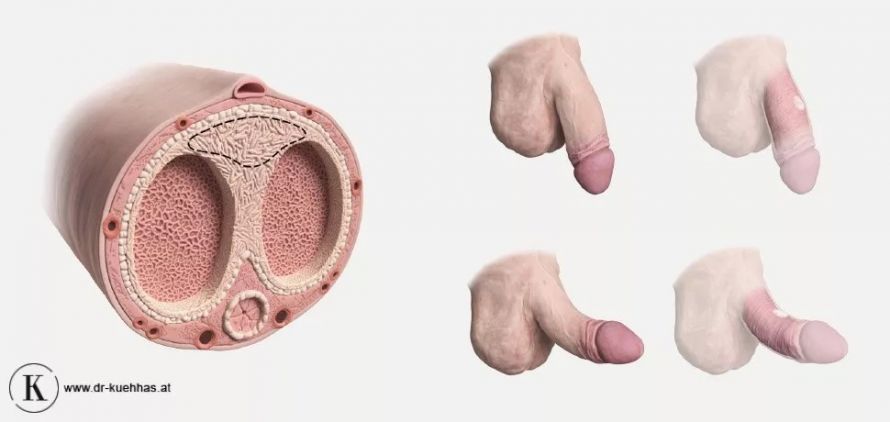 The pain reported by patients with induratio penisplastica is often attributable to the acute phase of the condition. These men experience pain, which occurs in about 40 percent of cases.
“The causes of the pain are feelings of pulling and tension in the area of scar tissue and the nodule in the connective tissue, which can develop during the acute phase. This pain is particularly uncomfortable during erections and can last between three and 24 months. The situation is different with a congenital penile curvature, which normally does not cause pain. Nevertheless, pain can also occur with this condition during attempts at penetration, especially when trying to straighten the penis to facilitate penetration. “Many patients find the sudden pain—which they had not experienced before—irritating, as it is often accompanied by a dull, pulling sensation that can interfere with sexual activity,” explains Dr. Kuehhas.
Penile curvatures requiring treatment often manifest as a combination of functional and aesthetic problems. The most common symptoms include pain during erection or intercourse, which can sometimes be so severe that intimate contact becomes difficult or impossible. Significant deviations in penile alignment that exceed normal limits are also noticeable and can trigger both psychological stress and self-esteem issues.
Accurate diagnosis, individually tailored conservative or surgical treatment approaches, and empathetic communication with the specialist can alleviate physical symptoms while simultaneously reducing psychological and emotional distress. The goal is not only to correct the curvature but also to sustainably improve self-confidence, sexual function, and quality of life.
“When a patient comes in for an examination due to penile curvature, the focus is on an accurate diagnosis, which always includes visual assessment and evaluation of the curvature. A crucial part of the examination is inducing an artificial erection. This is done by injecting the medication alprostadil, a liquid erectile dysfunction treatment that is injected directly into the penis to promote an erection. This state allows the doctor to closely observe the degree of curvature as well as any possible rotation or indentation defects and to document the findings. It is important to inform the patient thoroughly about this beforehand, as many men feel self-conscious about this intimate area. Unfortunately, even in the 21st century, penile curvature is often still a taboo subject, which leads many patients to hesitate to see a urologist. They often hear from their primary care urologists that there are no treatment options, or they encounter statements such as “you’ll become impotent” or “you’ll lose too much penile length.” Such misconceptions are widespread, especially because not all urologists are familiar with the latest treatment options for induratio penisplastica or congenital penile curvature. Experience shows that it can be a great relief for patients to confide in a specialist who is knowledgeable about the condition and familiar with the appropriate surgical methods. An open conversation can alleviate fears and provide a better understanding of the issue. Many patients eventually discover that the situation isn’t nearly as bad as they had feared. While some patients come to appointments alone, partners often accompany them as well. “As a rule, however, most patients go through the diagnosis and treatment step by step on their own,” says Dr. Kuehhas.
 In cases of penile curvature, treatment depends heavily on the type and degree of curvature, the symptoms, and erectile function.
Dr. Kuehhas explains: “According to the latest guidelines, there is only one conservative therapy for the treatment of induratio penisplastica that has been proven to have positive effects: shock wave therapy. While this therapy can alleviate pain symptoms during the acute phase of the condition, it does not reduce the curvature. Therefore, it is important that patients have realistic expectations regarding such conservative treatment approaches. It would be misleading to tell them that shock wave therapy straightens the penis—that is not the case. For men with congenital penile curvature, there are no conservative treatment options at all that would lead to penile straightening. In these cases, it is crucial to consider surgical correction, provided the necessary criteria are met. This means that surgical procedures are the only option for effective treatment.”
Surgical procedures are necessary in cases of pronounced curvature, functional limitations, or severe pain. They aim to correct penile curvature, eliminate pain, and restore sexual function.
Dr. Kuehhas explains the primary surgical methods: “In the acquired form of penile curvature, induratio penisplastica, two basic surgical methods are distinguished: those that shorten the penis and those that preserve penile length, such as the incision and graft technique. It is crucial to understand that induratio penisplastica is not only associated with a curvature that causes problems with penetration and psychosexual issues, but that the formation of plaques and nodules in the connective tissue also leads to a significant loss of penile length. Approximately 80 percent of patients report a loss of about two and a half to three centimeters. Therefore, it is important to evaluate the individual loss of penile length and determine whether this is a source of distress for the patient. If straightening the penis through surgery were to result in further shortening, the patient might indeed end up with a straight penis but would be dissatisfied because he would feel as though he had merely a “stump” instead of his original length. During the examination, the patient’s erectile function should also be assessed. If the patient has good erections, length restoration or preservation using the incision-and-graft technique can be offered. In more severe cases involving massive penile shortening or severe erectile dysfunction, it may also be necessary to implant a penile prosthesis. In advanced stages of induratio penisplastica, patients may no longer have a functional penis. In such cases, a straight penis alone would not be helpful if it is not also functional. Therefore, in these severe cases, a combination of penile straightening and the implantation of a penile prosthesis may be necessary.”
The choice of the appropriate surgical procedure depends on several factors: the severity of the curvature, the stability of the erection, the extent of scar tissue, and the patient’s individual expectations. The goal of any treatment is to optimize both the functionality and the aesthetics of the penis, alleviate symptoms, and restore self-confidence and the quality of sexual life.
“Surgery to treat penile curvature, whether congenital or acquired, typically takes between 2 and 2.5 hours and is performed under general anesthesia. The procedure can usually be performed on an outpatient basis, meaning the patient can return home or to a nearby hotel on the same day. A follow-up appointment is scheduled two days later, during which the dressing is changed. In cases of congenital penile curvature, the patient wears a continuous dressing for one week and then wears nighttime dressings for five weeks to promote tissue healing. For acquired penile curvatures, a continuous dressing for one week is usually sufficient. Since the glans is not covered by the dressing, urination generally proceeds without problems and does not cause any significant pain. On a pain scale of 0 to 10, the sensation during surgery is about a 2 to 3. The bandage may feel somewhat uncomfortable, but it does not significantly interfere with daily life. As for straightening the penis, in surgical techniques that shorten the penis, the longer side of the curvature is shortened to match the shorter side, so that the penis becomes straight again. This method is often referred to as the Nesbit procedure. To restore the length of the penis, an incision is made on the shortened side of the curvature and it is adjusted to match the longer, healthy side. The resulting defect is covered with an artificial material, typically bovine pericardium. This material is well-established in medical practice and has been used in cardiac surgery for many years. The decision on whether to perform a length-restoration surgery depends on several factors. As a rule, this technique is offered to patients with a curvature of more than 60 degrees, provided they have good erectile function. This type of surgery is more invasive, which is why not every patient is a suitable candidate for it. Discussions about which surgical technique is best suited for each individual patient are common in everyday clinical practice. “The patient should understand why a particular technique is recommended and the reasoning behind it, so that he can make the best possible decision,” explains Dr. Kuehhas.
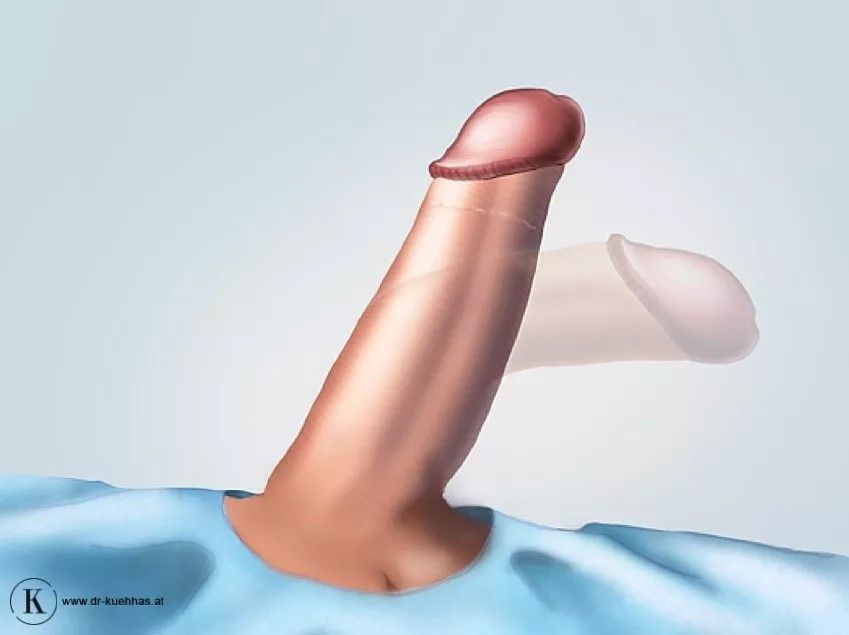 Specialized physicians ensure long-term treatment success for penile curvature and other genital surgical problems through a close collaboration involving precise diagnostics, individualized treatment planning, and expert surgical execution.
“It is of the utmost importance for patients to seek professional help and not to struggle on their own. A first step should be to ensure that the doctor is a specialist in this field. Several key factors can help when selecting a suitable doctor: Patients should ask how many penile straightening surgeries the treating doctor performs or has performed per year. This number can be considered an indicator of quality; a doctor who performs fewer than ten such procedures annually may not be able to offer the same level of experience and expertise as someone who performs several hundred of them each year. “Personally, I perform about 200 penile curvature corrections per year,” emphasizes Dr. Kuehhas, adding at the conclusion of our conversation:
“The procedures described have been known for many years, as the condition—known as induratio penisplastica or Peyronie’s disease—has in fact been documented since ancient times. The term ‘Peyronie’s disease’ comes from the personal physician of King Louis XVI, who first described the curvature. The specific technique for penile shortening surgery—the Nesbit procedure—has been performed since 1964. The most important thing for patients, however, is simply not to be afraid to talk about their problems and to overcome the shame that is, unfortunately, often associated with such taboo topics. There is a solution for every form of penile curvature, and seeking professional help is the crucial step toward alleviating symptoms and improving quality of life.”
Thank you very much, Dr. Kuehhas, for your informative insights on the still-taboo topic of penile curvature!
- Highly specialized andrologist with an international reputation in reconstructive genital surgery.
- Focus on penile curvature, penile prostheses, penile lengthening/thickening, circumcision, hypospadias, vasectomy, and scrotal lift.
- A pioneer in surgical techniques such as the STAGE and Egydio methods for minimizing loss of penile length.
- Treats functional and aesthetic issues with high precision, discretion, and empathy.
- Practice in Vienna: modern facilities, personalized diagnostics, and treatment planning.
- International experience, publications, and lectures, combined with personalized patient care.
Link: Congenital penile curvature
Share this article
Expert Interviews
Read next
- Expert interview
Expert interview with Professor Dr Elmar Herbst, PhD
Oct 15, 2026
Patient-centred and personalised knee surgery
Read more - Expert interview
Cardiogeriatrics: Significance and benefits in the context of hospital reform
Sep 21, 2026
Cardiogeriatrics: Significance and benefits in the context of hospital reform
Read more - Expert interview
Expert Interview with Professor Dr. Amadeus Hornemann, MPH
Sep 18, 2026
Prof. Amadeus Hornemann on Precision Medicine in Gynecology: Modern Surgery, New Techniques, Better Quality of Life
Read more