Expert Interviews
Minimally Invasive Interventional Radiology: Innovative Solutions for the Treatment of Vascular Diseases and Chronic Circulatory Disorders

Alexandra Pfitzmann ·
Today, minimally invasive interventional radiology is opening up entirely new avenues in the treatment of vascular diseases and chronic circulatory disorders. Instead of major surgeries, highly precise, image-guided catheter procedures are used to gently access and specifically treat diseased vessels. These modern techniques make it possible to restore blood flow, significantly alleviate symptoms, and prevent complications—without general anesthesia and with a short recovery time. In this way, interventional radiology combines medical precision with maximum patient comfort. The editorial team at Leading Medicine Guide wanted to learn more and spoke with Dr. Arun Kumarasamy.

Diabetic foot syndrome is a complex and potentially dangerous complication of diabetes in which several pathological processes interact. Chronically elevated blood sugar levels damage the nerves—a condition known as diabetic polyneuropathy. Peripheral arterial disease (PAD) is a chronic circulatory disorder of the legs caused by deposits in the arteries. These deposits—mostly consisting of fats, calcium, and inflammatory cells—gradually narrow the blood vessels.
“Intermittent claudication is largely hereditary. About seventy percent of those affected have a genetic predisposition. It typically occurs in older people starting around the age of sixty, who then present with gradually worsening symptoms. The term itself dates back to a time when older patients were ashamed that they could no longer walk long distances. To conceal the fact that they had to stop, they would stand in front of store windows, feigning interest—hence the name. At its core, it is a disease of the vascular system: the blood vessels narrow, similar to what is seen in coronary heart disease. Many patients with blockages in the heart also develop such narrowings in the pelvic and leg vessels—or even in the neck vessels—because the entire body consists of a single interconnected vascular system. Thus, the term “window-shop disease” became widely used to refer to PAD. Diabetic foot syndrome is fundamentally different. It is typically a complication of diabetes in which both nerve damage and circulatory disorders cause foot injuries to go unnoticed and wounds to heal poorly. Due to the reduced blood supply, infections can spread easily. This is a typical late complication of diabetes, in which persistently elevated blood sugar is the primary trigger. A well-managed diabetic usually does not develop such problems until very late in the course of the disease because they monitor their metabolism closely and thus remain stable for a long time. However, those who ignore the disease have a significantly higher risk of developing complications more quickly. Factors such as smoking, high blood pressure, chronically poorly controlled blood sugar, lack of exercise, and high stress further exacerbate the situation. “They increase the risk factors and cause the blood vessels—which are often also affected in diabetic foot syndrome—to age more rapidly and sustain damage,” explains Dr. Kumarasamy.

Interventional radiology plays a central role in modern vascular medicine today because it combines diagnosis and treatment in a particularly gentle yet highly precise manner.
“Interventional radiology plays a central role in both conditions because it targets the exact location where the problems arise: the narrowed or blocked arteries. There are essentially two forms of vascular disease. On the one hand, there are narrowings that begin higher up in the pelvic region. On the other hand—and this primarily affects people with diabetes—the narrowings occur further down, in the lower leg and foot arteries. These lower vessels are significantly more difficult to treat because they are much smaller and anatomically more complex. While the arteries in the thigh still have a diameter of four to six millimeters, the vessels in the lower leg often measure only 3.5 to 2 millimeters. The arteries in the feet are even narrower: here we’re talking about just 1.5 to 2 millimeters. It becomes particularly challenging when the very fine terminal branches that supply the toes are affected. Interventional radiology therefore attempts to reach even these smallest arteries using extremely fine catheters and guidewires in order to improve blood flow as much as possible. The goal is always the same: to ensure that the tissue is once again adequately supplied with blood—and thus with oxygen, nutrients, and the immune cells that fight infections. Only when blood flow is restored can inflammation subside, wounds heal, and medications such as antibiotics actually reach the right place. This is precisely where the special significance of interventional radiology lies: it creates the conditions necessary for the tissue to survive and recover,” explains Dr. Kumarasamy.
Interventional radiology has become increasingly important in the treatment of diabetic foot syndrome in recent years. Whereas in the past, patients with severe circulatory disorders in the foot or lower leg had few alternatives to open vascular surgery or even amputation, modern endovascular procedures now enable significantly less invasive and, at the same time, more effective treatments.
“Treatment usually begins by first obtaining as accurate a picture as possible of the blood vessels. Although narrowings or blockages can already be detected via MRI, CT, or duplex ultrasound, the actual gold standard is angiography. In this procedure, a contrast agent is injected into the artery through a fine needle, allowing blood flow to be visualized in real time. These images immediately reveal whether a blood vessel is narrowed, blocked, or severely calcified—and whether this change could explain the patient’s symptoms, such as poorly healing wounds, nighttime pain at rest, or infections in the foot area. Angiography is performed in what is known as an interventional setting. This means that as soon as a diagnosis is made and a relevant narrowing is visible, treatment can be performed immediately during the same procedure. Using very fine wires and catheters, the goal is to reopen the narrowed or blocked arteries and improve blood flow to the point where the tissue is once again adequately supplied. It is not always necessary to open the artery that was originally responsible for the blood supply. If a vessel is completely blocked, blood flow to the affected area can also be restored indirectly via another artery. The key is to ensure that, in the end, enough blood—and thus oxygen, nutrients, and immune cells—reaches the tissue so that wounds can heal and infections can be fought off. This work is particularly challenging in the lower leg and foot areas because the vessels there are extremely small. Reaching these areas requires a great deal of experience, a delicate touch, and a level of specialization that only a few clinics offer,” explains Dr. Kumarasamy, adding:
“When vessels need to be dilated, several minimally invasive techniques are available that can be combined depending on the situation. The easiest to visualize are balloons that are placed inside the narrowed vessel and carefully expanded there. There are also drug-coated balloons that release active ingredients to prevent the narrowed area from re-narrowing. If that’s not enough, atherectomy is used—a procedure that can actually be imagined as a tiny drill. If a blood vessel is so severely calcified that a balloon cannot pass through or cannot be inflated, a rotating burr is used to remove the hardened material. These instruments rotate at tremendous speeds and create space so that the balloon can then pass through without difficulty and widen the blood vessel. Only when all these methods prove insufficient are stents used—small supports that keep the vessel permanently open. Modern approaches, however, follow the “Leave Nothing Behind” principle—that is, leaving as little permanent material in the body as possible. For this reason, stents are used only when absolutely necessary. All of these procedures are used to treat both peripheral arterial disease and diabetic foot syndrome. In both cases, the goal is to improve blood flow to the extent that the tissue is once again adequately supplied with oxygen and nutrients, giving wounds a chance to heal at all.”
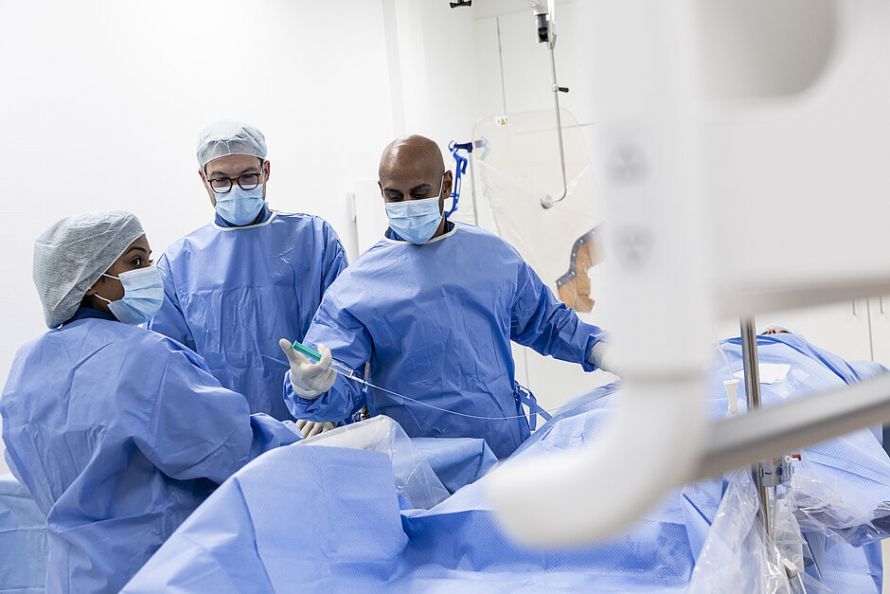
Complex procedures on the lower leg and foot arteries require many years of experience, extensive hands-on experience performing these treatments, and collaboration with specialized colleagues. Only a few hospitals possess this expertise, which is why specialized centers are renowned nationwide. Patients there benefit from a high level of expertise and safe, well-established procedures, including, for example, very high revascularization rates.
The close collaboration between the Diabetes Foot Center and the largest diabetes department in Frankfurt results in care that is significantly faster, more coordinated, and medically more precise than treatment provided in separate facilities.
Dr. Kumarasamy explains: “The collaboration with the Diabetes Foot Center is designed to form a true unit in which all expertise related to the diabetic foot is consolidated. Frankfurt is home to one of Germany’s largest and highest-certified diabetes departments, led by Christian-Dominik Müller—a department that meets all the criteria required for top-level certification. This strong foundation in diabetes care is complemented by interventional radiology, which offers minimally invasive vascular treatments at the highest level. Both departments not only work side by side but actually hand in hand, so that patients benefit from closely integrated, interdisciplinary care. In addition, since January, the center has welcomed a new chief physician, PD Dr. med. Sebastian Fischer, from the field of foot surgery, who previously worked at the BGU Frankfurt and is considered a recognized expert. His addition further rounds out the center’s profile, as he brings the surgical expertise essential for treating complex wounds, deformities, or surgical procedures on the diabetic foot. This creates a team that holds a special position both regionally and beyond and can present itself as a unified whole. In addition to diabetology, interventional radiology, and foot surgery, other specialties also play an important role. The Department of Internal Medicine provides support for comorbidities, and thanks to the strong gynecology department, procedures such as myoma embolization can be offered—another example of how catheter-based procedures are utilized across various disciplines. “Overall, this creates a network in which various specialties work closely together to provide a level of care that few hospitals offer in this form.”
Through direct collaboration, patients at increased risk for slow-healing wounds or circulatory disorders can be identified much earlier. Diabetologists recognize warning signs such as neuropathy, infections, or emerging vascular problems and refer patients to the foot center without delay. There, specialized surgeons, wound care experts, and vascular specialists are on hand to immediately initiate diagnosis and treatment. Prompt care is especially critical for diabetic foot conditions, as infections spread rapidly and there is a risk of tissue loss.
A center of excellence for diabetic foot syndrome thrives on the fact that multiple highly specialized disciplines do not merely work side by side, but truly collaborate with one another. Each discipline contributes its own indispensable expertise—and it is this collaboration that makes care so effective. For patients, this results in a treatment pathway that is faster, safer, and significantly more targeted than in conventional settings.
The interdisciplinary collaboration between diabetology, interventional radiology, and foot surgery is one of the key factors ensuring that patients with diabetic foot syndrome and PAD have significantly better chances of recovery today than they did just a few years ago.
“The treatment of vascular diseases such as intermittent claudication and diabetic foot syndrome has come a long way. Procedures such as balloon dilation and stent implantation have been around for many decades, but in the past they were used much less frequently. It was only over time that guidelines changed and the importance of minimally invasive therapy grew. Today, not only interventional radiologists use these methods, but also cardiologists, angiologists, and, increasingly, vascular surgeons—who previously performed only surgical procedures. What matters is not so much the medical specialty as the ability to master interventional techniques with confidence. Over the years, numerous new techniques have been introduced, significantly expanding treatment options. These include atherectomy, in which calcifications are mechanically removed; drug-eluting balloons and stents; and modern procedures such as lithotripsy, which uses ultrasound to break up hard calcium deposits. “These technical advances have made the procedures safer, reduced the complication rate, and improved outcomes,” says Dr. Kumarasamy, adding:
“At the same time, patients benefit from shorter hospital stays, less pain, and a lower risk of infection, as major surgeries are required less and less frequently. As experience grows, so does the quality of care. Hospitals that treat several hundred patients each year develop specialized expertise from which patients benefit directly. Interdisciplinary collaboration across various departments further enhances this effect. Larger hospitals can offer a broader range of services, and close cooperation with hospital management creates favorable conditions for modern, patient-centered medicine. How long a patient stays after a procedure now depends heavily on the individual’s specific condition. The goal is to discharge patients back to their daily lives as quickly as possible without compromising medical safety. If necessary, they can be readmitted or continue to receive inpatient care at any time—the decisive factors are always the individual situation and a seamless integration between outpatient and inpatient care.”
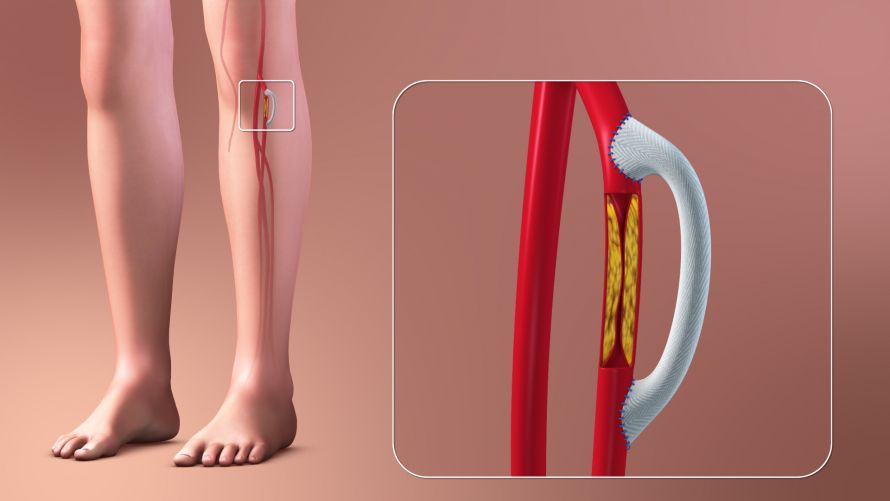
After an interventional vascular procedure, there are several important points for patients to follow to ensure the success of the procedure.
“As a rule, we conduct an initial follow-up examination within two weeks. During this visit, we assess how well blood flow has been restored and monitor the progression of any symptoms or wounds. During their hospital stay, patients are seen daily, blood flow is measured regularly, and any changes are detected immediately. If something isn’t going as well as it should, follow-up treatment can be provided right away—a major advantage of this close monitoring. Many patients notice an improvement in their walking distance relatively quickly. Although bruising, mild pain at the puncture site, or a pulling sensation in the calf may occur in the first few days after treatment, the patient’s ability to bear weight usually increases rapidly. Even wounds that previously would not heal often show significant improvement within a few weeks. The relief from reduced pain or the ability to walk longer distances again is immediately noticeable for many patients. In the long term, however, it’s important to remember: a vascular patient remains a vascular patient. The condition does not disappear completely, and the blood vessels continue to age. Some patients experience many years of remission, while others require retreatment after two to four years—especially when the narrowings are located in very small arteries in the lower leg or foot. Larger vessels in the pelvic region usually remain open significantly longer. It is crucial that patients attend regular follow-up appointments so that changes can be detected early and treated in a timely manner. In principle, the treatment can be repeated as often as necessary. How long the benefits last depends on many factors: the location of the narrowing, the patient’s overall health, and lifestyle. Smoking, poorly controlled diabetes, lack of exercise, or high blood pressure accelerate the progression of the disease. “Those who keep their risk factors well under control usually benefit from the procedure for much longer,” explains Dr. Kumarasamy, emphasizing at the end of our conversation:
“Several hundred such procedures are performed each year in specialized centers—a wealth of experience that significantly influences the quality of treatment. Modern technologies such as intravascular ultrasound or ultrasound-based lithotripsy, which break up hard calcifications, further expand the possibilities. The goal always remains the same: to open chronic or acute vascular occlusions, ensure blood flow, and prevent amputations. Although approximately 50,000 major amputations are performed annually in Germany, regions with specialized centers show significantly lower rates. In these regions, it is more often possible to prevent major surgeries and limit the need to minor amputations, such as the loss of a toe.”
Thank you very much, Dr. Kumarasamy, for this detailed information on interventional radiology!
- Specialist in interventional radiology with an excellent reputation and many years of experience in minimally invasive, image-guided vascular procedures
- Chief Physician at the Department of Interventional Radiology at Bürgerhospital Frankfurt
- Focus on catheter-based vascular therapies for treating narrowed or blocked arteries
- Proven expertise in the treatment of peripheral arterial disease (PAD)
- Use of state-of-the-art endovascular techniques to restore blood flow and prevent serious complications
- High level of expertise in the diagnosis of complex vascular diseases using CT, MRI, and angiography procedures
- Treatment of chronic circulatory disorders, particularly in cases of diabetes, hypertension, and tobacco use
- Close interdisciplinary collaboration with angiology, diabetology, and vascular and foot surgery
- Committed to precise medicine, modern technology, and patient-centered, empathetic care
Share this article
Expert Interviews
Read next
- Expert interview
Expert interview with Professor Dr Elmar Herbst, PhD
Oct 15, 2026
Patient-centred and personalised knee surgery
Read more - Expert interview
Cardiogeriatrics: Significance and benefits in the context of hospital reform
Sep 21, 2026
Cardiogeriatrics: Significance and benefits in the context of hospital reform
Read more - Expert interview
Expert Interview with Professor Dr. Amadeus Hornemann, MPH
Sep 18, 2026
Prof. Amadeus Hornemann on Precision Medicine in Gynecology: Modern Surgery, New Techniques, Better Quality of Life
Read more