Expert Interviews
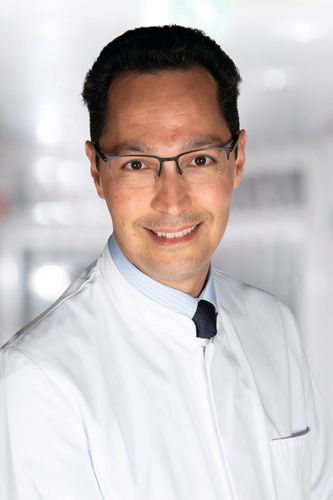
Hernias - Expert Interview with Assistant Professor Dr. Matthias Hofmann, FEBS AWS

Alexandra Pfitzmann ·
Senior Physician Dr. Matthias Hofmann is a highly qualified specialist in general and visceral surgery with a strong focus on hernia surgery. Since 2019, he has been a senior physician at the Hernia Competence Center at Franziskus Hospital and has established himself as a respected specialist in hernia treatment at his practice in Vienna. As one of only four surgeons in Austria to have successfully passed the Europe-wide recognized FEBS AWS (Fellow of the European Board of Surgery in Abdominal Wall Surgery), Dr. Hofmann possesses exceptional expertise in reconstructive surgery for inguinal and abdominal wall hernias.
With over 845 successfully performed inguinal hernia surgeries and more than 400 abdominal wall hernia procedures, Dr. Hofmann can look back on an impressive wealth of experience. He employs state-of-the-art, minimally invasive techniques that enable faster healing and fewer postoperative complications. In particular, the surgical treatment of inguinal hernias in women and complex incisional hernias is one of his areas of specialization. His patients benefit not only from his professional expertise but also from personalized, holistic care—from precise diagnosis through surgery to postoperative follow-up, which he personally oversees in his practice.
Dr. Hofmann places great emphasis on comprehensive consultations and preventive care for his patients, including prehabilitation before surgery, which helps ensure optimal preparation for surgical procedures. Gastroscopies and colonoscopies for cancer screening are also part of his range of services, through which he makes an important contribution to the early detection and prevention of gastrointestinal diseases. Through his membership in renowned professional societies, such as the Austrian Society for Surgery (ÖGCH) and the German Hernia Society (DHG), as well as his work at Vienna’s only certified hernia center of excellence, Dr. Hofmann remains at the cutting edge of medical research and technology. Thanks to his many years of experience and deep expertise, he offers highly specialized and patient-centered care that is highly regarded in the region and beyond. The editorial team of the Leading Medicine Guide had the opportunity to speak with Dr. Hofmann and learn more about the focus of his work, particularly regarding inguinal hernias.

An inguinal hernia—medically known as “hernia inguinalis”—is one of the most common conditions requiring surgery. In this condition, tissue—usually a portion of the intestine or fatty tissue—protrudes outward through a weak spot or opening in the abdominal wall in the groin area. This often manifests as a visible bulge and may be accompanied by pain or an uncomfortable feeling of pressure. Men are affected significantly more often than women. If left untreated, an inguinal hernia can cause serious complications, which is why timely diagnosis and treatment—often in the form of surgery—are important. Modern surgical techniques now allow for minimally invasive and safe procedures.
One of the most important factors contributing to the development of an inguinal hernia is a congenital weakness of the connective tissue. Especially in people with a family history of the condition, the tissue may give way more quickly. Added to this are mechanical stresses that increase pressure in the abdominal cavity: these include heavy lifting, chronic coughing (such as with COPD or asthma), frequent and forceful straining during bowel movements (e.g., due to chronic constipation), or repeated vomiting. Other risk factors include being overweight, pregnancy, weak abdominal muscles, or previous surgeries that have compromised the stability of the abdominal wall.
“Ultimately, an inguinal hernia develops due to weakness in the connective tissue. There are various factors that can contribute to this. One of the most important—and the only one you can actively influence yourself—is smoking. Smoking damages connective tissue and significantly increases the risk of an inguinal hernia. So, quitting smoking is also an effective preventive measure. Of course, there are also causes that are less within your control, such as a genetic predisposition. If there is a family history of hernias, your own risk is also increased. Certain medical conditions, such as chronic obstructive pulmonary disease (COPD), which involves frequent and severe coughing, also damage connective tissue over the long term and can increase the risk of a hernia. The same applies to people who do very physically demanding work or engage in excessive strength training—the constant high pressure on the abdominal wall also increases the risk in these cases,” explains Dr. Hofmann at the beginning of our conversation.
Anatomical differences between the sexes—which often explain the nonspecific symptoms in women and age-related tissue wear and tear in men—are why inguinal hernias predominantly affect male patients. Diagnosis is often a challenge—especially in women—and inguinal hernias are among the most common surgical procedures worldwide.
“The fact that men are affected more frequently than women can be explained in part by anatomy. Although the inguinal canal is present in both sexes, in men it develops into a continuous passage from the abdominal cavity to the scrotum—where the spermatic cord, along with blood vessels and the testicles, runs. This structure is more prone to weakness. In women, however, the canal ends blindly and contains only the so-called round ligament, which serves to suspend the uterus. As a result, there are fewer opportunities for a hernia to develop. In addition, inguinal hernias in women are often more difficult to diagnose. Typical signs, such as visible swelling in the groin, occur less frequently. Instead, many women complain of vague pain, which makes diagnosis more difficult. It often takes a long time before a hernia is even considered—by that point, many women have already undergone a series of other tests. In many cases, a CT scan or ultrasound is then required to identify the cause. During pregnancy, this issue tends to play a less significant role. As the pregnancy progresses, the growing uterus lies protectively over the groin area and acts as a kind of buffer, reducing pressure there. In women, inguinal hernias occur more frequently starting around age 50. Many have been experiencing symptoms for quite some time by the time the correct diagnosis is finally reached. In men, however, inguinal hernias are significantly more common—the ratio is roughly 10 to 1. It is one of the most commonly performed surgeries worldwide, with approximately 20 million procedures performed annually. “You could say it’s a kind of wear and tear: as we age, the connective tissue doesn’t become stronger, but weaker. And when the pressure in the abdominal region is high enough, this typical bulge into the inguinal canal occurs,” says Dr. Hofmann.
In addition, during a physical examination, smaller or deeper hernias in women are more difficult to palpate. Imaging techniques such as ultrasound or MRI are therefore used more often to confirm the diagnosis. Precisely because inguinal hernias in women can become incarcerated more quickly and then pose a medical emergency, an early and accurate diagnosis is particularly important. Therefore, in cases of unclear groin or lower abdominal symptoms, hernias should be considered early on, even in women.
An inguinal hernia often progresses with few symptoms over a long period of time and may initially appear harmless. However, a hernia becomes an acute emergency when the hernial sac becomes incarcerated. In this case, loops of intestine or other tissue become trapped in the hernial ring, and blood flow can be cut off—a potentially life-threatening situation.
“When a patient comes to the office with pain in the groin area, the first question is whether or not it is an emergency. In most cases, men have what is known as a reducible inguinal hernia—a soft swelling in the groin where parts of the abdominal cavity, such as fatty tissue or the intestine, protrude through a weak spot in the inguinal canal. However, this bulge can usually be pushed back in, so there is no immediate danger. The situation is different if the contents of the hernia—especially the intestine—become trapped and twisted within the inguinal canal. This is referred to as an incarcerated inguinal hernia, and it is a true medical emergency. Affected patients usually experience sudden, severe pain; the swelling can no longer be pushed back and feels rock-hard. In such a case, immediate action is required, as blood flow to the strangulated section of the intestine is compromised. Surgery must be performed within a few hours to free the affected section of the intestine and prevent serious complications. In well-served regions such as Germany, Austria, or Switzerland, this is generally not a problem—patients are admitted to the hospital quickly, undergo surgery promptly, and everything proceeds smoothly. However, the situation can become critical in countries or regions where adequate medical care is not guaranteed. If timely intervention does not occur in such a case, the situation can escalate dramatically: Blood flow to the intestine is completely cut off, a hole forms in the intestine, and stool leaks into the abdominal cavity, causing severe peritonitis. This can progress to sepsis and, if left untreated, can even be fatal. For patients who do not require immediate surgery, it is important to closely monitor the situation and take immediate action if certain warning signs appear. These include severe pain in the groin and a hard, swollen lump that cannot be pushed back—in these cases, you should call emergency services immediately and go to a hospital. Otherwise, it is certainly possible to live with a hernia for a while without any problems. Nevertheless, experience shows that about 70 percent of patients who initially opt not to have surgery end up returning later—mostly because the hernia grows larger and causes increasing discomfort,” explains Dr. Hofmann.
Acute Emergency in Cases of Inguinal Hernia
Important signs of an emergency include sudden, severe pain in the area of the hernia that does not subside even at rest. In addition, the hernia site may feel hard or taut, and the bulge can no longer be pushed back—unlike in an uncomplicated hernia. These symptoms may be accompanied by nausea, vomiting, fever, a distended abdomen, and increasing difficulty passing stool or gas. These symptoms indicate the onset of intestinal paralysis or an intestinal obstruction and require immediate medical attention!
Today, various modern surgical procedures are available for treating inguinal hernias, which are generally divided into open and minimally invasive techniques. The choice of method depends on several factors, such as the size of the hernia, the patient’s individual risk factors, and their personal preferences.
Dr. Hofmann explains: “When it comes to surgery, there are essentially two proven procedures available: open surgery and the minimally invasive technique. Contrary to the common assumption that only minimally invasive surgery is performed these days, open repair using a synthetic mesh is still considered the gold standard. In this procedure, the inguinal canal is surgically opened, the mesh is inserted, and the wound is closed again. This procedure remains well-established and effective. Nevertheless, minimally invasive methods have become increasingly prevalent in recent years—primarily because they are proven to result in less postoperative pain and a shorter recovery time. There are two main variants: In Germany, the extraperitoneal method is common, in which the surgery takes place outside the abdominal cavity. This is referred to as TEP. In Austria, on the other hand, the transabdominal method—which is performed through the abdominal cavity—is more commonly preferred; this is known as TAPP. Both procedures place the mesh at the same location behind the peritoneum. This mesh is generally larger than that used in the open technique and thus provides better coverage of potential hernia sites. The minimally invasive technique should be preferred, especially for women. This is because certain types of hernias, such as femoral hernias, occur more frequently in women but often go undetected with the open method—unless specifically looked for. Minimally invasive techniques therefore offer a diagnostic and therapeutic advantage in these cases. There are also mesh-free procedures, such as the so-called Shouldice technique, in which the hernia is closed using the body’s own tissue. This procedure is an option in certain exceptional cases—for example, in young men, where the decision can be made on a case-by-case basis. As a rule, however, mesh placement is recommended, as it carries the lowest risk of hernia recurrence and chronic pain. Patients, of course, have a say in the matter. If someone explicitly does not want mesh, this is respected. In practice, however, this rarely happens. In other regions, such as the U.S., on the other hand, a critical attitude toward meshes is increasingly developing—in some cases, people there even speak of a veritable “mesh phobia.”
Meshes used in the surgical treatment of inguinal hernias are made of various synthetic polymers. There are numerous manufacturers, each offering different materials and structures. The mesh remains permanently in the body and fuses with the surrounding tissue. The body’s reaction to the material plays a central role in this process: Since the mesh is recognized as a foreign body, scar tissue forms around the mesh structure. This scar tissue is ultimately the decisive factor for the stability of the treated area—it provides greater support to the region than the mesh itself.
Various risks and complications can arise after inguinal hernia surgery, even though these procedures are generally safe and routine today.
“The overall risk of complications from inguinal hernia surgery is relatively low. As with any surgery, there are general risks—such as those associated with anesthesia or impaired wound healing—but serious problems occur only rarely. However, there is a specific risk for men: Since the procedure is performed in close proximity to the spermatic cord, injury can occur in rare cases. If the spermatic cord is severed on both sides, this would have the same effect as a vasectomy. This is an aspect that younger men or those who wish to have children should definitely consider beforehand. Another potential risk involves the minimally invasive technique, in which the surgery is performed through the abdominal cavity. In theory, other organs such as the bladder or the intestines could also be injured—even though this is extremely rare. Slightly more common, however, is the occurrence of chronic pain after the procedure: About 7 to 10 percent of patients report persistent symptoms that still persist six months after the operation. To avoid such complications as much as possible, the experience of the treating surgeon is a key factor. Studies clearly show that in specialized centers where inguinal hernias are routinely treated, the risk of chronic pain and recurrence is only about 1 to 2 percent. In less experienced facilities, however, problems can arise in up to a quarter of cases. “Choosing the right surgeon is therefore by no means a minor matter,” emphasizes Dr. Hofmann
Dr. Matthias Hofmann has already performed 1,007 inguinal hernia surgeries and 467 abdominal wall hernia surgeries during his medical career. (As of June 2025)
The return to daily life after inguinal hernia surgery depends on various factors, such as the type of procedure, the patient’s overall health, and individual healing processes.
Recovery after inguinal hernia surgery is generally straightforward and quick. The recommended recovery period is relatively short: During the first two to three weeks after the procedure, patients should avoid heavy lifting—that is, lifting loads over five kilograms. After that, most everyday activities can be resumed. It is important to listen to your body and pay attention to any personal discomfort: Anything that causes pain should be avoided at first. Generally, the surgical site can bear weight again after a few weeks, so there is no longer an increased risk.
Dr. Hofmann explains: “Especially among younger, athletically active patients, the question often arises as to when they can resume training—for example, playing soccer. Here, too, the rule is: After two to three weeks, the body is generally stable enough again. Nevertheless, you should take it slowly and increase the intensity gradually. Of course, one might wonder what happens if someone lifts heavy objects too soon. While it is theoretically possible that the implanted mesh could shift or become damaged if overloaded, the materials used today are extremely durable. In the U.S., for example, some patients resume full physical activity as early as the first or second day after surgery—though there is no conclusive scientific evidence regarding the advantages or disadvantages of this approach. In German-speaking countries, the approach to postoperative care tends to be more cautious. Special rehabilitation measures are not necessary after inguinal hernia surgery. As a rule, it is sufficient to follow the basic recommendations for taking it easy,” he adds:
“When it comes to medical care, experience is a decisive factor. In specialized centers such as our Hernia Competence Center, over 1,300 hernia surgeries are performed annually—a figure that ranks among the highest in Europe. There, the entire treatment team—from surgeons to anesthesiologists to nursing staff—focuses exclusively on these procedures. This specialization plays a crucial role in ensuring that patients receive the best possible care—with a high level of safety and a low risk of complications.”
In Austria, the organization of surgical procedures is generally regulated in a similar way to Germany: In theory, any specialist is permitted to perform surgeries such as inguinal hernia repair. However, this does not automatically mean that every procedure is performed to the same standard of quality. This is precisely where the problem lies—and also the starting point for the discussion on specialization and centralization.
“The idea of having certain surgeries performed only in specialized centers makes perfect sense from a medical perspective. After all, the more often you do something, the better you usually get at it. This applies to surgery just as much as it does to many other areas of life. Those who specialize in a particular field develop more routine, work more confidently, and make fewer mistakes. Ultimately, patients benefit most from this because complication rates decrease and overall outcomes are better. Nevertheless, even in Austria, it is still possible for any general surgeon to perform hernia surgeries—with very mixed results. The statement that “anyone can operate on a hernia like this” may be true on paper, but it doesn’t necessarily reflect reality in terms of quality and experience. It is precisely because of this specialization that patients from all over the country come to us. Some even travel from abroad—for example, from Dubai, the Netherlands, or Norway. This clearly shows that many people specifically seek out experience and expertise when it comes to surgical procedures,” explains Dr. Hofmann, and with that, we conclude our conversation.
Thank you very much, Dr. Hofmann, for this insightful information!
Share this article
Expert Interviews
Read next
- Expert interview
Expert interview with Professor Dr Elmar Herbst, PhD
Oct 15, 2026
Patient-centred and personalised knee surgery
Read more - Expert interview
Cardiogeriatrics: Significance and benefits in the context of hospital reform
Sep 21, 2026
Cardiogeriatrics: Significance and benefits in the context of hospital reform
Read more - Expert interview
Expert Interview with Professor Dr. Amadeus Hornemann, MPH
Sep 18, 2026
Prof. Amadeus Hornemann on Precision Medicine in Gynecology: Modern Surgery, New Techniques, Better Quality of Life
Read more