Expert Interviews
Revolutionary Treatment for Heart Rhythm Disorders: Focus on Pulsed-Field Ablation and Smartwatch-Based Outpatient Monitoring

Alexandra Pfitzmann ·
The treatment of cardiac arrhythmias is currently undergoing a profound transformation. With pulsed-field ablation, a procedure is now available for the first time that ablates heart tissue precisely and gently, thereby setting new standards in safety and efficiency. At the same time, smartwatch-based outpatient care is transforming access to diagnostics: Modern wearables detect arrhythmias early on and enable close monitoring without requiring patients to constantly visit the hospital. Together, these developments mark a decisive step toward a more modern, patient-centered approach to cardiology. In an interview with Dr. Patrick Müller, the editorial team at Leading Medicine Guide learned more.

Cardiac arrhythmias occur when the heart’s finely tuned electrical control system becomes unbalanced. Normally, the sinus node in the right atrium generates regular electrical impulses that travel through the cardiac conduction system—the AV node, His bundle, Tawara branches, and Purkinje fibers—and spread throughout the heart muscle. If this process is disrupted, the heart beats too fast, too slow, or irregularly. The reasons for this are varied and range from structural changes in the heart muscle to external influences.
“Cardiac arrhythmias have very diverse causes, and that is precisely what makes the issue so challenging. When discussing the most common form—atrial fibrillation—it quickly becomes clear why this arrhythmia is so widespread today and will become even more common in the future. When I was a student, the figure in Germany was about two million people affected; today, it’s around three million.
A major reason for this is age: The older we get, the more structural changes take place in the heart, and the more likely it is that electrical disturbances will occur that can trigger atrial fibrillation. As our society as a whole ages, large Scandinavian studies also show that this arrhythmia will continue to increase. Added to this is lifestyle, which plays a decisive role, especially in atrial fibrillation. High blood pressure, obesity, smoking, alcohol, diabetes, snoring, and sleep apnea are among the classic risk factors.
An unhealthy diet and lack of exercise further increase the risk and contribute to a higher incidence of cardiac arrhythmias. At the same time, electrophysiology encompasses much more than just atrial fibrillation. There are also many young patients who suffer from paroxysmal supraventricular tachycardia—benign arrhythmias originating in the atria. These individuals often have no pre-existing conditions, but rather congenital abnormalities such as additional conduction pathways or dual conduction pathways around the AV node.
“The causes are therefore varied, but at their core, age, genetic factors, and lifestyle play the biggest role. All of these factors can lead to electrical malfunctions in the heart—and that is precisely what causes cardiac arrhythmias,” Dr. Müller explains at the beginning of our conversation.
The symptoms indicating a heart rhythm disorder can vary widely. Many people experience palpitations, a strong or “stuttering” heartbeat, or an irregular pulse. Others notice more nonspecific symptoms such as dizziness, lightheadedness, restlessness, or a sudden decline in physical performance.

“Atrial fibrillation presents with an exceptionally wide range of symptoms. It is estimated that about two-thirds of those affected develop symptoms, and these can indeed be described as a diverse array. The most common symptoms are a racing heart and a skipping heartbeat, medically referred to as palpitations.
These may be accompanied by dizziness, shortness of breath, fatigue, reduced exercise tolerance, and, in rare cases, even loss of consciousness. However, the two predominant symptoms remain irregular heartbeats and a racing heart. At the same time, one-third of patients experience no symptoms at all and remain completely asymptomatic.
This is precisely what makes the condition so tragic, because atrial fibrillation is associated with a significantly increased risk: the risk of stroke increases approximately five- to sixfold, and the risk of heart failure roughly threefold. “What is particularly serious is that strokes triggered by atrial fibrillation have a more severe prognosis than those without a heart rhythm disorder,” explains Dr. Müller.
Atrial fibrillation can begin abruptly or gradually. Some people immediately feel severe palpitations or an irregular heartbeat, while others notice only a gradual decline in their exercise tolerance over the course of weeks.
The ECG remains central to the diagnostic process.
Dr. Müller explains: “Diagnosis can essentially be traced back to two typical pathways through which patients come to us. One is via the emergency department: A general practitioner or a cardiologist in private practice detects atrial fibrillation, and from there the patient is referred to the emergency department and ultimately to us. The other route goes through our large arrhythmia clinic, a specialized outpatient clinic, where the diagnosis is also usually made by the primary care physician or a cardiologist in private practice.
We can and are authorized to assess cardiac arrhythmias using an ECG. With atrial fibrillation in particular, we need to take a step back, because in the early stages we refer to it as paroxysmal—meaning the arrhythmia is not present continuously. This is crucial for the acute interpretation of an ECG: A normal sinus rhythm does not rule out the possibility that the patient still has atrial fibrillation. This is supplemented by an echocardiogram, a detailed medical history, and an assessment of risk factors. In the arrhythmia clinic, it’s also part of the process to carefully review the patient’s medical history and check whether previous arrhythmias have been documented or whether there are any relevant indications.”
Pulsed-field ablation (PFA) differs fundamentally from conventional ablation procedures such as radiofrequency (heat) or cryoablation (cold) in one key aspect: it operates electrically rather than thermally. This is precisely what gives it its most important advantage—significantly less damage to the surrounding tissue.
“Pulse-field ablation has established itself in recent years as the correct and commonly used term. It is also referred to as electroporation, but ‘Pulse-Field Ablation’ has clearly become the accepted term. It is an exceptionally exciting and innovative technology that differs significantly from traditional ablation methods.
These traditional methods—radiofrequency ablation using heat and cryoablation using cold—have been in use for over 25 years. Atrial fibrillation ablation was first described in the late 1990s, initially using radiofrequency energy, and later made easier by the introduction of cryoballoon therapy.
Both procedures work well but have the disadvantage of generating heat or cold within the heart, which can potentially affect surrounding tissue. The heart is located in the chest cavity in close proximity to sensitive structures such as the esophagus or the phrenic nerve, which are only a few millimeters away. Damage is rare but possible. Pulse-field ablation, on the other hand, is a non-thermal procedure. It generates an electric field whose energy is released so quickly that neither heat nor cold is generated. As a result, it acts selectively on heart muscle cells, while surrounding tissue remains completely unharmed.
This safety aspect is particularly attractive in atrial fibrillation ablation, a procedure that can be scheduled in advance. In addition, procedure times have decreased dramatically compared to the past: While radiofrequency ablations initially took four to six hours and cryoballoon therapy reduced this to 60 to 90 minutes, pulse-field ablation now takes only 30 to 40 minutes. “For the initial treatment of atrial fibrillation, this is a very safe and remarkably fast procedure,” says Dr. Müller, who then explains how it is used:
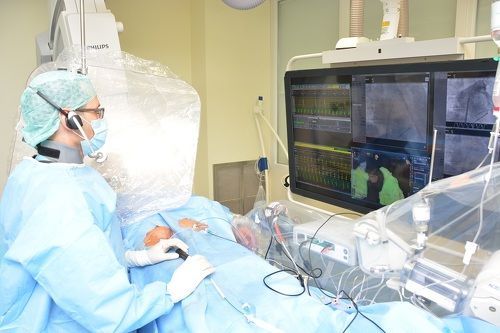
“In practice, there are two guidance options available: classic X-ray imaging via fluoroscopy and millimeter-precise 3-D mapping of the heart, which the system also enables. The radiation exposure is extremely low.
The procedure is performed via the femoral vein, usually on the right side. The patient is deeply sedated, similar to a gastrointestinal endoscopy, without general anesthesia. A catheter is inserted through the groin; for atrial fibrillation ablation, a transseptal puncture is then performed to access the left atrium from the right atrium. There, all four pulmonary veins are electrically isolated—a process that proceeds impressively quickly with the new technology.
From an organizational standpoint, electrophysiology is also in an exciting phase. While patients used to remain hospitalized as a rule, new approaches are increasingly enabling outpatient ablations. Due to the very low risk profile, the first patients have already been discharged home on the same day. This is not yet a widespread standard, but it is a realistic option when the right conditions are in place: daily procedures, a high level of expertise, certifications, and verifiable quality. This makes it possible to make atrial fibrillation ablations not only safer and faster, but also more patient-friendly.”
Whether a treatment needs to be repeated depends heavily on the specific arrhythmia. For paroxysmal supraventricular tachycardias, which frequently occur in young patients—such as AV-node reentry tachycardia—success rates exceed 95%.
Dr. Müller comments: “In these cases, one can almost speak of a cure, and it is extremely rare for patients to return for follow-up. With atrial fibrillation, such an outcome would be desirable, but the reality is different. Depending on the timing of the ablation, individual risk factors, and the duration of the existing arrhythmia, success rates after initial treatment are around 75 to 80 %.
Some patients require repeat procedures, usually because one of the four pulmonary veins redevelops electrical conductivity—a process known as “reconnection”—which then must be closed off again. Overall, therefore, repeat procedures do occur, both among our own patients and among those who were treated externally beforehand.”
Pulsed-field ablation offers particular benefits to patients for whom safety and tissue preservation are especially important. People with atrial fibrillation benefit the most, especially in early stages such as paroxysmal atrial fibrillation, because pulmonary vein isolation is the primary treatment goal in these cases, and PFA demonstrates its greatest strength precisely in this area: rapid, stable lesions combined with a significantly lower risk of damage to surrounding structures.
“In principle, atrial fibrillation ablation is indicated for symptomatic patients, but success is not measured solely by the absence of symptoms. People with concomitant heart failure, in particular, have been shown to benefit, as studies indicate that ablation can help them live longer—a measure of success that goes far beyond mere symptom control.
Timing is also crucial: the earlier catheter ablation is performed, the fewer remodeling processes have taken hold in the atrium. Atrial fibrillation itself triggers such remodeling processes, which in turn promote new episodes—a veritable vicious cycle. That is why treatment as early as possible is advantageous. Pulsed-field ablation has become established at our center as a routine procedure for initial ablation and is particularly well-suited for young patients. It is fast, safe, and—due to the low thermal stress—also ideal for situations where the esophagus is anatomically very close by.
“Since very little contrast agent is required, the procedure is also an excellent option for people with impaired kidney function,” Dr. Müller explains, adding:
“A previous stroke does not generally preclude catheter ablation. The procedure would only be avoided during the acute phase of a stroke because blood thinners are used during ablation, and this could lead to bleeding in the fresh infarct area of the brain. However, once the acute phase has passed, a history of stroke is not an obstacle—on the contrary, the treatment can even reduce the risk of a second stroke.
The key factor here is not just the ablation itself, but the patient’s overall risk profile. Factors such as long-term smoking, obesity, or untreated sleep apnea significantly influence the success of the procedure. Studies clearly show that while ablation is effective, the arrhythmia can recur if accompanying risk factors are not addressed at the same time. Catheter ablation is therefore only one part of the bigger picture—an important piece of the puzzle, but certainly not the only one.
Equally important is the consistent management of risk factors. For this reason, the arrhythmia clinic systematically assesses all relevant factors and maintains a broad network of collaborative partners. These include a sleep lab to evaluate snoring and sleep apnea, as well as one of Germany’s largest obesity centers, which offers the full spectrum of treatment—from nutritional counseling and medication to surgical interventions. There are specialized partners for each area, ensuring that patients receive comprehensive care—a key component of successful and sustainable treatment.”
Smartwatches provide continuous or event-based heart rhythm data, which many people record immediately as soon as they feel heart flutters, palpitations, or irregularities. This data is then sent directly to the smartwatch clinic, where it is evaluated by medical specialists. This eliminates the traditional diagnostic detour involving repeated ECG checks, long-term ECGs, or waiting for the arrhythmia to “finally” occur during an examination. This is an enormous advantage, especially in cases of paroxysmal atrial fibrillation, which often occurs only briefly and irregularly.
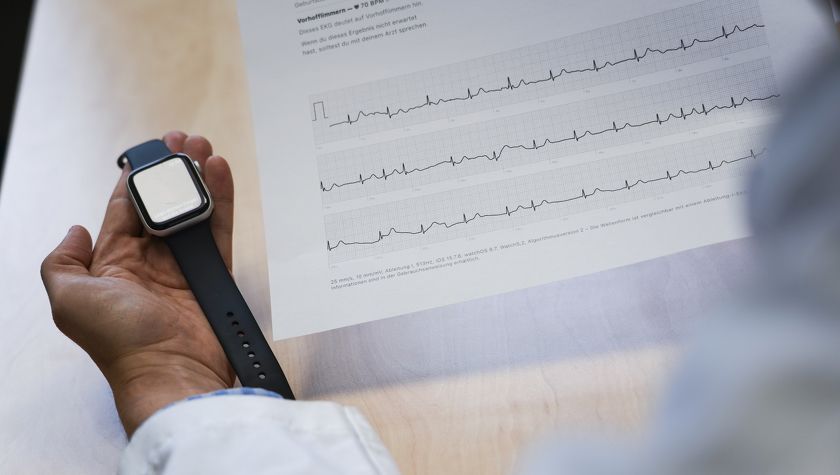
Dr. Müller explains this in more detail: “Smartwatches and other wearables now play a major role in follow-up care, and their use has become fully integrated into routine practice in recent years. While only a few patients used such devices five years ago, it feels like one in two people wears a smartwatch today. Basically, there’s hardly anyone to whom we wouldn’t recommend them—especially if cardiac arrhythmia is suspected.
It’s important to distinguish between different types of wearables. The major advantage of a smartwatch with an ECG function is that it’s constantly on the wrist and fulfills two key tasks: It continuously measures parameters such as oxygen saturation and uses algorithms to detect signs of arrhythmias, particularly atrial fibrillation. At first, this is just a warning signal. In addition, the user can record a single-channel ECG, and this feature is CE-certified on many models.”
Devices such as the Apple Watch, as well as models from Withings, Samsung, and Google, provide ECGs that are surprisingly easy to interpret. If someone receives an alert at home, records an ECG, and the watch reports “suspected atrial fibrillation,” this isn’t 100 percent accurate, but it’s often meaningful enough to warrant a medical evaluation.
“If a plausible ECG is available, a diagnosis can actually be made based solely on this recording, and treatment can be initiated—such as blood-thinning medication if the stroke risk is elevated according to the CHA₂DS₂-VA score (a medical scoring system). It was precisely this development that gave rise to the idea of setting up a smartwatch clinic.
Since the end of last year, ECGs submitted from outside have been evaluated promptly, and patients receive a recommendation quickly or are invited for a consultation. In this way, several people have already been treated at an early stage. The issue of cost coverage has not yet been uniformly regulated; there is currently no general reimbursement by health insurance providers. Given the high diagnostic value of these devices, this would be desirable, especially since one-third of those affected experience no symptoms at all.
At the same time, there are also people for whom such watches are not suitable—for example, those who would constantly monitor themselves and would find it difficult to concentrate on anything else in their daily lives. For others, however—such as those who record an ECG on Sundays after their morning coffee—they are a simple and reassuring tool. Depending on the manufacturer and model, the devices cost between about 250 and 500 euros.
Above all, it is important that the watch has a certified ECG function; this is the case with the Apple Watch starting with Series 4. In addition, many models offer additional safety features such as fall detection or automatic emergency alerts in the event of an accident. Development is advancing rapidly, and further innovations are expected in the next five to ten years—such as smartwatches that can continuously measure blood pressure or even blood sugar. “This would be an enormous step forward, especially for people with chronic illnesses,” emphasizes Dr. Müller.
These two innovations—pulsed-field ablation and digital rhythm monitoring—deliver their greatest benefit when they are viewed not as parallel, supplementary services, but as an integral part of a comprehensive treatment pathway. It is crucial that they do not replace existing structures, but rather precisely fill the gaps where traditional care pathways have previously fallen short.
Preventive measures that every individual can take.
“Among the most effective preventive measures for protecting the heart are, quite traditionally, exercise and regular physical activity, because we spend far too much time sitting overall. A healthy diet—ideally a Mediterranean diet, and thus the exact opposite of fast food—also plays a central role.
Maintaining a healthy body weight is also important. Many people, especially working professionals, have a local primary care physician, and it’s worth starting at some point to have your blood pressure checked regularly to detect high blood pressure early on. If you notice that your partner is snoring heavily, you should also have them checked early on for sleep apnea. This is one of the standard recommendations.
Starting at age 60, it’s also a good idea to have your family doctor perform an ECG—simply as a preventive diagnostic measure. Medicine today is moving in a direction where diseases are not only detected early but, ideally, prevented. “With the possibilities offered by AI and medical advances, the focus will increasingly be on establishing prevention centers, identifying risk factors as early as possible, and treating them in the best possible way,” advises Dr. Müller, and with that, we conclude our conversation.
Thank you very much, Dr. Müller, for this very important conversation about the impressive treatment options for cardiac arrhythmias!
- Chief Physician, Department of Electrophysiology, Knappschaft Kliniken Recklinghausen
- Specialty: Cardiac arrhythmias, ablation procedures (PFA)
- Areas of Focus: Diagnosis and treatment of cardiac arrhythmias, invasive electrophysiological examinations, catheter ablations (radiofrequency, cryo, PFA), atrial fibrillation at a certified center
- Specialty Clinics (Arrhythmia and Smartwatch Clinic)
- DGK-certified Atrial Fibrillation Center
- Interdisciplinary collaboration, advancement of electrophysiology
Share this article
Expert Interviews
Read next
- Expert interview
Expert interview with Professor Dr Elmar Herbst, PhD
Oct 15, 2026
Patient-centred and personalised knee surgery
Read more - Expert interview
Cardiogeriatrics: Significance and benefits in the context of hospital reform
Sep 21, 2026
Cardiogeriatrics: Significance and benefits in the context of hospital reform
Read more - Expert interview
Expert Interview with Professor Dr. Amadeus Hornemann, MPH
Sep 18, 2026
Prof. Amadeus Hornemann on Precision Medicine in Gynecology: Modern Surgery, New Techniques, Better Quality of Life
Read more