Expert Interviews
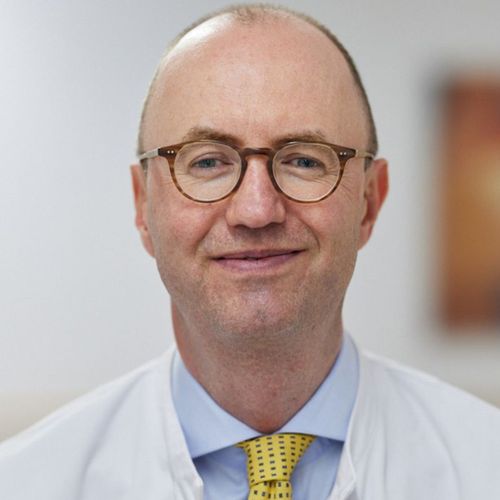
Innovative Tools and Optimized Processes: Greater Patient Safety in Knee Replacement Surgery — Expert Interview with Dr. Andreas Ottersbach, M.D.

Alexandra Pfitzmann ·
Dr. Andreas Ottersbach is a recognized and highly specialized orthopedic surgeon with an international reputation who specializes in hip and knee joint replacement. As Chief of Orthopedics at the Orthopedic Clinic at the Upper Valais Hospital Center in Switzerland, he relies on minimally invasive techniques and state-of-the-art procedures to implant prostheses with the highest precision while minimizing damage to surrounding tissue.
Of particular note is his pioneering work in Switzerland with the Rapid Recovery™ concept, which accelerates the recovery process after surgery and continuously optimizes procedures. His high level of specialization, particularly in the field of endoprosthetics, makes him a sought-after expert who enjoys great recognition both nationally and internationally. With his passion for innovative procedures, Dr. Ottersbach was a pioneer in the introduction of intraoperative digitization and navigation-guided joint surgery in Switzerland. By utilizing state-of-the-art technologies, such as the SPI system and infrared-based navigation techniques, he is able to precisely account for his patients’ individual anatomical conditions.
Under his leadership, the clinic in Brig achieved above-average results in the Swiss Implant Registry, which attests to the high quality of care and the low revision rate. Dr. Ottersbach’s deep understanding of hip and knee joint anatomy enables him to treat particularly complex cases. In doing so, he places great emphasis on keeping his patients’ hospital stays and recovery times as short as possible through minimally invasive procedures. His innovative spirit and constant pursuit of improving surgical procedures make him a leading expert in the field of joint replacement.
The editorial team of the Leading Medicine Guide spoke with the specialist in knee arthroplasty and learned more about patient safety and the optimization of treatment processes.

Knee arthroplasty represents a significant advance in modern orthopedics, offering patients with severe knee joint conditions—such as osteoarthritis or rheumatoid arthritis—an improved quality of life. In this procedure, the damaged knee joint is replaced with an artificial joint to relieve pain and restore mobility. Thanks to innovative techniques, such as minimally invasive surgery and precise navigation, these procedures are now safer and less invasive, which shortens recovery time and maximizes long-term treatment success. These developments enable many patients to once again participate actively and pain-free in everyday life. Tools designed to enhance patient safety in knee replacement surgery—such as computer-assisted navigation and intraoperative imaging—enable precise implant placement and reduce the risk of complications. Process optimizations, such as standardized treatment pathways and the Rapid Recovery™ concept, accelerate recovery and ensure consistent treatment quality through clear procedures.
According to Dr. Ottersbach, computer-assisted navigation systems have made knee replacement safer by significantly improving the precision of knee joint prosthesis implantation. These systems operate using infrared technology during surgery. Patients and healthcare providers are not exposed to any additional X-ray radiation during the procedure. In addition, imaging techniques such as X-rays, CT, or MRI can be used prior to the procedure to determine leg axes and to create a three-dimensional model of the knee joint. The latest developments even allow radiation-free MRI data sets to be converted into a CT scan.
“At the Valais Hospital, we use the Orthopilot system from Braun Äsculap for total knee arthroplasty—a system with which I’ve actually had 25 years of experience. Over this period, there have been repeated updates to both the hardware and software, and the system has been an established procedure in orthopedic medicine for over two decades, ensuring a high degree of consistency and safety—not least due to these continuous improvements.
The major advantage of this system is that it takes into account not only leg axes but also ligament tension, allowing the surgeon to determine and implement the optimal balance between leg axes and ligament tension at the end of the operation. The navigation system provides the surgeon with a wealth of information, which is processed into an individualized treatment plan using a computer program. Drawing on their wealth of experience, the surgeon can intervene to correct or adjust the axial alignments and dimensions of the prosthetic components suggested by the computer program. Implementation is again carried out with high precision using infrared-based navigation technology. “With other conventional systems, the approach is sometimes axis-based, and ligament tensions are not measured or taken into account with such high precision,” explains Dr. Ottersbach, adding further details about the system:
“The entire navigation system is infrared-based, meaning it operates without X-rays, which is a major advantage for both patients and practitioners. Prosthesis sizes are determined through infrared measurements and are therefore accurate to within 0.2 mm. This ultimately provides crucial information for selecting the most appropriate prosthesis sizes in terms of dimensions from left to right, front to back, and bottom to top, since three dimensions of the knee joint are captured.” Robotics also leverages these advantages of navigation, but greater accuracy cannot be expected, since even without using a “robotic saw” or “robotic saw mount,” precision can be checked after each critical saw cut and, if necessary, a cut can be corrected until the desired result is achieved.
Important Procedures in the Operating Room
The “team time-out” is an essential component of safety measures in all surgical disciplines and serves to ensure patient safety even before an operation begins.
It is a structured checklist that ensures the entire surgical team—consisting of surgeons, anesthesiologists, and nursing staff—is on the same page. Developed as part of the World Health Organization’s (WHO) “Surgical Safety Checklist,” it is mandatory in many countries and is designed to minimize errors and complications in the operating room.
“This checklist must be worked through just as systematically as an airplane pilot checks all systems before takeoff. The patient is identified, as are the correct surgical site, the anesthesia method, and the availability of the necessary prostheses. In the orthopedics department in Brig, this procedure is already being digitized in real time. Using a foot pedal, the surgeon then confirms the sequence of the planned surgical steps on the monitor and can check off each action with a click. The preparation of necessary equipment and the surgical approach are also checked and confirmed step by step. Photos of key surgical scenes are also displayed on the monitor, which makes it easier for the surgical nurse, for example, to have the required instruments ready in a timely manner. “The SPI program (Surgical Process Institute Program), in combination with the ‘Team Time-Out,’ thus contributes to the highest possible level of patient safety,” explains Dr. Ottersbach.
Additional measures to enhance patient safety and treatment quality before and after surgery
Standardized protocols help identify and systematically eliminate potential sources of error. For example, they specify which pain medications are to be used or how postoperative complications such as infections and thrombosis can be prevented as much as possible. These systematic procedures minimize the risk of complications that could disrupt the healing process and ensure a consistently high quality of care. Overall, patients are able to return to their daily lives more quickly. A smooth course of treatment, less postoperative pain, and a shorter rehabilitation period contribute significantly to patient satisfaction. In addition, adherence to standardized protocols fosters trust in the treatment team, as it reassures our patients that their treatment is based on evidence-based and proven methods.
The Rapid Recovery™ concept has a significant impact on postoperative rehabilitation for knee replacements by accelerating the recovery process, reducing the length of hospital stay, and helping patients return to their daily activities more quickly.
A key aspect of this concept is the early mobilization of patients, often on the very day of surgery. This rapid mobilization is supported by less invasive techniques and optimized pain management, which reduces the risk of complications such as thrombosis or infections and promotes the healing process. Another key factor is the interdisciplinary collaboration between surgeons, anesthesiologists, physical therapists, and nursing staff, which ensures comprehensive patient care.
“I came to Switzerland in 2005 and introduced surgical navigation in Brig shortly thereafter. The SPI program was the first of its kind in Switzerland to be integrated into our hospital in 2018. I always strive to find and implement the most effective tools. We were also pioneers in Switzerland with the Rapid Recovery concept—an evidence-based approach—as early as 2011. This is an interdisciplinary, holistic approach aimed at guiding patients safely and quickly through their scheduled surgery and ensuring the shortest possible recovery time so that they can return home as soon as possible.
To make the entire surgical experience even more relaxed, we can also arrange for the patient to walk into the operating room on their own two feet, making it clear that they are not sick but are simply receiving a replacement part—though for logistical reasons, this is not a fixed part of the standardized procedure. The entire interdisciplinary concept is so successful because everyone involved in the patient’s care contributes to it. Another important component of the Rapid Recovery concept is providing patients with thorough information. Every week, experienced surgical assistants give presentations on topics such as knee, hip, spine, and shoulder prosthetics, which the patients scheduled for these procedures attend together about two weeks before their own surgery.
An anesthesiologist explains the anesthesia procedures, and the ward nurse also comes to explain to the patients what to expect on the ward. In addition, the physical therapy team provides information about any necessary assistive devices. This way, every patient knows exactly what to expect in the near future, enters the hospital feeling more at ease, and realizes they are not alone. “All of this gives patients a sense of security,” Dr. Ottersbach explains.
One of the most important success criteria of the Rapid Recovery™ concept is the significant reduction in hospital stays. Thanks to the optimized processes, many patients can be discharged after just a few days. Another sign of success is the patients’ rapid mobility in the first few days after surgery, which is closely monitored and documented. At the same time, the complication rate—particularly the occurrence of infections or joint stiffness—is strictly monitored to document the quality of care, draw conclusions, and continuously improve.
“As far as reducing pain after surgery is concerned, effective procedures have been in place for many years. For example, a larger amount of local anesthetic is mixed with epinephrine and injected directly into and around the joint. This results in the patient being completely pain-free for the first 6–7 hours after surgery, and we can already mobilize them during this time by having a physical therapist come and help the patient take their first steps pain-free.
There are also no drains, as they are no longer necessary due to the minimally invasive surgical techniques used today, unlike in the past. This initiates a rapid recovery, which is then supplemented by a well-designed and standardized pain management plan that is continually adjusted with new and proven medications—ideally without excessive use of opioids, as these carry many side effects. We strive to keep patients active—for example, they are given ice cream in the recovery room, which is not only a treat but also provides a quick boost of calories, giving them a little more energy for early mobilization.
Typically, patients go home on the third day after joint replacement surgery. This differs here in Switzerland from Germany, where inpatient rehabilitation is almost the norm—approximately 90% of patients undergo inpatient rehabilitation, which, however, slows their return to normal daily life. At our clinic, we’ve reduced this figure to under 30%, so that patients can return to their familiar surroundings more quickly without compromising the quality of their outcomes. In this respect, a win-win situation is created for all parties,” says Dr. Ottersbach regarding this successful overall concept.
At the Oberwallis Hospital Center, over 400 knee and hip replacements are performed each year. Dr. Ottersbach performs over 200 of these procedures himself.
Digital process management tools and standardization in the operating room play a crucial role in preventing errors and improving patient safety, particularly in knee replacement surgery.
A key element of these digital tools is real-time monitoring, which is used during surgery. Through the continuous collection and analysis of data, potential problems can be identified early on, which helps prevent errors.
“The success of the overall method is reflected in the Swiss Arthroplasty Registry, where we in Brig perform particularly well in knee and hip arthroplasty, especially with regard to revision surgeries. As for patient safety regarding anesthesia procedures, we now measure brain waves to ensure even better monitoring. However, most patients receive gentle spinal anesthesia, which allows them to be pain-free but awake if they wish.
Some patients even want to watch their own surgery via the ceiling-mounted camera in the operating room. This can be discussed with each patient on a case-by-case basis. We also offer 3D glasses as a distraction. Those who do not want to be aware of the surgery at all will, of course, receive general anesthesia,” says Dr. Ottersbach, emphasizing at the end of our conversation:
“For two decades now, we have been voluntarily measuring the quality of care by providing our patients with questionnaires—including digital versions— to collect patient-reported outcome measures (PROMS) in order to gain an overview of functional outcomes and make fine adjustments.”
Thank you very much, Dr. Ottersbach, for the in-depth insight into your internal processes and the measures taken to ensure patient safety!
Share this article
Expert Interviews
Read next
- Expert interview
Expert interview with Professor Dr Elmar Herbst, PhD
Oct 15, 2026
Patient-centred and personalised knee surgery
Read more - Expert interview
Cardiogeriatrics: Significance and benefits in the context of hospital reform
Sep 21, 2026
Cardiogeriatrics: Significance and benefits in the context of hospital reform
Read more - Expert interview
Expert Interview with Professor Dr. Amadeus Hornemann, MPH
Sep 18, 2026
Prof. Amadeus Hornemann on Precision Medicine in Gynecology: Modern Surgery, New Techniques, Better Quality of Life
Read more