Expert Interviews
Outpatient Hernia Surgery and Outpatient Surgery in General at the Seechirurgie Practice’s New Outpatient Surgical Center—An Expert Interview with Dr. Pöschmann

Alexandra Pfitzmann ·
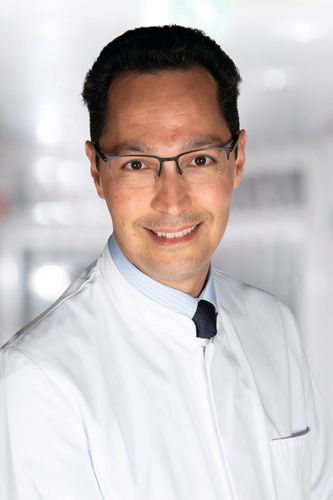
Dr. Enrico Pöschmann, M.D., is a recognized specialist in hernia surgery and heads the state-of-the-art Seechirurgie outpatient surgical center on Lake Zurich in Switzerland. With his many years of experience and expertise, he has earned an excellent reputation, particularly in the treatment of complex hernias, such as incisional hernias, rectus diastases, and sports hernias. Dr. Pöschmann performs approximately 500 surgeries in this field each year and specializes in minimally invasive procedures and robot-assisted surgery. These innovative techniques make it possible to perform procedures in a particularly gentle and precise manner, with minimal risk to patients.
The Seechirurgie Center combines Dr. Pöschmann’s expertise within his team with state-of-the-art infrastructure, ensuring optimal patient care. With first-class equipment, including a high-end dual operating room, MRI, and CT scanner, the center offers advanced medical care. Close collaboration with external radiology institutes and regional primary care physicians ensures accurate diagnostics and seamless care. Of particular note is the focus on minimally invasive procedures, which are complemented by innovative keyhole surgery and the use of the da Vinci robot. These advanced methods contribute to a faster recovery and a swift return to daily life for patients.
Dr. Pöschmann places great emphasis on personalized surgical care tailored to the specific needs of each patient. Through his close collaboration with renowned hospitals and medical groups, as well as his ongoing participation in international medical exchanges, he remains at the cutting edge of medical science. This enables him to integrate the most modern diagnostic and surgical methods into his work, further solidifying his outstanding standing in the international medical community. In addition to his expertise in hernia surgery, Dr. Pöschmann is also highly skilled in the treatment of complex adhesions, intestinal obstructions, and other surgical procedures, and is regularly consulted for second opinions.
The Seechirurgie Center is distinguished not only by its medical excellence but also by a pleasant and reassuring atmosphere that promotes patients’ well-being. This patient-centered approach ensures that patients feel well cared for from the initial consultation through follow-up care.
The shift toward outpatient care for many treatments is gaining momentum. The editorial team of the Leading Medicine Guide spoke with Dr. Pöschmann specifically on this topic, including outpatient hernia surgery.

Outpatient surgeries are becoming increasingly important and are changing the way surgical procedures are performed. This trend is not only a response to many patients’ desire for faster recovery and shorter hospital stays, but also the result of technical advances and innovative surgical methods. Outpatient surgeries are on the rise, particularly in the field of hernia surgery, where procedures traditionally required a longer hospital stay. Thanks to minimally invasive techniques and state-of-the-art technology, patients can often go home just a few hours after surgery without compromising on the quality of their care. Outpatient hernia surgery is an outstanding example of the efficiency and patient-centered approach of modern medicine. The Center of Excellence for Laparoscopic Surgery, led by Dr. Enrico Pöschmann, combines specialized surgery, emergency care, and outpatient procedures.
The decision on whether a surgery should be performed on an outpatient or inpatient basis depends on various factors.
“Here at our outpatient surgery practice, a great deal is generally possible—though always following a careful, individualized assessment. According to the guidelines, certain procedures are clearly intended for outpatient care, in accordance with the principle of ‘outpatient before inpatient.’ In addition, there are also surgeries that can be performed both on an outpatient and inpatient basis. In these cases, the patients’ wishes and personal circumstances play a central role. The decision as to whether a surgery is feasible on an outpatient basis is always made individually by the treatment team—based on clear medical criteria. This includes, among other things, the following questions: How complex is the procedure? What postoperative symptoms and risks are to be expected, such as pain or possible postoperative bleeding? The patient’s personal living situation also plays an important role: Does the patient live alone? Is adequate care at home guaranteed? Is the commute to the clinic a long one? The decision is made by an interdisciplinary team, which includes the anesthesiology department. Before the procedure, the anesthesiologist assesses whether the patient is suitable for outpatient surgery from an anesthesiological perspective. “This is how we ensure that every procedure is performed with the greatest possible safety and in the best interest of our patients,” explains Prof. Dr. Pöschmann at the start of our conversation.
Some people feel safer staying in the hospital after major procedures, especially if they need assistance with daily activities or if the procedure requires a longer recovery period. In such cases, the decision to admit a patient may also be based on the patient’s individual needs and safety. Whether outpatient surgery is an option depends largely on the patient’s overall health.
“If someone, for example, suffers from poorly controlled blood pressure, has a serious heart condition, or has a known predisposition to stroke, they are classified as medically more fragile. In such cases, for safety reasons, it is advisable to perform the procedure as an inpatient under monitoring. However, this decision is always made as a team—in consultation with the anesthesiologist and the operating surgeon, and based on all available information. Generally speaking, we perform a great many outpatient surgeries at our practice, which works exceptionally well thanks to modern technology and well-established procedures. Another important factor is the distance from the patient’s home. A long commute can actually be a reason to rule out outpatient surgery—especially if the procedure is scheduled for late afternoon. This is because, after the procedure, the patient needs sufficient time to recover before they can be safely discharged home. The average length of stay after an outpatient surgery at our clinic is about one and a half to two hours. This depends primarily on how well the patient tolerates the anesthesia, whether they experience nausea, and whether they are able to eat or drink again. The last outpatient surgery of the day usually takes place around 4:00 p.m. We make sure that minor and uncomplicated procedures for healthy patients are scheduled later in the day. More complex procedures or surgeries for patients with relevant pre-existing conditions are performed as early in the day as possible. “The anesthesia department handles the scheduling in close coordination with the entire team—and this approach has proven extremely effective in daily practice,” says Dr. Pöschmann regarding the decision between “outpatient or inpatient” care.
Many surgeries can now be performed safely and efficiently on an outpatient basis—and this applies to far more than just minor procedures.
Dr. Pöschmann explains: “In our department, hernia surgeries in particular are standard procedures that are generally performed on an outpatient basis. But even elective gallbladder removals for gallstones—provided there is no acute inflammation—as well as selected appendectomies can be performed on an outpatient basis without any problems. All rectal surgery—that is, procedures for hemorrhoids, fistulas, or anal fissures—can also be performed very effectively on an outpatient basis. In addition, procedures in hand and foot surgery are just as much a part of the outpatient spectrum as knee arthroscopies or meniscus surgeries. Minor fractures, such as those of the wrist, fibula, or metacarpals, as well as the removal of metal implants following fracture surgery, can also be treated on an outpatient basis. In addition to these surgical procedures, our practice also performs procedures from other medical specialties. For example, our gynecologist colleagues perform conizations or dilation and curettage (D&C) procedures here. In the field of urology, procedures include circumcisions, bladder irrigations, and the placement of ureteral stents. This range of services is complemented by plastic surgery procedures such as eyelid lifts and breast surgeries, which are also performed on an outpatient basis. Overall, our close interdisciplinary collaboration with experienced affiliated physicians enables us to offer a broad range of surgical procedures that can be performed on an outpatient basis in a minimally invasive and patient-centered manner.”
Preparing a patient for outpatient surgery involves several steps designed to make the procedure as safe as possible and to promote a quick recovery.
Outpatient procedures are carefully planned in advance and carried out in close coordination between the surgeon, the anesthesia team, and the patient. As a rule, the procedure can take place within a few weeks of the initial consultation. Medical care is also ensured after the surgery—with clearly defined availability of the medical team and supplementary digital solutions for monitoring key vital signs.
“Before an outpatient surgery is performed, we naturally conduct a thorough diagnostic evaluation and assessment right here on-site. Typically, the time between the initial consultation and the surgery is about two to four weeks—depending on the scope of the planned procedure and its urgency. In cases of acute symptoms, the process can, of course, be expedited. Scheduling always takes place in close consultation with our anesthesia team and is also tailored to the individual preferences of our patients, such as with regard to work commitments or vacation plans. We always strive to make the scheduling process as flexible and patient-friendly as possible. After surgery, it is important that the patient gets home safely. Driving a car on one’s own is not permitted due to the aftereffects of anesthesia. Typically, patients arrange for a family member or friend to pick them up; alternatively, they can return home by taxi or public transportation. In the event that this is not possible, we also assist with arranging transportation. An initial follow-up examination usually takes place the very next day on an outpatient basis—and here, too, we provide the necessary assistance with transportation if needed,” says Dr. Pöschmann, emphasizing the importance of follow-up care:
“For the period following surgery, we offer close and well-structured follow-up care. The surgeon in charge can be reached via an emergency number even after the procedure—around the clock—as can a member of the anesthesia team. This ensures that any complications, such as pain, nausea, or wound issues, can be competently assessed at any time. In addition, we are currently working on an innovative follow-up care concept in cooperation with a startup: In the future, patients will be equipped with a small monitoring system via an app that continuously monitors vital signs such as heart rate and blood pressure. Any abnormalities are automatically analyzed by AI and can—depending on their severity—be reported directly to the responsible physicians or, in an emergency, even to emergency medical services. This system not only provides additional safety for patients but also enables us to address individual risks even more effectively in the future—even among patient groups with pre-existing conditions. Despite this technical support, one thing remains a given: the personal responsibility of surgeons for their patients—even after outpatient surgery—is beyond question for us.”
Compared to traditional inpatient procedures, outpatient hernia surgery offers a number of advantages for both patients and the healthcare system.
Outpatient hernia surgery has evolved significantly in recent years and now offers numerous advantages—for both patients and medical staff. Whereas in the past even simple, minimally invasive procedures such as a unilateral inguinal hernia repair required a hospital stay of several days—sometimes from Monday through Saturday—this situation has changed fundamentally. Today, many patients find it hard to understand why they should remain hospitalized after an uncomplicated surgery, since they are usually pain-free, mobile, and off IV fluids by the next morning.
“This development is primarily due to advances in surgical and anesthetic techniques. Procedures are shorter, gentler on the tissue, and cause significantly less pain than in the past. Outpatient surgery has now become the standard, particularly for uncomplicated inguinal or umbilical hernias. From a health policy and insurance medicine perspective as well, the outpatient approach is increasingly preferred. Patients welcome this development, as many specifically no longer wish to be admitted to the hospital and actively seek outpatient solutions. For the medical team, this development also means greater efficiency: Organizational workflows are streamlined, rounds and time-consuming inpatient processes are eliminated, and communication can be more direct and targeted. In an outpatient setting, patients can also be cared for more easily between procedures without having to maintain inpatient care operations. Outpatient hernia surgeries are usually performed using minimally invasive techniques, such as laparoscopic or robot-assisted methods. In certain cases—such as with young patients, smaller defects, or specific medical preferences—open surgery may also be appropriate, for example, using the classic Shouldice technique without mesh implantation. “These open procedures are also very gentle on the tissue and involve smaller skin incisions of about two to three centimeters, often even under local anesthesia or in combination with brief general anesthesia,” explains Dr. Pöschmann.
Smaller and less complex types of hernias are generally particularly well-suited for outpatient procedures, as the surgery can be performed using minimally invasive techniques and the patient can quickly return to their daily routine. These types primarily include inguinal hernias, umbilical hernias, and femoral hernias, provided they are diagnosed at an early stage and the procedure is planned accordingly.
The shift toward outpatient procedures, particularly for more complex hernia surgeries, poses a challenge in terms of the quality of follow-up care and the rapid detection of potential complications. To ensure that patients receive optimal care despite the absence of inpatient observation, several measures are necessary that focus on both preventive aspects and comprehensive postoperative care. These include close patient monitoring, modern communication channels, and clear instructions for patients to monitor their own condition.
“The introduction of the aforementioned app for digital follow-up care is a promising step toward further improving safety and care after outpatient surgeries. At the same time, however, a legitimate question arises as to how this system works for older or technologically inexperienced patients—for example, an 80-year-old woman who has difficulty using digital devices. In such cases, one thing is clear: patient safety comes first. If it is foreseeable in advance that home monitoring cannot be ensured—for example, due to cognitive impairments or a lack of technical capabilities—the person in question will not be scheduled for outpatient surgery. Especially for older adults with increased risk or limited independence, an inpatient stay remains appropriate and is planned accordingly. The situation is different for patients who are cognitively fit and understand how to use the app or who can be supported by family members if necessary. In these cases, the digital follow-up system offers additional safety without compromising care. “Patients can recover in the familiar surroundings of their own homes while receiving medical monitoring from the team,” Dr. Pöschmann clarifies, explaining the options should the patient ultimately need to be admitted:
“In the event that a patient still requires more intensive care temporarily after an outpatient procedure—for example, due to nausea following anesthesia or severe pain—two additional patient rooms are available at the facility. These serve, on the one hand, to expand the day clinic’s capacity and, on the other hand, as a safety net for precisely such situations. In addition, these rooms are also used by affiliated plastic surgeons whose patients are required to stay overnight following more complex procedures, such as those involving the breast area. In these cases, the respective surgeon assumes responsibility for the care, which is medically supported—comparable to an “in-house hotel” with specialized care.
Although Seechirurgie is still a relatively new project, it is already possible to take stock—and the overall assessment is very positive. The infrastructural foundations have been laid and have proven to be extremely efficient and reliable in day-to-day operations, especially on surgery days.
“A medical system is never perfect—and that’s a good thing. After all, continuous improvement is a central component of medical quality. The team continuously identifies and implements minor optimizations—whether in process organization, communication, or patient care procedures. The goal is always to make processes even more efficient, make stays more comfortable, and further enhance safety. Particular attention is paid to the seamless exchange of information—as this is one of the most important foundations for high-quality medical care. To ensure this, internal processes are continuously reviewed and refined. Furthermore, the integration of new technologies is another important step. Increasing digitalization—such as through digital patient records, modern monitoring systems, or smart post-operative care solutions—is strategically leveraged to continuously modernize the care model and align it with current standards. In short: There is no standing still. Seechirurgie is a dynamic system that continuously adapts, improves, and grows—always with the goal of offering patients the best possible outpatient surgical care,” Dr. Pöschmann makes clear, and emphasizes at the end of our conversation:
“Another important aspect is our program for affiliated physicians. In addition to specialized hernia surgery, we also offer other physicians who wish to perform outpatient surgery the complete infrastructure and necessary support. This includes not only our modern operating rooms but also our qualified staff and the anesthesia department. Our goal is to continuously develop and expand this offering so that even more patients can benefit from this efficient and patient-friendly care. We currently perform about 50 to 60 surgeries per month. This number is expected to continue to rise, as we are still relatively in the early stages. However, the trend is promising, and we expect this number to increase further in the coming months.”
Thank you very much, Dr. Pöschmann, for these encouraging insights into outpatient surgeries at your Seechirurgie clinic!
Share this article
Expert Interviews
Read next
- Expert interview
Expert interview with Professor Dr Elmar Herbst, PhD
Oct 15, 2026
Patient-centred and personalised knee surgery
Read more - Expert interview
Cardiogeriatrics: Significance and benefits in the context of hospital reform
Sep 21, 2026
Cardiogeriatrics: Significance and benefits in the context of hospital reform
Read more - Expert interview
Expert Interview with Professor Dr. Amadeus Hornemann, MPH
Sep 18, 2026
Prof. Amadeus Hornemann on Precision Medicine in Gynecology: Modern Surgery, New Techniques, Better Quality of Life
Read more