Expert Interviews
Focus on Superficial Skin Cancer

Alexandra Pfitzmann ·
Non-melanoma skin cancer is one of the most common—and at the same time most underestimated—types of cancer today. It is crucial not only to treat it, but to do so early, precisely, and with an emphasis on aesthetic outcomes. At the same time, dermatological care has undergone fundamental changes in recent years. Today, the focus is no longer merely on removing individual skin lesions, but on a holistic, precise, and aesthetically optimized treatment approach. Modern diagnostics, innovative therapeutic methods such as photodynamic therapy (PDT), and highly specialized dermatological surgery make it possible to treat skin cancer earlier and more precisely than ever before.
In an interview with the Leading Medicine Guide, Priv.-Doz. Dr. med. Laurenz Schmitt explains the role played by technologies such as digital skin analysis with computer-assisted examination methods, electrical impedance techniques, and laser-assisted therapies.
“Non-melanoma skin cancer does not develop suddenly—it builds up over years. The significant increase in non-melanoma skin cancer is primarily due to the long-term effects of chronic UV exposure. Much skin damage occurs at a young age but only becomes visible decades later.
Often, what began decades earlier becomes apparent on the skin—many of today’s findings are the result of past lifestyle habits. At our center, we particularly often see patients with chronically sun-damaged skin, especially on the face, scalp, ears, and nose, as well as on the hands and forearms.
The most important risk factors include fair skin types, intense or long-term sun exposure, repeated sunburns, and advancing age. “Immunosuppressed patients and people who have already had skin cancer also face a significantly increased risk,” explains Dr. Schmitt, and he makes a crucial point clear:
“Skin cancer is not a sudden event—it’s a process. That’s exactly why structured early detection is so crucial.”

Why many patients seek care too late.
“A key problem is that light-skin-type melanoma has long been underestimated. Many changes appear harmless—such as dry skin or age spots. At the same time, skin tumors often do not develop in isolation but arise against a background of so-called field carcinogenesis—that is, widespread skin damage.
Typical warning signs include:
- newly appearing skin changes
- non-healing areas
- recurring crusting
- Bleeding
- slow growth
- rough, calloused areas
“It is precisely these subtle changes that are often taken seriously too late. Yet this is exactly where the opportunity for gentle treatment lies,” explains PD Dr. Schmitt.
Modern Diagnostics: The Decisive Difference.
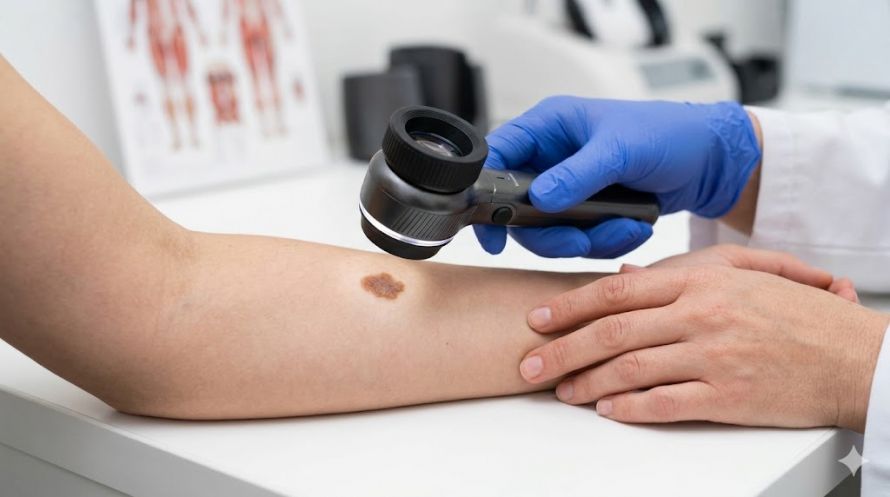
“A trained eye remains important—but today, the combination of experience and technology is crucial. At our center, we consistently use modern, digital diagnostics:
- FotoFinder® systems enable high-resolution analysis and comprehensive follow-up monitoring
- Digital skin mapping often detects changes earlier than the human eye
- Nevisense® (electrical impedance spectroscopy) provides additional certainty in cases of unclear findings
For patients, this means one thing above all: earlier diagnosis, greater peace of mind, and clearer, more personalized treatment decisions. It is precisely this combination that elevates skin cancer screening far beyond the traditional standard,” emphasizes PD Dr. Schmitt.
Treatment today: precise, personalized, and aesthetically optimized.
PD Dr. Schmitt explains: “Modern treatment of non-melanoma skin cancer is now significantly more nuanced than it was just a few years ago. Our goal is not only the safe removal of tumors—but also an optimal aesthetic outcome. To achieve this, we strategically combine various procedures:
- Dermatological surgery at the highest level
- Photodynamic therapy (PDT)
- Daylight PDT for a particularly gentle treatment
- Laser-assisted PDT to enhance efficacy
- Modern laser techniques for precise tissue treatment
- Targeted treatment approaches
“It is precisely this combination that allows us to tailor our approach to each patient—both medically and aesthetically.”
Laser-assisted photodynamic therapy (PDT):
Why it makes all the difference.
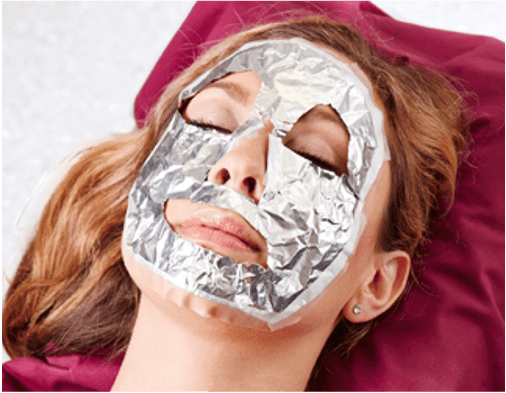
“Laser-assisted photodynamic therapy represents a decisive advance: For the first time, it enables the targeted and effective treatment of not just individual lesions, but entire areas of UV-damaged skin—with significantly improved penetration of the active ingredient and optimized results.
Many patients have not just individual lesions, but an entire area of UV-damaged skin. This is precisely where this procedure comes into play. Through laser-assisted preparation, we specifically enhance the absorption of the active ingredient into the skin—thereby significantly increasing the treatment’s effectiveness. The procedure is particularly suitable for:
- multiple actinic keratoses
- pronounced field carcinogenesis
- recurrent skin lesions
- aesthetically sensitive areas Another advantage:
We treat not only what is visible, but the entire at-risk area. Daylight PDT complements this perfectly: effective, very well tolerated, and barely noticeable in daily life—perfect for patients who want effectiveness without discomfort,” emphasizes PD Dr. Schmitt.
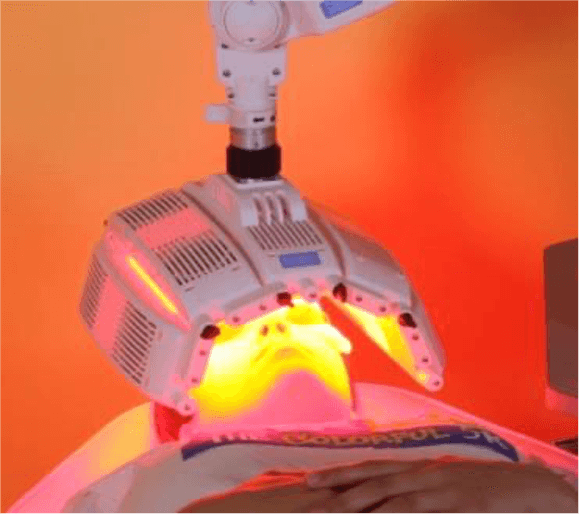
From Individual Treatment to Area-Wide Therapy
Laser-assisted PDT fundamentally changes the approach to skin cancer therapy: Instead of treating individual lesions, the entire UV-damaged skin area is targeted—precisely, effectively, and with aesthetically pleasing results.
Dermatosurgery: When precision is crucial.
“Surgery only makes sense if it is truly necessary—and in such cases, experience is paramount. The decision depends on oncological relevance, the location of the lesion, and individual risk. Especially on the face, it’s not just about complete tumor removal, but about striking a precise balance between safety, function, and an aesthetically pleasing result,” adds PD Dr. Schmitt.
Whether a skin lesion should be surgically removed is no longer decided solely by the question of “to cut or not to cut,” but rather by a precise medical assessment: How high is the oncological risk—and which procedure offers the patient the safest and, at the same time, the best possible solution?
PD Dr. Schmitt explains: “The decision to perform surgical removal is based primarily on the oncological significance of the findings. If there is clinical or histological suspicion of basal cell carcinoma, squamous cell carcinoma, or advanced precancerous lesions, surgery is in many cases the safest and most definitive treatment. At the same time, we always consider each finding within its overall context—medically, functionally, and aesthetically. Key factors include:
- Location
- Size and depth
- Biological growth behavior
- Previous treatments or recurrences
- The patient’s individual situation and expectations
Surgical experience is crucial, especially in sensitive areas such as the nose, lips, ears, or eyelids. Here, it is not just a matter of complete tumor removal, but of striking a precise balance between oncological safety and an optimal functional and aesthetic outcome.”
PD Dr. Schmitt emphasizes: “A particular focus of our practice is surgical dermatology. With approximately 1,300 skin cancer surgeries per year, our practice is among the most experienced centers for dermatological surgery in Germany. At the same time, our guiding principle is: If an equivalent non-surgical treatment is possible, it always takes precedence.”
To ensure that functional and aesthetic aspects are optimally addressed, planning begins well before the actual procedure.
“The incision consistently follows the natural skin lines to minimize tension and preserve tissue structures. This helps reduce visible scars and ensure function—especially in sensitive areas such as the eyelids, lips, or the rest of the face. Depending on the findings, various reconstructive techniques are used, ranging from direct suturing to more complex flap procedures. The key consideration remains the same in every case: maximum oncological safety combined with the best possible aesthetic integration. In many cases, we work with the patient to choose the approach that makes the most medical sense and is personally suitable,” says PD Dr. Schmitt.
Regular skin cancer screening is so important because it enables exactly what modern dermatology is designed to achieve: early detection, minimally invasive treatment, and avoiding surgery whenever possible.
Most basal cell and squamous cell carcinomas develop slowly and manifest themselves over an extended period through subtle changes.
“Early detection depends on two factors: the patient’s vigilance and the diagnostic precision of medicine. And this is precisely where there have been enormous advancements in recent years. Today, modern screening no longer means merely detecting overt tumors, but above all:
- identifying precancerous lesions at an early stage
- making high-risk areas visible
- Targeted detection of patchy UV damage
- and accurately documenting developments over time
I see room for improvement primarily in three areas:
- greater awareness of chronic light-induced damage
- Targeted preventive care for at-risk patients
- Consistent use of modern diagnostic tools such as digital dermatoscopy and complementary technologies for risk assessment
“Our goal is clear: to detect skin cancer early enough that we can treat it gently, precisely, and with excellent cosmetic results,” explains PD Dr. Schmitt, emphasizing:
“Our goal should always be to detect skin cancer not only at an advanced stage, but as early as possible, and to treat it on an individual basis. This is precisely where the great opportunity of modern dermatological oncology lies,” states PD Dr. Schmitt, and with that, we conclude our conversation.
Thank you very much, PD Dr. Schmitt, for this important information on the topic of “non-melanoma skin cancer”!
- One of Germany’s most experienced dermatological surgeons, performing over 10,000 skin surgeries and 1,300 skin cancer surgeries per year
- Specializing in actinic keratoses, field cancerization, and the treatment of basal cell and squamous cell carcinomas
- A leader in laser-assisted photodynamic therapy and modern dermatological laser surgery
- Board-certified specialist in dermatology, allergology, phlebology, and tumor therapy; founder of the Weinheim Skin Center
- Former senior physician and head of the dermatosurgery division at the University Dermatology Clinics in Heidelberg and Aachen
Share this article
Expert Interviews
Read next
- Expert interview
Cardiogeriatrics: Significance and benefits in the context of hospital reform
Sep 21, 2026
Cardiogeriatrics: Significance and benefits in the context of hospital reform
Read more - Expert interview
Expert Interview with Professor Dr. Amadeus Hornemann, MPH
Sep 18, 2026
Prof. Amadeus Hornemann on Precision Medicine in Gynecology: Modern Surgery, New Techniques, Better Quality of Life
Read more - Expert interview
Expert Interview with Professor Dr. Konstantinos Anagnostakos
Sep 15, 2026
Prof. Anagnostakos on Painful Knee Replacements
Read more