Expert Interviews
Expert Interview with Dr. Stephanie Adam, M.D. — Defect Arthropathy and Osteoarthritis of the Knee: Ways to Improve Mobility and Relieve Pain

Alexandra Pfitzmann ·
Dr. med. Stephanie Adam is a specialist in orthopedics and trauma surgery with a focus on shoulder and elbow surgery at the Marien-Hospital Euskirchen Foundation. As a certified shoulder and elbow surgeon (DVSE), she has many years of experience and is regarded as an expert in the treatment of complex conditions and injuries involving these joints. Her medical care is based on state-of-the-art diagnostics, the latest technology, and individualized treatment plans tailored to the specific needs of her patients.
As director of the Center for Shoulder and Elbow Arthroplasty, which has been awarded the DVSE Silver Prosthesis Seal, she employs specialized therapeutic procedures for conditions such as omarthrosis (shoulder joint osteoarthritis) or defect arthropathy. The goal is to restore mobility and alleviate pain. To achieve this, she combines modern procedures with computer-assisted prosthesis planning and tissue-preserving techniques to achieve optimal treatment outcomes. Her approach is characterized by thorough diagnostics, transparent communication, and personalized care. She takes ample time for consultations, explains treatment options in an easy-to-understand manner, and supports her patients from the initial examination through follow-up care.
She is supported by the state-of-the-art facilities at Marien-Hospital as well as an interdisciplinary team consisting of surgical technicians, nurses, physical therapists, social service staff, and a dedicated administrative team. Dr. Stephanie Adam is a respected and highly regarded specialist in shoulder and elbow surgery and is considered a competent point of contact for all questions regarding joint replacement, the treatment of osteoarthritis and injuries, as well as optimizing mobility following illness. Her many years of experience, professional expertise, and empathetic approach make her a recognized physician in the Euskirchen region and beyond.
The editorial team of the Leading Medicine Guide learned more about the treatment of various forms of shoulder osteoarthritis, defect arthropathy, and omarthrosis during a conversation with Dr. Adam.

Significant progress has been made in recent years in the treatment of defect arthropathy and omarthrosis. Innovative therapeutic approaches make it possible to restore shoulder mobility and effectively relieve pain. Through the targeted use of modern technologies, tissue-preserving procedures, and individualized treatment plans, these developments offer new prospects for patients who previously had to live with significant limitations. The goal is to significantly improve quality of life and enable a lasting recovery.
Osteoarthritis of the shoulder usually develops slowly due to the progressive wear and tear of the articular cartilage. Over time, the cartilage in the joint wears away, causing the bones to rub against each other, which leads to pain, inflammation, and restricted movement.
“Osteoarthritis, particularly what is known as omarthrosis, is the wear and tear of the shoulder joint. A distinction is made here between primary and secondary omarthrosis. The primary form occurs without external influences and is genetically determined. Some people are simply unlucky enough to have inherited a predisposition to osteoarthritis, which is why this wear and tear can develop at an early age. Secondary omarthrosis, however, is much more common. This is usually the result of years of heavy strain, such as that experienced by people who do physically demanding work—whether on construction sites or in other occupations that place heavy stress on the shoulder. Over the years, excessive strain and improper loading take their toll, thereby contributing to the development of osteoarthritis. In addition, there are forms of osteoarthritis that develop following injuries. For example, anyone who has had a bone fracture in the shoulder joint—especially if it affects the joint surface—has a higher risk of developing post-traumatic osteoarthritis in the long term. This risk applies to any damaged joint: once injured, joint cartilage is more prone to osteoarthritis than healthy cartilage. Inflammatory rheumatic conditions such as rheumatoid arthritis can also lead to osteoarthritis, although such cases have become less common in recent years thanks to advanced medications. Other, though rare, causes include metabolic disorders such as gout. A special form is defect arthropathy, which is associated with damage to the rotator cuff, a group of muscles surrounding the shoulder joint. The supraspinatus muscle, an important part of this cuff, wears down over the course of a person’s life—it is said to “degenerate”—so that it is often barely present in these patients. This muscle normally ensures that the shoulder remains centered and stable. “Without this support, the head of the humerus gradually shifts upward and slips out of the joint socket, leading to pain and restricted movement,” explains Dr. Adam, describing the symptoms in greater detail:
“Patients with osteoarthritis experience pain that can radiate into the upper arm or the muscles at the base of the neck, as well as limited range of motion. These limitations manifest as difficulty abducting the arm to the side, raising it forward, or rotating it. Some patients are no longer able to raise their arm to the horizontal. Everyday life becomes increasingly difficult: combing one’s hair or getting dressed become challenges. Patients are often no longer able to lie on the affected side. Both forms of osteoarthritis have in common that they are painful and limit mobility, often accompanied by some loss of strength.”
When the shoulder is painful, even combing one’s hair becomes difficult._AI-generated
The diagnosis is typically made through a thorough clinical examination and imaging tests. The physical examination includes an assessment of range of motion and pain, during which the doctor tests mobility and looks for tender points.
“As soon as a patient with the described shoulder problems comes to see us, the diagnostic process usually begins with a detailed medical history. The goal is to gather the patient’s medical history and understand the exact symptoms. The next step is imaging, which always begins with an X-ray. Often, an X-ray alone is very informative, especially in cases of classic omarthrosis or defect arthropathy. In such cases, typical changes in the shoulder joint can be identified. However, if the X-ray does not provide sufficient information or if the disease is still in its early stages, an MRI scan is recommended as a follow-up. MRI provides detailed insights, particularly regarding the rotator cuff. This examination can reveal the condition of the muscles—for example, whether the supraspinatus muscle is still intact or whether muscular changes, such as fatty degeneration, are already present. Muscle fatty degeneration indicates long-standing damage, for example because the muscle can no longer be used properly due to a damaged tendon. In addition, MRI also allows for an assessment of the cartilage structure, which is important for evaluating the stage of the disease,” explains Dr. Adam.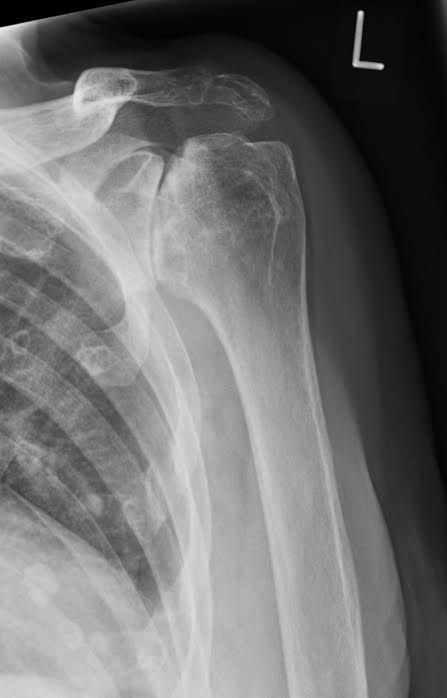
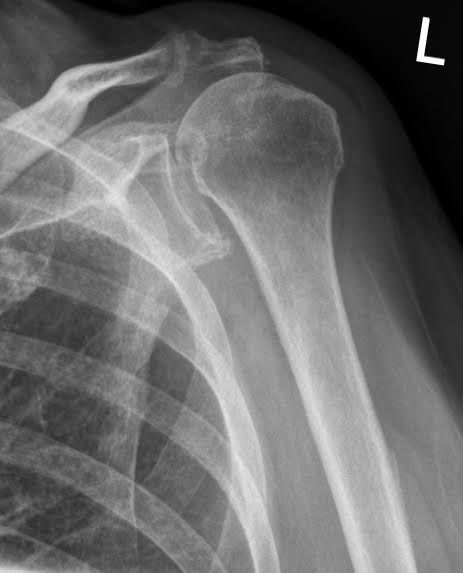
Before surgical treatment is considered for a patient with shoulder osteoarthritis or defect arthropathy, comprehensive conservative therapies are typically employed, aimed at relieving pain, improving mobility, and maintaining the function of the shoulder joint. These treatment approaches are often successful and can delay or even prevent the need for surgery.
Dr. Adam comments: “As a rule, conservative treatment is the first step before any potential surgery, and this is also the case for shoulder problems. In the early stages, typical measures include physical therapy and home exercises to strengthen the muscles and maintain mobility. Many patients also take pain relievers, though the frequency varies greatly from person to person—some only occasionally, others regularly. Anti-inflammatory medications can also be helpful. In addition, physical therapies are often effective: for example, applying cold can relieve pain and feel soothing. Another option is an injection into the joint. The goal is to reduce pain and alleviate inflammation. In addition, if possible, the strain on the shoulder should be reduced. However, this isn’t always feasible for working people, as many have to continue working,” he adds:
“For most patients with omarthrosis or defect arthropathy, conservative treatment is initially the treatment of choice. However, the decision to intensify treatment or consider surgery depends on the success of the treatment. The diagnosis must be clear. Ultimately, it is always the patient’s decision, based on their level of suffering. I always say during consultations: There are various options available—conservative or surgical treatment—and what matters most is how the patient themselves is feeling. Some just want to manage their daily lives, while others want to be physically active. The decision is based on the individual’s perception of pain. If someone only takes pain medication occasionally and is managing well with it, we often take a wait-and-see approach. However, if the symptoms are so severe that they significantly limit daily life—for example, due to pain that occurs even at rest or at night, making it impossible to lie on one’s side—then the willingness to undergo surgery is significantly higher. It’s important to note that the decision to undergo surgery always rests with the patient. It’s not made solely on the basis of X-rays or MRI images—the patient’s level of suffering is the decisive factor.” 
Pain-free function of the shoulder can be restored with the right treatment._AI-generated
The treatment approaches for defect arthropathy with tendon damage and for omarthrosis, in which cartilage wear is the primary issue, differ because the underlying causes and clinical presentations are different. 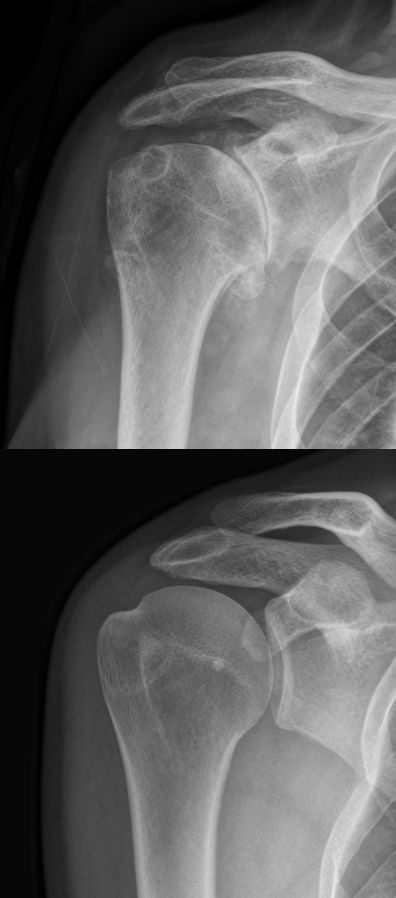
“The surgical procedure for these two types of osteoarthritis is similar. If surgery becomes necessary, the first step is precise planning, which is carried out using computed tomography (CT). This imaging is used to identify the exact bony deformities that can occur in both forms of osteoarthritis—both on the humeral head and in the glenoid cavity. It is important to take these deformities into account on an individual basis for each patient, as they can occur on both sides or on only one side. Special planning software based on the CT data is used for this purpose. This software creates a 3D reconstruction of the joint to assess the individual extent of the bony changes and select the best possible implants. In addition, the software can be used to simulate the range of motion in order to determine the optimal solution for each patient. The actual planning is highly individualized and is carried out by me personally. The CT data is essential for this, and I work directly with the software to plan everything precisely,” explains Dr. Adam, adding:
“As far as treatment is concerned, the general rule is that these cases of osteoarthritis always require a total joint replacement. This means that during surgery, both joint components—that is, both the humeral head and the acetabulum—are always replaced. This is because osteoarthritis affects both sides of the joint, and treating only one side would worsen the situation over time, as the deformity on the acetabular side caused by the osteoarthritis would continue to progress. Osteoarthritis usually progresses: It begins with cartilage degradation. Once the cartilage is completely worn away, bone changes occur, such as bone spurs or deformities. In the case of the socket, wear often occurs toward the back, which causes the joint to become increasingly misaligned and negatively affects muscle and bone positioning. During surgery, depending on the severity, a specialized glenoid reconstruction is then necessary to restore joint centration, especially when the deformities and wear are pronounced. The goal is to return the joint to a position that is as biomechanically normal as possible and to preserve mobility.” 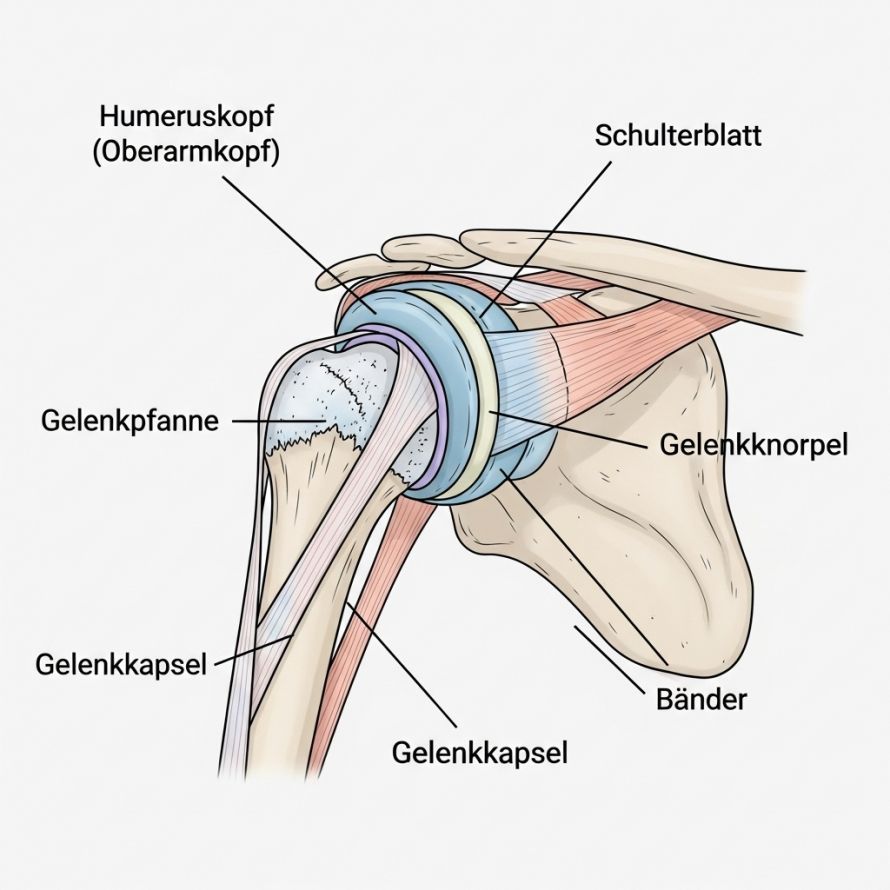
Shoulder joint._AI-generated
Tissue-sparing surgery plays a role in the treatment of both defect arthropathy with tendon damage and omarthrosis, as it aims to preserve healthy soft tissues and offers benefits to patients.
“Today, it is standard practice to perform procedures in a way that is as tissue-sparing as possible. However, to access the joint, a small, standardized incision is always required at the front of the shoulder, approximately at the level of the axillary fold. This approach allows for instrument insertion and the surgical procedure. In cases of defect arthropathy, the existing defect in the rotator cuff can be utilized, which simplifies the procedure since no additional muscle needs to be detached. If the rotator cuff is still intact, a muscle must be detached to access the joint. This muscle is then reattached at the end of the surgery. Overall, the surgery takes about 70–90 minutes, and the patient typically stays in the hospital for 3–4 days. Prior to the surgery, all preparations—including planning—are conducted on an outpatient basis. “It is important that patients receive early functional therapy from us after surgery and are allowed to use their arm again immediately,” Dr. Adam emphasizes.
Tailoring treatment to the individual in cases of defect arthropathy and omarthrosis is crucial for achieving optimal results and ensuring the best possible quality of life for patients. Since these conditions vary significantly in severity, cause, and patient circumstances, a standardized treatment often cannot address all individual needs. Therefore, when planning therapy, special attention is paid to the precise diagnosis, structural damage, age, activity level, comorbidities, and personal expectations. 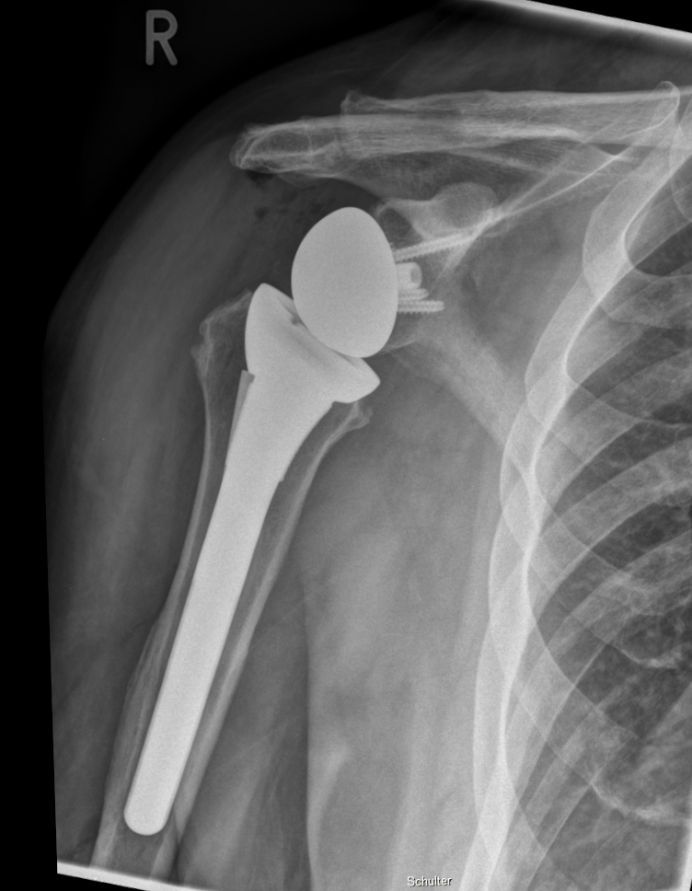
Following shoulder surgery, prompt and structured postoperative care is crucial to the success of treatment. To quickly restore mobility and prevent complications, we emphasize early mobilization and targeted rehabilitation.
“Immediately after surgery, patients are generally allowed—and encouraged—to use their arm without a bandage. Our specialized team of physical therapists, who are highly knowledgeable about shoulders, begins physical therapy as early as the first day after surgery. We also use a shoulder mobilization chair that enables motorized, passive mobilization. The patient sits in a chair with a special backrest on which the arm rests. Passive mobilization begins with gentle movements—such as abduction or forward movements—during which the device controls the motion. After the hospital stay, we strongly recommend follow-up rehabilitation, as many patients have experienced long-term limitations in movement due to osteoarthritis. While this rehabilitation is not mandatory, it is highly recommended because it leads to better functional outcomes. The patient can choose between outpatient or inpatient rehabilitation, and we work this out together with our social services department. Rehabilitation should ideally begin in the second week after surgery, that is, between the 10th and 14th day,” explains Dr. Adam, highlighting the unique feature of the shoulder mobilization chair:
“We also provide our patients with the shoulder mobilization chair for use at home to support mobilization. The device is loaned to the patient, adjusted by an orthopedic technician, and the patient receives brief instruction on its use. It provides passive mobilization, which is supported by a machine. This is followed by active-assisted movements, during which the patient moves the arm more and more on their own, and finally the active phase, in which the patient moves the arm entirely on their own. If you imagine a fit patient who receives a shoulder prosthesis, it’s entirely conceivable that they’ll be able to resume sports like tennis after about six months. Lighter sports such as swimming, light cycling, or jogging are often possible after just three months.” 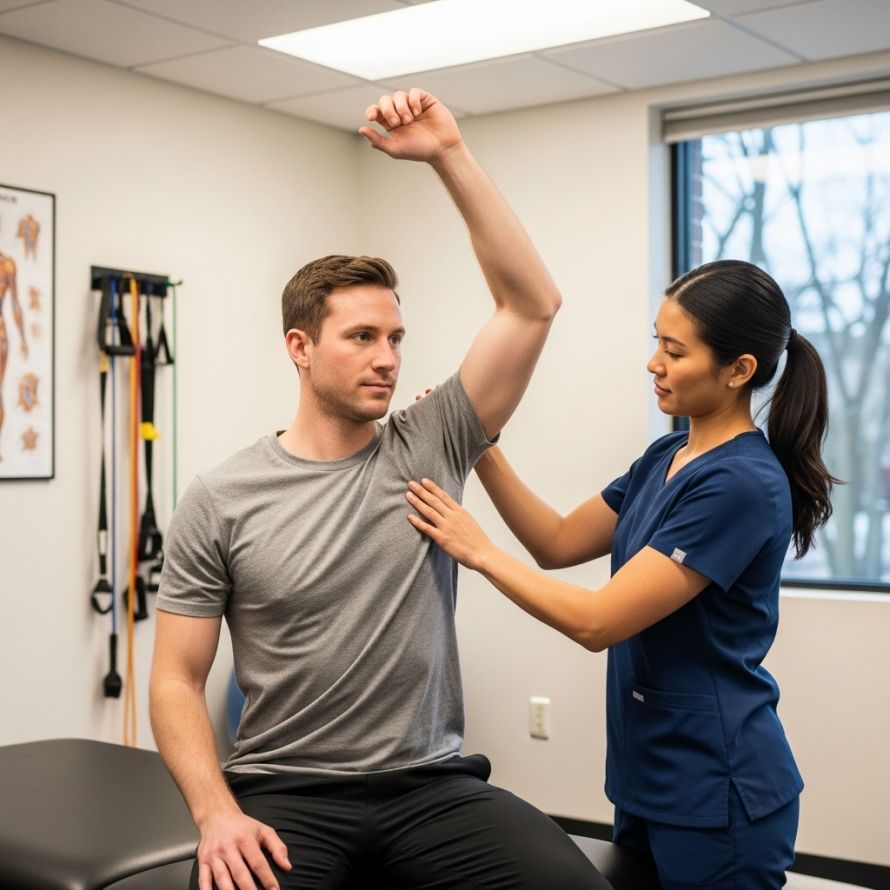
Stock image of physical therapy._AI-generated
There are several challenges involved in treating complex shoulder conditions such as defect arthropathy. A key difficulty lies in precisely diagnosing the individual damage to tendons, cartilage, and bone and developing a treatment that is both functionally effective and long-lasting. For this reason, a high level of medical expertise is required—Dr. Stephanie Adam is certified as an expert by the German Association for Shoulder and Elbow Surgery (DVSE).
Dr. Stephanie Adam’s DVSE certification as an expert in shoulder and elbow surgery indicates that she possesses specialized knowledge and extensive experience in treating conditions affecting these joint regions. The German Association for Shoulder and Elbow Surgery (DVSE) awards this certification to physicians who have completed specialized advanced training and provided practical evidence of their ability to perform complex surgical and conservative procedures in this specialty. This is intended to ensure the quality of medical care and professional competence in the treatment of shoulder and elbow conditions. 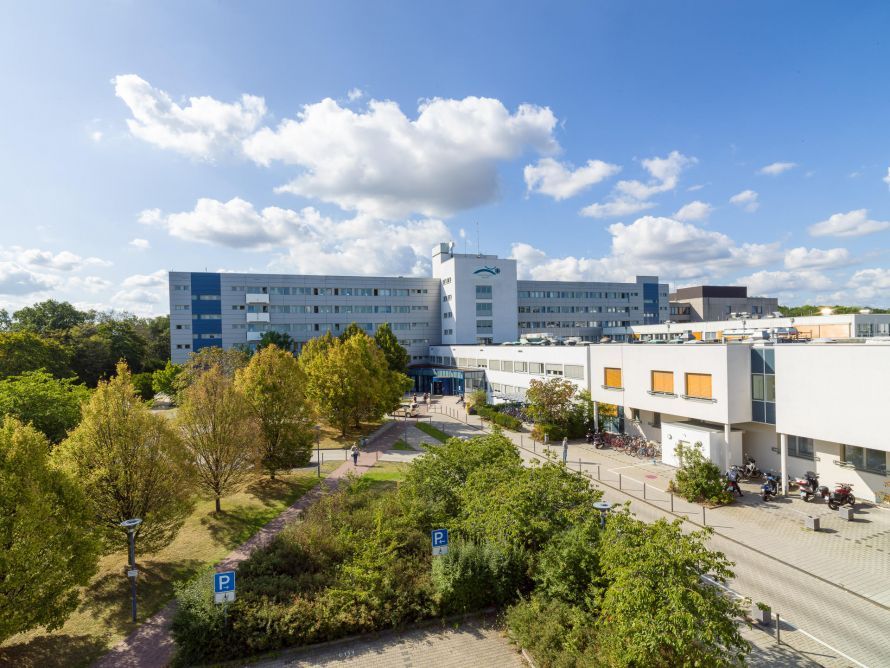
“As the operating surgeon, I see the greatest challenge in optimally realigning the joint in cases of bony deformities. Deformities are particularly common on the glenoid side and must be corrected accordingly. Modern implants allow us to compensate for various tilt angles, and sometimes bone grafting is also necessary to restore the correct joint alignment. We perform about 40–50 shoulder replacements per year, and I am very satisfied with our technical equipment. Today’s implants, planning systems, and navigation aids are very advanced and already provide excellent results for patients. There are individually customizable prostheses, stemless designs, short-stem prostheses, and special implants, as well as computer-assisted navigation for particularly difficult cases. The market is well-developed, with a wide variety of suppliers,” says Dr. Adam, concluding:
“It’s difficult to offer a preventive tip. Stress-related damage, in particular, often depends heavily on one’s occupation; someone who does physical labor usually has little ability to reduce the strain. However, joint impacts should be avoided—as far as possible—especially if there is already pre-existing damage. Sports that place strain on the shoulder, such as intense strength training or boxing, should be approached with caution, as they can increase the risk of overuse injuries to the rotator cuff and joint cartilage.” 
A full return to daily life usually takes 6 months._AI-generated
Thank you very much, Dr. Adam, for this informative conversation!
Share this article
Expert Interviews
Read next
- Expert interview
Expert interview with Professor Dr Elmar Herbst, PhD
Oct 15, 2026
Patient-centred and personalised knee surgery
Read more - Expert interview
Cardiogeriatrics: Significance and benefits in the context of hospital reform
Sep 21, 2026
Cardiogeriatrics: Significance and benefits in the context of hospital reform
Read more - Expert interview
Expert Interview with Professor Dr. Amadeus Hornemann, MPH
Sep 18, 2026
Prof. Amadeus Hornemann on Precision Medicine in Gynecology: Modern Surgery, New Techniques, Better Quality of Life
Read more