Expert Interviews
The most effective method for liposuction combined with skin tightening using the VASER® and Renuvion systems

Alexandra Pfitzmann ·
The editorial team at Leading Medicine Guide spoke with Dr. Tabatabaei about two specific techniques for liposuction combined with skin tightening.
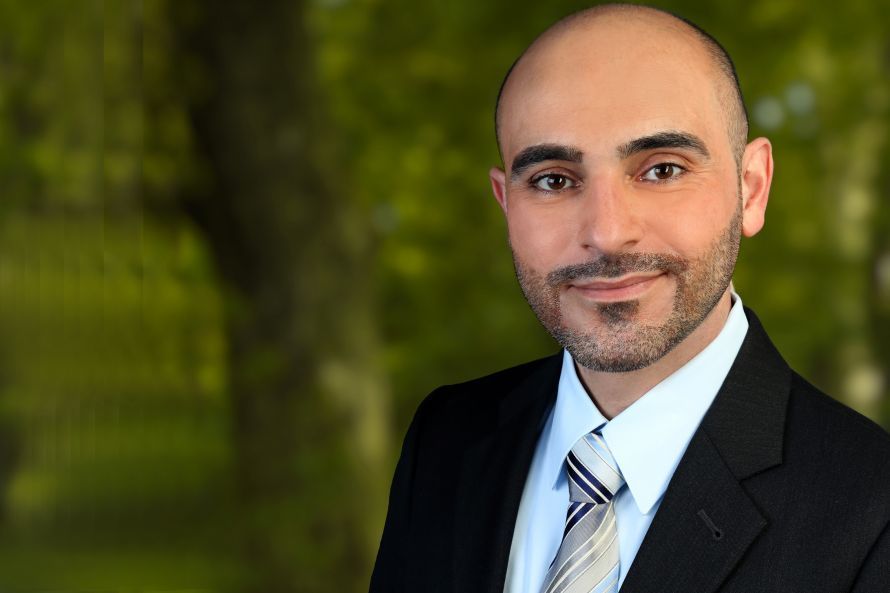
“The ultrasound-radiofrequency-assisted liposuction we use offers an effective solution for patients who not only want to reduce fat tissue but also improve skin elasticity during liposuction. While we very gently and precisely liquefy the excess, unsightly fat tissue using an ultrasound system such as the VASER device and then suction it out, modern radiofrequency devices such as the Renuvion system—also known as J-Plasma — ensure skin tightening without long, visible scars by significantly increasing skin elasticity. “These combined methods allow me, as a surgeon, to achieve lasting improvements in aesthetic appearance, since not only is the fat tissue removed and the body contours precisely sculpted, but the sagging skin is also tightened in the process. Thanks to this gentler method, patients experience less bruising and less pain after liposuction, which significantly shortens recovery time and downtime,” explains Dr. Tabatabaei at the beginning of our conversation.
The initial contact with the patient takes place during a detailed consultation held in person at the clinic.
“When I see a patient for the first time, the most important thing is their motivation. The conversation we have usually lasts an hour—and that’s by design. The goal is to find out why the patient is interested in this procedure. It must be clear and evident that the desire stems from their own initiative and not from external pressure—whether from a partner, family, or their social circle. That’s crucial to me. Even if someone comes in with a completely realistic idea—if, ultimately, another person’s wishes are behind it, then I’m not the right person to talk to. I’ve always taken the time because I consider it essential to understand patients’ true motivations. Patients must make it clear to me during our conversation that they’re acting out of their own psychological distress. And yes, it does indeed happen more often that people are pressured by comments like, “You’re too fat—do something about it”—whether subtly or directly. When people feel insecure, they look for explanations and reasons for their situation. This sometimes leads them to look for external causes, and since I don’t know anyone who is 100% satisfied with their body, they often find what they’re looking for and conclude that the body is the real problem. “That’s why a brief consultation simply isn’t enough,” explains Dr. Tabatabaei, adding:
“We must not only clarify the patient’s motivation but also discuss their expectations. If someone says, ‘Actually, everything about my body bothers me,’ that’s a red flag for me. It suggests there’s something deeper at play, and the patient hasn’t grappled with the issue intensively or seriously enough. It’s completely different with patients who have a specific concern—for example, someone who is generally at peace with their body but says, ‘My upper arms bother me; it’s a burden in my daily life. When I’m choosing clothes or someone touches my upper arm, I don’t feel comfortable.’ Then I realize there’s a specific request, and under certain circumstances, I can address it very effectively. But even if surgery is possible, expectations must remain realistic. Once that’s established, the conversation continues with a review of the patient’s medical history, an anamnesis, and a physical examination. Once that’s clarified, I explain the surgical procedure in detail: from marking the area to the procedure itself—including the possible risks and their frequency—all the way through to postoperative care, which I personally provide. I’m also happy to inform patients about alternatives to the treatment I recommend. Finally, patients want to know the cost of the procedure. After this one-hour consultation, some patients decide immediately and schedule a surgery appointment with me right away, while others need some time to think it over—which I fully understand.”
VASER Renuvion-assisted liposuction is the most advanced method of liposuction, using ultrasound waves to liquefy fat cells before they are gently and permanently removed from the body. Renuvion, also known as J-Plasma, is an innovative skin-tightening technology that combines helium plasma with radiofrequency energy to heat and tighten the skin in a controlled manner from the inside.
Unlike conventional liposuction, in which fat tissue is simply suctioned out, VASER-Renuvion liposuction allows the surgeon to precisely sculpt the body’s contours, achieving long-lasting and aesthetically pleasing results. This method is used on almost all areas of the body where fat tissue has accumulated under the skin—such as the abdomen, back, upper arms, hips, thighs, lower legs, the double chin, and even the neck, and offers the advantage of a minimally invasive, scar-minimizing treatment with manageable risks and shorter recovery time.
Dr. Tabatabaei explains in detail: “In the 1970s, physicians began suctioning out fat tissue using thin cannulas. Over time, the technique has evolved. Special solutions, such as the tumescent solution, were introduced to loosen the fat tissue beforehand and minimize bleeding (it also acts as a local anesthetic). But a recurring problem arose with the traditional methods: the skin loses its firmness. I like to explain it to my patients this way: As unpleasant as fat tissue may be, it has a positive side effect. Fat keeps the skin taut. Everyone knows the saying: “If you don’t want wrinkles, gain some weight.” When you gain weight, you usually have fewer wrinkles because the fat tissue fills out the skin from the inside. However, if large amounts of fat are suddenly removed—especially in cases of weak connective tissue or older, less elastic skin—excess skin often results. This is particularly noticeable in what are known as “flabby arms.” Some patients report, “I used to wear long sleeves to hide my thick arms—after liposuction, I still wear long sleeves to conceal my flabby arms.” But that can’t be the goal. That’s why methods have been developed to selectively heat the skin after liposuction in order to tighten it. The principle is similar to grilling. A piece of steak on the grill shrinks and becomes smaller. It was known from experience that scars—especially in burn victims—have a very strong tendency to contract. They began to heat the skin’s connective tissue in a controlled manner and found that the fibers sometimes contracted immediately; after a few weeks, they even observed a significant improvement in skin elasticity in the treated areas—and it is precisely this effect that we utilize in a controlled manner. “For skin tightening in conjunction with liposuction, two technologies are used: radiofrequency with the Renuvion device and a laser device with a specific wavelength,” he adds:
“I have worked with both methods—laser and Renuvion—in recent years. My experience has shown that the radiofrequency method, i.e., Renuvion, is indeed safer and is therefore the only device worldwide explicitly approved for skin tightening. An experienced specialist can achieve equally good results with the laser device, but the risk of skin burns is higher because the temperature beneath the skin is more difficult to control. Another important component is the so-called VASER device—an ultrasound device. It is actually used before the actual liposuction procedure. A fine probe is inserted under the skin through tiny incisions; at its tip, it uses ultrasound waves to liquefy (emulsify) the fatty tissue and slowly release it from the connective tissue. The best way I can describe this is like trying to eat ice cream with a straw—it doesn’t work very well—but if you turn the ice cream into a milkshake first, it’s much easier to suck through the straw. That’s exactly what VASER does to the fat: it’s essentially liquefied before being effortlessly and gently suctioned out. The interesting thing is that all other important structures—such as the lymphatic vessels, blood vessels, and nerves—remain largely intact. There is less bruising and pain after surgery, and the healing time is noticeably shorter. The VASER device enables highly precise liposuction and is regularly used in what’s known as “High Definition Liposuction” or “Body Sculpting.” The procedure is as follows: First, the tumescent solution—which also serves as a local anesthetic—is injected under the skin. This prepares the surgical area and loosens the fatty tissue. Next, the fat tissue is liquefied using the Vaser device. The liquefied fat tissue is then suctioned out using a thin cannula. Finally, the Renuvion device is used to tighten the skin. All of these procedures are performed on an outpatient basis at our clinic, without general anesthesia, leaving minimal scarring and requiring only a few small incisions of 3–4 mm, which can be easily concealed by clothing or even a bikini.”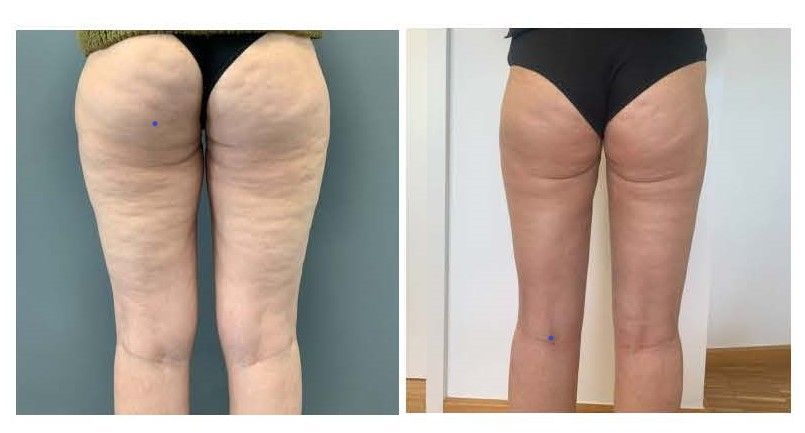
As mentioned earlier, these methods can generally be used anywhere where fat is located directly under the skin—that is, subcutaneous fat. This is the fat you can pinch with your fingers. The only problem is what’s known as visceral fat—that is, the fat deep within the abdominal cavity, such as in a classic “beer belly.” This fat cannot be removed by liposuction; it must be reduced through dietary changes and exercise, and in very severe cases, even through bariatric surgery (gastric sleeve, gastric bypass, etc.).
“Typical areas for treatment include, for example, the double chin, upper arms, abdomen, back, flanks, and areas such as the so-called ‘buffalo neck.’ The thighs respond very well to treatment. The buttocks are a bit more challenging—we only perform liposuction there in exceptional cases, such as localized, pathological fat accumulation. The breasts in women are generally not treated with liposuction because they consist mostly of glandular tissue. An exception is the female breast shape in men—also known as gynecomastia. In this condition, if the cause is an abnormal fat distribution, liposuction may also be performed. “Overall, this method is highly versatile and offers a significantly better and more modern alternative to traditional procedures—both from a medical and an aesthetic perspective—with faster recovery and more aesthetically pleasing results,” states Dr. Tabatabaei.
Liposuction and skin tightening are particularly effective in areas of the body where fat tissue has accumulated disproportionately and connective tissue is weak. The most common treatment areas include the abdomen and back, hips, thighs, lower legs, upper arms, and the double chin.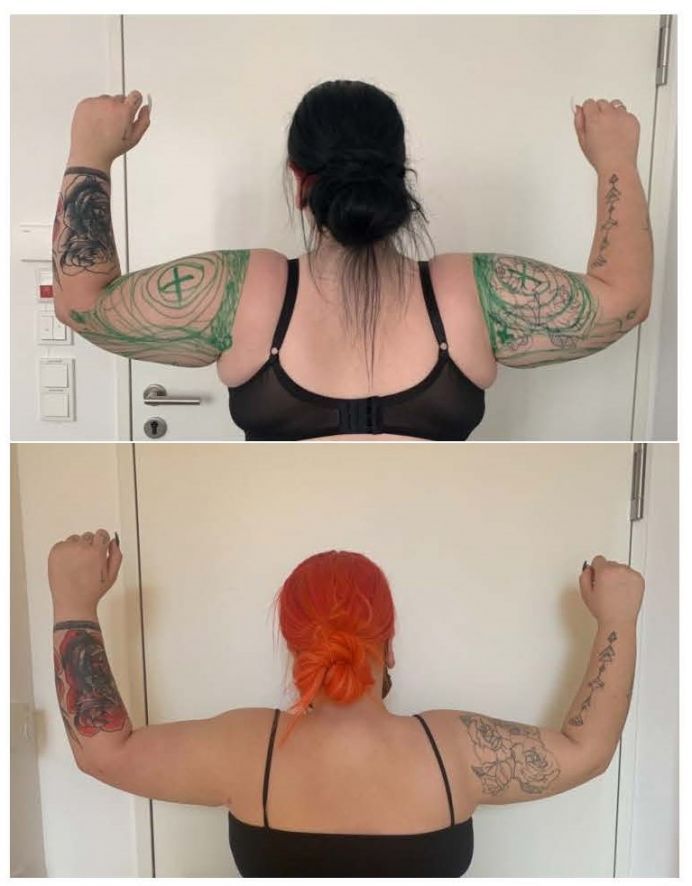
“In summary, I’d like to emphasize once again that liposuction is not intended to reduce body weight, but rather to shape and optimize the body’s contours. If you weigh less after liposuction, that’s a bonus. Recently, we’ve been seeing more and more patients who have either heard or seen something about ‘360° liposuction’ on social media or know someone who had all their fat removed at once while abroad. Since the health of my patients always comes first for me, I usually advise against such a procedure and recommend a treatment plan spread over several sessions. There are several reasons for this: 1. We specialists recommend removing approximately 5% of the patient’s current body weight per procedure to minimize risks such as cardiovascular complications, blood loss, prolonged recovery time, etc. In cases with pronounced fat deposits—for example, on the abdomen—you may reach this volume and significantly exceed the 5% threshold if you also perform liposuction on the back. 2. If you perform liposuction on both the abdomen and the back, the healing time can be significantly prolonged. During this time, patients can hardly find any relief, because no matter how they turn, they are lying on a large wound. Although the wound is not visible externally, it is located beneath the skin, which takes at least three weeks to heal. I have seen patients who, after such liposuction, were unable to sleep at night due to the pain, which had a very negative impact on their professional and personal lives. Unfortunately, this is all too often underestimated. As a reputable specialist, it is my duty to inform my patients about such risks, especially before cosmetic procedures. 3. When performing all-around liposuction, the patient must turn over multiple times on the operating table during the procedure. This automatically increases the risk of infection, as items can become contaminated without being noticed during these repositioning maneuvers. 4. If you want to achieve a good result, the procedure—including VASER and Renuvion—takes time. A longer surgery duration carries the risk of hypothermia or increased pain and bleeding due to the waning effect of the tumescent solution. This could force the surgeon to terminate the procedure early and schedule the remainder for a later date,” emphasizes Dr. Tabatabaei.
Recovery after treatment with VASER liposuction combined with Renuvion is generally faster and gentler than with conventional procedures, but it requires structured postoperative care and some patience until the final results are visible.
“All patients receive compression garments after a procedure to optimally support the healing process and minimize potential complications. After liposuction, cavities form under the skin where wound fluid could accumulate. The compression garments apply even pressure to the tissue, thereby reducing the size of these cavities. In addition, this garment helps reduce swelling and promotes lymphatic drainage from the recently operated tissue. It also helps the skin adapt to the new body contour by supporting skin retraction and preventing unevenness. Some patients initially find this garment uncomfortable, but after six weeks—when they are able to remove the girdle—almost all of them want to continue wearing it because it provides more support and a sense of security. There is no reason not to do so. It also provides greater stability and reduces postoperative swelling. However, strenuous physical activity should be avoided for a while, as the treated tissue needs time to heal and stabilize. “I advise patients to always listen to their bodies. I allow showering as early as two days after the procedure. However, we recommend waiting about six weeks before taking baths, using the sauna, or engaging in strenuous physical activities,” says Dr. Tabatabaei.
The first visible changes often appear after just a few days; the final result is usually achieved after three to six months, once the swelling has completely subsided and the tissue has reformed. Thanks in particular to Renuvion’s skin-tightening effect, the appearance continues to improve over time, as new collagen formation continues for several months. Regular follow-up appointments with a doctor are necessary to monitor the healing process and respond early to any potential complications.
When deciding on liposuction and skin tightening—even with modern techniques such as VASER and Renuvion—various risk factors and contraindications must be carefully evaluated. Not every patient is a suitable candidate for such procedures. A comprehensive medical evaluation prior to the procedure is therefore essential.
“During the consultation, I explain to my patients the so-called general risks of surgery. These are risks that exist regardless of the type of procedure, whether it’s an appendectomy, knee replacement, or a cosmetic procedure such as liposuction. These include, for example, infections, swelling, bruising, postoperative pain, as well as thrombosis or embolisms—these complications can, in principle, occur with any surgical procedure. In addition, I provide patients with detailed information—sometimes using images and diagrams—about the specific risks that are particularly relevant to liposuction. These include, among other things, the very rare possibility of minor irregularities in the skin’s surface or the perception of asymmetries. Occasionally, patients may need a minor touch-up procedure to further optimize the result. And it is indeed possible—even when working very carefully—that it is sometimes not possible to achieve 100% symmetry. That’s why it’s important to clearly inform patients that aesthetic procedures are not a matter of mathematical precision and that minor follow-up corrections (touch-ups) may be necessary. So, to some extent, we also need to manage patients’ expectations, especially when it comes to aesthetic procedures. Unfortunately, I have also seen cases where patients ended up with inexperienced doctors, which led to serious complications. While such cases are fortunately extremely rare, they demonstrate just how important education and qualifications are,” says Dr. Tabatabaei.
Kinesio taping is a therapeutic method in which special elastic adhesive tapes—known as Kinesio tapes—are applied to the skin to support muscles, joints, lymphatic vessels, or connective tissue without restricting mobility.
“This technique originated in physical therapy and sports medicine but has since become established as a post-liposuction treatment as well. It allows the taped areas to be stabilized without patients having to squeeze back into tight compression garments right away. We have an excellent physical therapy department at our clinic that also offers taping. If patients wish, I refer them directly there, where the areas treated with liposuction are professionally taped. This is significantly more comfortable for some; you can even shower while wearing it, and it works very well on certain areas of the body. Of course, it doesn’t work everywhere, but in many cases it’s a nice alternative to traditional compression garments and aids the healing process,” states Dr. Tabatabaei.
The combination of VASER liposuction and Renuvion not only provides visible short-term improvements in body contour but also has a positive long-term effect on skin structure and tissue. Both procedures complement each other in their mechanisms of action and enable precise, gentle fat removal combined with effective skin tightening.
“The long-term results of liposuction are generally permanent, provided the patient maintains their lifestyle. Fat cells do not divide or multiply—every person is born with a specific number of them. So when fat cells are removed during a procedure, they are gone for good. Although the remaining cells can enlarge again with excessive calorie intake, the treated areas generally never look the same as they did before. As long as one maintains a balanced diet and exercises regularly, the results remain stable. This represents a lifelong reduction in fat cells in the respective area. As for the age distribution, the influence of social media is leading to an increasing number of younger patients. Although the majority of treatments are performed on women, men are now also seeking treatment more frequently. While some fat deposits respond quickly and disappear with weight loss, others are particularly resistant and persist even with an active lifestyle and a healthy diet. This is precisely where liposuction can be useful and effective. “Procedures are generally offered starting at around age 20 and can also be performed into older age, although from around age 60 onward, special care is taken to assess whether the procedure is medically justifiable in each individual case,” Dr. Tabatabaei clarifies, and with that, we conclude our conversation.
Thank you very much, Dr. Tabatabaei, for this fascinating insight into aesthetic medicine!
- Board-certified specialist in plastic and aesthetic surgery; Head of the Department of Plastic and Aesthetic Surgery at Schloss Heiligenberg, part of the Darmstadt-Dieburg District Hospitals in Seeheim-Jugenheim
- Extensive international training and many years of experience at renowned hospitals. Completed residency and served as a senior physician at the Ökumenisches Verbundkrankenhaus in Trier; subsequently served as a senior physician at the Alfried-Krupp-Krankenhaus in Essen
- Fellowship in Tehran specializing in body contouring, aesthetic breast surgery, and rhinoplasty
- Co-founder of the Department of Plastic and Aesthetic Surgery at the Darmstadt-Dieburg District Hospitals
- Additional leadership experience as Medical Director at Proaesthetic Heidelberg and the s-thetic Clinics
- Since 2022, Head of the Department at Schloss Heiligenberg, specializing in plastic surgery procedures following significant weight loss
- Treatment focus: functional restoration and aesthetic optimization using modern surgical methods. Areas of expertise: body contouring (liposuction, body lift procedures), aesthetic facial and breast surgery
- Additional services: wrinkle treatments, fillers, laser therapy, RF microneedling, cryolipolysis
- Member of the DGPRÄC, Interplast-Germany, and the Hessian State Medical Association
Share this article
Expert Interviews
Read next
- Expert interview
Expert interview with Professor Dr Elmar Herbst, PhD
Oct 15, 2026
Patient-centred and personalised knee surgery
Read more - Expert interview
Cardiogeriatrics: Significance and benefits in the context of hospital reform
Sep 21, 2026
Cardiogeriatrics: Significance and benefits in the context of hospital reform
Read more - Expert interview
Expert Interview with Professor Dr. Amadeus Hornemann, MPH
Sep 18, 2026
Prof. Amadeus Hornemann on Precision Medicine in Gynecology: Modern Surgery, New Techniques, Better Quality of Life
Read more