Expert Interviews
Dr. Waldemar Komorek on custom-fit 3-D joint implants: “A milestone!”

Claudia Dechamps ·
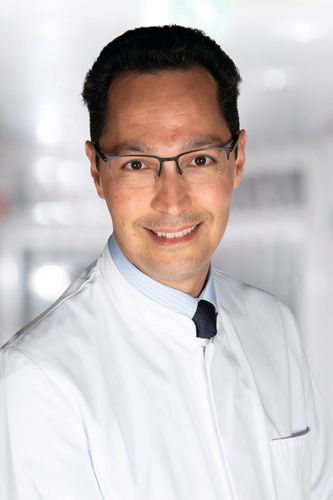
As a specialist in orthopedics and orthopedic surgery at the Orthopoint Sports and Joint Clinic in Pfäffikon SZ, Dr. Waldemar Komorek has specialized in injuries to the foot, the ankle, and the knee, although shoulder joint surgery is also among his primary surgical areas of focus. He also enjoys a first-class reputation as an expert in hip surgery—precisely because his approach always prioritizes joint preservation. He is best known for his expertise in artificial knee joints. In this field, he is considered one of the internationally renowned specialists, particularly in the area of so-called 3-D prostheses, which he customizes to meet individual patient needs. He shared insights into his extensive expertise with the Leading Medicine Guide.

Leading Medicine Guide: Dr. Komorek, you are certainly one of the few orthopedic surgeons who truly have first-hand experience with sports injuries.
Dr. Waldemar Komorek: I’m sure you’re referring to my time as a competitive athlete in professional soccer when I was younger and later as a team doctor for the Bavarian First Soccer League. Indeed, in this line of work, you see a lot of sports injuries. After all, soccer is not a low-risk sport—the legs, the ankles, the knees—basically every part of the lower extremities is vulnerable and can sustain complex injuries while playing the sport.
Leading Medicine Guide: What’s at the top of the list of typical soccer injuries?
Dr. Waldemar Komorek: Those are muscle injuries—the well-known strains or muscle fiber tears—followed by the dreaded ligament injuries to the knee joint—or the ankle joint. As team doctors, we rarely have to treat broken bones, but of course, the ankle can sometimes be hit in a particularly unfortunate way. And when that happens, it’s usually not a simple fracture, but something more complicated.
Leading Medicine Guide: Aside from a great deal of expertise—what else is absolutely essential for a team doctor?
Dr. Waldemar Komorek: Strong nerves, a cool head, and a great deal of psychological sensitivity. You have to be able to assess the situation very quickly, then make the correct diagnosis and take the appropriate decision: Does the player go back onto the field, sit on the bench, or does he need further medical treatment? By the way, every athlete decides for himself whether to return to the game. My role is an advisory one, but of course the guys trust me. The exception is head injuries and obvious loss of consciousness—in those cases, as the team doctor, I really do have the final say. Team doctors are only allowed to enter the field at the referee’s signal, unless there’s suspicion of a heart attack or a head injury.
Leading Medicine Guide: And as a team doctor, you have to be a proven expert in the field of sports orthopedics and sports surgery. Is that correct?
Dr. Waldemar Komorek: I gained my medical experience at various orthopedic clinics, a private clinic, and as the medical director of a clinic and a surgical center. Over time, I’ve been able to build and refine my comprehensive expertise through more than ten thousand surgeries.
Leading Medicine Guide: In addition, you hold numerous memberships in orthopedic professional societies and have authored several scientific publications. What is your specific area of expertise today?
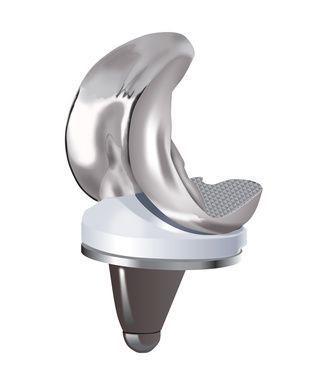
Dr. Waldemar Komorek: Currently, in addition to all joint-preserving surgical options, I’m fascinated by 3-D customization of artificial knee joints. This allows us to achieve truly excellent results. We have to consider that the large joints—such as the hip, knee, ankle, and shoulder—are subjected to enormous stress over the years. At some point, nearly everyone experiences minor or major signs of wear and tear that often can no longer be satisfactorily treated with conservative therapies. We’ve been familiar with joint replacement for decades, but the fact that knee prostheses can now be individually and precisely customized represents a technical and medical advancement. After all, we must keep one thing in mind: Patients have become more demanding; they don’t just want to be free of pain—they want to continue leading active lives. And they’ve gotten younger, which means they demand greater durability, longevity, and functionality from the prosthesis. And the really great thing about 3-D implants is that they feel significantly less artificial—that’s what patients tell me.
Leading Medicine Guide: Can you describe how 3-D customization differs from previous methods?
Dr. Waldemar Komorek: Every joint has an individual shape, or morphology, as we doctors say. Broadly speaking, all hip or knee joints look the same, of course, but they differ in subtle ways, and these nuances are ultimately crucial for achieving the most natural possible range of motion—which, of course, must be extensively trained during the rehabilitation period. There’s no getting around this, even with a 3-D implant. But with 3-D measurement, we collect detailed data on the leg axis and the shape of the joint before surgery and analyze the bone structures and the entire surrounding soft tissue envelope. Based on all this information, a truly custom-fit, individualized implant can be created that is precisely tailored to the patient’s anatomy and mechanical capabilities.
Leading Medicine Guide: That sounds like a tremendous improvement.
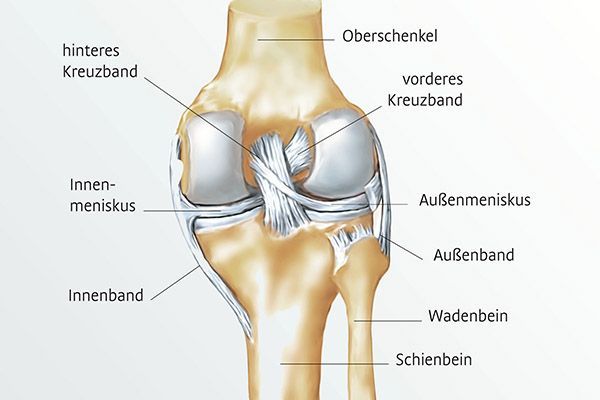
Dr. Waldemar Komorek: I personally consider this a milestone as well. For the first time, it’s truly possible to customize the prosthesis to the patient’s anatomy. And this has enormous implications, especially for the knee. This is because the knee joint involves a complex interplay of bone structure, ligament mobility, and the resulting highly specific mechanics. With a standard prosthesis, we can approximate this kinematics—as this complex interplay is called—but only to a certain extent. However, if we adapt the artificial joint precisely to the individual anatomy—rather than the other way around—we achieve entirely different results. Of course, a patient’s own joint is always best, which is why the criteria for artificial joint replacement must always be strictly applied, and all other conservative and surgical options must be exhausted first.
Leading Medicine Guide: That sounds as if the use of 3-D joint implants requires very extensive preparation?
Dr. Waldemar Komorek: That is indeed the case. It involves detailed digital preparation. But this also has the advantage that we can test and optimize the mechanics on the model beforehand. With the wealth of data collected, the entire surgical procedure can be planned more precisely and performed with greater care. With precisely fitted joint replacements, we observe that patients quickly regain a natural range of motion, report fewer residual symptoms, and have a significantly lower revision rate. Science is still a long way from reaching the end of its development of individualized replacement solutions tailored to each patient. Here at Orthopoint, we keep track of these developments and stay up to date with the latest scientific advancements so that we can treat our patients using the most advanced methods possible.
Leading Medicine Guide: You mentioned earlier that patients want to resume their usual sports without discomfort after surgery. Is that possible without any restrictions?
Dr. Waldemar Komorek: In principle, yes—at least sports such as cycling, swimming, sailing, scuba diving, golf, and bowling can be practiced without hesitation. Tennis and skiing are a bit more challenging, but not impossible. In these cases, advice and decisions must be made on an individual basis, depending on the patient’s fitness and training level. Unfortunately, contact sports such as soccer, handball, or basketball are no longer an option.
Dr. Komorek, thank you very much for this fascinating insight into the promising field of 3D medicine!
Anyone who would like to contact Dr. Komorek directly can do so via his profile page on the Leading Medicine Guide.
Share this article
About the medical author
Claudia Dechamps
Editor
Claudia Dechamps – medical author: expert articles, professional insights and medical knowledge in the Leading Medicine Guide.
More about the medical author →Expert Interviews
Read next
- Expert interview
Cardiogeriatrics: Significance and benefits in the context of hospital reform
Sep 21, 2026
Cardiogeriatrics: Significance and benefits in the context of hospital reform
Read more - Expert interview
Expert Interview with Professor Dr. Amadeus Hornemann, MPH
Sep 18, 2026
Prof. Amadeus Hornemann on Precision Medicine in Gynecology: Modern Surgery, New Techniques, Better Quality of Life
Read more - Expert interview
Expert Interview with Professor Dr. Konstantinos Anagnostakos
Sep 15, 2026
Prof. Anagnostakos on Painful Knee Replacements
Read more