Expert Interviews
Pulmonary Emphysema and COPD – When You Can’t Catch Your Breath: An Expert Interview with Prof. Darwiche

Alexandra Pfitzmann ·
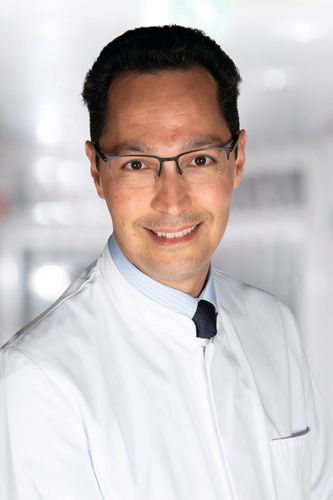
The Ruhrlandklinik in Essen, part of the West German Lung Center, is known for its outstanding expertise in the treatment of respiratory and lung diseases. It places a special emphasis on early detection, symptom relief, and personalized therapies. Professor Kaid Darwiche, M.D., a specialist in internal medicine and pulmonology, heads the Department of Interventional Bronchology and Palliative Pulmonology at this clinic and is distinguished by his exceptional experience and skills.
The Department of Pulmonology, headed by University Professor Dr. Christian Taube, specializes in the treatment of a wide variety of respiratory diseases, including chronic obstructive pulmonary disease (COPD), lung cancer, occupational lung diseases, infectious diseases, and rare lung diseases. At the Ruhrlandklinik, personalized patient care is always the top priority.
Under the direction of Prof. Dr. med. Kaid Darwiche, who possesses extensive qualifications in various medical fields, the specialists use modern medical technology to make accurate diagnoses. These include endoscopic and imaging techniques, with bronchoscopy playing a key role. This procedure allows for real-time examination of the airways using a flexible camera and a fiber-optic light source inserted through the nose or mouth. Even the smallest tissue changes can thus be detected in real time, and tissue samples can be collected and analyzed on-site. This minimally invasive diagnostic method avoids unnecessary invasive procedures and leads to a rapid diagnosis.
A key focus of the section is the interventional treatment of advanced respiratory diseases, such as asthma and COPD (chronic obstructive pulmonary disease), lung tumors, and pulmonary emphysema. The editorial team of the Leading Medicine Guide spoke with Professor Dr. Darwiche to shed more light on pulmonary emphysema.

Pulmonary emphysema is a chronic lung disease in which the air sacs (alveoli) are damaged and lose their elasticity. There are various causes and risk factors associated with the development of pulmonary emphysema. “The most important risk factor is cigarette smoking. The chemicals in tobacco smoke can attack the lung structures and lead to permanent damage. As a result, about 90% of patients with COPD are smokers. It is not enough for the doctor simply to recommend that the patient quit smoking. We have therefore established a structured smoking cessation program at the Ruhrlandklinik that includes medication and telephone support—the so-called “Quit Line,” a telephone service provided by the Federal Center for Health Education. Through this program, we are able to help approximately 40% of patients become smoke-free within a year. It is also important to remember that even exposure to secondhand smoke increases the risk of COPD and the development of pulmonary emphysema. Long-term exposure to harmful air pollutants, particularly in industrial or polluted environments, can also increase the risk of pulmonary emphysema. In some cases, a genetic predisposition, such as alpha-1 antitrypsin deficiency, can increase the risk. Occupational exposure to harmful substances such as dust, chemicals, or gases can also lead to an increased risk of pulmonary emphysema. The risk of this disease also increases with age, as the lung structure undergoes natural wear and tear over time. Repeated respiratory infections can lead to permanent lung damage and increase the risk of pulmonary emphysema,” Prof. Dr. Darwiche begins our conversation with a word of caution.
For people at high risk of pulmonary emphysema, regular medical checkups are important for detecting signs of the disease early on. However, it is important to note that pulmonary emphysema is a serious condition and that the best measures for reducing risk lie in prevention. If symptoms of pulmonary emphysema are already present, urgent medical attention is required, as while the disease cannot be reversed, the symptoms can be treated and managed.
Emphysema often develops over the course of several years before symptoms appear.
Shortness of breath is one of the most common symptoms of pulmonary emphysema. Initially, shortness of breath may only occur during physical exertion, but it worsens over time and can even occur at rest. “People primarily complain of what is known as exertional dyspnea and are sometimes severely limited in their daily lives because they experience shortness of breath with any exertion. A persistent cough that worsens can also be a sign of pulmonary emphysema. Sometimes there may be an increase in sputum, which can turn yellow or greenish during infections. In addition, a feeling of pressure or tightness in the chest may occur. As soon as any of these symptoms appear, it’s important to take early action—for example, by seeing your primary care physician to undergo a lung function test, which will then refer you to a pulmonologist,” advises Prof. Dr. Darwiche.
It is important to note that pulmonary emphysema is a progressive disease that cannot be reversed. Treatment aims to control symptoms, slow the progression of the disease, and prevent complications. Treatment options include quitting smoking, medications to improve respiratory function, respiratory therapy, and, in severe cases, oxygen therapy may be necessary.
Unintentional weight loss can also occur in some people with advanced pulmonary emphysema. In most cases, the affected patient also experiences a general feeling of fatigue and exhaustion. In advanced cases, fluid may accumulate in the legs and ankles.
The diagnosis of pulmonary emphysema and the determination of its severity are usually made through a combination of clinical examinations and diagnostic tests.
“The extended pulmonary function test is particularly useful for evaluating lung diseases such as pulmonary emphysema, restrictive lung diseases, and obstructive airway diseases. It enables a more precise diagnosis and helps monitor the progression of these conditions. It is a more complex test than what is known as spirometry and requires specialized equipment as well as the guidance of experienced medical professionals. A “chest CT” is another medical imaging method that uses a computed tomography (CT) scanner to produce detailed images of the chest, including the lungs, heart, and surrounding structures. The term “thorax” refers to the chest cavity, which encompasses the area between the neck and the abdomen. A blood test should also be performed to rule out a possible genetic cause. For this purpose, a so-called alpha-1 antitrypsin deficiency test is conducted to detect a potential deficiency. A bronchoscopy may also be useful in some cases,” says Prof. Dr. Darwiche, describing the various examination methods.
Alpha-1 antitrypsin (AAT) is a protein produced primarily in the liver that plays an important role in the lungs. A deficiency in AAT can lead to severe lung diseases, particularly the early onset of chronic obstructive pulmonary disease (COPD) or pulmonary emphysema.
The combination of these diagnostic tests helps doctors identify pulmonary emphysema, assess its severity, and rule out other lung diseases that could cause similar symptoms. Spirometry is usually the first step in diagnosis, followed by additional tests as needed. The assessment of the severity of emphysema is often based on the FEV1 value, which indicates the percentage of the expected one-second forced expiratory volume compared to that of a healthy individual. The lower the FEV1 value, the more severe the emphysema.
Pulmonary emphysema and COPD are two closely related lung diseases that often occur together, but they have some important differences.
Emphysema is a specific pathological change in the lungs in which the air sacs (alveoli) are overinflated and damaged, leading to a loss of lung elasticity and air trapping. On the other hand, COPD is an umbrella term for chronic lung diseases, which include pulmonary emphysema. It also encompasses chronic bronchitis, in which the airways are inflamed and narrowed.
“COPD has two distinct forms: the airway type and the lung tissue type. The latter is pulmonary emphysema. A mixed presentation is also possible. Almost all patients with pulmonary emphysema also have COPD, but not vice versa. Both forms have different symptoms and manifestations,” explains Prof. Dr. Darwiche. The main symptoms of pulmonary emphysema are shortness of breath—especially during physical exertion—as well as coughing and sputum production. COPD patients may experience symptoms similar to those of pulmonary emphysema, including shortness of breath and coughing, but they may also have symptoms of chronic bronchitis, such as a persistent cough with mucus production. Treatment for pulmonary emphysema focuses on relieving symptoms and slowing the progression of the disease. This may include quitting smoking, respiratory therapy, medications to improve lung function, and, in some cases, oxygen therapy. Treatment for COPD involves similar measures to those for pulmonary emphysema but may also include the use of inhaled medications to open the airways and treatment for infections.
The treatment of pulmonary emphysema aims to relieve symptoms, slow the progression of the disease, and improve quality of life. There are various treatment options, including both medication-based and non-medication-based approaches.
“The foundation of treatment is avoiding harmful substances. Medications to relieve breathing difficulties are often administered via inhalers and may include long-acting (for daily use) or short-acting (for acute symptoms) bronchodilators. Over the past ten years, a new and interesting component has been added: muscle strength and muscle building, which train the lungs and increase respiratory volume. In this regard, we do indeed send patients to the weight room,” says Prof. Darwiche regarding initial treatment options, adding: “If a genetic form of pulmonary emphysema is present, the missing enzyme can be replaced. Chronic bronchitis can be treated with medication. If the emphysema is severe, lung volume reduction is an option, which can be performed surgically or endoscopically. When lung volume is reduced, the better-functioning part of the lung has more space.”
Lifestyle changes, such as quitting smoking and engaging in regular physical activity, can have a positive effect on pulmonary emphysema and improve quality of life.
Quitting smoking reduces further damage to the lungs, as smoking is the main cause of pulmonary emphysema. Just a few weeks after quitting, you may notice an improvement in lung function and a reduction in symptoms. “It’s very easy to imagine. When you light a cigarette and inhale the smoke, you immediately damage the cells in your lungs. These are the cells with cilia that are responsible for clearing the lungs. They immediately stop working when exposed to the harmful substances in cigarette smoke. What happens instead is a cough to clear the lungs of mucus. That’s why many smokers wake up in the morning and have to cough first to clear their lungs of mucus. “If a cough persists for more than six weeks, everyone should consult a doctor immediately to have a lung function test done,” Prof. Darwiche emphasizes strongly.
- When you smoke a cigarette, you inhale smoke consisting of thousands of chemicals, including many toxic substances such as tar, carbon monoxide, formaldehyde, and heavy metals.
- The smoke first enters the trachea and from there into the bronchi. Immediately after inhalation, the mucous membranes in the airways can become irritated, which can lead to a cough.
- The smoke eventually reaches the alveoli, which are responsible for gas exchange. Various harmful processes can occur there: The chemicals in the smoke can cause inflammation in the alveoli and the surrounding tissues. This impairs the lungs’ ability to take in oxygen and release carbon dioxide.
- The lungs may produce more mucus to protect themselves against the irritants in the smoke. This can block the airways and lead to a chronic cough.
- With long-term smoking, the smoke can cause the alveoli to lose their elasticity and become damaged. This leads to a loss of lung function and can result in emphysema.
- Carbon monoxide from cigarette smoke enters the bloodstream and displaces oxygen from the red blood cells. This results in the body receiving less oxygen, which can lead to fatigue and shortness of breath.
To motivate smokers to quit, it is important to educate them about the immediate and long-term effects of smoking on lung health. The risk of respiratory diseases, lung cancer, and other serious lung conditions increases significantly with smoking. The sooner someone quits smoking, the better their chances of maintaining lung function and reducing the risk of serious lung diseases.
“In Germany, we spend millions of euros on treating lung diseases, but not on prevention. As a result, Germany is one of the few countries where cigarette vending machines still exist. This makes cigarettes freely accessible. Smoking cessation programs also generally have to be paid for by the patients themselves. Furthermore, cigarettes are still too cheap in Germany,” criticizes Prof. Dr. Darwiche, adding: “There are still too few medication-based approaches for treating COPD. The ones we do have don’t stop the progression of the disease; they merely alleviate the symptoms. Finally, I appeal to all smokers: You know you should quit. We’re here to support you!” With this urgent appeal, Prof. Dr. Darwiche concludes our conversation.
Professor Dr. Darwiche, thank you very much for this insightful conversation on the topics of pulmonary emphysema and COPD!
Share this article
Expert Interviews
Read next
- Expert interview
Expert interview with Professor Dr Elmar Herbst, PhD
Oct 15, 2026
Patient-centred and personalised knee surgery
Read more - Expert interview
Cardiogeriatrics: Significance and benefits in the context of hospital reform
Sep 21, 2026
Cardiogeriatrics: Significance and benefits in the context of hospital reform
Read more - Expert interview
Expert Interview with Professor Dr. Amadeus Hornemann, MPH
Sep 18, 2026
Prof. Amadeus Hornemann on Precision Medicine in Gynecology: Modern Surgery, New Techniques, Better Quality of Life
Read more