Expert Interviews
Focus on Watery Eyes: An Overview of Various Treatment Approaches—An Expert Interview with Prof. Heindl

Alexandra Pfitzmann ·
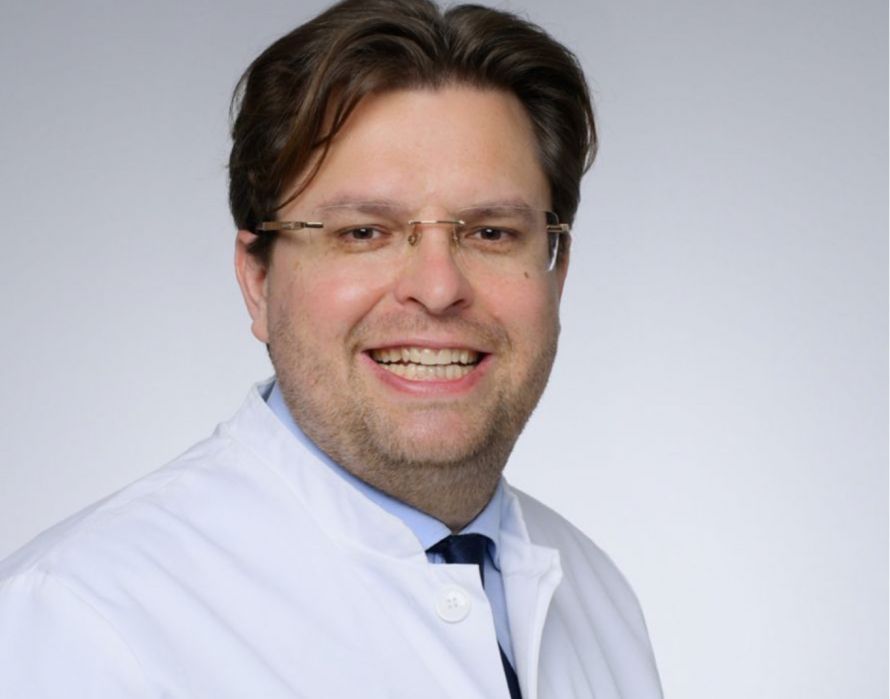
Prof. Dr. Dr. Ludwig M. Heindl enjoys an outstanding reputation in modern ophthalmology as a specialist in reconstructive surgery. This experienced eyelid surgeon is internationally renowned for his diagnostic expertise—in part due to his advancements in minimally invasive eye surgery and his scientific publications. Univ.-Prof. Dr. Dr. Ludwig Heindl is a professor of ophthalmology at the University Hospital of Cologne. He is a nationally and internationally renowned expert in the field of ophthalmic oncology (tumors on and in the eye) and ophthalmic plastic surgery, and heads the Department of Ophthalmic Oncology and Ophthalmic Plastic Surgery at the University Eye Hospital in Cologne. Diseases of the eyelids, lacrimal ducts, the ocular surface, and the orbit (eye socket) are also part of his scope of treatment.
With his in-depth knowledge and many years of experience in all aspects of the eye and its diseases, Prof. Dr. Dr. Heindl convincingly combines theory and practice. The goal and guiding principle of his medical practice is always to place the patient—as an individual with unique treatment needs—at the center of care. As head of the Ophthalmic Oncology and Ophthalmic Plastic Surgery division and as medical director of the outpatient clinic and the Ophthalmic Diagnostic Function Laboratory, Prof. Dr. Dr. Heindl plays a crucial role in the treatment of patients with various eye diseases. His area of expertise includes diseases of the eyelids, the lacrimal system, the ocular surface, and the orbit (eye socket). Of particular note is his pioneering work in the field of ophthalmoplastic surgery, where he performs complex surgical procedures to treat lacrimal duct stenosis and other disorders of the lacrimal system.
In addition to his clinical work, Prof. Dr. Dr. Heindl is also a dedicated researcher and scientist who is actively involved in new developments in ophthalmology. His involvement in national and international professional societies, as well as his numerous scientific publications and research projects, attest to his contribution to the advancement of ophthalmology. As an experienced ophthalmologist, Prof. Dr. Dr. Heindl combines his in-depth expertise with patient-centered care. His empathetic manner and his commitment to his patients’ health make him a highly regarded expert in his field. At a clinic renowned for its excellent medical care, Prof. Dr. Dr. Heindl plays a key role in ensuring the best possible treatment for patients with eye diseases. The editorial team at Leading Medicine Guide spoke with Prof. Dr. Dr. Heindl and, in doing so, learned a great deal more about the treatment of so-called lacrimal duct stenosis.
In the field of ophthalmology, watery eyes are often a central symptom. However, this seemingly harmless condition can have various causes, ranging from simple allergies to more serious diseases. The search for effective treatment methods is therefore of crucial importance. From conservative approaches to innovative surgical procedures, various methods offer hope for relief and a better quality of life for patients suffering from this symptom.
The path of a tear begins in the lacrimal gland, located above the outer corner of the eye. This is where tear fluid is produced—a mixture of water, proteins, fats, and antibacterial substances. The tears then flow through small openings on the surface of the eye—the lacrimal puncta—into the conjunctival sac. From there, the tear fluid spreads evenly across the eye to keep it moist and protect it. When you blink, the fluid moves across the eye to remove foreign bodies or dirt particles and clean the surface. The tears then collect at the inner corner of the eye and drain into the tear ducts, which extend toward the nostrils. The tear ducts carry the fluid into the nasolacrimal duct and ultimately to the back of the nose. From there, the tear fluid enters the nasopharynx and is either swallowed or evaporates. Normal tear flow not only ensures that the eye remains moist but also helps cleanse and lubricate the surface of the eye. However, if the tear duct is blocked or obstructed, this can lead to watery eyes or other eye problems.
A watery eye can have various causes, which differ depending on the underlying issue.
“A watery eye can take many forms. Everyone is familiar with tears that flow for emotional reasons, whether as a child or an adult. The eye also naturally tears up when foreign objects enter it, as a way to cleanse itself. This is a simple protective mechanism. Both causes involve purely physiological processes designed to maintain the eye’s function. Eyelid malpositions or eyelashes rubbing against the cornea can cause the eyes to water. If the tear cannot find its way out as described above—that is, if there is an obstruction to drainage—tear blockages occur; this is referred to as a lacrimal duct stenosis. “This is one of the most common causes of watery eyes,” explains Prof. Dr. Dr. Heindl at the beginning of our conversation, adding: “We broadly distinguish between two types of lacrimal duct stenosis: those in children and those in adults. In children, the most common cause is that the nasal passage does not open at birth. This must be treated, and the condition can be effectively managed. In adults, the condition is not congenital but acquired due to adhesions that lead to blockage and subclinical inflammation.”
- One of the main causes of watery eyes is a blockage or obstruction of the tear ducts. This can be caused by infections, inflammation, or anatomical abnormalities.
- Conjunctivitis (inflammation of the conjunctiva) or blepharitis (inflammation of the eyelid margins) can also lead to watery eyes. These conditions can be caused by bacteria, viruses, or allergens.
- Paradoxically, dry eyes can also lead to excessive tearing. If the eyes do not produce enough tears or the tears are of poor quality, the body reacts with excessive tearing to compensate for the problem.
- When small foreign particles enter the eye—whether dust, sand, or even cosmetic particles—this can cause irritation and watery eyes.
- Pollen, dust, pet dander, or other allergens can trigger allergic reactions that lead to watery eyes.
Diagnosing watery eyes requires a thorough examination by an ophthalmologist.
“First and foremost, it is very important to take a detailed medical history. During the consultation with the patient, information is gathered about the duration of the symptoms and their exact nature. How does the patient experience the symptoms—is the eye watering, does vision appear as if looking through an aquarium, does the patient wake up in the morning with sticky eyes, etc.? These questions are crucial for determining whether there is a suspected tear duct stenosis and how severe the patient’s symptoms are. Then we move on to clinical diagnostics,” explains Prof. Dr. Dr. Heindl. The clinical examination focuses on the anterior segment of the eye to identify possible causes such as injuries, inflammation, or abnormalities of the eyelids, conjunctiva, or cornea. To assess tear production and quality, tear film analyses are sometimes performed. These tests make it possible to detect dry eye problems or changes in the composition of the tear fluid.
A stye, also known as a hordeolum, is caused by a painful infection of the sebaceous glands or hair follicles along the edges of the eyelids. This process begins when bacteria—usually Staphylococcus aureus—enter these glands. This infection causes a blockage of the sebaceous glands, which are normally responsible for producing oil to lubricate the eyelids and stabilize the tear film. This can be effectively treated with antibacterial eye drops to stop the inflammatory process.
“If a blockage or stenosis of the tear ducts is suspected, a tear duct irrigation or probing is usually performed to locate any blockages. A probe is inserted into the tear duct to flush it and assess the anatomy of the drainage system. In some cases, imaging techniques using contrast agents, such as MRI or CT, may also be used to visualize structural abnormalities or changes in the eye area. The choice of diagnostic tests depends on the patient’s specific symptoms and medical history. However, these are only necessary in certain situations—for example, if there is a mass in the lacrimal sac area—to determine its extent,” explains Prof. Dr. Dr. Heindl regarding the diagnostic measures.
The treatment options for lacrimal duct stenosis are varied and depend on the specific cause.
“It depends on the type of stenosis and its location. A distinction is made between relative stenosis—that is, a narrowing—and absolute stenosis, in which the passage is completely blocked. In cases of narrowing, the doctor can—depending on the patient’s comfort level, under light anesthesia—insert an intubation catheter into the tear duct and dilate the narrowed area. A subsequent stenting procedure using thin silicone tubes remains in place for about three months, after which we check whether the narrowing has been completely cleared. In cases of complete blockages of the tear duct, recanalization procedures are performed to restore the tear duct’s anatomical structure. In cases of long-segment stenoses, a bypass must be created. There are three procedures for this: one performed from the nose (endonasal), then the so-called dacryocystorhinostomy—also known as the Toti procedure—in which a new drainage pathway for the tear fluid is created, running from the lacrimal sac into the nasal cavity, and finally, here at the University Hospital of Cologne, I have developed a minimally invasive laser procedure,” explains Prof. Dr. Dr. Heindl.
The anatomy of the lacrimal system is crucial for regulating tear fluid.
Non-surgical approaches often involve the use of warm compresses or massages around the lacrimal glands to relieve blockages and promote the flow of tears. These measures can help resolve temporary blockages, but for chronic problems, surgical interventions may be the more effective solution for treating the underlying cause and providing long-term relief. Prof. Dr. Dr. Heindl’s innovative laser surgery for treating lacrimal duct stenosis is a groundbreaking method for resolving narrowings or blockages in the lacrimal ducts.
“In this minimally invasive technique, which I developed, a laser is used to open the narrowed or blocked area in the tear duct without having to make an incision in the skin. The procedure is typically performed under local anesthesia. A fine laser is carefully inserted and used to remove the narrowing or blockage, restoring the normal flow of tears. This highly precise and minimally invasive approach opens the mucous membrane of the tear duct to improve tear drainage. This technique enables scar-free treatment of tear duct stenosis and can be an effective solution for patients suffering from watery eyes due to blockages in the tear ducts. “Laser treatment of lacrimal stenosis has the potential to normalize the flow of tear fluid and significantly reduce the symptoms of watery eyes,” says Prof. Heidl, describing the effective and gentle laser method. “Occlusion of the lacrimal canaliculus is still very rare—in such cases, a different surgical procedure must be performed to insert a small tube into the inner corner of the eye. Here, too, we have developed a technique in Cologne that can be performed using a laser,” adds Prof. Dr. Dr. Heindl.
Outlook
“It would be desirable to have better public education about the treatment options for lacrimal duct stenosis. Diagnosis and treatment should also be initiated early to avoid scarring or adhesions, as well as the need for bypass surgery. Here in Cologne, we are the largest lacrimal duct center in Germany, and ten years ago I began developing laser surgical procedures. This is now a fully established procedure that is internationally recognized and widely used. It’s important for people to simply learn more about how our tears are produced and what’s involved. With lacrimal duct surgery, I certainly don’t want to prevent tears of joy, nor can I magically make the emotional stress that produces tears of sadness disappear. “But I can help people who develop eye problems due to lacrimal duct stenosis and constantly produce uncontrolled tears,” explains Prof. Dr. Dr. Heindl, and with that, we conclude our conversation.
Thank you very much, Professor Dr. Heindl, for the insight into the rather little-known world of tears—where they come from and what happens when they don’t flow or flow uncontrollably!
Share this article
Expert Interviews
Read next
- Expert interview
Expert interview with Professor Dr Elmar Herbst, PhD
Oct 15, 2026
Patient-centred and personalised knee surgery
Read more - Expert interview
Cardiogeriatrics: Significance and benefits in the context of hospital reform
Sep 21, 2026
Cardiogeriatrics: Significance and benefits in the context of hospital reform
Read more - Expert interview
Expert Interview with Professor Dr. Amadeus Hornemann, MPH
Sep 18, 2026
Prof. Amadeus Hornemann on Precision Medicine in Gynecology: Modern Surgery, New Techniques, Better Quality of Life
Read more