Expert Interviews
State-of-the-Art Therapies and Surgery for Shoulder Treatment: Innovative Approaches to Pain Relief and Preservation of Function—An Expert Interview with Prof. Kaisidis

Alexandra Pfitzmann ·
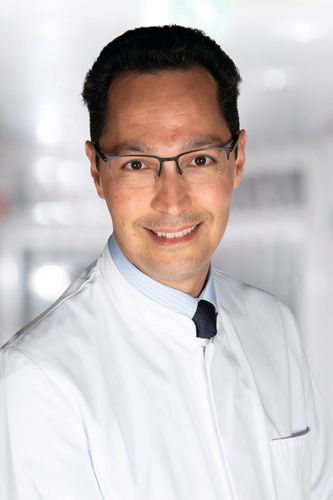
Professor Dr. Aristotelis Kaisidis, Adjunct Professor and specialist in orthopedics and trauma surgery, is an expert in the field of shoulder surgery and a driving force in the development of innovative treatment methods. As Chief Physician at the renowned Clinic for Shoulder Surgery at the Frankfurt Red Cross Hospitals, he specializes in various areas of shoulder surgery, including shoulder arthroplasty, shoulder arthroscopy, shoulder stabilization procedures, rotator cuff tears, sports injuries, shoulder trauma, tendon transfers, conservative shoulder therapy, and shoulder diagnostics.
His broad expertise and innovative approach enable him and his highly specialized team to successfully treat a wide range of shoulder conditions and injuries. Under the leadership of Professor Dr. Kaisidis, the Clinic for Shoulder Surgery is distinguished by a comprehensive clinical structure that ensures effective and patient-centered care. The clinic is equipped with state-of-the-art surgical devices and instruments, which are continuously updated to keep pace with the latest technologies.
A pioneering feature of the clinic is the modern SVF (Stromal Vascular Fraction) autologous fat stem cell therapy. This innovative treatment method has proven to be extremely effective in treating osteoarthritis, soft tissue defects, and other shoulder problems. The use of the body’s own resources facilitates improved regeneration and healing.
The Clinic for Shoulder Surgery performs approximately 700–800 shoulder surgeries annually and sets a record across Germany with around 5,000 outpatient visits from shoulder patients each year. This impressive caseload underscores the high demand and the trust that patients place in the clinic’s expertise. The extensive experience and expertise of Professor Dr. Kaisidis and his team make them sought-after experts for well-founded second medical opinions on shoulder pathologies and the various treatment options.
The editorial team of the Leading Medicine Guide took the opportunity to learn more about conservative and surgical treatments for the shoulder and spoke with Prof. Dr. Kaisidis.
In addition to surgical procedures, there are various non-surgical treatment methods that have proven particularly effective in managing shoulder osteoarthritis. “Classic conservative treatment methods include hyaluronic acid injections, cortisone injections, and physical therapy. Among the more modern treatment options are autologous blood therapies or injections. Many professional athletes frequently resort to these, but they are also used for people who are not very active in sports but suffer from osteoarthritis and other soft-tissue pathologies and defects, and they are suitable for all age groups. All of this can be supplemented with modern, high-energy laser therapies and, if necessary, magnetic field therapies,” says Prof. Dr. Kaisidis, adding the following regarding the individual treatments:
“Hyaluronic acid has specific indications. It is used for Kellgren grade 2–3 osteoarthritis, and it’s not really a pain reliever—rather, it works a bit like oil in an engine: it lubricates and has anti-inflammatory properties, though it is significantly less effective at relieving pain than, for example, cortisone. Cortisone is administered in combination with a local anesthetic, which acts directly on the pain but is not at all long-lasting (nor is hyaluronic acid, for that matter), though it does relieve acute pain. And the hope is that the pain relief will last as long as possible—how long, that remains to be seen. No more than 3–5 injections should be given within a year, and in only a few cases more than five times a year. When it comes to autologous blood therapy, it is a step above in terms of long-term effectiveness, since it offers a biological means of suppressing inflammation. And osteoarthritis is a type of aseptic inflammation. To choose the right therapy, it’s important to discuss the patient’s perceived pain level, lifestyle habits, and occupational activities with them and tailor the treatment individually to the patient. Combining hyaluronic acid or cortisone with high-energy laser therapy further increases the effectiveness of the entire treatment. Alternatively, hyaluronic acid can be combined with cortisone. It always depends on how experienced the physician is with the specific joint and the available treatment options.”
In addition, regular physical activity and weight loss can reduce the strain on the shoulder joint and alleviate the symptoms of shoulder osteoarthritis. The effectiveness of treatment methods can vary from person to person, and in some cases, surgical intervention may be necessary, particularly in cases of advanced osteoarthritis with deformities. “During treatment, the patient should continue doing everything they normally do. We always want to test the therapy under real-world conditions; otherwise, we have no way of knowing whether the therapy is effective in real-life situations, nor do we have the opportunity to adjust it. Certain sports shouldn’t necessarily be practiced too intensely—such as strength training—and in these cases, the patient can scale back a bit. Physical therapy—whether exercise therapy or manual therapy—is also a form of supportive exercise that often takes place alongside the treatment,” recommends Prof. Dr. Kaisidis.
SVF Autologous Fat Stem Cell Therapy (Stromal Vascular Fraction).
“Autologous fat stem cell therapy, known as SVF (Stromal Vascular Fraction), isn’t actually that new. SVF has been available in Germany for about ten years, and it has been around much longer in the U.S. and the U.K. This is a groundbreaking method at the Maingau Clinic, especially for people with osteoarthritis. This condition often affects the body’s large joints, such as the knees, hips, and shoulders, where it leads to cartilage damage. The body’s own stem cells and progenitor cells are extracted from adipose tissue. These stem cells have properties similar to those of stem cells from bone marrow. They can differentiate into cartilage, bone, and muscle cells, thereby regenerating the joint. “This is a significant advance in the treatment of osteoarthritis,” explains Prof. Dr. Kaisidis.
SVF therapy is a regenerative procedure that uses stem cells derived from the body’s own adipose tissue to repair this cartilage damage. The isolated stromal-vascular fractions (SVF) from adipose tissue contain various regenerative cells, including mesenchymal stem cells, which are known for their reparative properties. By injecting these cells into the affected joint, SVF therapy can effectively treat osteoarthritis, inhibit inflammation, and promote regeneration.
“SVF therapy is a purely biological, sustainable treatment without any additives. It is performed under local anesthesia, during which a small amount of adipose tissue—approximately 30–40 ml—is harvested from abdominal fat directly beneath the skin. After processing by centrifugation, approximately 1.5–2 million of the patient’s living stem cells are isolated and injected directly into the affected joint. These stem cells possess tremendous regenerative power, and cartilage, mucous membranes, and joint capsules regenerate, giving this therapy a success rate of approximately 70%. The indication must be absolutely correct—primarily, patients with grade 3 and 4 osteoarthritis are treated. After the approximately 1-hour treatment, the patient goes home and continues with their life as usual. The first signs of improvement become apparent within the first 1–3 months. “In 2020, a comprehensive meta-analysis was conducted examining 7,800 patients from 180 renowned studies with regard to the success rate, which indeed yielded a 70% success rate,” reports Prof. Dr. Kaisidis.
The effects can last for years and be prolonged through regular booster treatments with platelet-rich plasma. Prof. Dr. Kaisidis highlights the effectiveness of this therapy for various shoulder problems and emphasizes the possibility of utilizing the body’s own resources to promote regeneration and healing.
The development of modern imaging techniques such as magnetic resonance imaging (arthro-MRI) and ultrasound has significantly improved the diagnosis and management of shoulder osteoarthritis.
These technologies allow physicians to obtain detailed images of the shoulder joint, enabling them to precisely identify, classify, and assess osteoarthritis and associated changes in the joint. With the help of MRI scans, doctors can not only determine the severity of osteoarthritis but also detect other potential issues, such as ligament injuries or inflammation within the joint. This enables a more accurate diagnosis and helps doctors develop a personalized treatment plan. In addition, MRI imaging can also be used throughout the course of treatment to monitor the effectiveness of therapy and make adjustments as needed. Modern ultrasound diagnostics offers an alternative imaging method that can be particularly useful for detecting soft tissue injuries and inflammation in the shoulder joint. Compared to MRI, modern ultrasound diagnostics is often more cost-effective and can be performed in real time, making it a practical tool for examining shoulder problems.
“MRIs are now high-resolution—the standard in Germany is 1.5–3 tesla; in special cases, an arthro-MRI (with contrast agent injected into the joint) can also be used. This allows shoulder pathologies to be detected and classified. 7-Tesla MRIs are rather rare in Germany. Personally, I was first introduced to this high-resolution 7-Tesla MRI 17 years ago in Dubai, when I was invited to a private clinic there. At that time, only 1.5-Tesla MRIs were available in Germany,” Prof. Dr. Kaisidis explains.
Physical therapy interventions play a crucial role in the multimodal treatment of shoulder osteoarthritis.
Through targeted exercises and techniques, physical therapists can help improve the mobility and function of the shoulder joint, alleviate pain, and enhance patients’ quality of life. An important component of physical therapy for shoulder osteoarthritis is exercises designed to strengthen the complex shoulder musculature. These include, for example, isometric exercises, which gently strengthen and build up the muscles and joints, as well as dynamic exercises that more actively improve the mobility and strength of the shoulder joint. In addition, specific exercises can help improve posture and coordination. Another important technique in the physical therapy treatment of shoulder osteoarthritis is manual therapy. This involves the use of targeted manual techniques to improve the mobility of the shoulder joint, relieve tension, and promote blood flow to the tissues. These include, for example, mobilization techniques, soft tissue techniques, and fascial techniques.
“Physical therapy can help at almost every stage of osteoarthritis—sometimes more, sometimes less. This is because physical therapy can strengthen, build up, and treat the muscles of the shoulder girdle, thereby mechanically relieving pressure on the joint. You can think of this in terms of a car: the better the shock absorbers, the less you feel the bumps, and the smoother the ride. That’s how you should picture the muscle sheath around the shoulder. Patients are also given a home exercise program so they can perform the appropriate exercises on their own after receiving prior instruction. They are also taught the best ways to reduce strain or lift objects. “This helps prevent pain,” says Prof. Dr. Kaisidis regarding the benefits of physical therapy.
In addition to exercises and manual therapy, other physical therapy modalities such as electrotherapy, thermotherapy, and hydrotherapy can be used to relieve pain and improve function. Furthermore, patient counseling plays an important role in motivating patients to adopt an active lifestyle and supporting them in their self-management strategies. Physiotherapy treatment for shoulder osteoarthritis is aimed at alleviating symptoms, improving the mobility and function of the shoulder joint, and enhancing patients’ quality of life.
Minimally invasive arthroscopy has emerged as an important surgical option for treating shoulder osteoarthritis and offers a number of advantages and disadvantages compared to traditional open surgery.
Arthroscopy allows surgeons to visualize the affected joint through small skin incisions using an arthroscope—a flexible instrument with a camera and light source at the tip. This allows for a detailed examination of the joint and the performance of various surgical procedures to alleviate the symptoms of shoulder osteoarthritis.
“Fortunately, the most common shoulder surgeries are not those for osteoarthritis. Here, the primary issues are tendon and ligament tears, general injuries or fractures, dislocations, instabilities, bursitis, and impingement syndromes, all of which can be treated with minimally invasive surgery. The most challenging procedures are tendon transfers, which are specialized surgeries because they involve tendons in the shoulder that can no longer be repaired. When it comes to surgery for osteoarthritis, a joint replacement is performed; here in Frankfurt am Main, we also perform this very minimally invasively using very fine and small incisions. The artificial joints themselves are also getting smaller and smaller, and the surgery takes very little time—about 40–60 minutes. A revision surgery takes correspondingly longer. The hospital stay is limited to about 5–7 days, followed by rehabilitation, which can be conducted on an inpatient or outpatient basis. The surgical techniques are the same across all age groups. “With osteoarthritis, you simply have to determine the specific type—for example, whether tendons have already torn—and then select the appropriate prosthesis type,” explains Prof. Dr. Kaisidis, adding: “We implant approximately 200 joints per year, though it’s important to note that this figure is enormous for shoulder joint replacements, as most clinics perform only about 30 of these surgeries per year. Our patients come to us from all over Germany. Partly because of the high level of expertise we have here at our facility, and certainly also because we’re easily accessible in Frankfurt. What we offer in-house for shoulder surgery is very rare throughout Germany, as we provide the full spectrum of care—including non-surgical treatments—and we do so as a full-service hospital rather than a limited medical facility. And, of course, we are one of the few hospitals with the expertise to perform stem cell therapy.”
Innovative technologies and therapeutic approaches in regenerative medicine are showing promising results in the treatment of shoulder osteoarthritis.
The studies clearly indicate that these approaches have the potential to expand treatment options for this condition and improve the quality of life for affected patients.
Prof. Dr. Kaisidis offers a forecast for the future, concluding our conversation: “AI (artificial intelligence) will certainly play a major role in the development of implants and new materials. Unlike biomechanics, AI can simulate scenarios more accurately, with a specificity of 99.99%. This will provide an enormous boost to our field, and I hope that AI is used wisely in medicine. Unfortunately, progress is lagging a bit because the Western world is overly bureaucratic. What used to take 1–3 years to develop now requires significantly more time due to bureaucratic hurdles. It’s all moving far too slowly. Other countries are far ahead of us in this regard.”
Thank you very much, Professor Dr. Kaisidis, for these fascinating insights into shoulder treatment!
Share this article
About the medical author
Alexandra Pfitzmann
Editor
Alexandra Pfitzmann – medical author: expert knowledge, professional articles and medical insights in the Leading Medicine Guide.
More about the medical author →Expert Interviews
Read next
- Expert interview
Cardiogeriatrics: Significance and benefits in the context of hospital reform
Sep 21, 2026
Cardiogeriatrics: Significance and benefits in the context of hospital reform
Read more - Expert interview
Expert Interview with Professor Dr. Amadeus Hornemann, MPH
Sep 18, 2026
Prof. Amadeus Hornemann on Precision Medicine in Gynecology: Modern Surgery, New Techniques, Better Quality of Life
Read more - Expert interview
Expert Interview with Professor Dr. Konstantinos Anagnostakos
Sep 15, 2026
Prof. Anagnostakos on Painful Knee Replacements
Read more