Expert Interviews
Surgical Innovation in the Fight Against Colorectal Cancer: The Revolution in Visceral Surgery—An Expert Interview with Prof. Mirow

Alexandra Pfitzmann ·
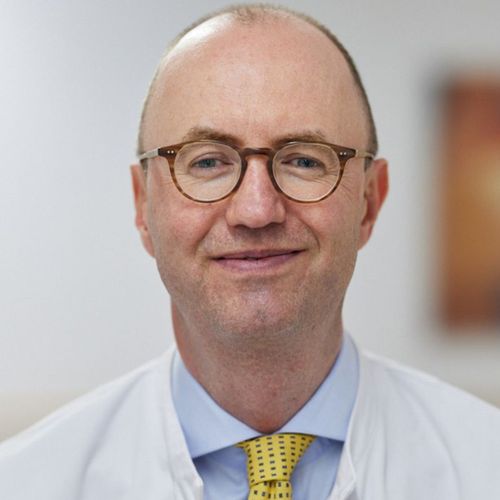
Professor Dr. Lutz Mirow, an outstanding visceral surgeon, performs surgeries throughout the abdominal cavity with exceptional expertise. His expertise extends not only to the gastrointestinal tract but also to diseases of the esophagus and rectum, particularly in cases of cancer.
Known for his pioneering work in robot-assisted surgery, he has established the renowned Chemnitz Hospital as a leading center for visceral surgery. Since Prof. Dr. Lutz Mirow took over the Department of General and Visceral Surgery at Chemnitz University Hospital in April 2018, he has enhanced the hospital’s reputation and set internationally recognized standards for surgical procedures.
The clinic is distinguished not only by its state-of-the-art equipment and high-tech medical technology, but also by Prof. Dr. Mirow’s commitment to innovative approaches. Under his leadership, the first surgeries using the Versius system in Germany took place—a milestone in the field of surgery. The department is not only exceptionally well-equipped but also renowned for its interdisciplinary collaboration and the high level of expertise among its medical staff.
Prof. Dr. Mirow has extensive knowledge of various diseases, ranging from the stomach to the pancreas. He is considered an expert in oncological surgery and provides outstanding care for gastrointestinal tumors, employing innovative multimodal treatment approaches. His dedication and exceptional expertise in minimally invasive surgical techniques, as well as his use of computer-assisted surgery, make Prof. Dr. Lutz Mirow and his team highly sought-after specialists.
The editorial team at Leading Medicine Guide had the opportunity to speak with Prof. Dr. Mirow, focusing on the importance of preventive care and robot-assisted surgery for colorectal cancer patients.

The treatment of visceral tumors—that is, tumors in the abdominal cavity—requires precision and expertise at the highest level. In the modern medical landscape, surgical procedures play a crucial role in the treatment of these tumors, which can occur in various organs of the abdominal cavity. Through innovative techniques and a comprehensive approach to tumor treatment, visceral tumor surgery is becoming an essential component of oncological care. It enables the targeted removal or treatment of tumors to achieve the best possible outcomes for patients.
The symptoms of colorectal cancer can vary, but the most common include changes in bowel habits such as diarrhea or constipation, bloody stools, abdominal pain or cramps, unexplained weight loss, and persistent fatigue.
“Colorectal cancer is generally preventable through screening! Early detection of colorectal cancer offers crucial advantages. As soon as you notice symptoms, you should not wait for them to go away on their own, but rather see a qualified doctor promptly and have a colonoscopy performed. Young people should also have their colon examined if they experience any of the symptoms mentioned above, as we are now seeing several young people with colorectal cancer. A colonoscopy can detect precancerous lesions, such as polyps, at an early stage, allowing them to be removed before they develop into cancer. This also significantly reduces the risk of cancer developing later on. Early detection also allows for more effective treatment, since the cancer is diagnosed at an early stage when it is still treatable,” Prof. Dr. Mirow emphasizes at the beginning of our conversation, adding:
“The time it takes for colorectal cancer to develop varies greatly from person to person. If there is a family history of the disease, screening should be done more frequently and regularly. If a precancerous lesion continues to grow for several years, it may already be too late for successful treatment within three to four years. As a result, many advanced cases of rectal cancer can then only be treated with great difficulty and at great expense.”
Modern screening methods for the early detection of colorectal cancer have made significant progress in recent years.
Colonoscopy, one of the most reliable methods, allows for direct visualization of the colon and the removal of polyps before they can develop into cancer. An alternative method, CT colonography or virtual colonoscopy, uses CT scans to create 3D images of the colon and provide a detailed view without the need to insert an endoscope. “Of course, a colonoscopy is an invasion of privacy—it’s uncomfortable because it focuses on the genital area. But a colonoscopy is crucial for preventing serious diseases. Blood tests using biomarkers or specific proteins can indicate the presence of cancer. You can have one done, but unfortunately, these tests so often yield false negatives or false positives that you can’t rely on the results. Even a CT scan does not offer 100% certainty. This means that patients must overcome their reservations to prevent a potentially malignant cancer. I must also make a special appeal to men, as they tend to be more hesitant and are less likely to undergo preventive screenings than women, who are probably accustomed to getting checked due to regular gynecological exams,” explains Prof. Dr. Mirow.
A healthy lifestyle can play a significant role in minimizing the risk of developing colorectal cancer.
Diet plays a significant role: A high-fiber diet rich in fruits, vegetables, whole grains, and legumes can reduce the risk of colorectal cancer. Consumption of red meat and processed foods such as sausages and bacon should be limited, as these can increase the risk of cancer. In addition, regular physical activity is of great importance. Exercise and sports not only help control weight but also have a positive impact on gut health and can lower the risk of colorectal cancer.
“Even a BMI (Body Mass Index) of 35 or higher puts a person at greater risk for colorectal cancer and, of course, for other types of cancer. Maintaining a healthy body weight and avoiding being overweight is therefore very important. It is also advisable to reduce alcohol consumption and quit smoking. Both factors increase the risk. You can support your gut health with a good diet. And you should always remember where the body comes from, because our ancestors did not always have food available everywhere, which is why there’s nothing wrong with occasional fasting. It’s more dangerous to overload the body. Obese people are sick, and without help, these patients usually cannot break out of this vicious cycle. Unfortunately, we have a high percentage of obese people for whom surgery is the only option left to reduce weight. Unfortunately, here in Germany, health insurers are far too reluctant to cover these costs. Yet drastic weight loss can definitely help ensure that, in cases of doubt, medications—such as blood pressure medications, which are also very expensive—can be discontinued, or that diabetes or joint problems can be prevented,” explains Prof. Dr. Mirow.
Immunotherapy for colorectal cancer is an innovative treatment method that harnesses the body’s own immune system to attack and destroy cancer cells.
Immunotherapies are an innovative treatment option for colorectal cancer. They aim to strengthen the body’s own immune system so that it can better recognize and attack cancer cells. Checkpoint inhibitors are a promising form of immunotherapy; they override certain inhibitory mechanisms of the immune system, thereby enhancing the immune response against the tumor. “Immunotherapy is only used when colorectal cancer can no longer be cured by surgery. We are currently introducing many drugs with remarkable success. This is a major topic right now. The best prognosis is always when the tumor has not metastasized and can be completely removed surgically. But if the tumor has metastasized to the lymph nodes, then adjuvant—that is, supplementary—therapy in the form of immunotherapy is used. “We are increasingly striving for personalized therapy for each patient and do not view existing guidelines as the primary focus,” says Prof. Dr. Mirow, describing these additional therapeutic approaches.
Personalized therapy in oncology is also based on genetic testing to identify specific genetic mutations that play a role in the development and progression of colorectal cancer. Through genetic analysis of the tumor, doctors can better tailor treatment to the individual’s genetic profile and the tumor’s molecular characteristics. This enables a more targeted and personalized therapy that is tailored to the needs of the individual patient and may be potentially more effective and better tolerated. Overall, these advances in personalized therapy and immunotherapy open up new possibilities for the treatment of colorectal cancer patients, particularly those with advanced or metastatic forms of the disease.
Various surgical options are available for colorectal cancer, including minimally invasive techniques designed to make the surgery less invasive.
“Whenever possible, we at Chemnitz University Hospital perform colorectal cancer surgery using minimally invasive techniques, specifically the so-called keyhole technique. The open technique is used only when the tumor has spread across multiple organs. Minimally invasive surgical procedures include laparoscopic surgery and robot-assisted surgery. One of these systems is the Versius Surgical Robotic System, which we are the first hospital in Germany to use. This system enables even more precise movements of the instruments through small incisions in the abdomen, giving the surgeon a better view and allowing for more delicate manipulation during the procedure. The surgeon controls the instruments via consoles and receives a 3D view of the surgical field, which improves the accuracy and efficiency of the procedure. Robot-assisted surgery allows for more complex procedures, and patients often benefit from a faster recovery and a shorter hospital stay compared to conventional methods,” explains Prof. Dr. Mirow, adding:
“Robotic assistance offers many advantages for the surgeon. There are now new tools—for example, we can use staining methods to visualize blood flow in tissue. Looking ahead, I foresee a development here that will be closely integrated with AI (artificial intelligence), which will, for example, allow for better documentation of surgeries or enable a kind of warning system to monitor the procedure and alert the surgeon when instruments are approaching sensitive organ or tissue areas. The entire field of robotics is exciting—we serve as a training center here and train colleagues on the Versius Surgical Robotic System, and I personally travel regularly throughout Europe to teach, for example, in Poland and Slovakia.”
The Versius system is an innovative robot-assisted surgical system used in minimally invasive surgeries. It consists of a robotic arm with multiple joints, which allows the surgeon to precisely control surgical instruments. The robotic arm can move flexibly and operate various surgical tools, enabling a more precise and less invasive surgical approach.
Follow-up care and rehabilitation after colorectal cancer treatment are crucial for promoting the patient’s well-being and minimizing the risk of disease recurrence.
Typically, follow-up care includes regular medical examinations to ensure that the patient is healing well and shows no signs of tumor regrowth or metastases. These follow-up examinations may include various imaging techniques such as CT or MRI scans, ultrasound, or blood tests to monitor the patient’s health. In addition, endoscopies such as a colonoscopy may be performed to ensure that the colorectal cancer does not recur. “Follow-up care is the key to success and can lead to long-term survival, as recurrences can be prevented. We provide patients with a structured follow-up program that outlines when each follow-up examination is scheduled. We also collaborate with many oncologists in the region who then manage the follow-up therapy,” said Prof. Dr. Mirow.
Rehabilitation focuses on improving the patient’s physical and mental health after treatment. This often includes nutritional counseling, physical activities, and psychological support to promote recovery and manage any side effects of treatment. Specialized programs can help improve the patient’s physical fitness and strength, especially if they have undergone surgery or chemotherapy. “With colorectal cancer, there is the unique aspect that chemotherapy is often administered before surgery, not after. However, this always depends on the individual case and is discussed during a pre-treatment case conference in the tumor board to develop a tailored plan for the patient. A well-planned pre- and post-treatment regimen is crucial for the patient’s recovery,” Prof. Dr. Mirow states clearly.
Family history and genetic predisposition play an important role in determining an individual’s risk of colorectal cancer.
People with a family history of colorectal cancer or certain genetic conditions, such as Lynch syndrome or familial adenomatous polyposis, have a higher risk of developing colorectal cancer. Professor Dr. Mirow recommends the following for those with a family history: “The risk is ten times higher if there is a family history. For people with a family history of colorectal cancer or a genetic predisposition, regular monitoring is therefore particularly important. Screening tests such as colonoscopies should possibly begin earlier and be performed more frequently to minimize the risk of cancer. This can vary depending on the patient’s individual risk and age and should be discussed with a doctor or a gastroenterologist. We also recommend genetic testing and counseling for very young patients.”
Comprehensive care under one roof at Chemnitz University Hospital!
“It’s very important that people understand that screening is the be-all and end-all of preventing colorectal cancer. If necessary, people must also change their lifestyle. The importance of screening must become even more widely recognized. After all, the need for treatment ultimately stems from a failure of screening. Here at our hospital, we have the advantage of having all specialists on board under one roof, so that in case of doubt, the patient can be referred from one colleague to the next with ease. Of course, we’re also in contact with external partners, some of whom participate in our conferences, and the surrounding hospitals collaborate with us as well. We’re here for the people! Once you understand that it doesn’t matter which door the patient walks through first, then you’ve understood medicine. “Whether it’s the oncologist or the gastroenterologist first, a joint discussion must then take place in the tumor board to collaboratively determine the best treatment for the patient,” Prof. Dr. Mirow emphasizes, and with that, we conclude our conversation.
Thank you very much, Prof. Dr. Mirow, for this important message to everyone and for the interesting overview of colorectal cancer treatment options and preventive care measures!
Share this article
Expert Interviews
Read next
- Expert interview
Expert interview with Professor Dr Elmar Herbst, PhD
Oct 15, 2026
Patient-centred and personalised knee surgery
Read more - Expert interview
Cardiogeriatrics: Significance and benefits in the context of hospital reform
Sep 21, 2026
Cardiogeriatrics: Significance and benefits in the context of hospital reform
Read more - Expert interview
Expert Interview with Professor Dr. Amadeus Hornemann, MPH
Sep 18, 2026
Prof. Amadeus Hornemann on Precision Medicine in Gynecology: Modern Surgery, New Techniques, Better Quality of Life
Read more