Expert Interviews
Quality of Life Redefined: Hip and Knee Replacement Surgery—An Expert Interview with Prof. Schräder

Alexandra Pfitzmann ·
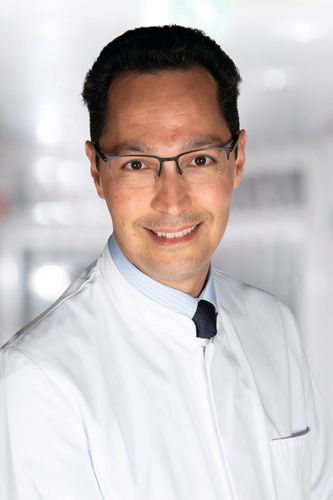
Prof. Dr. Peter Schräder is a leading expert in the field of orthopedics and trauma surgery and plays a key role in the area of mobility preservation. As Chief Physician and Medical Director of the Department of Orthopedics and Traumatology at OrthoCentrum Jugenheim (OCJ) in Hesse, Prof. Dr. Schräder covers a broad spectrum of care—from adult to pediatric orthopedics. His expertise spans numerous specialties, including hip and knee arthroplasty, articular cartilage surgery, sports surgery and traumatology, and orthopedic rheumatology. With a highly specialized focus on joint replacement, Prof. Dr. Schräder enjoys an excellent reputation. Under his leadership, the clinic covers all aspects of treatment for the musculoskeletal system.
The clinic in Jugenheim, idyllically located in the Darmstadt-Dieburg district, is not only equipped with state-of-the-art technology but also focuses on the individual needs of each patient. Prof. Dr. Schräder places great emphasis on prioritizing non-surgical methods to treat symptoms and mobility limitations before considering surgical intervention. His goal is always to restore patients’ mobility as quickly and effectively as possible. To this end, he relies on a holistic approach to diagnosis and treatment to achieve the best possible outcomes. His clinic performs a large number of primary procedures, using only high-quality implants to improve patients’ quality of life.
equally, Prof. Dr. Schräder and his team specialize in revision surgeries. The use of state-of-the-art technologies—such as a new robotics- and navigation-assisted surgical technique for artificial knee joints—has led to improved function and longevity of the prostheses. His approach is characterized not only by professional expertise but also by a high degree of empathy. He builds a relationship of trust with his patients to ensure optimal treatment. Overall, Prof. Dr. Peter Schräder is known for his high level of expertise, his holistic and individualized patient care, and his innovative approaches in orthopedics and trauma surgery, all of which aim to improve his patients’ quality of life and mobility.
The editorial team of the Leading Medicine Guide wanted to learn more about hip and knee arthroplasty and was able to interview Prof. Dr. Schräder on this topic.

Joint replacement, also known as arthroplasty, is a specialized medical procedure for treating joint problems. It involves the use of artificial joints to restore the function and mobility of damaged or diseased joints and offers a wide range of options for relieving pain, improving mobility, and restoring quality of life for people with joint diseases or severe injuries.
When deciding between joint-preserving cartilage surgery and joint replacement surgery for the knee or hip, several specific indications and factors play a decisive role.
“First and foremost, the choice between joint-preserving surgery and joint replacement is often determined by the condition of the affected joint. Cartilage replacement procedures play a greater role in the knee joint, but only a minor one in the hip joint. For the knee joint, a fundamental distinction must be made between three groups: joint-preserving measures (such as cartilage regeneration), partial joint replacement, and total joint replacement. It is important that a clinic can offer the entire spectrum, from joint-preserving measures to total joint replacement, so that patients can be strategically offered what they need. “This depends on the extent of the cartilage and joint damage and where this damage is located,” explains Prof. Dr. Schräder at the start of our conversation, adding:
“Other factors in the decision include the patient’s age and weight, as well as the alignment of the leg. All of this plays a role, and we need to determine what the patient hopes to achieve in the long term. Younger and more active patients are often more interested in preserving their natural joint in order to maintain freedom of movement and the ability to participate in sports. In such cases, joint-preserving surgery can be an attractive option, as it offers the chance for long-term preservation of joint function and may reduce the need for a later prosthesis revision. These are the overall questions we ask ourselves, and we can then determine the best course of action for the patient.”
In addition, individual preferences and life circumstances also play a role in the decision. Some patients are determined to preserve their natural joints as long as it is medically justifiable, so joint-preserving surgery is preferred. Finally, the risks and potential complications of each treatment option are also taken into account. While joint-preserving surgeries are often less invasive procedures and may be associated with a lower risk of complications such as infections and blood clots, they may not offer the same long-term durability and pain relief as total joint replacement. The patient’s individual risk factors and preferences are therefore carefully weighed to select the most appropriate treatment option that best meets the patient’s long-term needs and goals.
“I always explain it to patients this way: God built a big zoo, and the people in it are all very different. When I explain to a patient that a selected partial prosthesis might only last 2–3 years, there are those who say, ‘Yes, I definitely want to try everything before opting for a full prosthesis,’ and that’s fine—we can do that. Other patients, on the other hand, say, ‘No, I’d rather have the full prosthesis right away so I can get it over with.’ I discuss this thoroughly with patients before the procedure, because I don’t want a situation where, for example, a cartilage replacement procedure is performed but only lasts two years, and the patient ends up saying, ‘If I’d known that beforehand… I would have opted for a partial or full prosthesis right away.’ The decision is made together with the patient. There’s time for this, since it’s an elective surgery—that is, a procedure chosen by the patient—and not an emergency operation,” says Prof. Dr. Schräder.
The decision to implant a prosthesis as late as possible can be just as wrong as doing so as early as possible. “If, for example, the patient ends up suffering for one to two years with cartilage therapy and we end up performing the prosthesis surgery anyway, then we should make the decision in favor of the patient’s quality of life. And whether I operate on the patient at age 62 or 65—at the end of the day, that’s not relevant. Some patients are also quite young; their expectations are usually higher, and the stress on their joints is sometimes greater as well, since their athletic activities are often more intense. And then there’s the young patient’s desire to continue leading an active life,” says Prof. Dr. Schräder, outlining key aspects of the decision-making process.
Modern implants are increasingly made from high-quality materials such as ceramics, metal alloys, and high-strength polymers, which offer better durability and wear resistance.
“The durability of prostheses evolves over a period of approximately 20 years. In the past, the figure was around 15 years. The longer durability is ultimately due to the components and materials—and, of course, the so-called bearing pair. Prostheses used today correspond much more closely to the anatomy of the natural joint and its movement. It is the ability to roll and glide that makes the difference here, and—especially when it comes to artificial hip joints—people also refer to it as the ‘forgotten joint’—meaning the patient no longer even thinks about the fact that they have an artificial joint. With the knee joint, things are a bit different. Here, there is a significant proportion of patients who repeatedly complain of minor discomfort here and there and still experience a sensation of a foreign body. This is partly because the knee and hip joints are two different types of joints—the ball-and-socket joint and the hinge joint—which have entirely different underlying mechanics. “With the hip joint, there’s simply more muscle and tissue supporting the joint,” explains Prof. Dr. Schräder, highlighting the patient’s experience with hip and knee replacements in particular.
The bearing pair in the knee joint refers to the specific way in which the artificial components of a knee prosthesis interact with one another to enable joint movement. In a knee prosthesis, the main components typically consist of metal and plastic parts that are attached to the bone. The bearing pair refers to the way these components move when the knee joint is bent or straightened.
Another important advancement involves improvements in surgical techniques and instruments. Minimally invasive surgical techniques allow for more precise and less invasive procedures, which can lead to faster recovery and fewer postoperative complications. In addition, advances in imaging technology—such as the use of preoperative 3D images and computer-assisted planning systems—have helped surgeons work with greater precision, improving the fit and alignment of the implants and promoting long-term stability. Of course, the advancement of implant fixation techniques also plays a major role. Modern implants can be securely fixed using both cementless and cemented techniques, with the choice made based on the individual patient’s case. In addition, advances in surface coating technology have improved the integration of implants with the surrounding bone, which supports the long-term stability and durability of the implants.
Movement is important!
Prof. Dr. Schräder describes the post-operative course following the placement of a prosthesis as follows: “The prostheses used today can bear full weight from the day of surgery, and patients are mobilized very quickly; they should regain independent mobility as soon as possible, in line with the ‘fast-track concept.’ This means that the goal is not to discharge the patient from the hospital as early as possible, but to help them regain independence as quickly as possible. This is followed by approximately 4–6 weeks of rehabilitation with accompanying physical therapy, and it takes another approximately 3–6 months until the patient is fit enough to resume athletic activities (with a hip replacement, the process is somewhat faster than with a knee replacement). With the knee joint, muscular control is crucial for walking well and safely, and the muscle mass that has been lost cannot be rebuilt overnight. It’s also quite common for the patient to need pain medication for an extended period after the procedure. It’s important for the patient to stay active, and in this case, it’s better to walk several shorter distances rather than one long one. Pain is a sign that shouldn’t be ignored, but that doesn’t mean you should stop moving altogether. Motivating the patient is therefore crucial at this stage. Most patients eventually find the right amount of exercise that works for them.”
Revision arthroplasty is a particular challenge
Unlike primary joint replacement, in which an intact joint is replaced with an implant, revision joint replacement requires special surgical techniques and instruments to remove the old prosthesis and place a new one. This often requires additional preoperative planning and a customized approach to achieve the best possible outcomes for the patient.
“The initial surgery is always highly standardized. A revision surgery, on the other hand, is highly individualized. Every surgery is definitely different. The second point is that, although the joint is loose during a revision surgery, it’s not as if you can simply pull the joint out of the bone and just put the new one back in. There is always additional damage to the bone. Standard implants aren’t sufficient either; instead, special implants are needed for both the knee and the hip to ensure the joint is securely anchored in the bone again. These implants have a modular design, consist of several individual parts, and must be assembled specifically during the operation. This allows surgeons to effectively compensate for existing deficiencies, account for all contingencies, and rotate a part of the implant slightly to the left or right so that everything fits well in the end. “This therefore involves a significantly greater technical effort than in an initial surgery, which always makes revision surgery a special challenge that, as a rule, never follows a standard procedure,” emphasizes Prof. Dr. Schräder.
Because of this particular challenge, not every orthopedic surgeon at a hospital can perform a revision surgery. “Such surgeries can only be performed at hospitals that have the necessary experience. This can also be expressed in numbers. The guidelines state that a hospital must perform an average of at least 50 knee surgeries per year to be eligible to offer revision surgeries. That’s a joke—it would amount to just one knee per week. We perform approximately 1,000 knee surgeries per year, just to give you an idea of the scale. A surgeon who performs revision surgeries should be highly proficient in implanting standard prostheses—that is, in primary implantations—and, in my opinion, should have completed at least 3–5 years of training at a center that performs more than just a handful of knee surgeries per year after obtaining board certification.” It’s hard to quantify—it’s a craft—some take a little longer, others are faster. “It’s ultimately difficult to put a specific number on the number of surgeries required, but it serves only as a rough estimate, especially since one must also distinguish between simple and complex revision surgeries,” explains Prof. Dr. Schräder.
The development of materials and implant designs plays a crucial role in preserving the joint’s natural mobility and long-term functionality in orthopedics, particularly in the field of joint replacement surgery.
Modern materials such as high-strength polymer composites, ceramics, and metal alloys are carefully selected to mimic the joint’s natural biomechanical properties while ensuring durability and wear resistance. An important aspect of material development is the reduction of friction and wear.
“In primary joint replacement, there have been fundamentally more changes than in revision joint replacement, and this involves more than ‘just’ the material. Surgical approaches have also changed here; most procedures can be performed using minimally invasive techniques, the pre- and post-operative care periods have changed, and here at our clinic, we often use robotic-assisted surgery as well. In revision arthroplasty, there is a wider range of materials available compared to the past, and we very much prefer to perform revision knee surgeries with navigation assistance. As far as materials are concerned, titanium combined with highly cross-linked polyethylene works well, ensuring that the prosthesis bonds effectively with the bone in cases of cementless surgery. There is also the ceramic-on-ceramic bearing combination and a special surface treatment for the prostheses,” explains Prof. Dr. Schräder.
The use of low-friction materials, such as ultra-high-molecular-weight polyethylene for bearing surfaces or ceramic surfaces for metallic components, can minimize inflammation and wear, which supports the joint’s long-term functionality and reduces the likelihood of implant failure. “In addition, advances in implant design also play a crucial role in preserving the joint’s natural mobility. We don’t design implants to make them look particularly stylish, but rather to optimize their function. Modern implants are increasingly anatomically shaped and customized to achieve a better fit and alignment within the joint. For example, we’ve moved toward asymmetrical designs for knee joints because our knee joint itself isn’t symmetrical (one part is concave, the other is convex). In the past, we forced the knee into a shape that it does not naturally have. This shape also results in a different range of motion. The asymmetrical shape, however, produces very natural kinematics, whereas in the past, limitations were to be expected. For hip joints, one can choose between short-stem and long-stem prostheses, which integrate into the bone differently. “The more natural the force distribution, the longer the prosthesis will last,” explains Prof. Dr. Schräder regarding the state-of-the-art prostheses used today.
Joint-preserving techniques and more precise surgical methods have a significant influence on the decision between joint-preserving cartilage surgeries and total joint replacement, particularly in the context of hip and knee surgery.
Joint-preserving techniques such as cartilage grafts, microfracturing, and autologous chondrocyte transplantation (ACT) help repair localized cartilage damage and preserve natural joint function. These techniques aim to regenerate or replace damaged cartilage rather than replacing the entire joint with a prosthesis. Healthy cartilage cells (chondrocytes) are harvested from an intact area of the affected joint, cultured, and multiplied. These cells are then implanted into the damaged area of the cartilage. For patients with localized cartilage damage—particularly younger and active patients—these joint-preserving cartilage surgeries can be an attractive option for preserving natural joint function and delaying or avoiding the need for joint replacement.
“The size of the cartilage defect is an important parameter that is determined via magnetic resonance imaging (MRI). Based on that, a decision can be made as to whether the cartilage can be replaced or not. The larger the area of cartilage damage, the more likely joint replacement—or at least partial replacement—will be necessary. Age also plays a role, although this is relative, since things generally do not improve with age. When cartilage reconstruction is performed, it must be ensured that the cartilage can regenerate biologically. Therefore, there is no fixed age limit. The patient’s weight is important because overweight patients heal less effectively. A possible axial misalignment, such as bowlegs or knock-knees, is also a decisive factor—cartilage regeneration cannot occur in these cases. The patient’s expectations and symptoms are also relevant. Do they want to be able to ski again, or do they only experience discomfort while walking every day? These are fundamental factors that need to be clarified,” says Prof. Dr. Schräder regarding the criteria for potential cartilage regeneration.
Rehabilitation measures and postoperative protocols play a crucial role in minimizing complications and improving long-term outcomes following joint-preserving surgeries as well as hip and knee replacement procedures.
These measures aim to accelerate recovery, restore muscle strength and joint mobility, control pain, and reduce the risk of complications such as thrombosis and infections. “To start on a positive note: Joint replacement is one of the most successful surgical procedures there is, and the complication rate is extremely low—in fact, it’s only 1–2%! An infection can always occur. For this reason, specialized clinics generally maintain the highest hygiene level, 1A, in their operating rooms. This includes administering prophylactic antibiotics to patients during surgery, and there are also specially coated films in the operating room. In addition, we use two pairs of gloves alternately, observe longer hand-washing times, and provide patients with a hygiene kit containing antiseptic shower gel and nasal drops before surgery to ensure that germs are completely eliminated from the mucous membranes. “These measures are intended to prevent infection as much as possible,” says Prof. Dr. Schräder, explaining the preventive measures and discussing other potential complications:
“Theoretically, thrombosis or embolism can occur (here, too, patients receive thrombosis prophylaxis); a bone can also fracture during surgery, which we try to prevent using various surgical techniques. And finally, nerve and vascular damage can occur, though this is a risk associated with any surgery,” Prof. Dr. Schräder lists among the surgical risks. Regarding postoperative risks, he notes: “Dislocation of an endoprosthesis is possible, and if it does occur, it affects only the hip—though this is extremely rare today. This is because during the surgery, all possible movements are checked under anesthesia and with X-ray guidance, and sutures are applied only once everything is confirmed to be in order. Dislocation is therefore no longer really an issue. Thanks to the minimally invasive surgical option and the patient’s early mobilization, the muscle is not damaged and does not deteriorate as quickly.”
Outlook
“Robotics and navigation are well on their way for knee surgeries. For the hip, we’re still a bit further away from applying these techniques here. Essentially, what we’re doing here is providing and optimizing ‘replacement parts.’ It’s very important that patients go to a specialized clinic equipped with the ‘fast-track concept’ and a high level of expertise. Also important—and this is what we focus on here at OrthoCentrum Jugenheim—is what’s known as ‘Praeha’—that is, prehabilitation—to optimally prepare patients for surgery. For example, we have our own sports center so that patients can engage in training here before their surgery. “Patients often have a waiting period of 3–4 months before surgery, and during this time they can already do a lot for themselves to ultimately contribute to their own success,” states Prof. Dr. Schräder, and with that we conclude our conversation.
Thank you very much, Professor Dr. Schräder, for this comprehensive insight into hip and knee joint replacement!
Share this article
About the medical author
Alexandra Pfitzmann
Editor
Alexandra Pfitzmann – medical author: expert knowledge, professional articles and medical insights in the Leading Medicine Guide.
More about the medical author →Expert Interviews
Read next
- Expert interview
Cardiogeriatrics: Significance and benefits in the context of hospital reform
Sep 21, 2026
Cardiogeriatrics: Significance and benefits in the context of hospital reform
Read more - Expert interview
Expert Interview with Professor Dr. Amadeus Hornemann, MPH
Sep 18, 2026
Prof. Amadeus Hornemann on Precision Medicine in Gynecology: Modern Surgery, New Techniques, Better Quality of Life
Read more - Expert interview
Expert Interview with Professor Dr. Konstantinos Anagnostakos
Sep 15, 2026
Prof. Anagnostakos on Painful Knee Replacements
Read more