Expert Interviews
Knie & Co.: New Approaches to Joint Replacement and Outpatient Care—An Expert Interview with Prof. Wachowski

Alexandra Pfitzmann ·
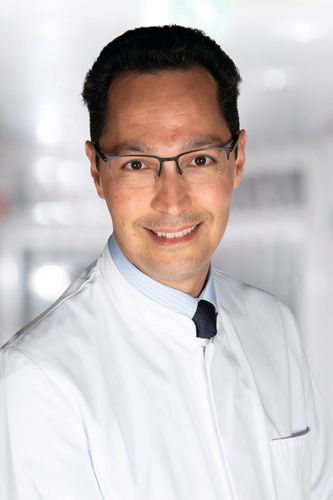
Prof. Dr. med. Martin Wachowski, director of the DUO practice in Duderstadt, has made a name for himself as a certified knee surgeon. His expertise spans trauma surgery and orthopedics, with a focus on knee treatments and joint replacement procedures. He offers a wide range of cartilage surgery options, including cartilage cell transplants. Among the procedures he frequently performs is cruciate ligament reconstruction.
As an experienced physician, Prof. Dr. Wachowski prioritizes medical care based on the latest research. His scientific publications attest to his dedication. He received the Teaching Award from the Medical Faculty of the University of Göttingen and has supervised numerous doctoral dissertations. Prof. Dr. Wachowski is a member of various medical professional associations and an experienced lecturer.
Another focus of his practice is sports medicine. Prof. Dr. Wachowski treats amateur and professional athletes for sports injuries and mobility issues, analyzes injuries, and offers personalized physical therapy interventions to facilitate a return to athletic activity. His goal is to restore mobility without discomfort and with maximum performance.
In his procedures, Prof. Dr. Wachowski works with his patients to select the gentlest and most effective treatment methods. He also successfully performs complex surgeries, such as revisions of cruciate ligament reconstructions or stabilization surgeries on the kneecap. Prof. Dr. Wachowski is known for his thorough consultations, detailed explanations of treatment steps, and close monitoring before and after surgery. Patients who seek his care are in experienced hands.
The editorial team of the Leading Medicine Guide spoke with Prof. Dr. Wachowski and was particularly interested in learning more about knee replacement and its outpatient care.

New avenues have opened up, particularly for knee problems and other joint conditions, to offer patients an improved quality of life. Modern approaches to joint replacement, along with the increasing integration of outpatient care options, are shaping an era of transformation in orthopedic care. From innovative treatment options to advanced care in both outpatient and inpatient settings, the topic of joint replacement is becoming increasingly important for patients. This development is at the center of an exciting discussion about how medical advances and improved care options can revolutionize the lives of people with joint problems.
Patellar instability can be attributed to various causes.
Anatomical factors such as insufficient depth of the patellar glide track or a high-riding patella can certainly lead to this problem. “First and foremost, it is genetic factors that increase susceptibility to patellar instability. Instability resulting from an accident is not very common. In the case of a congenital condition—known as patellar dislocation—the patella repeatedly pops out of place. Age plays a very important role here. Young people are most commonly affected, and the younger they are when the first patellar dislocation occurs, the greater the likelihood that it will happen again and again. In many cases, measures must be taken to restore stability, as otherwise there is a risk of premature joint wear. A patellar dislocation is a life-changing event for the person affected; the pain that occurs when the patella pops out is excruciating, and the leg suddenly becomes immobile. This is because every contraction of the muscles pulls the dislocated patella past the knee. “The worst part is that this usually happens without any warning at all,” explains Prof. Dr. Wachowski at the start of our conversation, adding: “It’s important to thoroughly assess the degree of patellar instability. In other words, we need to assess how likely it is that it will pop out again.”
Without adequate treatment, an unstable kneecap often leads to premature joint wear over the years, and under certain circumstances, joint replacement may ultimately need to be considered as a possible solution.
This step is usually taken only when other treatments are insufficient and the instability or osteoarthritis of the patella leads to significant pain, limited mobility, or functional impairment. To delay this necessity for as long as possible, appropriate measures should be taken to prevent the kneecap from dislocating before osteoarthritis sets in. The type of stabilization procedure is tailored individually to the condition and severity of the instability, ranging from soft-tissue stabilization procedures to more complex surgeries such as trochleoplasty (deepening the gliding surface of the patella). A comprehensive consultation with a medical specialist is crucial to finding the best possible treatment option for each individual case.
“First and foremost, it is very important to determine why the patient’s kneecap has dislocated. There are various factors that contribute to this. For example, a misalignment such as bowlegs can be a cause, as can a high-riding patella, or—and this is very important—a possible malformation of the glide track on the femur, along which the patella moves. The gliding surface on the thigh bone, along which the kneecap moves up and down when the knee joint is in motion, normally has a V-shaped groove. In cases of instability, the groove is flattened or, in extreme cases, has a convex shape. In such cases, the patella does not glide along a track but, in extreme cases, moves like two balls rolling against each other, resulting in severe instability. The overall picture must be analyzed, and one must identify any risk factors present in addition to the malformation of the gliding surface so that the appropriate treatment can be selected. The minimum required is soft-tissue stabilization, for example, in the form of ligament fixation on the inner side of the knee using a tendon or a tendon graft and a self-dissolving screw in the thigh. This strengthens the inner portion of the knee joint capsule to prevent the kneecap from dislocating again. In addition, it is necessary to assess prior to surgery what else may need to be done. There may be bowlegs, which can be corrected surgically, or the articular surface may be severely malformed, which can also be corrected surgically. “The complexity of the treatment lies in choosing the right therapy,” explains Prof. Dr. Wachowski.
Various modern techniques and implants are available to address the problem of patellar instability.
MPFL Reconstruction: Medial patellofemoral ligament (MPFL) reconstruction is a technique in which the torn or weakened ligament responsible for stabilizing the patella is restored. A replacement ligament made from the patient’s own tissue is used in this procedure.
Tibial Tuberosity Transfer (TTT): This is a procedure in which the attachment of the patellar tendons to the tibia (shinbone) is repositioned to correct the position of the kneecap and thereby reduce instability.
Cartilage therapy: Modern procedures to regenerate cartilage can be performed in cases of concomitant cartilage damage. For more extensive damage, cartilage cell transplantation is also used to regenerate damaged cartilage.
Partial Knee Replacement: For severe cases of patellar instability where advanced wear and tear (osteoarthritis) has already occurred—to the extent that biological treatments would no longer be sufficient—knee replacement may be considered. In such cases, it is possible to replace only the femoral condyle and the articular surface of the patella while leaving the rest of the knee joint intact. Modern prostheses offer a better fit and improved functionality.
Depending on the extent and type of stabilization surgery performed on the patella, this procedure naturally carries risks and potential complications.
“Infection is a potential risk associated with any surgical procedure. For most patients, soft-tissue stabilization—which is routine today—is sufficient. The surgery is therefore brief. Only small incisions are required, and very little foreign material is used. As a result, infections are an absolute exception. Fortunately, they are rare even when a more complex surgical procedure (e.g., trochleoplasty) is necessary. Most patients are young people who generally have a stable immune system. They typically have normal blood clotting function, so complications rarely occur in these cases. It is also a very rare complication for the bones that are corrected and realigned during surgery to fail to fuse properly. However, it is important to always keep in mind that, compared to healthy patients, there is a higher risk of premature joint wear; this risk would, of course, be much higher if the instability were not corrected. It must be made very clear to the patient that premature joint wear is inevitable, but that the likelihood of osteoarthritis can be reduced through appropriate measures. Pain after surgery can, of course, occur. However, patients typically experience a rapid reduction in symptoms and can be mobilized very quickly. Without the necessary measures, further dislocations would almost certainly occur in most cases, meaning that the required correction is virtually unavoidable. The duration of the surgery depends on the procedures performed. If soft-tissue stabilization (MPFL augmentation) is performed, the procedure takes well under an hour,” explains Prof. Dr. Wachowski.
Postoperative rehabilitation following stabilization surgery is crucial for the success of the procedure and the restoration of full knee function.
Initially, the focus is on mobilization with controlled weight-bearing to promote healing. Physical therapy plays a central role in improving joint mobility, regaining muscle strength, and restoring normal knee function. “Generally speaking, the patient is allowed to get out of bed immediately on the day of surgery. In most cases, however, the patient is not allowed to bear full weight and must use crutches in any case. A tendon graft used in the reconstruction of the patellar retinaculum is very durable. Crutches are recommended for about 4–6 weeks. By the end of this period, however, patients are certainly allowed to bear weight and use the crutches only for safety. Physical therapy begins immediately with the patient, while a traditional, long-term rehabilitation program is rather uncommon for young patients. It is usually sufficient for the patient to return to their daily routine and resume sports with the support of a physical therapist. At the very latest, patients are walking without crutches after eight weeks. The next step in improving mobility would then be, for example, cycling. Jogging would then be possible again after about three months,” says Prof. Dr. Wachowski, describing the recovery process.
Pain management is also an important aspect of rehabilitation. Pain medications and other pain-relief measures are prescribed according to the patient’s individual needs.
Several methods are available for treating cartilage damage in the knee to promote cartilage regeneration or replace damaged cartilage.
The possibility of cartilage regeneration in the knee is of particular importance, especially for people facing cartilage problems or injuries in the knee joint. The cartilage in the knee is crucial for the smooth functioning of the joint, and damage to it can lead to significant discomfort and limitations. In recent years, various approaches and technologies have been researched to promote cartilage regeneration in the knee and regenerate damaged tissue. These advances offer hope for improved treatment options and an enhanced quality of life for patients with knee problems.
“If patients come to the doctor ‘too late,’ so to speak, or if too much damage has already occurred during the initial dislocations, then we need to consider a combination of stabilizing the kneecap on the one hand and rebuilding the cartilage on the other. Follow-up treatment takes a little longer in such cases. However, this depends on the extent and location of the damage. In any case, newly formed cartilage is more sensitive than when only patellar stabilization is performed. Most patients who need stabilization have mild cartilage damage, which, fortunately, usually occurred during the dislocation itself—specifically in areas that are not relevant during normal movement without dislocation. This means that once the kneecap is put back into place, the damaged area is usually not under load. Minor cartilage damage therefore often does not need to be repaired at all,” explains Prof. Dr. Wachowski.
Being overweight puts a lot of strain on the knee joints and can lead to increased cartilage damage. A healthy diet and regular exercise can help control body weight and reduce the strain on the knees.
When osteoarthritis develops as a result of cartilage damage, it means that the protective cartilage in the joint is being broken down, leading to friction and inflammation. The loss of cartilage mass leads to a reduction in joint flexibility and can cause inflammation in the joint. Osteoarthritis is a degenerative joint disease that develops over time, and its symptoms can include pain, swelling, limited mobility, and stiffness. In advanced stages, osteoarthritis can significantly impair quality of life and substantially limit the ability to perform daily activities. Therefore, the prevention and treatment of cartilage damage are crucial to minimizing or slowing the progression of osteoarthritis.
Cartilage Regeneration Methods
Microfracturing: This is a minimally invasive procedure in which tiny holes are created in the bone beneath the cartilage. This stimulates the release of stem cells and growth factors from the bone marrow, which promote the growth of new cartilage. However, this new cartilage is of lower quality than the original cartilage tissue. Therefore, this procedure is recommended only for small areas of damage.
For slightly larger defects, the damaged area can be sealed with a protein membrane or a gel to improve the quality of the regenerated cartilage.
Cartilage cell transplantation: In this procedure, healthy cartilage is harvested from another area of the knee and transplanted into the damaged area. There are various types of cartilage transplantation, such as autologous cartilage cell transplantation (ACT), in which the patient’s own cartilage cells are used. These are harvested during an initial surgery and cultured outside the body. They are then implanted approximately 6 weeks later during a second surgery. This results in high-quality cartilage tissue. This procedure is also recommended for more extensive damage.
In recent years, unilateral transplantation (minced cartilage) has become popular. In this procedure, cartilage is mixed with blood components and reimplanted during the same surgery. However, long-term results are not yet available.
“It is absolutely essential to prevent osteoarthritis, as cartilage regeneration would no longer be possible in an arthritic environment. So once that threshold is crossed, there is no turning back. I therefore recommend taking good care of your knees as a preventive measure. For example, people who regularly go to the gym, ride a bike, row, or swim are strengthening the muscles around the knee, which helps stabilize it. Breaststroke, however, isn’t so good for the knee—whether you’re thinking of the kneecap or the meniscus—because it involves certain movements and stresses that can put strain on these structures in the knee. As a result, the kneecap might actually pop out for the first time while swimming. Jogging isn’t highly recommended either, whereas Nordic walking is beneficial because you can better control the intensity and it engages the upper body. “Jogging is sometimes simply too much for the joints,” advises the knee surgery specialist.
Outlook and Hopes for the Future
“It’s important to correctly identify and classify complex patient situations in order to provide appropriate treatment. This is particularly important in cartilage regeneration and also in patellar instability. It’s essential that our existing knowledge be further expanded and deepened across the board. Patellar surgery is a complex field and, unfortunately, is still underestimated in some quarters,” says Prof. Dr. Wachowski.
DUO-Duderstadt Trauma Surgery & Orthopedics—a reliable partner on the journey from diagnosis through treatment to rehabilitation.
As a dedicated partner on the path to recovery, the practice focuses in particular on injuries and degenerative joint diseases. A central focus is on restoring knee joint function. “When it comes to patellar stability, we can offer many years of expertise, even with complex surgeries. The patient is clearly our top priority; we have to meet them where they are. After all, in the end, they determine the outcome of the entire process. Our task is to involve patients as informed participants early on and to explain what needs to be done to support their therapy,” says Prof. Dr. Wachowski optimistically, and with that, we conclude our conversation.
Dear Professor Dr. Wachowski, thank you very much for this informative conversation about the knee!
Share this article
About the medical author
Alexandra Pfitzmann
Editor
Alexandra Pfitzmann – medical author: expert knowledge, professional articles and medical insights in the Leading Medicine Guide.
More about the medical author →Expert Interviews
Read next
- Expert interview
Cardiogeriatrics: Significance and benefits in the context of hospital reform
Sep 21, 2026
Cardiogeriatrics: Significance and benefits in the context of hospital reform
Read more - Expert interview
Expert Interview with Professor Dr. Amadeus Hornemann, MPH
Sep 18, 2026
Prof. Amadeus Hornemann on Precision Medicine in Gynecology: Modern Surgery, New Techniques, Better Quality of Life
Read more - Expert interview
Expert Interview with Professor Dr. Konstantinos Anagnostakos
Sep 15, 2026
Prof. Anagnostakos on Painful Knee Replacements
Read more