Expert Interviews
Expert Interview with Professor Fritz Thorey, M.D., on Hip Replacement Surgery

Alexandra Pfitzmann ·
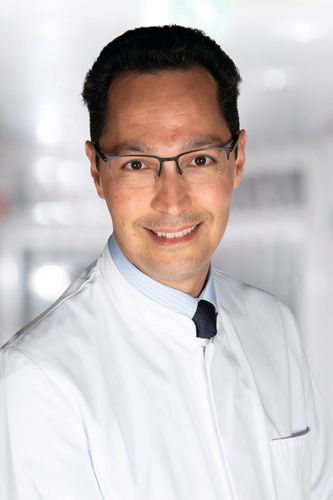
Prof. Dr. med. Fritz Thorey is a world-renowned expert in hip surgery, knee surgery, hip replacement, knee replacement, sports surgery, sports traumatology, and sports orthopedics. His outstanding expertise and impressive experience—performing approximately 800 surgeries per year—have earned him numerous awards and honors. His skills are particularly sought after in the fields of hip and knee joint replacement. The ATOS Clinic in Heidelberg is internationally renowned, not least because of the prestigious “IZO—International Center for Orthopedics.” Here, Prof. Dr. med. Fritz Thorey stands out in particular as an expert in joint replacement. Expectations regarding mobility and physical activity have changed significantly in recent years, and Prof. Dr. Thorey has played a key role in this shift. Patients who need joint replacement today often aim for more than just the ability to walk pain-free. The editorial team of the Leading Medicine Guide spoke with Professor Dr. Thorey specifically about hip replacement to learn what options are available to affected patients.
Prof. Dr. med. Fritz Thorey has already seen numerous patients who, with prostheses, have developed a passion for sports and devoted themselves to extreme sports. Prof. Dr. Thorey’s impressive medical achievements are the result of his early enthusiasm for orthopedics and trauma surgery during his medical studies, as well as his intensive focus on the field of endoprosthetics. In Heidelberg, he continuously refines his methods of minimally invasive and muscle-preserving endoprosthetics. As a result, even patients with advanced hip and knee osteoarthritis can lead a pain-free, mobile, and active life.
However, Prof. Dr. Thorey is not only an experienced specialist but also a tireless researcher. He is constantly optimizing medical procedures, such as the use of bone-preserving implants, bearing surfaces in the hip and knee joints, robot-assisted joint replacement, and customized implants. His team supports him in driving innovation in orthopedic surgery and sports medicine. Despite his impressive experience, Prof. Dr. Thorey ensures that his surgeries never become routine. Each year, he performs around 800 procedures—some of them complex—always with a watchful eye and a commitment to further optimizing medical techniques.
Hip joint problems are usually caused by cartilage degeneration.
Cartilage loss in the hip can be caused by various factors that lead to damage or loss of cartilage tissue. As we age, cartilage naturally wears down because the body’s ability to produce new cartilage decreases. This age-related cartilage loss is known as degenerative joint disease or osteoarthritis.
Frequent and repeated stress or overuse of the hip can also lead to premature cartilage degeneration. This can occur in people who work in certain occupations that require repetitive movements, or in athletes who place excessive strain on their hips. Injuries such as fractures, dislocations, or cartilage damage caused by trauma can impair the cartilage in the hip and lead to accelerated degeneration. Similarly, inflammatory conditions such as rheumatoid arthritis or hip joint inflammation can damage the cartilage and accelerate its degeneration.
And last but not least, congenital abnormalities or misalignments of the hip, such as hip dysplasia or femoroacetabular impingement (FAI), can lead to uneven stress on the cartilage and promote its degeneration. We’d now like to take a closer look at this last factor and discuss it with Professor Dr. Thorey.
Femoroacetabular Impingement (FAI)
“Femoroacetabular impingement (FAI) is caused by abnormal bone growth on the joint surfaces of the femoral head (femur) and/or the hip socket (acetabulum). These abnormal bony growths can prevent the femoral head and the acetabulum from moving smoothly; instead, they collide or “get stuck” against each other during movement (impingement). There are three types of FAI. In the so-called “cam” type, the femoral head is not perfectly round but is slightly flattened or irregularly shaped. This can lead to restricted range of motion. In the pincer type, the acetabulum extends too far over the femoral head, which can lead to restricted mobility. “In the mixed type, both the cam and pincer types are present,” explains Prof. Dr. Thorey at the outset of our conversation, adding: “FAI is typically diagnosed through a combination of clinical examinations, imaging techniques such as X-rays or MRI, and, if necessary, an arthroscopic examination of the hip joint. This makes it possible to assess the structure of the hip joint more accurately and to identify abnormal shapes or bone changes.”
Femoroacetabular Impingement (FAI) vs. Hip Dysplasia
FAI (femoroacetabular impingement) and hip dysplasia are two distinct conditions that affect the hip joint. Femoroacetabular impingement is an abnormal shape of the hip joint in which either the head of the thigh bone (femur) or the hip socket (acetabulum) is not properly formed. This restricts the normal range of motion of the hip joint and can lead to pain and damage to the surrounding tissues. FAI can be caused by genetic predisposition or acquired factors. Hip dysplasia is a congenital malformation of the hip joint in which the hip socket is underdeveloped. As a result, the femoral head does not fit properly into the hip socket, which can lead to instability and an increased susceptibility to dislocations. Hip dysplasia often occurs at birth or in early childhood.
“In FAI, the femoral head collides with the acetabulum during certain movements, which can lead to pain, inflammation, and potential damage to the articular cartilage, the labrum (hip joint rim), or the surrounding tissue. In hip dysplasia, the hip joint is unstable because the femoral head is not properly positioned in the hip socket. “This can lead to premature wear of the articular cartilage, hip pain, limited range of motion, and the development of osteoarthritis,” explains Prof. Dr. Thorey, clarifying the differences.
Patients come to Professor Dr. Thorey when their hip is already causing pain.
“The initial symptoms of FAI can vary, but pain typically occurs in the groin or hip area. The pain can worsen with certain movements or activities, such as walking, running, bending over, or sitting for long periods. If left untreated, FAI can lead to further damage to the hip joint, such as the development of hip osteoarthritis, which is why treatment as soon as possible is recommended,” explains the hip and knee specialist.
With regard to treatment options for FAI, there are both conservative and surgical approaches. The choice of treatment depends on the severity of the symptoms, the extent of structural changes, and the patient’s individual needs. “Taking nonsteroidal anti-inflammatory drugs (NSAIDs) can help relieve pain and inflammation, and targeted exercises to strengthen the surrounding muscles and improve mobility can also be helpful. In addition, corticosteroid injections may provide temporary pain relief. Ultimately, however, surgery is usually the final step. In a minimally invasive procedure, a tiny camera (arthroscope) is inserted into the hip joint through small incisions. Abnormal bone structures can be corrected, inflamed tissue removed, and, if necessary, the labrum of the hip joint repaired. “In advanced cases where other measures are not sufficiently effective, a hip replacement may be necessary,” explains Prof. Dr. Thorey, clarifying the treatment options.
Many people are very apprehensive about hip surgery
Of course, facing surgery is never a pleasant prospect. But when it comes to the hip in particular, people are often more apprehensive—after all, the hip isn’t a small bone, and patients may imagine the procedure to be especially daunting. Here, Prof. Dr. Thorey can reassure patients: “Fortunately, for quite some time now, we’ve been able to perform hip surgery using minimally invasive techniques. In this context, ‘minimally invasive’ means, above all, that the muscle tissue is spared during the operation, which in turn leads to a faster recovery for the patient. As a rule, a patient who has undergone surgery is able to at least get up and walk on the very day of the procedure. That used to be unthinkable! Back then, patients often spent the first three weeks confined to their hospital beds,” says Prof. Dr. Thorey encouragingly.
There are several steps that anyone can take to protect the cartilage in the hip and promote the overall health of the hip joint.
“Regular, low-impact exercise—such as swimming, cycling, or yoga—can improve blood circulation, strengthen muscles, and enhance joint stability. This helps relieve pressure on the hip joints and keep the cartilage healthy. Being overweight can also increase the strain on the hip joints and lead to faster cartilage wear. Every kilo counts! I often explain to patients that they should imagine carrying a box of water. It weighs about 8 kilos. So if those 8 kilos are gone, that’s already a significant amount.
A balanced diet with an adequate intake of vitamins, minerals, and antioxidants can help keep the cartilage healthy. Dietary supplements can be helpful. The key active ingredients here are glucosamine and chondroitin, which are believed to help preserve cartilage. But as always, what we get from nature is ultimately the best. “He who heals is right, as the saying goes,” explains Prof. Dr. Thorey, adding: “Excessive strain on the hip joints—such as standing for long periods, heavy lifting, or high-intensity training—can, of course, also lead to cartilage wear.
It’s important to take breaks, avoid putting excessive strain on the hips, and pay attention to how your body feels. Whether during exercise or everyday activities, it’s important to focus on movement patterns that are gentle on the joints. Avoid excessive jumping, hard landings, or abrupt twisting movements that could strain the hip joints, and also maintain good posture to avoid putting unnecessary pressure on the hip joints.” It is important to note that while these measures can support hip joint health, they cannot prevent all types of hip problems or conditions.
Top-Notch Care at the ATOS Clinic in Heidelberg
“We have the advantage of being able to offer the highest level of specialization within the ATOS Clinic. I, for example, perform only hip and knee surgeries. I perform approximately 500 hip surgeries and about 300 knee surgeries each year. Doctors and specialists from various fields—such as orthopedics, radiology, physical therapy, and rehabilitation—work closely together to ensure comprehensive and individually tailored treatment. The patient’s well-being is the top priority, and great importance is placed on personalized consultation, education, and care. Treatment is carried out in close coordination with the patient to achieve the best possible results,” says Prof. Dr. Thorey, explaining the advantages of the ATOS Clinic in Heidelberg.
“As far as research and progress are concerned, there’s definitely still room for improvement. We can already grow cartilage, but it doesn’t work quite as well for the hip yet, since it’s really difficult to grow femoral heads,” states Prof. Dr. Thorey, but then goes on to speak enthusiastically about his oldest patient to date. “My oldest patient was 97 years old, but had a biological age of perhaps 73. He was a spry guy, ran 10 kilometers every day, and was just in great shape. I gave him a new hip; he was back on his feet in five days and only needed outpatient rehab. It’s great to see something like that! So it’s important to take care of your own fitness and overall health—then you’ll always have the best options,” Prof. Dr. Thorey concludes our conversation.
Professor Dr. Thorey, thank you very much for these fascinating insights!
Share this article
About the medical author
Alexandra Pfitzmann
Editor
Alexandra Pfitzmann – medical author: expert knowledge, professional articles and medical insights in the Leading Medicine Guide.
More about the medical author →Expert Interviews
Read next
- Expert interview
Cardiogeriatrics: Significance and benefits in the context of hospital reform
Sep 21, 2026
Cardiogeriatrics: Significance and benefits in the context of hospital reform
Read more - Expert interview
Expert Interview with Professor Dr. Amadeus Hornemann, MPH
Sep 18, 2026
Prof. Amadeus Hornemann on Precision Medicine in Gynecology: Modern Surgery, New Techniques, Better Quality of Life
Read more - Expert interview
Expert Interview with Professor Dr. Konstantinos Anagnostakos
Sep 15, 2026
Prof. Anagnostakos on Painful Knee Replacements
Read more