Expert Interviews
For a radiant smile: Oral Health! An Interview with Prof. Jäger

Alexandra Pfitzmann ·
What is the best way to prevent dental problems and keep your teeth healthy? Professor Dr. med. dent. Kurt Jäger, a specialist in implantology, general dentistry, periodontology, cosmetic dentistry, endodontics, and orthodontics, knows this better than anyone. At the Aarburg location of Argodentis Dental, where he serves as practice director, people from the region receive top-quality care in areas such as implantology, dentistry, and oral surgery—ensured not only by Prof. Dr. med. dent. Jäger, among others, by co-director Dr. med. dent., MSc Christoph Vögtlin. All dental services are provided in Aarburg, and the specialists place great importance on comprehensive counseling to help patients prevent dental and gum diseases through individually tailored preventive care. The editorial team of the Leading Medicine Guide spoke with Professor Dr. med. dent. Kurt Jäger about important issues related to teeth and oral health.

“Taking care of your teeth is the be-all and end-all!”
People with healthy teeth smile more than those whose visible teeth are discolored or decayed—or who are even missing some. Many people avoid regular visits to the dentist out of fear. However, today’s technology and modern anesthesiology have advanced to such an extent that even complicated treatments are virtually pain-free and yield excellent results.
Good dental care is one of the most important factors in keeping your teeth healthy. But is a regular manual toothbrush enough? Or should you opt for a high-tech model with all the features, including a water flosser? Do I need dental floss? “During our preventive care and dental hygiene sessions, we recommend the electric sonic toothbrush, though proper technique is key: don’t scrub! While an oral irrigator is pleasant, it’s not absolutely necessary. Teeth should be brushed three times a day, after every meal,” explains Professor Dr. Kurt Jäger, outlining the best approach to brushing teeth.
The sonic toothbrush is a type of electric toothbrush whose brush head resembles that of a conventional manual toothbrush—that is, it is elongated. The brush moves side-to-side, vibrates at about 31,000 oscillations per minute, and emits a sound wave with a frequency of approximately 260 Hz.
Brushing your teeth three times a day may seem like a lot at first—after all, you’d have to take everything with you to work… But the recommendation follows the logic that teeth are primarily there to break down food, and we normally do that—at least—three times a day. And when we eat, plaque also builds up in the mouth—that is, dental plaque that can damage teeth and gums.
“If you’re on the go, you can of course use a conventional manual toothbrush,” adds Professor Dr. Jäger, “but you should use the Bass or Stillmann technique.” The Bass technique is based on small, almost stationary vibrating movements with the toothbrush and is one of the most common tooth-cleaning methods, which also cleans between the teeth. The Stillman technique is recommended for people with both healthy periodontal tissue (gum line) and receding gums (also known as “recessions”), which result in more sensitive tooth necks. With this technique, you brush from red to white—that is, from the gums toward the tooth.
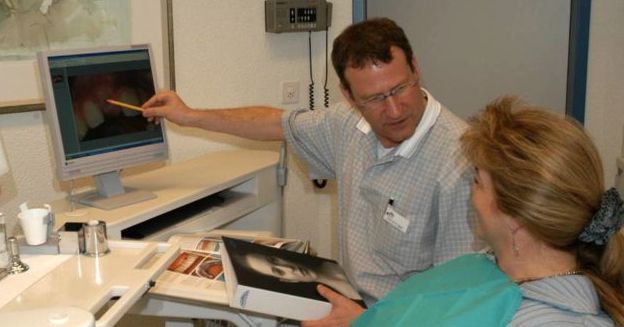
“Equally important is interdental care using dental floss or interdental brushes. Fluoride prophylaxis is also part of this—fluoride promotes remineralization, hardens the outermost layer of enamel, and inhibits bacterial growth!” recommends Prof. Dr. Jäger. Unfortunately, many people neglect to use dental floss. Yet flossing is very helpful in oral care, as the floss can remove a great many harmful plaque-causing bacteria from between the teeth, thereby preventing gum inflammation.
With eating comes plaque!
Of course, we eat several times a day—whether it’s traditional meals or snacks in between, and maybe even something sweet like chocolate or cake every now and then. After all, we should be able to enjoy all of that. “Diet is, of course, important. A healthy, balanced diet is essential for overall health. Teeth suffer from foods high in sugar. I recommend consuming as little sugar as possible and, if necessary, only with main meals. This also applies to sugary drinks. When choosing foods, you should make sure they are labeled as ‘tooth-friendly,’“ says the specialist.
“Sugar-free does not mean that no acids harmful to teeth are formed,” Prof. Jäger cautions at this point. It’s important to remember that “sugar-free” often simply means “free of cane sugar, i.e., common table sugar.” However, products may still contain fructose (fruit sugar), glucose (grape sugar), lactose (milk sugar), or maltose (malt sugar), which can ultimately lead to tooth decay as well. But you don’t have to give up everything—you just need to be more mindful, whether you’re shopping or eating.
If tooth decay has set in…
…it must be removed. This is because tooth decay (from the Latin word *caries*, meaning “rot” or “decay”) destroys tooth enamel, the hard tooth tissue, and dentin. It develops with the involvement of microorganisms and is ultimately the result of an ecological change in the teeth’s natural biofilm. In its early stages, tooth decay can be stopped with the use of fluoride, as long as a cavity—that is, a hollow space—has not yet formed. If the decay has progressed, the affected hard tooth structure must be removed and the tooth filled with a restorative material.
And what about amalgam fillings?
There are various filling materials: for example, glass ionomer cement, a mineral cement that is usually used only as a temporary solution, such as for provisional restorations. There are composites, which consist of twenty percent plastic and eighty percent of a silicic acid salt, as well as inlays made of gold or amalgam. The latter filling option once fell into serious disrepute. It’s good that we were able to speak with a dental expert on this topic: “In its day, amalgam was a cost-effective, easy-to-work-with filling material that stood the test of time brilliantly thanks to its good oral durability. However, modern tooth-colored composites have replaced amalgam as a filling material. In rare cases, it can still be used to repair the margins of crowns.” Good to know!
“Amalgam is safe; this has been proven repeatedly through scientific, conventional medical research,” explains Prof. Dr. Jäger. Now, of course, we’d like to know which type of filling is recommended. “There are direct and indirect fillings. With direct fillings, healthy tooth structure is preserved as much as possible today (formerly: ‘extension for prevention’). Modern composite materials are applied mechanically and chemically using an acid-etching technique to preserve the tooth. With indirect fillings, an impression or scan is taken of the prepared tooth, and the filling—fabricated in a dental laboratory—is cemented into the tooth,” explains Prof. Dr. Jäger.
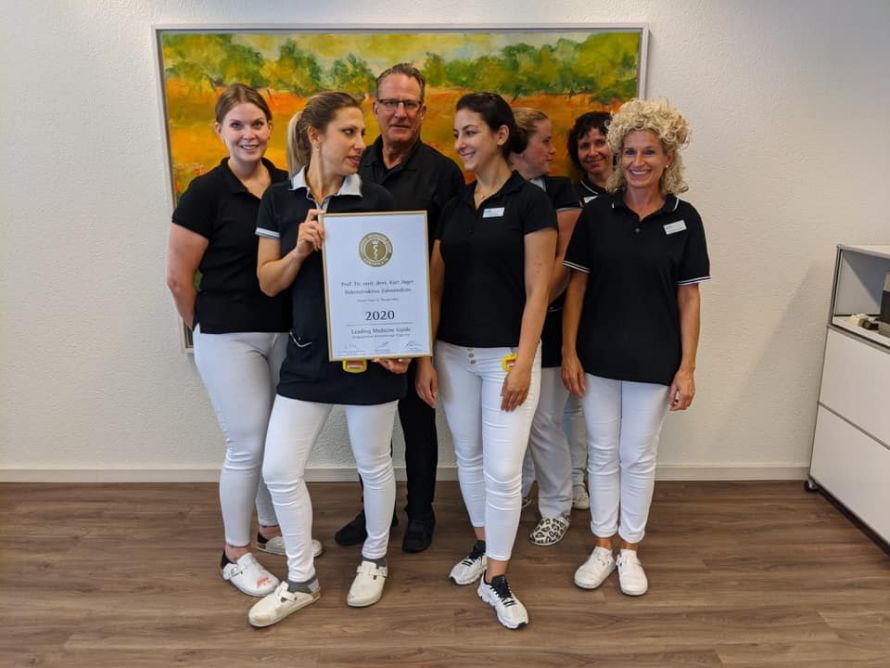
Award-Winner: Prof. Jäger also received the Leading Medicine Guide seal of approval in 2020
Implants are becoming more and more popular, aren’t they?
We keep hearing about the use of implants. Are implants an option for every patient? “As with all medical procedures, there are indications and contraindications, advantages and disadvantages, and risks that require thorough explanation. Dental implantology is very advanced and has a broad range of indications. If there is insufficient bone, bone can usually be built up using various techniques. Depending on the initial situation, the dental work required for implants may be more extensive. A commitment to good oral hygiene and abstaining from smoking promote long-term success,” says Prof. Dr. Jäger.
A dental implant with a matching prosthesis is a sensible option when a tooth and its root are missing. Today, placing dental implants is a viable solution for replacing a tooth and thus permanently closing unsightly gaps in the dentition.
Many people suffer from masticatory dysfunction
“Masticatory dysfunction is accompanied by jaw and facial pain, increased muscle tone, restricted jaw movement, jaw joint clicking, or joint pain,” explains Prof. Dr. Jäger. This often stems from clenching or grinding the teeth—for example, in stressful situations—which can also occur during sleep. Rheumatic diseases or injuries may also play a role. Headaches, clicking of the temporomandibular joint, muscle tension, or tinnitus can result.
“The causes are multifactorial and interdisciplinary. The specialized dentist must determine which therapeutic measures fall within their area of expertise and which do not. In the dental office, oral physiotherapy can be prescribed, medication can be administered, or a bite splint can be fitted. Often, the dentist is the first point of contact for patients experiencing pain. It is important to use the medical history and symptoms to arrive at the correct triage, to treat what falls within the scope of the specialty, and to collaborate in a multidisciplinary manner. “For example, I participate in a multidisciplinary temporomandibular joint clinic at the Hirslanden Clinic in Aarau,” says Prof. Dr. Jäger, with a view toward providing continuous care for his patients.
Fear Often Accompanies Patients in the Dental Chair
The older we get, the more vulnerable our teeth naturally become. In fact, only one percent of people live without cavities, fillings, or dentures. So rest assured! “The most important thing for a dentist is to gain the patient’s trust. Without effective anesthesia, treatment must not continue if it causes the patient pain. With anxious patients, the treating dentist must proceed slowly. Lasers can help here because they operate without physical contact. They also eliminate the unpleasant noises and vibrations. Hypnosis can also be used, or if that’s not an option at all, the dental treatment should be performed under general anesthesia,” explains Prof. Dr. Jäger, describing his approach to anxious patients, and jokes: “With a patient who’s afraid of the shot, I bet them a cake or a bottle of wine every time that they won’t feel either the needle or the injection. If you look at my figure, you’ll see who almost always wins!”
Dentistry Requires Sensitivity
“When I retire in just under three years, I will have been practicing as a dentist for exactly forty years. It’s a wonderful profession if you enjoy performing detailed, hands-on work in a specialized field and have a passion for the medical field. Interacting with patients and staff, as well as with colleagues and stakeholders, is inspiring and enriching,” says Prof. Dr. Jäger, who is very popular with patients thanks to his empathetic nature. And this is precisely where he continues to focus: “Dentistry is constantly evolving in the technological realm and becoming fully digitized. Orthodontics is playing an increasingly important role. Solo practices are gradually disappearing in favor of group practices and dental centers. However, I hope that empathetic points of contact will remain, especially for patients suffering from pain. Long-term treatment and care are very important for building trust. Every practice today must place a strong emphasis on preventive care.”
Professor Dr. Jäger, thank you very much for this insightful conversation!
The Aarburg location of the St. Margarethen Clinic has been directed since 1989 by Prof. Dr. med. dent. Kurt Jäger, who not only has extensive clinical experience in dentistry but is also active in research. Prof. Jäger has published around 200 articles and book chapters in national and international journals and also teaches as a titular professor at the University of Basel. The Aarburg branch of the St. Margarethen Clinic also has its own dental training center.
Share this article
About the medical author
Alexandra Pfitzmann
Editor
Alexandra Pfitzmann – medical author: expert knowledge, professional articles and medical insights in the Leading Medicine Guide.
More about the medical author →Expert Interviews
Read next
- Expert interview
Cardiogeriatrics: Significance and benefits in the context of hospital reform
Sep 21, 2026
Cardiogeriatrics: Significance and benefits in the context of hospital reform
Read more - Expert interview
Expert Interview with Professor Dr. Amadeus Hornemann, MPH
Sep 18, 2026
Prof. Amadeus Hornemann on Precision Medicine in Gynecology: Modern Surgery, New Techniques, Better Quality of Life
Read more - Expert interview
Expert Interview with Professor Dr. Konstantinos Anagnostakos
Sep 15, 2026
Prof. Anagnostakos on Painful Knee Replacements
Read more