Expert Interviews
Gastroenterologist in Switzerland: Prof. Dr. Robert Rosenberg in Baselland
Leading Medicine Guide Editors ·
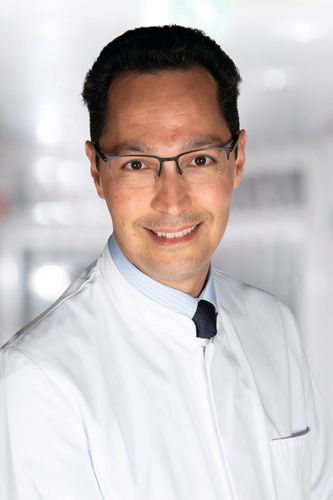
The gut is the most important control center in the abdomen—a fact that has long been recognized even by many laypeople. Yet it is still often neglected. And yet, a healthy gut is particularly important for overall well-being! Prof. Dr. Robert Rosenberg knows exactly how important it is: As chief of abdominal surgery at the Baselland Cantonal Hospital, he deals with this organ and its many mysteries on a daily basis—including, of course, colorectal cancer. That’s why he also knows what’s needed for a better recovery.
For several years now, Prof. Robert Rosenberg has also headed the Colorectal Cancer Center at the Baselland Cantonal Hospital in his capacity as chief of visceral surgery. After several stints abroad, including in Florida and New York, his love for his wife brought him to Switzerland. He feels at home in Liestal: Located about twenty kilometers from Basel, where rural charm blends with urban flair, it’s a great place to live.
A Wide Range of Surgical Techniques—Even Using the Da Vinci Robot
There are other reasons besides his personal circumstances why Prof. Robert Rosenberg ended up in Baselland after earning numerous additional qualifications and completing further training. The most important factor is the highly specialized tumor surgery program, which has earned a very good regional reputation in Liestal—in part thanks to its director. Here, the entire spectrum of visceral surgery is offered using both open and minimally invasive surgical techniques, as well as with the assistance of the Da Vinci robot.
As a result, the center offers a wide range of surgical procedures, which naturally benefits the patients. “Our broad range of surgical procedures and the various surgical techniques allow us to offer the best treatment for every patient,” the professor confirms. He adds: “Of course, we base our advice on national and international guidelines and recommendations.” Nevertheless, the individual patient always plays an important role and is involved in the decision-making process regarding the best treatment.
Thorough expertise is a given
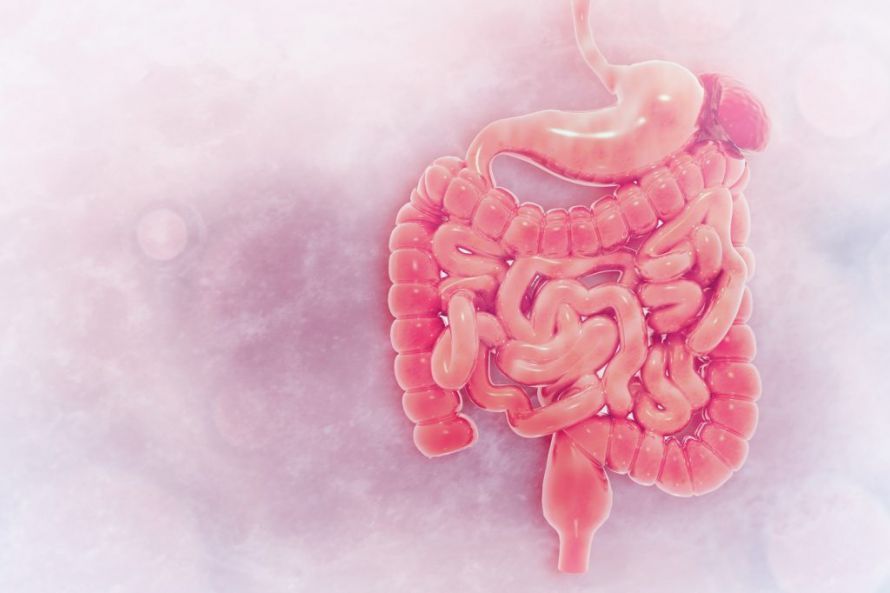
In addition to in-depth expertise across the entire spectrum of tumor surgery—from the esophagus to the rectum—the Baselland Cantonal Hospital offers other specialized services, such as endocrine surgery. So anyone with thyroid or adrenal gland issues is also in good hands here. But Professor Rosenberg’s team is also among the top choices in the country in the fields of proctology, hernia surgery, reflux surgery, and gallbladder surgery.
Personally, in addition to visceral surgery, Prof. Rosenberg focuses particularly on issues related to colorectal cancer. As the director of the Colorectal Cancer Center, he is regarded as a true specialist in this field. No wonder, then, that many patients turn to him with questions.
What’s good for the colon?
The most important question, of course, arises right from the start: How can I prevent colorectal disease? And if I already have it—what’s the best course of action? Basically, the classic tips for a healthy diet apply:
- A balanced diet, freshly prepared and rich in fiber? The gut doesn’t like red meat very much, but it does like more vegetables—that’s important for gut flora.
- Drink plenty of water? This is important for the body; ideally, about one and a half liters a day.
- Get plenty of exercise? Absolutely—30 minutes every day would be ideal.
- And, of course, don’t smoke and limit your alcohol intake!
An Important Tool Against Colon Cancer: Prevention
The best thing you can do to combat colorectal cancer is prevention. One issue, however, remains firmly entrenched in patients’ minds: fear of colorectal cancer screening remains widespread. For Prof. Rosenberg, this has long since ceased to make sense: “Today, no one needs to be afraid of a colonoscopy anymore,” he says. “The procedure can now be performed very gently.” For most patients, the only part that’s still quite unpleasant is drinking the saline solution—but that’s manageable. As the professor explains: “It has been proven that such preventive screenings can detect and prevent the early stages of colorectal cancer!”
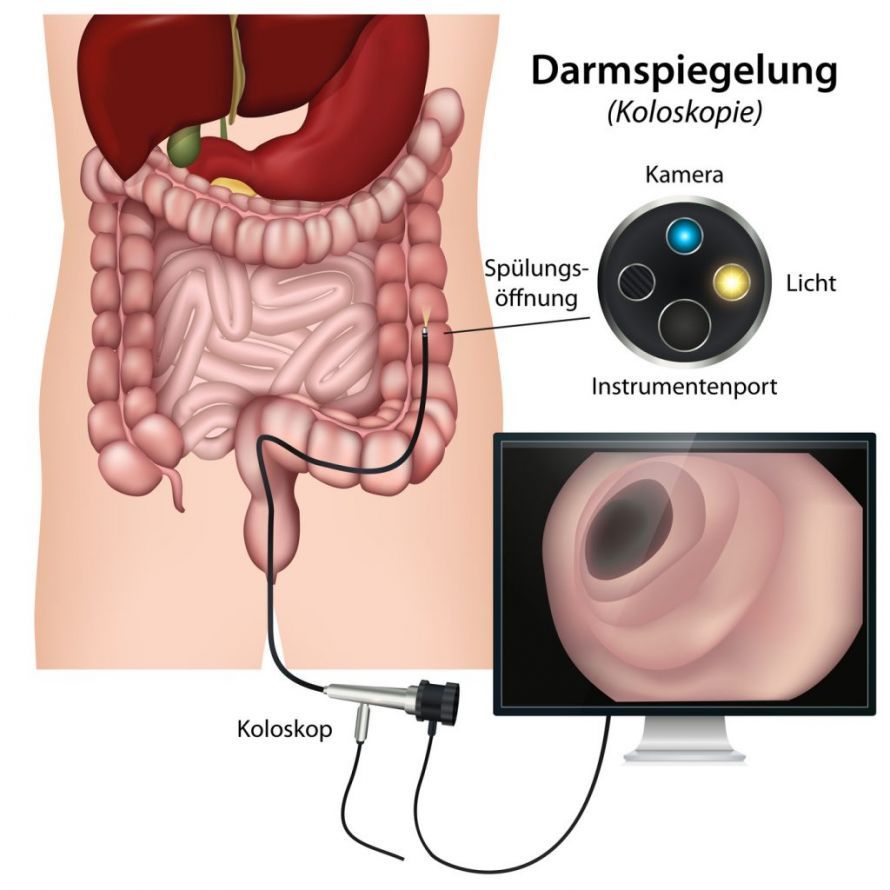
His main focus is on education and raising awareness. A key point: People often pay more attention to other organs than to the colon. A good example here is obesity. The fact that when it comes to fast food, almost everyone thinks only of fat deposits and not of the colon almost annoys Prof. Rosenberg: “It really is an underestimated organ,” he says. After all: “Anyone who overindulges in fast food or ready-made meals from the freezer risks, among other things, developing a bowel disease.”
Better Chances of Recovery Than Ever Before
But even those diagnosed with colorectal cancer have a good chance of recovering today. At his certified colorectal cancer center, psychology plays a role alongside state-of-the-art equipment. “Patients usually do well when their mental health and gut are in balance,” says Prof. Rosenberg, “which is why we also have a psycho-oncologist on staff at our colorectal cancer center.” The psychologist, who is specially trained to work with cancer patients, provides support during times of emotional distress and serves as a confidante. Prof. Rosenberg: “It has been shown that such conversations lead to a better recovery process.” There’s no question about it: The chances of recovery for colorectal cancer have never been as good as they are today.
How well the recovery proceeds is determined as early as the surgery itself. At the Baselland Cantonal Hospital, the focus is not only on using innovative surgical techniques and the best equipment. Prof. Rosenberg: “In Liestal, we pay close attention to treating patients with care, so we do our best to accommodate their personal needs during their hospital stay.”
… and eat again in the evening!
State-of-the-art diagnostic and surgical techniques, combined with respectful treatment of patients as equals, also have an impact on recovery. “In the past, after colorectal surgery, you’d spend a week in bed, weren’t allowed to move, and received nothing to eat or drink until everything had healed,” recalls the professor. But that has changed: At the Baselland Cantonal Hospital, patients no longer go into the operating room on an empty stomach—they receive a carbohydrate-rich liquid meal two hours before the procedure. And as early as the evening after the procedure, they’re given something to eat again. Light fare, of course.
Thank you very much, Professor Rosenberg, for sharing your expert knowledge on intestinal health with us!
Are you a patient looking for a specialist in colorectal surgery? You can find information and direct contact details for Prof. Rosenberg on Leading Medicine Guide.
Image sources: (c) adiruch na chiangmai, (c) Crystal light, (c) bilderzwerg – Adobe Stock.
Share this article
Basel-Country Cantonal Hospital, Liestal Site
ProfileExpert Interviews
Read next
- Expert interview
Cardiogeriatrics: Significance and benefits in the context of hospital reform
Sep 21, 2026
Cardiogeriatrics: Significance and benefits in the context of hospital reform
Read more - Expert interview
Expert Interview with Professor Dr. Amadeus Hornemann, MPH
Sep 18, 2026
Prof. Amadeus Hornemann on Precision Medicine in Gynecology: Modern Surgery, New Techniques, Better Quality of Life
Read more - Expert interview
Expert Interview with Professor Dr. Konstantinos Anagnostakos
Sep 15, 2026
Prof. Anagnostakos on Painful Knee Replacements
Read more