Expert Interviews
Hydraulic vs. Semirigid Penile Prosthesis

Alexandra Pfitzmann ·
Penile prostheses are an important treatment option for men for whom other treatments for erectile dysfunction are no longer effective. They do not replace the penis itself, but rather take over the function of the erectile tissues—thereby making reliable erections possible again. For many affected men, this means a significant improvement in their sex life, relationship, and quality of life.
In the DACH region, the number of men affected is high: in Germany alone, four to six million men suffer from erectile dysfunction. Extrapolated to Austria and Switzerland, this amounts to approximately five to seven million men affected by erectile dysfunction—and for some of them, a penile prosthesis is a viable solution.
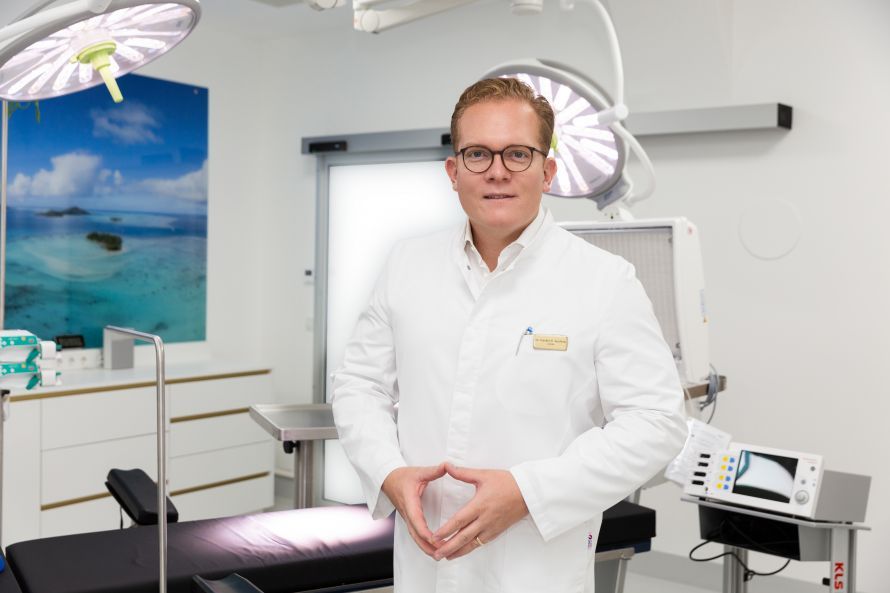
“The topic of penile implants remains a taboo for many men. Yet erectile dysfunction affects a great many people, and it’s important to raise awareness about it. Starting at age 50, one can roughly assume that the likelihood of experiencing erectile dysfunction corresponds to the decade of life: a 50-year-old man thus has about a 50 percent chance of being affected, and this probability continues to rise for men in their 60s and 70s.
Consequently, the number of men for whom a penile prosthesis could ultimately be a viable treatment option is also growing. Nevertheless, this option is often not considered because patients know too little about it, and many urologists do not actively offer this form of treatment or have only limited knowledge of it themselves. For many men, the path to seeing a doctor is a long one, as erectile dysfunction is still a major taboo. Many are reluctant to admit that they have problems with erections, even though we live in an age when medications like Viagra or Cialis are readily and safely available by prescription.
Nevertheless, some continue to order questionable products online, even though there is absolutely no reason to do so, since effective medications can be obtained quite easily from a urologist or primary care physician. This reluctance leads some men to suffer for years before seeking help. At the same time, however, there are also those who take decisive action, clearly recognize their problem, and do not want to compromise their quality of life. They seek information early on and take advantage of the treatment options available to them,” Dr. Kuehhas notes at the start of our conversation.
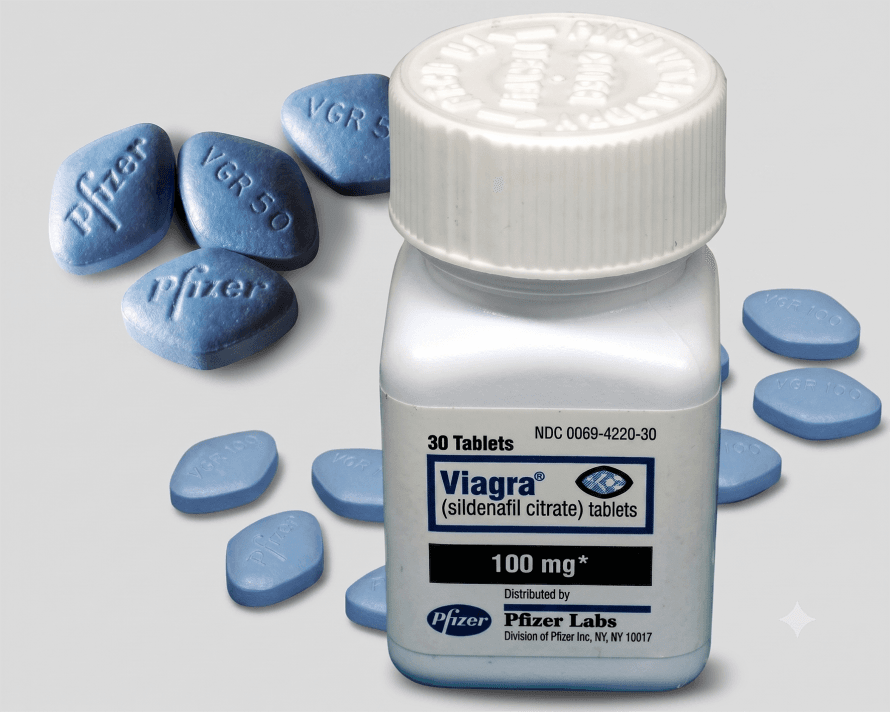
Prescription medications such as Viagra and Cialis improve erections by increasing blood flow to the penis. Both active ingredients belong to the class of PDE-5 inhibitors and ensure that the blood vessels in the erectile tissue relax more effectively, allowing more blood to flow in. However, they only work when sexual arousal is present. They may no longer be effective if blood flow to the penis is severely restricted, the erectile tissue is scarred, or nerve function is impaired—for example, following surgery, severe vascular disease, or long-term diabetes. In such cases, the mechanism of action of these medications is no longer sufficient to produce an erection. The next option is therapy with alprostadil, an active ingredient that directly triggers an erection by dilating the blood vessels in the erectile tissue. In what is known as SKAT therapy (corpus cavernosum autoinjection therapy), alprostadil is injected into the corpus cavernosum using a very fine needle, resulting in an erection regardless of nerve function. This method is effective even when PDE-5 inhibitors such as Viagra or Cialis no longer work adequately.
The decision on whether a penile prosthesis is an option is made only after a thorough medical evaluation. The focus of this evaluation is on determining whether severe erectile dysfunction is present that can no longer be adequately treated despite medication, injections, or mechanical aids.
“To be a candidate for a penile prosthesis, all conservative treatment options must first have been exhausted. When a patient with erectile dysfunction comes in for a consultation, the evaluation therefore always begins by determining whether all previous treatment options have been fully exhausted. This includes first trying medication—that is, the standard pills designed to support an erection.
If these are not sufficiently effective or are not well tolerated, the next step is injection therapy with alprostadil, known as SKAT therapy. Many men find it unpleasant to have to give themselves an injection into the penis, and some discontinue this therapy because it causes pain or does not achieve the desired effect.
“Only once it is clear that these conservative measures have not been successful or are not an option is it determined whether a penile prosthesis might be a suitable option,” explains Dr. Kuehhas, going into further detail about the necessary examinations:
“If a patient continues to suffer from severe erectile dysfunction after all conservative therapies and is interested in a penile prosthesis, potential exclusion criteria must first be clarified and the anatomical conditions carefully examined. This begins with a thorough physical examination of the penis.
The key factor is whether there is scarring or calcification in the corpus cavernosum tissue that could complicate the procedure. To assess this, a detailed ultrasound is performed, and an artificial erection is induced—using the same injection that is also used in SKAT therapy.
This allows us to see how the tissue reacts and whether there are any structural changes that would be relevant during implantation. Equally important is the precise measurement of the corpus cavernosum diameter. Only once the width of the corpus cavernosum is clear can it be determined which prosthesis models are suitable and whether certain variants are ruled out. Some patients require thinner models due to their anatomy, while others can use any of the available systems. This information must be clearly established before surgery.
For many men, the examination is an intimate and embarrassing situation, especially when an artificial erection must be induced. Nevertheless, it is generally well accepted once it is clear why it is necessary and what information it provides. When the procedure is explained transparently, most patients understand the medical purpose and no longer perceive the examination as inappropriate.
For the physician, this means proceeding with a professional demeanor, seriousness, and without hesitation, as this is an examination that, while unfamiliar, is medically essential.”
Once all conservative measures have been exhausted and it is clear that only the implantation of a penile prosthesis is an option, the actual decision-making process begins. The choice between a semirigid and a hydraulic prosthesis plays a central role here, as both systems differ significantly in function, suitability for daily life, and natural appearance. Which option is chosen always depends on the patient’s expectations and needs.
“A semirigid prosthesis consists of two silicone rods that provide permanent basic rigidity. The penis can be bent upward or downward but always remains in a semi-rigid state. For sexual intercourse, it is simply brought into the straight position; for everyday use, it is bent downward. These prostheses are mechanically straightforward but less anatomically accurate and appear less natural in everyday life.
Especially in situations such as saunas or locker rooms, the permanent basic rigidity is visible, which can be a limitation for some patients. The hydraulic prosthesis works differently: It is inflatable and allows the patient to determine the degree of rigidity themselves. In everyday life, the penis can remain soft and inconspicuous, while a full erection is achieved for sexual intercourse. As a result, this option appears much more natural and is easier to conceal in everyday life.
It goes unnoticed in the sauna or under clothing because the penis appears normal when flaccid. The semi-rigid prosthesis is more difficult to conceal under clothing. Patients usually have to wear tight-fitting underwear to secure the penis and control its visible baseline rigidity. With the hydraulic prosthesis, this is not necessary, as the flaccid state remains visually inconspicuous,” explains Dr. Kuehhas, adding:
“Clinically, the hydraulic prosthesis is considered the gold standard because it looks more anatomically natural, remains inconspicuous in everyday life, and offers a high level of functionality. Nevertheless, there are situations in which a semi-rigid prosthesis is the better choice. The decisive factors here are the patient’s physical condition and their ability to handle the prosthesis.
A hydraulic prosthesis requires that the patient be able to safely reach and operate the pump in the scrotum. In cases of severe obesity or a very large waist circumference, the scrotum may be difficult to access. If the patient cannot feel or press the pump, the hydraulic option is not practical. The same applies in cases of limited dexterity, such as due to Parkinson’s disease, neurological disorders, or age-related weakness. Patients who cannot reliably operate the pump are more likely to benefit clinically from a semirigid prosthesis, which requires no manual operation.
Despite these exceptions, the hydraulic prosthesis remains the preferred solution, provided the physical requirements are met. It offers the most natural function and the greatest suitability for everyday use. The decision requires experience, as the surgeon must be able to assess which option makes the most sense for the individual patient in the long term. In some cases, partners are included in the consultation, as erectile dysfunction has usually been a known issue in the relationship for some time. Many come to the consultation together; others let the man go alone, but the desire for improvement is generally shared by both partners.
The question of how operating a pump affects intimacy certainly plays a role here. Nevertheless, studies show that the hydraulic prosthesis achieves the highest satisfaction rates despite its technical operation. About 98% of patients report a significant improvement in their quality of life because sexual activity becomes possible again. The semi-rigid prosthesis also achieves good results, with a satisfaction rate of about 80%, as it likewise offers a reliable solution for previously untreatable erectile dysfunction.”
With hydraulic prostheses, an erection is achieved through an active, fluid-based system that mimics the natural function of the corpora cavernosa, while semirigid prostheses provide a permanent baseline rigidity that is activated through manual positioning. The choice therefore depends heavily on anatomical conditions, motor skills, aesthetic expectations, and the desired degree of naturalness.
The implantation of a penile prosthesis—regardless of whether it is a semirigid or hydraulic model—is a standardized procedure that typically takes between 60 and 90 minutes.
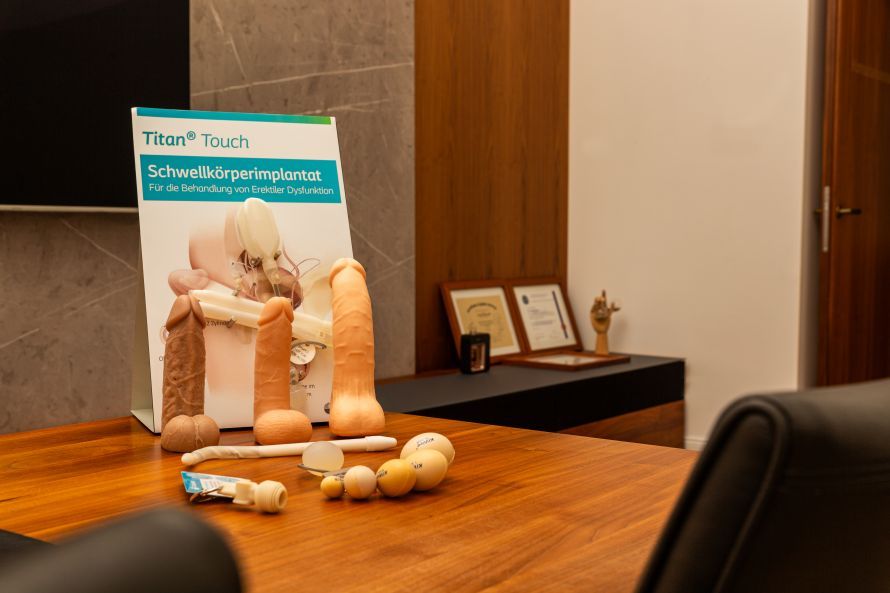
Corpus cavernosum implants
“The prosthesis is implanted under general anesthesia and is classified as an outpatient procedure, meaning the patient can theoretically go home the same day. However, actual use of the prosthesis does not begin until later: Instruction on how to operate the hydraulic pump—or, in the case of the semi-rigid version, how to handle the prosthesis itself—takes place after four to six weeks. Only then has healing progressed sufficiently for sexual activity to resume. The complication rates are similar for both types of prostheses.
It is particularly important to prevent infection of the prosthesis, as this would be the most serious complication: In such a case, the prosthesis would have to be removed and later reimplanted. Thanks to modern surgical techniques and antibacterial coatings on the hydraulic models, however, this risk is extremely low. Recent studies report an infection rate of about 0.3%, which is significantly lower than the infection rates for knee or hip prostheses, which are around 2%. In addition, an antibiotic is administered intravenously during surgery, which further increases protection.
After surgery, the patient must above all ensure that the wound remains clean and does not become infected. Thorough disinfection and hygiene are crucial during this phase. “There are no problems with urination, as the urethra is not touched during the procedure; the surgical focus is exclusively on the two corpora cavernosa,” emphasizes Dr. Kuehhas.
Hydraulic implants offer greater discretion, comfort, and more natural sexual function, while semirigid implants are appealing due to their simplicity and immediate readiness for use, but are less flexible in everyday life.
The durability and long-term reliability of hydraulic and semirigid penile prostheses differ primarily due to their technical design.
Dr. Kuehhas explains: “The durability of the various penile prostheses varies significantly. Semirigid models consist of solid silicone rods and can theoretically last a lifetime because they have no moving parts that could wear out. There is very good long-term data for hydraulic prostheses, as these systems have been in use since 1974. After three years, about 98 % of the implants are still functioning; after ten years, around 88 %. After 15 years, the functional rate is about 60 %; after 20 years, 55 %; and even after 25 years, roughly half of these prostheses are still functioning reliably.
This longevity is remarkable and exceeds the durability of many other implants, such as breast implants. When a hydraulic prosthesis needs to be replaced, it is usually due to a mechanical defect. If the system no longer functions, it is surgically replaced. The prosthesis consists of three components—a reservoir, cylinders, and a pump—and it is often not possible to determine definitively which part is defective.
In such cases, the entire system is replaced, although in some instances it is also possible to replace individual components. The procedure itself is standardized and technically straightforward. Above all, it is important to thoroughly irrigate with antibiotics during the operation and to keep the surgical sites clean to prevent infections.”
Hydraulic prostheses offer very natural function but are technically more complex and may develop mechanical defects over the long term, such as pump problems or minor leaks. After ten years, depending on the model, about 70–80 % continue to function reliably. Semi-rigid implants have a simpler design, are virtually fail-safe, and often remain stable for many years; their risks tend to involve pressure sores or rare cases of tissue erosion. The risk of infection is slightly higher with hydraulic systems due to the more complex procedure, while semi-rigid prostheses are generally somewhat less susceptible.
The actual unmet need for penile prostheses is significantly higher than the number of procedures performed annually. At the Kuehhas Andrology Clinic in Vienna, approximately 80 to 100 prostheses are implanted each year, although it is clear that far more men could benefit from this treatment.
“Many affected men simply do not know that this option exists, or they are reluctant to see a specialist. After the surgery and follow-up examinations, satisfaction levels are generally very high. Patients report that their sex lives and intimacy improve noticeably because a door that had often been closed for many years has been reopened. This revitalizes relationships and has a positive effect on overall well-being.
Sexuality in older age can be beneficial to health, and there are striking examples of how important it remains for some people. One of the oldest patients was 92 years old, physically fit, and had a partner who was 60. For him, sexuality was a central part of his life that he wanted to experience again. After the surgery, he sent a postcard from Miami thanking us for restoring a piece of his quality of life.
Such feedback shows just how profoundly this treatment can change a person’s life. The fact that many people are unaware that penile prostheses even exist is partly because the topic is rarely discussed publicly. More education is needed—through interviews, informational resources, and more open communication within the field of urology.
In addition, in many countries, the implantation is not covered by public health insurance and is therefore not considered a standard procedure that every urologist performs routinely,” emphasizes Dr. Kuehhas, adding at the end of our conversation:
“Medical tourism also plays a role here. Time and again, we see patients who had surgery abroad—for example, in Turkey—because it’s cheaper there. If problems arise later and contact with the original clinic is lost, they are left without a point of contact and require corrective surgery. This shows how important it is to choose the right clinic. It is crucial that the surgery be performed by a specialist in genital surgery who has a high volume of cases.
Patients should explicitly ask how often the prosthesis is implanted at that center. If a procedure is performed only once or twice a year, the necessary routine is lacking, and the risk of complications increases. A high volume of cases means a high level of expertise—a principle that also applies in oncology, where minimum case volumes are mandated to ensure quality. In Austria, penile prosthesis implantation remains rare because it is not covered by public health insurance and is therefore not part of standard urological training.
The path to specialization often leads through international centers. Training in London, for example, offers extensive experience because several hundred prostheses are implanted there annually. Even in Germany, there are only a few colleagues who perform this surgery in large numbers. Many German patients therefore travel to my practice in Vienna to receive treatment there.”
- Specialist in reconstructive andrology with an international reputation; focus exclusively on diseases and surgeries of the male genitalia
- Expert in complex penile surgeries—treatment of congenital and acquired penile curvatures, including IPP (Induratio Penis Plastica)
- Penile prosthesis implantations for severe erectile dysfunction; high success and satisfaction rates
- Aesthetic genital surgery: penile lengthening, thickening, hypospadias correction, frenulotomy, scrotal lift, scrotoplasty, foreskin-preserving circumcision
- Pioneer of modern surgical techniques—co-developer of the STAGE technique; application of the Egydio method for penile straightening while preserving length
- Comprehensive diagnostics & discreet care in a modern Viennese practice; strong emphasis on empathy and a professional atmosphere
- Broad range of andrological services: vasectomy, fertility evaluation, prostate screening, treatment of premature ejaculation
- International network
Share this article
Expert Interviews
Read next
- Expert interview
Expert interview with Professor Dr Elmar Herbst, PhD
Oct 15, 2026
Patient-centred and personalised knee surgery
Read more - Expert interview
Cardiogeriatrics: Significance and benefits in the context of hospital reform
Sep 21, 2026
Cardiogeriatrics: Significance and benefits in the context of hospital reform
Read more - Expert interview
Expert Interview with Professor Dr. Amadeus Hornemann, MPH
Sep 18, 2026
Prof. Amadeus Hornemann on Precision Medicine in Gynecology: Modern Surgery, New Techniques, Better Quality of Life
Read more