Expert Interviews
Internal Hernias – 350,000 Surgeries a Year. Here’s What You Need to Know
Leading Medicine Guide Editors ·
Every year, approximately 350,000 hernia surgeries are performed in Germany. A hernia occurs when internal organs—primarily parts of the intestine—protrude through a weak spot in the abdominal wall or diaphragm. Such hernias frequently occur in the groin, at the navel, or at the scar site of a previous surgery. This can be very painful and may also lead to an intestinal obstruction. Since a hernia does not resolve on its own, it usually requires surgical treatment.

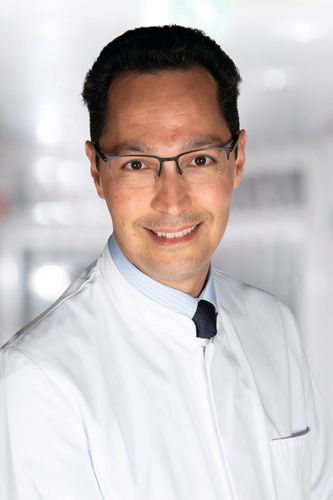
Surgical procedures range from simple suture closure to reinforcement of the abdominal wall using synthetic or biological mesh. We are pleased to discuss this topic with the renowned specialist Assoc. Professor Priv.-Doz. Dr. Emanuel Sporn from Vienna. Prof. Dr. Sporn is a specialist in general surgery, visceral surgery, and vascular surgery; he specializes in hernia surgery and is therefore highly knowledgeable about this condition.
Professor Dr. Sporn, you run two private practices in Vienna and are a recognized expert in the field of hernia surgery. What are some of the most common procedures you perform?
Prof. Sporn: In the field of hernia surgery, we most frequently deal with inguinal hernias and umbilical hernias. The lifetime risk of developing an inguinal hernia is about 27% for men and 3% for women. For example, approximately 200,000 inguinal hernia surgeries are performed in Germany each year. Whenever possible, inguinal hernias should be treated using minimally invasive techniques—that is, without a large abdominal incision—since these methods allow patients to resume normal activities more quickly. The long-term results in terms of freedom from symptoms are also impressive. These techniques require a high level of expertise to achieve consistently good results. Laparoscopic inguinal hernia surgery (TAPP) is therefore one of my favorite procedures; I have refined and perfected it accordingly and perform it very frequently.

How can one visualize a hernia, that is, a rupture in the abdominal cavity?
Prof. Sporn: The abdominal cavity, with all its organs, is held together by the abdominal wall, which consists of various layers of muscle and connective tissue. There are several so-called predisposed sites where weakness in the abdominal wall can occur, leading subsequently to the development of a hernia. This is very often the groin area: on the one hand, this area has relatively weak muscles; on the other hand, it is located in the lower part of the abdomen, which—due to gravity—is exposed to greater pressure from organs such as the intestines. Men are particularly affected because, in male embryos, the testicles migrate from the abdominal cavity through the inguinal canals into the scrotum, which is why men have an additional weakening of the abdominal wall in this area. Inguinal hernias occur about nine times more frequently in men than in women.
Another weak spot is the navel, since there are no muscles in the midline of the abdominal wall and a small opening often remains where the umbilical cord passed through. This opening can widen with weight gain or, in particular, during pregnancy, which then leads to the development of an umbilical hernia. Additional weak spots can develop in the scar area of the abdominal wall following abdominal surgery—this is referred to as an incisional hernia.
A special type of hernia is a hiatal hernia. In this condition, the opening in the diaphragm through which the esophagus passes becomes enlarged. As a result, part of the stomach can be pushed into the chest cavity, which may require surgical treatment if certain symptoms are present.

How can a person tell if they have an abdominal hernia?
Prof. Sporn: Most patients notice a bulge in the abdominal wall that becomes more prominent when coughing or straining and often disappears when lying down. The presence of a hernia is not necessarily associated with symptoms. Patients often report a pulling sensation, pressure, or pain in the area of the hernia. Other symptoms may include digestive problems.
Can someone be predisposed to hernias?
Prof. Sporn: Yes, some patients have a predisposition to hernias due to tissue weakness. Other risk factors include being overweight and frequent straining of the abdominal muscles (such as due to constipation or previous pregnancies).

Open abdominal surgery (for a hernia) is performed with or without a mesh. What is the difference here? What criteria are used to make this decision?
Prof. Sporn: The decision on whether to use a mesh or not depends on various factors. One of the most important criteria is the size of the hernia or its hernial orifice. We know that the recurrence rate—that is, the reappearance of a hernia—increases proportionally with the size of the hernial orifice following surgery without a mesh. Patients who are overweight or who engage in heavy physical activity benefit from the implantation of a synthetic mesh even in cases of smaller hernias.
Professor Dr. Sporn, thank you very much for helping us better understand the topic of hernias and today’s treatment methods!
Associate Professor and Priv.-Doz. Dr. Emanuel Sporn, a specialist in general surgery, visceral surgery, and vascular surgery, is an expert in abdominal and thoracic surgery in Vienna, where he runs two private practices. His areas of expertise include hernia surgery, breast cancer surgery, gastrointestinal surgery (including gastroscopy and colonoscopy), oncological surgery, and gallbladder surgery. Prof. Sporn has also completed additional training, such as in vascular surgery. This training helps him, on the one hand, to better assess medical conditions and, on the other hand, to perform major surgeries on cancer patients more safely and to manage critical situations during a procedure more reliably.
ES290EC, LMG19 – (c) HENADZY, (c) chaiudom, (c) fotokitas – Adobe Stock.
Share this article
Doctor’s Offices at the Vienna Private Hospital
ProfileExpert Interviews
Read next
- Expert interview
Cardiogeriatrics: Significance and benefits in the context of hospital reform
Sep 21, 2026
Cardiogeriatrics: Significance and benefits in the context of hospital reform
Read more - Expert interview
Expert Interview with Professor Dr. Amadeus Hornemann, MPH
Sep 18, 2026
Prof. Amadeus Hornemann on Precision Medicine in Gynecology: Modern Surgery, New Techniques, Better Quality of Life
Read more - Expert interview
Expert Interview with Professor Dr. Konstantinos Anagnostakos
Sep 15, 2026
Prof. Anagnostakos on Painful Knee Replacements
Read more