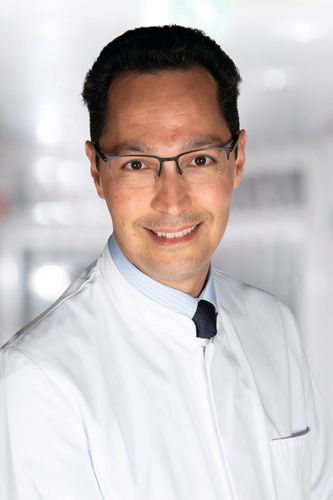
Expert Interviews
Interventional Procedures for Pain Conditions and Regenerative Medicine - Expert Interview with Dr. Kovačević on Behalf of Dr. Hartmann

Alexandra Pfitzmann ·
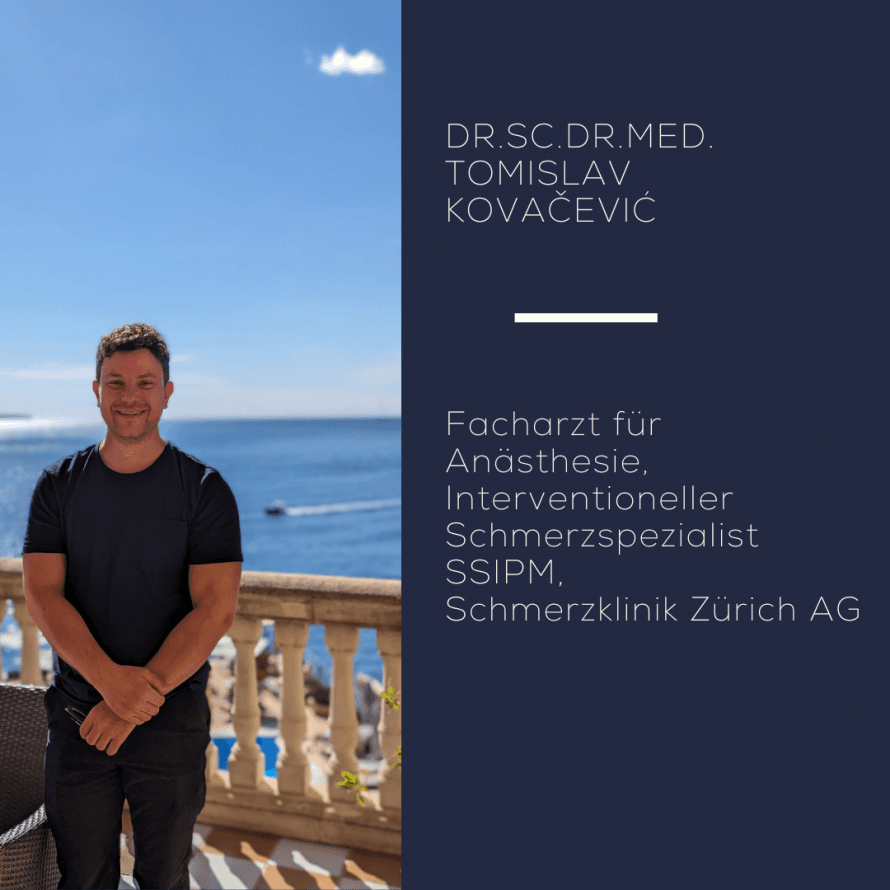
Dr. Tomislav Kovačević, M.D., is a renowned specialist in interventional pain management and anesthesiology with an impressive academic and clinical career. His expertise in this field is the result of a thorough medical education in Croatia, as well as postgraduate studies in neuroscience at the Neurological Institute of McGill University in Montreal, Canada. There, he specialized in particular in neuropharmacology and the use of psychotropic medications for depression, which earned him the title of Dr. sc.
After completing his residency in anesthesiology at renowned institutions such as the University Hospital of Zagreb and Charité Berlin, Dr. Kovačević gained extensive clinical experience, particularly in pain management. Before joining “Spitäler Schaffhausen” in Switzerland, he worked at the renowned Berlin Pain Clinic. As a member of the Swiss Society for Pain Medicine and the Swiss Society for Interventional Pain Medicine (SPS and SSIPM), he is actively involved in the further development and application of state-of-the-art treatment methods.
Schmerzklinik Zürich AG, led by Dr. Michael Hartmann, is known for its outstanding care, patient-centered approach, and holistic philosophy. As part of this multidisciplinary team, Dr. Kovačević contributes his expertise and passion for minimally invasive, pain-free procedures. The day clinic, equipped with seven beds, aims to improve the quality of life for patients with chronic pain by utilizing innovative technologies and procedures, thereby eliminating the need for long-term medication-based pain management.
The EPIONA Group’s acquisition of Schmerzklinik Zürich AG in November 2023 promises exciting developments in the field of pain medicine. This partnership will not only strengthen the synergies between the two institutions but also enable further improvements in patient care and the introduction of innovative solutions. Dr. Kovačević and his team of experts at EPIONA are tirelessly committed to providing sustainable, high-quality treatment for patients with chronic pain and continuously strive for excellence in medical care.
The editorial team at Leading Medicine Guide spoke with Dr. Tomislav Kovačević specifically about interventional procedures for pain conditions and regenerative medicine.
Interventional procedures for pain conditions and regenerative medicine represent a promising approach to alleviating pain and promoting the body’s natural healing process. In today’s medical landscape, these techniques are gaining increasing importance as they can offer a minimally invasive alternative to conventional treatment methods. By combining minimally invasive procedures with regenerative therapies, these approaches aim not only to treat symptoms but also to address the underlying causes of pain.
The Difference Between Interventional Procedures for Pain Conditions and Traditional Pain Management Approaches.
“Interventional procedures differ from traditional pain management approaches in that they target the source of the pain directly. While traditional approaches often rely on the administration of medications such as pain relievers or anti-inflammatory drugs (including antidepressants, anti-epileptics), interventional procedures aim to relieve pain through targeted interventions such as injections, nerve blocks, or minimally invasive surgical procedures. “These procedures can often take effect more quickly, have potentially fewer side effects, and address the root cause, making them diagnostically significant as well as therapeutic,” explains Dr. Kovačević at the beginning of our conversation. This can help minimize the risk of side effects, as lower doses of medication can be used and the effect is limited to the affected area.
Another advantage is that interventional procedures can often deliver immediate results. Many patients report immediate pain relief or an improvement in their symptoms after treatment. This can lead to a rapid improvement in quality of life and enable patients to resume their daily activities. Furthermore, interventional procedures can also help reduce dependence on strong painkillers. By directly treating the cause of the pain, they can help patients become less reliant on pain-relieving medications. This can not only reduce the risk of medication dependence and abuse but also minimize side effects and complications associated with long-term use of painkillers.
Regenerative medicine and stem cell therapy offer promising approaches to treating osteoarthritis, a degenerative joint disease often associated with pain, stiffness, and loss of function.
“Regenerative medicine (including PRP, ACP, and autologous blood therapy) and stem cell therapy (including MSC and BMA) offer innovative approaches to treating orthopedic conditions such as osteoarthritis and injuries to the musculoskeletal system. Regenerative medicine uses biological materials such as growth factors to promote the healing and regeneration of damaged tissue,” says Dr. Kovačević.
One example of the application of these therapies for osteoarthritis is the treatment of the knee joint. In the treatment of knee osteoarthritis, the physician can harvest stem cells from the patient’s adipose tissue or bone marrow. These stem cells are injected into the affected knee joint; they have anti-inflammatory properties and can reduce inflammation in the joint. This can help relieve pain and improve the symptoms of osteoarthritis. Another approach to treating osteoarthritis is the use of growth factors. In this method, proteins can stimulate cell proliferation and tissue regeneration. They can be injected into the affected joint to promote the healing and regeneration of damaged tissue.
Clinical studies have shown promising results with the use of stem cells and growth factors to treat knee osteoarthritis. Patients reported reduced pain, increased mobility, and decreased joint stiffness. These treatments therefore offer a promising alternative or supplement to conventional therapies such as pain relievers, physical therapy, or surgical procedures.
Interventional procedures and regenerative medicine can be used together to accelerate healing and relieve pain in chronic pain conditions, particularly in musculoskeletal disorders such as osteoarthritis, herniated discs, or sports injuries.
Interventional procedures such as injections of local anesthetics, corticosteroids, or hyaluronic acid can help relieve acute pain and reduce inflammation. They can also aid in diagnosing the causes of pain and are often part of a multimodal approach to pain management. Regenerative medicine, on the other hand, aims to promote the body’s natural healing processes and to repair or regenerate damaged tissue. These approaches can support the regeneration of cartilage, muscles, tendons, or ligaments and help restore the function of the affected tissue. Dr. Kovačević explains: “The combination of interventional procedures and regenerative medicine can have synergistic effects to accelerate healing and more effectively relieve pain in chronic pain conditions. For example, interventional procedures such as injections for pain relief can be combined with regenerative techniques like ACP to promote the repair of damaged tissue.”
Selecting the most appropriate intervention for a patient with pain conditions or orthopedic disorders.
“Selecting the most appropriate treatments for a patient depends on various factors, including the cause of the pain or orthopedic condition, the severity of the symptoms, the patient’s individual medical history, and personal preferences. A physician will conduct a thorough evaluation and develop a personalized treatment strategy based on the patient’s specific needs,” explains Dr. Kovačević
Injections of local anesthetics and corticosteroids are frequently used to treat inflammatory conditions such as arthritis or herniated discs. They can reduce inflammation and relieve acute pain by blocking nerve transmission or inhibiting the inflammatory response. Hyaluronic acid injections are often used in patients with osteoarthritis, particularly in joints such as the knee, hip, or shoulder. Hyaluronic acid is a natural component of synovial fluid and can improve joint lubrication and facilitate joint mobility. Nerve blocks can be used for certain pain conditions, such as nerve compression syndromes or neuropathic pain, to block pain signals and relieve pain. Radiofrequency ablation aims to interrupt pain signals through targeted thermal destruction of nerve fibers. It is frequently used in patients with chronic back pain or joint pain when other conservative treatments have failed. Acupuncture can be effective for a variety of pain conditions, including musculoskeletal pain and neuropathic pain. By stimulating specific acupuncture points, pain can be relieved and the body’s own healing processes can be supported.
In recent years, significant advances in regenerative medicine have expanded the potential for treating musculoskeletal problems in innovative ways.
“In recent years, there have been significant advances in regenerative medicine, particularly with regard to the development of new therapies and technologies for tissue engineering, the production of biomaterials, and the improvement of stem cell therapy. These advances open up new possibilities for treating musculoskeletal problems and could help improve the effectiveness and sustainability of treatments,” reports Dr. Kovačević. In addition, biological stimulators such as growth factors and cytokines play a crucial role. They can stimulate cell proliferation and tissue regeneration and are often used in combination with other regenerative therapies. Another important advancement is tissue engineering, which allows artificial tissues and organs to be produced in the laboratory. These can be used to replace or repair damaged tissue and have the potential to revolutionize treatment options for patients with musculoskeletal problems.
In addition, advances in imaging technology have improved the diagnosis and monitoring of musculoskeletal problems. State-of-the-art technologies such as MRI and ultrasound enable more precise diagnosis and treatment planning, which can ultimately lead to better outcomes for patients.
Clinical Trials and Research.
Dr. Kovačević comments: “Clinical trials and research play a crucial role in the further development of interventional procedures and regenerative medicine. Through carefully conducted studies, new treatment approaches can be evaluated, improved, and optimized to ensure their safety and efficacy. In the future, we can expect promising developments in areas such as personalized medicine, improved imaging techniques, and novel therapies for targeted tissue regeneration.”
Nanotechnology and biomaterials research play a central role in regenerative medicine, as they open up new avenues for treating tissue damage and diseases. By using nanoparticles and customized biomaterials, researchers can specifically intervene in the tissue regeneration process. One important area is the development of nanoscale biomaterials that can exhibit specific properties to promote tissue regeneration. By integrating nanoparticles into biomaterials, their mechanical, chemical, and biological properties can be enhanced to achieve better compatibility with the surrounding tissue. Another approach involves the targeted delivery of drugs or growth factors using nanoparticles. These can be engineered to transport drugs precisely to the location in the body where they are needed to promote regeneration. Furthermore, nanotechnology-based imaging techniques enable precise visualization of tissues and cells at the cellular and molecular levels, which is crucial for diagnosing tissue damage and monitoring the regeneration process.
3D printing of tissues and organs makes it possible to produce customized tissue replacements and organs. This technology has the potential to replace defective or damaged tissues and promote regeneration. Advances in nanotechnology and biomaterials research could certainly lead to new possibilities for tissue regeneration. In the future, we can therefore expect an increasing number of clinical trials and research projects aimed at further improving the effectiveness, safety, and efficiency of interventional procedures and regenerative medicine. These research efforts could lead to new therapies and treatment options that have the potential to improve the lives of millions of people worldwide.
Dear Dr. Kovačević, thank you very much for sharing your insights on interventional pain management!
Share this article
About the medical author
Alexandra Pfitzmann
Editor
Alexandra Pfitzmann – medical author: expert knowledge, professional articles and medical insights in the Leading Medicine Guide.
More about the medical author →Expert Interviews
Read next
- Expert interview
Cardiogeriatrics: Significance and benefits in the context of hospital reform
Sep 21, 2026
Cardiogeriatrics: Significance and benefits in the context of hospital reform
Read more - Expert interview
Expert Interview with Professor Dr. Amadeus Hornemann, MPH
Sep 18, 2026
Prof. Amadeus Hornemann on Precision Medicine in Gynecology: Modern Surgery, New Techniques, Better Quality of Life
Read more - Expert interview
Expert Interview with Professor Dr. Konstantinos Anagnostakos
Sep 15, 2026
Prof. Anagnostakos on Painful Knee Replacements
Read more