Expert Interviews
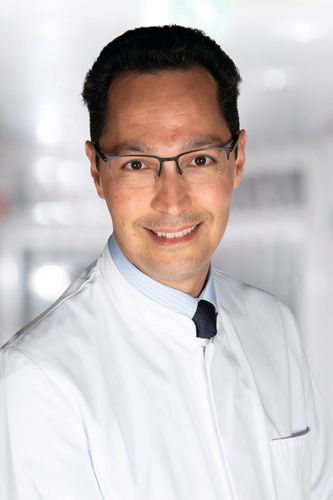
Expert Interview with PD Dr. med. Dr. h.c. Klaus Exner

Alexandra Pfitzmann ·
PD Dr. med. Dr. h.c. Klaus Exner is a renowned specialist in the field of aesthetic and plastic surgery with an impressive career that extends far beyond his professional expertise. In addition to his work at state-of-the-art clinics in Frankfurt am Main and Oberursel, he has made a name for himself in the international medical community—both through his innovative surgical techniques and his significant scientific contributions. But what truly sets Dr. Exner apart is his tireless humanitarian commitment, which has taken him to some of the world’s poorest regions for decades.
Dr. Exner’s humanitarian work is deeply rooted in his professional and personal journey. Since the 1980s, he has been dedicated to helping people in developing countries through plastic surgery procedures that open up new prospects for their lives. This mission has taken him and his team to Myanmar, Tanzania, Paraguay, and Ukraine, among other places. There, he operates—often under difficult conditions—on children and adults with severe congenital abnormalities such as cleft lip and palate, burns, and tumors. In doing so, he regularly sacrifices his free time to volunteer his services to treat people who would otherwise have no access to medical care. Particularly noteworthy are his repeated missions to Ukraine, where he not only provides medical assistance but also works closely with local doctors.
For his extraordinary service, he was awarded the Order of St. Nicholas by the Orthodox Church and received an honorary doctorate from the Danylo Halyzkyi National Medical University in Lviv. This commitment demonstrates that Dr. Exner is not only an outstanding surgeon but also possesses a deep human understanding of the hardships faced by others. His humanitarian missions are of great significance to the people he helps. They reflect his motto, “To help others,” and have already improved the lives of thousands. The gratitude he receives for this work and the lasting impact of his missions are proof that medical expertise and human compassion can together have a powerful effect. The editorial team at Leading Medicine Guide spoke with Dr. Exner about this extraordinary commitment and learned many details about his humanitarian work.

Humanitarian aid is an essential tool for supporting people in emergency situations caused by natural disasters, conflicts, epidemics, or other crises. It aims to meet acute human needs such as food, water, medical care, and shelter, and plays a crucial role in alleviating suffering and protecting human dignity. Given the increasing frequency and intensity of crises on a global scale, the need for humanitarian aid is becoming ever more urgent. It is often the first and most immediate response to disasters and contributes significantly to stabilizing societies in extreme situations.
As a plastic surgeon, humanitarian work is particularly close to Dr. Klaus Exner’s heart. His decision to dedicate himself to this cause is deeply rooted in his past and his personal history.
“I grew up in a family of doctors, and it was clear from an early age that I, too, would follow this path. My parents, both doctors, exemplified what it means to devote oneself wholeheartedly to medicine and the well-being of patients. This fundamental attitude had a lasting impact on me and has guided me throughout my life. My interest in medicine, and specifically in plastic surgery, continued to develop when I began my medical studies in Marburg. My father, the orthopedic surgeon Prof. Dr. Gerhard Exner, had also studied at this university, and in 1966 (when I was a high school senior), he noticed that there were no accessible entrances for people with disabilities. He encouraged me at the time to look after two students who used wheelchairs. For me, this meant driving to the dormitory very early in the morning, helping the two of them wash and get dressed, and then accompanying them to their lectures. I built wooden ramps so that the entrances would be accessible by wheelchair. It was all a bit complicated and challenging, but being able to help brought me joy. Not long after that, in 1969, the Konrad Biesalski House opened its doors on the Schlossberg in Marburg—the first accessible student residence in Germany. And because of that, the University of Regensburg was built as Germany’s first accessible university,” Dr. Exner explains at the start of our conversation, before going on to describe his early experiences with aid work in developing countries:
“Even while I was a student, I realized the importance of not only being technically skilled but also developing a deep understanding of patients’ circumstances. In 1972, I passed my state examination in Freiburg and heard about the opportunity to actively work and help in the Third World by organizing an association. This led to my first experience abroad as a development aid worker in Bolivia, where I spent a year primarily supporting the work of the humanitarian organizations Terres des Hommes and Misereor. These organizations had established base camps on the edge of the Amazon and in various small villages, which the medical team would visit once a month. The decisive turning point in my career came in 1980, when I worked at Markus Hospital in Frankfurt under the direction of Prof. Dr. Gottfried Lemperle. Prof. Dr. Lemperle founded Interplast Germany, an international organization that provides plastic surgery in developing countries, modeled entirely after the American organization Interplast, which he had become familiar with earlier. I was involved from the very beginning. My first trip on this mission took me to Bolivia, and from that point on, I was hooked—in a good way. Since then, I have participated in countless missions (61 missions since 1983) in Africa, Asia, and South America. I’ve undertaken many of these with the nonprofit association Pro Interplast, which is based in Seligenstadt. We’ve also accomplished a great deal with the organization Big Shoe. The company Medical Intervention Team, based in Frankfurt am Main, has taken me to Myanmar 12 times; in recent years, they’ve specialized in Ukraine, where I’ve also been on the ground with them. “Unfortunately, due to the political situation and the associated entry ban, Myanmar is not accessible even for humanitarian work, which is an absolute disaster.”
pro interplast Seligenstadt provides direct support in developing countries by sending teams of doctors during their vacations, equipped with all necessary devices, bandages, and medications, to perform free surgeries on people who would otherwise have no way of being cured of their often painful or life-threatening illnesses. If treatment cannot be performed on site, pro interplast brings patients to Germany in exceptional cases and covers the necessary expenses here as well. The aid projects are funded entirely by donations and allocations from fines. Membership dues (at least 36 euros annually) cover the minimal administrative costs of 2–3%, ensuring that 100% of the donations go toward humanitarian work. This is made possible through the efforts of volunteers and support in the form of in-kind donations.
Donation account for bank transfers:
Volksbank Seligenstadt e.G.
IBAN: DE24 5069 2100 0000 2802 08
BIC: GENODE51SEL
Please provide us with your full name and address so that we can send you a donation receipt. Your information will not be shared with third parties.
pro interplast Seligenstadt – Association for the Promotion of Medical and Social Aid in Developing Countries e.V. is registered with the Offenbach Local Court — the registry court — under association registry number 4539 and is recognized by the Offenbach am Main II Tax Office as a “nonprofit and charitable” organization and is authorized to issue donation receipts.
“Humanitarian work is a matter close to my heart. It is an opportunity to pass on the gift of my medical knowledge to those who need it most. Even after setting up my practice in Frankfurt and Oberursel, I have never given up this work. There is no greater reward than seeing people start a new life after a successful procedure.”
Successfully carrying out a medical mission abroad requires a high degree of organization.
“I structure the respective missions in collaboration with the aforementioned organizations and companies. To do this, I form teams—which, for example, corresponds to the basic structure of Interplast Germany—and use personal contacts in the respective country to identify a mission location. These contacts develop over time through the many missions we’ve already carried out and the exchanges in many different countries—whether Tanzania or Cambodia, where I was most recently during Easter 2024. Fortunately, as these contacts grow closer over time, the administrative burden is reduced, and with it, the associated costs. As for patient selection, this is always quite individual. On my most recent trip to Cambodia, there was a highly dedicated social worker there who is commissioned by the Vatican to care for poor families. As a result, she is familiar with cases of illness that particularly require treatment, which she was able to present very effectively through documentation accompanied by photos. Of course, it’s helpful when someone is already familiar with the local situation. However, during a first visit to a country, you often have to get your bearings first, and then, for example, church organizations help with patient recruitment via radio or advertisements and also take care of transportation. “Once you’ve been there more often, many organizational aspects naturally become easier, and the missions become increasingly effective as a result,” says Dr. Exner, explaining the approach.
During an overseas mission, a wide variety of conditions are treated.
“As the name ‘Interplast’ suggests, the focus is on plastic surgery—specifically, congenital malformations in children, such as cleft lips, cleft jaws, and cleft palates, as well as hand malformations. We always strive to treat the children in a single operation. In Ukraine, there are numerous cases of children with congenital drooping eyelids, which means that they usually cannot open one eye properly; as a result, they often develop torticollis because they constantly have to turn their heads, and of course they suffer greatly from the cosmetic issue. Then there are a great many cases resulting from accidents, especially burns. Here we often deal with the most severe burn contractures, even in children who were often not treated correctly—for example, when the chin has fused to the chest or they can no longer move their arms properly because everything has shrunk together. In Germany, we have highly specialized departments with burn units where patients are cared for every day and skin grafts are performed or artificial skin is used. None of this exists in poor regions. We also deal with all kinds of accident-related injuries, whether broken bones or open wounds, as well as tropical diseases that manifest on the skin’s surface,” says Dr. Exner regarding the various conditions treated on site, adding:
“Over time, the range of medical specialties has expanded, so that orthopedic surgeons, ophthalmologists, and even oral and maxillofacial surgeons are often on site to help. We also sometimes deal with tumors that cause large hemangiomas on the skin’s surface. Here, everything depends on the team—what’s feasible, including in terms of time. After all, such a planned mission lasts a maximum of 2–3 weeks on average. Of course, it’s common to see patients you’ve treated once again years later. For example, there was once a boy in Tanzania who limped in with two clubfeet. He was wearing large rubber boots so his feet would have enough room. We operated on the boy, and we returned a year later. He ran cheerfully toward us and was very proud that he could wear sneakers. Something like that naturally stays with you.”
Medical standards and local conditions are very different from what we’re used to in Germany.
“Through our repeated missions and collaboration with local doctors, we’ve been able to gradually improve medical care. This is an important aspect and a key goal of my work: In addition to providing emergency care, I’m always committed to training local medical staff and empowering them to work independently in the long term. This isn’t always easy, as it requires a delicate touch—sometimes due to cultural and hierarchical factors. Local conditions are also often challenging from a hygiene perspective. On top of that, there are political challenges. As I mentioned at the beginning, Myanmar has been inaccessible since the military junta took power, and it looks as though the civil war will continue. One could say that the current medical situation is similar to that of 1947. And only 2% of the staff remains in the hospitals. In Ukraine, hospitals are being upgraded by the West, but mainly for war victims, which has also given rise to an economic sector—for example, for companies that manufacture prosthetics. I notice this clearly because it has become really difficult to treat “normal” children without war injuries.
As for the necessary medical equipment, the anesthesia team always has to bring everything with them—such as a bronchoscope—so that there are no unpleasant surprises on site and the patient being treated is properly monitored. Thus, the anesthesia team has clear guidelines with checklists for the specific surgeries to be performed. Instruments usually have to be purchased at great expense using donations, though some can also be borrowed. As for the local medical staff, we naturally always try to involve them in our work. But even here, the concept of “work-life balance” is taking hold, and empathy is quite limited, so the interest here is often motivated more by financial gain than by humanitarian concerns. I get to choose my own team. Cambodia was particularly time-consuming in this regard recently, because from December 2023 to April 2024, I spent about 1–2 hours a day on administrative work to ensure everything was well coordinated. For example, Cambodia required every team member to have all their certificates notarized. Normally, I put my team together within a week—and they always have to work well together. The bureaucratic work is usually the most tedious part. Sometimes there’s also mistrust on the ground from the families of the children scheduled for surgery, which you have to take into account. The coordinated missions always take place during my personal vacation time, and about 9–10 days of surgery are feasible during that time—though this is already very exhausting, and ultimately, unfortunately, you don’t have all that many vacation days.
As for the costs, Interplast secures donations and also conducts fundraising. The Cambodia fundraising campaign cost approximately 20,000 euros. Airfare (economy class) is high, and hotel costs are kept as low as possible (though we doctors pay for our own accommodations on days when we are not working). Every doctor is expected to practice frugality. Unfortunately, we’ve noticed that the willingness to donate is generally declining.”
Outlook
“We mustn’t forget that there are many medical problems even without war. If we look at Myanmar, we see a complete catastrophe because medical care has dropped to zero. Ultimately, we don’t want to get involved in politics; rather, we prioritize individual assistance for each person. I like to live by my personal motto: ‘I throw a stone somewhere into the lake, and in the end, the ripples reach everywhere.’ And then it’s true that success is rewarding. I’m happy when I see that the children and their families are happy and have received good treatment. That’s motivating. Unfortunately, there are still blank spots on the world map where medical aid is urgently needed. “We see ourselves a bit like peace ambassadors and are giving something back. After all, we all know where some of the textiles in our stores come from and who picks the coffee for us,” explains Dr. Exner, bringing our conversation to a close.
Share this article
About the medical author
Alexandra Pfitzmann
Editor
Alexandra Pfitzmann – medical author: expert knowledge, professional articles and medical insights in the Leading Medicine Guide.
More about the medical author →Expert Interviews
Read next
- Expert interview
Cardiogeriatrics: Significance and benefits in the context of hospital reform
Sep 21, 2026
Cardiogeriatrics: Significance and benefits in the context of hospital reform
Read more - Expert interview
Expert Interview with Professor Dr. Amadeus Hornemann, MPH
Sep 18, 2026
Prof. Amadeus Hornemann on Precision Medicine in Gynecology: Modern Surgery, New Techniques, Better Quality of Life
Read more - Expert interview
Expert Interview with Professor Dr. Konstantinos Anagnostakos
Sep 15, 2026
Prof. Anagnostakos on Painful Knee Replacements
Read more