Expert Interviews
“Obesity Is Not Someone’s Own Fault!” An Interview with Prof. Dr. Ralph Peterli

Alexandra Pfitzmann ·
In our part of the world, many people want to lose weight. This is often achieved through increased physical activity and changes in eating habits. But what happens when weight gain gets out of control? What if, despite reducing calorie intake, the scale simply doesn’t budge—in other words, when being overweight turns into a chronic disease? The Leading Medicine Guide spoke with Professor Dr. Ralph Peterli, an experienced surgeon specializing in the entire abdominal cavity and, in particular, bariatric treatments. Since he is also one of the leading experts on diabetes, people affected by obesity can rely on comprehensive, all-around care that combines optimal counseling with minimally invasive surgical procedures. Prof. Dr. Ralph Peterli heads the largest bariatric reference center in northwestern Switzerland at the Clarunis University Abdominal Center in Basel—and has conducted extensive research on obesity and diabetes. Together with his team, he is a highly competent and empathetic point of contact.
It seems unfair. Some people can eat as much as they want without gaining weight, while others gain weight even though they supposedly eat very little. When weight gain becomes pathological, it is referred to as obesity. The word has its origins in the Latin term *adeps*—meaning “fat.” Obesity, or pathological overweight, is a nutritional and metabolic disorder, also known as adiposity or fat addiction.
The Body Mass Index (BMI) is used as a basis for calculating body weight. The BMI is a measure used to assess a person’s weight in relation to their height (kg/m²). “BMI is not a perfect measure, but it is a simple, quantifiable one,” comments Prof. Dr. Peterli, adding: “The so-called threshold lies between a BMI of 35 and 40. At this level, a person’s metabolism has already changed so significantly for the worse that it is virtually impossible to reduce weight on one’s own without external intervention.”
Our genes are contained in our DNA (deoxyribonucleic acid). These are long, fiber-like molecules that make up our chromosomes. They carry the code for the production of all proteins and, consequently, for every aspect of life’s processes. Our genes are like a blueprint—they determine our hair and eye color and how tall we’ll grow, and they’re involved in the production of proteins and hormones, which in turn determine our metabolism and our eating habits.
The causes of severe obesity are varied
However, the fact is that you cannot always blame an overweight person for having eaten too much in the past. This is because the causes of severe obesity are diverse: “That is why obesity is also referred to as a chronic disease, since those affected are simply not at fault. Rather, it is a matter of genetic predisposition. Genetics account for the primary cause in approximately forty to eighty percent of cases. This has also been confirmed by studies involving parents and twin studies. An individual’s lifestyle then plays a rather secondary role,” explains Prof. Dr. Peterli.
The specialist in bariatric surgery explains very succinctly what happens to the body during a diet—or even a radical weight-loss regimen—and why such an approach usually doesn’t work and the number on the scale simply hardly budges: “Anyone who goes on a radical diet puts their body into a state of starvation. The body desperately clings to every kilo in order to survive,” says Prof. Dr. Peterli. “There’s an interesting study showing that children born to underweight mothers at the end of World War II are at a higher risk of developing obesity in adulthood. It seems that, out of fear of famine, the body stores everything and clings unconditionally to fat,” he reports.
An Important Role: Diet in Childhood
Anyone who eats a lot of sugary and fatty foods as a child—and generally consumes more calories than they burn—will naturally gain weight and find it difficult to lose it again. “Of course, overall diet also plays a major role in adulthood. Another frustrating issue here is the misleading labeling that is rampant in the food industry. For example, many people fall for the belief that agave syrup is a good sugar substitute. That’s not entirely true, because ultimately, agave syrup is also fructose. And fructose is sugar!” says Prof. Dr. Peterli. Fructose cannot be broken down by the body and goes straight into fat stores.
Obesity Is Not One’s Own Fault
As people age, they typically gain weight steadily. This is a normal process. For people of normal weight, this isn’t much of a problem because it can be counteracted with simple measures. For obese patients, however, weight gain is often so advanced that only outside help can bring about a change. “Since 2011, metabolic or bariatric surgeries have been covered as mandatory benefits by statutory health insurance in Switzerland when a person is extremely overweight. This means that obesity is recognized as a disease in Germany—which is not the case in Switzerland, for example,” said Professor Dr. Peterli regarding the legal situation.
Surgery is not solely about weight loss
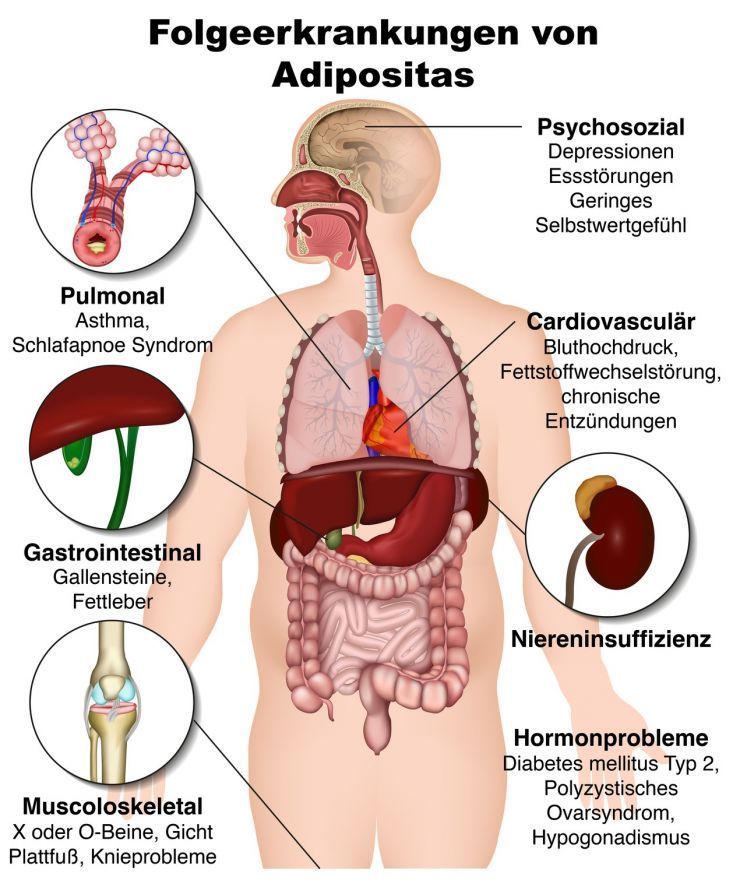
People who are severely overweight put a strain on their entire body. Just imagine what the bones and joints alone have to endure to bear the entire load. “Weight loss not only relieves the skeletal system but also helps in the treatment and prevention of cardiovascular diseases and type 2 diabetes, a chronic metabolic disorder in which the body produces too little insulin. It also reduces the risk of sleep apnea. Weight loss can save lives,” warns Prof. Dr. Peterli.
In Germany, more than seven million citizens were treated for diabetes mellitus in 2006, with type 2 diabetics in particular needing to take increasing amounts of insulin. As a result, type 2 diabetes is the most expensive chronic disease, costing German health insurance funds approximately 18 billion euros annually.
Various surgical methods to help patients lose excess weight in the long term
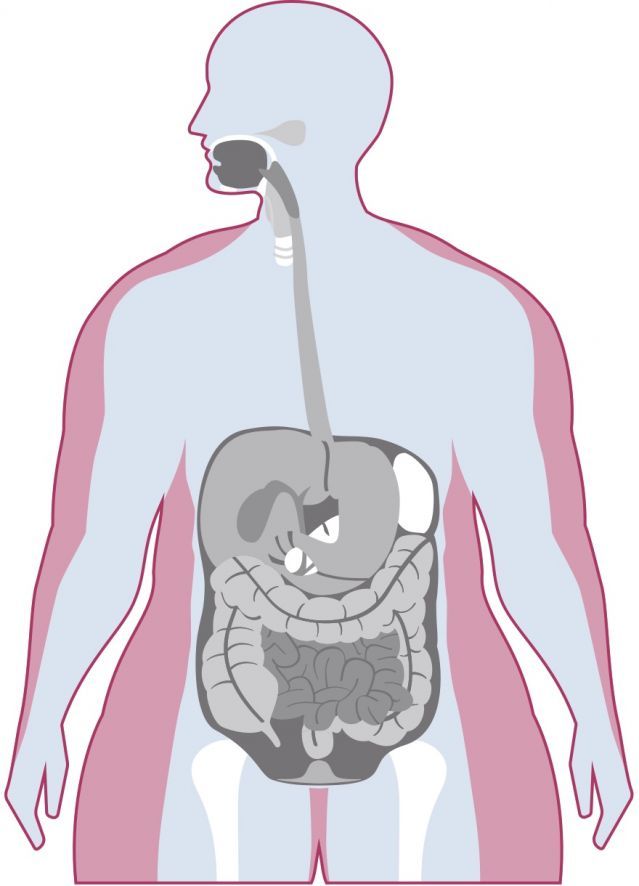
“The traditional gastric band has now become obsolete,” Prof. Peterli replies when asked about the various surgical methods. “A gastric band is only about 10% successful because it merely slows down food intake. The gastric bypass has been performed for over fifty years and is now a standard laparoscopic procedure. In this procedure, the passage of food through the gastrointestinal tract is rerouted via two artificially created connections, allowing a large portion of the stomach and parts of the small intestine to be bypassed,” explains Prof. Dr. Peterli.
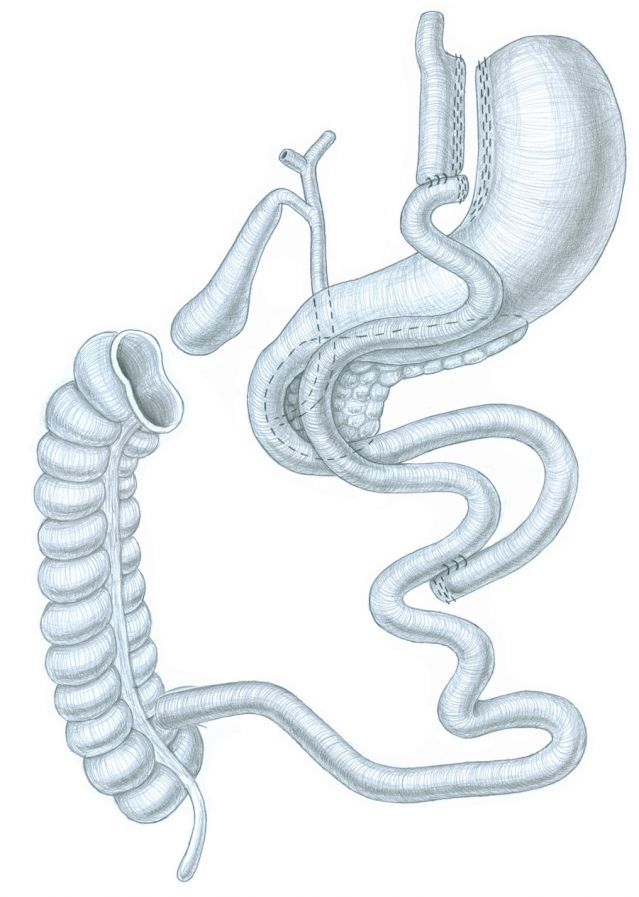
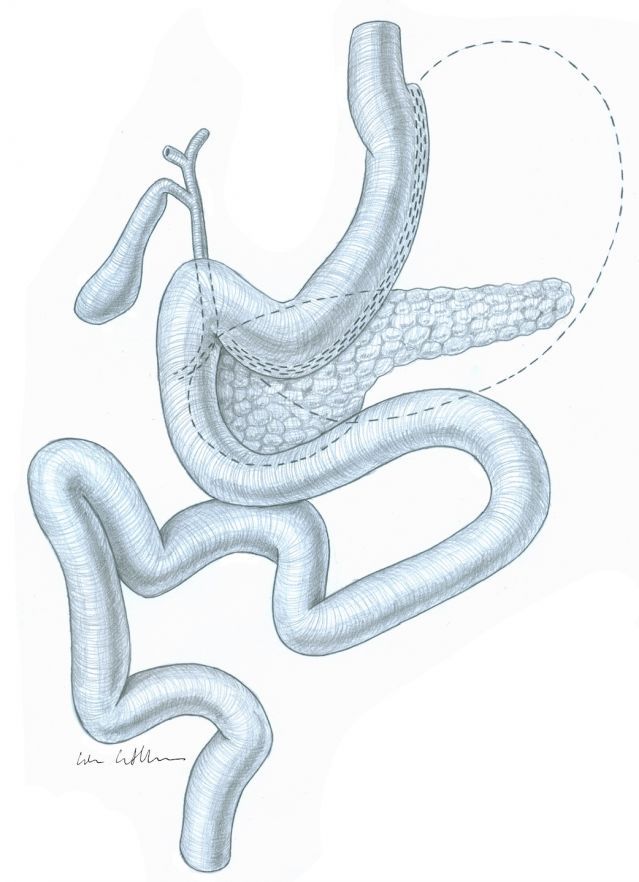
“The sleeve gastrectomy is the alternative to gastric bypass surgery, in which the stomach is simply drastically reduced in size so that, in principle, less food can be consumed,” Prof. Peterli clarifies. If the sleeve gastrectomy or gastric bypass is not successful, carefully selected patients may undergo what is known as biliopancreatic diversion surgery, a combination of bypass and sleeve gastrectomy procedures. In this procedure, the stomach is reshaped into a sleeve, and at the same time, most of the small intestine is bypassed, thereby shortening the digestive tract. “This type of surgery is more complex, but it results in approximately 80% weight loss. However, lifelong follow-up is necessary for the early detection of adverse side effects or deficiency symptoms,” explains Prof. Dr. Peterli.
Which Surgery for Which Patient?
To ensure the right surgical method is chosen, patients undergo various preparatory stages once all conservative treatment options have indeed failed. “First, an interdisciplinary evaluation takes place at the hospital. This means the patient undergoes a comprehensive evaluation by specialists from various fields (dietitians, metabolic specialists, psychiatrists, and, if necessary, cardiologists and pulmonologists). Then, during a detailed consultation, the advantages and disadvantages of the various surgical methods are explained to the patient. Statistically speaking, approximately 85% of gastric bypass surgeries are performed in Switzerland and 15% are sleeve gastrectomies—in Germany, the ratio is reversed,” explains Prof. Dr. Peterli with a slightly critical expression. This is because sleeve gastrectomy is ultimately the simpler procedure to perform. However, gastric bypass surgery is the more effective option and, for example, much more successful in patients with reflux, if only because it allows for the simultaneous treatment of a hiatal hernia. “The negative effects often associated with bypass surgery are frequently linked to inadequate postoperative care,” criticizes Prof. Dr. Peterli.
As the then-president of the Swiss Society for Bariatric Surgery, Prof. Dr. Peterli, together with representatives of the Swiss Society for Endocrinology and Diabetes, was able to secure approval for patients with a BMI of 30–35 and difficult-to-control diabetes mellitus (diabetes) to undergo surgery in Switzerland.
When selecting the surgical method, Prof. Dr. Peterli places great emphasis on making the optimal decision for each individual. Both bypass and sleeve gastrectomy surgeries are performed laparoscopically. Both procedures result in a beneficial change in metabolism in addition to a reduced food intake.
Simple Preventive Measures
In principle, anyone who is not yet obese can influence their weight through their behavior. The classic approaches are what work here: more exercise, healthier eating. However, Prof. Dr. Peterli explains this in plain language: “Please avoid sugar and sugary foods as much as possible. The food industry should really be sued, especially regarding the ingredients in products for children. Advertising leads people to believe, for example, that a children’s candy bar is healthy, when in fact it consists of unhealthy ingredients. According to the WHO, children should consume no more than 10 g of sugar per day, and adults no more than 25–50 g. Most so-called ‘healthy forms of sugar,’ such as agave syrup, coconut blossom sugar, maple syrup, or pear syrup, are no good, as they ultimately consist only of fructose. “Only the sweeteners xylitol and erythritol can be used here,” explains Prof. Dr. Peterli, who further recommends: “Always take your time when preparing meals and while eating. Avoid ready-made meals and reduce your carbohydrate intake. Of course, sugary drinks and alcohol should only be consumed in moderation. But in the end, what really matters is this: You should be able to enjoy your food and not deprive yourself.”
Thank you very much, Professor Dr. Peterli, for this interesting and insightful information! You can contact Prof. Dr. Peterli directly via his profile page on the Leading Medicine Guide.
Share this article
About the medical author
Alexandra Pfitzmann
Editor
Alexandra Pfitzmann – medical author: expert knowledge, professional articles and medical insights in the Leading Medicine Guide.
More about the medical author →Expert Interviews
Read next
- Expert interview
Cardiogeriatrics: Significance and benefits in the context of hospital reform
Sep 21, 2026
Cardiogeriatrics: Significance and benefits in the context of hospital reform
Read more - Expert interview
Expert Interview with Professor Dr. Amadeus Hornemann, MPH
Sep 18, 2026
Prof. Amadeus Hornemann on Precision Medicine in Gynecology: Modern Surgery, New Techniques, Better Quality of Life
Read more - Expert interview
Expert Interview with Professor Dr. Konstantinos Anagnostakos
Sep 15, 2026
Prof. Anagnostakos on Painful Knee Replacements
Read more