Expert Interviews
Orthopedic Pioneer Dr. Ottersbach: Measurable Successes in Joint Replacement Surgery
Claudia Dechamps ·
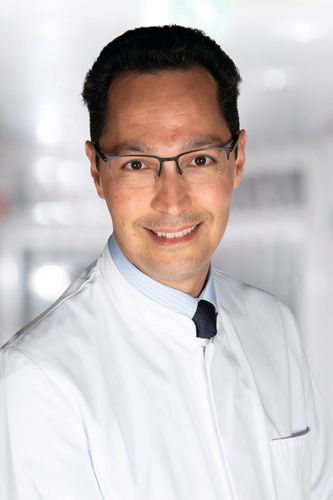
Dr. Andreas Ottersbach, M.D., is a highly specialized orthopedic surgeon who serves as chief physician and director of the Orthopedic Clinic at the Upper Valais Hospital Center in Brig. He began implementing digitalization in the operating room early on, making the hospital center’s orthopedic department a pioneer in the field. This enabled him to implement and establish optimized surgical standards characterized by high precision and process consistency. With his idea to develop an innovative leg positioning system—the RotexTable®—Dr. Ottersbach transformed orthopedic surgical procedures worldwide. In Switzerland, he is regarded as a pioneer of the Rapid Recovery™ fast-track concept in orthopedics, which accelerates recovery processes and standardizes and continuously improves all procedures related to joint replacement.
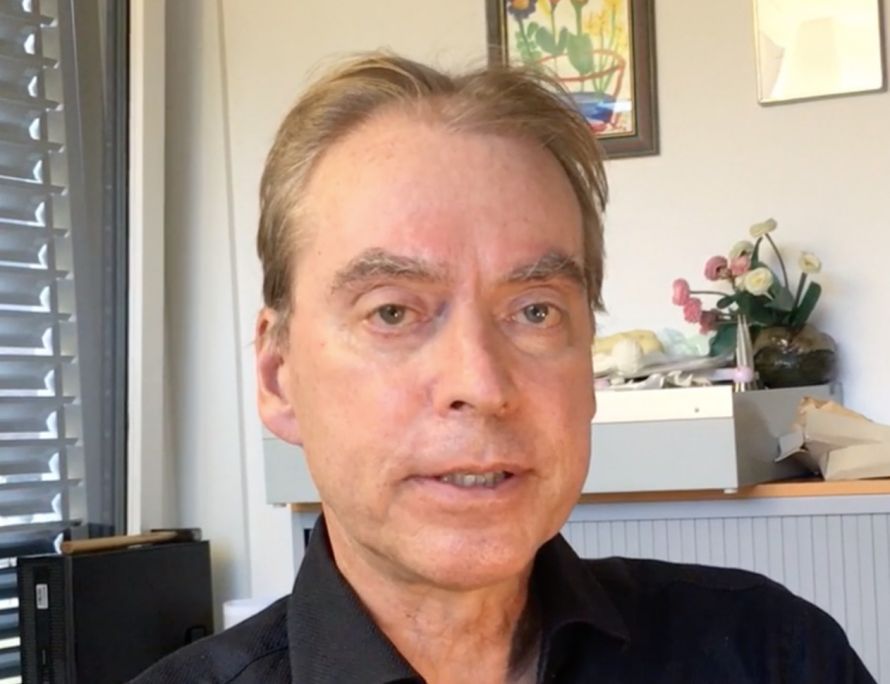
Leading Medicine Guide: Dr. Ottersbach, your enthusiasm for new things must be innate. At first, it was sports that fascinated you. Your passion for technical and digital developments in medicine came later, didn’t it?
Dr. Andreas Ottersbach: Yes, when I was younger, I was a surf instructor, and in 1986, in my early twenties, I competed in the World Surfing Championships in Italy. For five years, while studying medicine in Münster, I owned and ran the Diemelsee Surf and Sailing School in the Sauerland region; I was born in Bochum. I also dabbled a bit in church music and can call myself an assistant cantor.
Since I joined the Upper Valais Hospital Center in Brig in 2005—where I’ve headed the orthopedics department since 2008—digitalization in orthopedics, especially in the surgical field, has been a source of fascination for me. Computers have also permanently transformed our daily medical practice. Today, modern IT is indispensable in the operating room, and I use it with enthusiasm. It enables a whole new level of precision, reliability, and accuracy. Our work is meticulously documented, which makes our successes measurable. You can see this in detail in the Swiss Implant Registry (SIRIS).
Leading Medicine Guide: What does SIRIS say about the success of your work in orthopedics at Spital Oberwallis?
Dr. Andreas Ottersbach: Compared to the rest of Switzerland, Spital Oberwallis achieves above-average results in both knee replacement and hip replacement surgeries. We perform significantly fewer revisions—that is, repeat replacement surgeries—than the Swiss average. This means we have significantly fewer complications associated with our implant surgeries. Furthermore, SIRIS has confirmed that our results have been continuously improving.
Leading Medicine Guide: Could you explain in a bit more detail why that is? These good results don’t happen overnight; there’s a lot of work behind them. Could you elaborate on that?
Dr. Andreas Ottersbach: In 2005, I introduced navigation technology for knee replacement surgery in Brig—a technique I’ve been using consistently since 1999. Compared to the hip, the knee is a more complex joint, which presents us surgeons with significant technical challenges. The implanted joint must fit precisely within the leg’s axis and allow for good mobility. With computer-assisted navigation technology, we work using infrared beams, transmitters, and cameras. This allows us to monitor the bone cuts with great precision and make ideal adjustments during the surgery. The fitting of the implant, as well as the mobility and tension of the ligaments, can be performed with the utmost precision, verified, and digitally recorded. The advantages are clear, and the numbers back this up: Patients experience fewer “complaints” overall, which is why our revision rate is below the Swiss average.
Leading Medicine Guide: In 2018, you pioneered the introduction of digital technology in the operating room—what does that mean for people who aren’t medical experts?
Dr. Andreas Ottersbach: A digital process manager supports us during surgeries. Even the smallest surgical steps are defined and standardized here. The next step is announced on a screen or via voice prompt, and the surgeon or a team member confirms it. This simultaneously generates a meticulous surgical protocol that we can review regularly. If improvements are needed or new medical findings emerge, the program can be revised and optimized. We broke new ground in Switzerland with intraoperative digitization, and other clinics have followed our example.
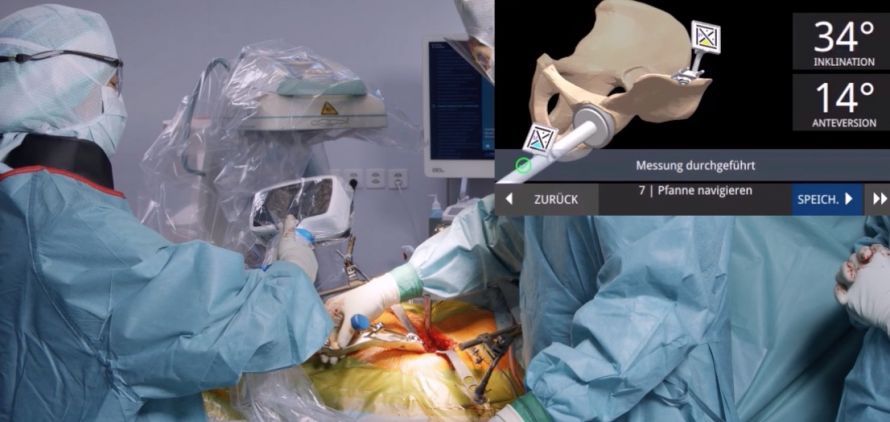
Leading Medicine Guide: Not only have you demonstrated strategic foresight in orthopedics with this initiative, but a special operating table designed based on your fundamental ideas is also being used worldwide in hip arthroplasty and arthroscopic hip surgery.
Dr. Andreas Ottersbach: Yes, that’s the RotexTable®, a specialized device for positioning the leg. It allows the surgeon to move and fine-tune the patient’s leg independently, without relying on assistance from the positioning staff. Thanks to its special design features, the surgeon can clearly feel and control tissue tension, which increases patient safety. One function of this ergonomic positioning aid—namely, lowering the leg—is electrically operated by the surgeon and is a unique selling point. The patient’s foot is positioned in a particularly ergonomic manner within the RotexShoe®. The concept behind this unique positioning aid is also based on my fundamental ideas. I have published extensively on this topic, and we regularly train surgeons from around the world in the entire technique, which I have named “Process-Optimized Minimally Invasive Total Hip Replacement.”
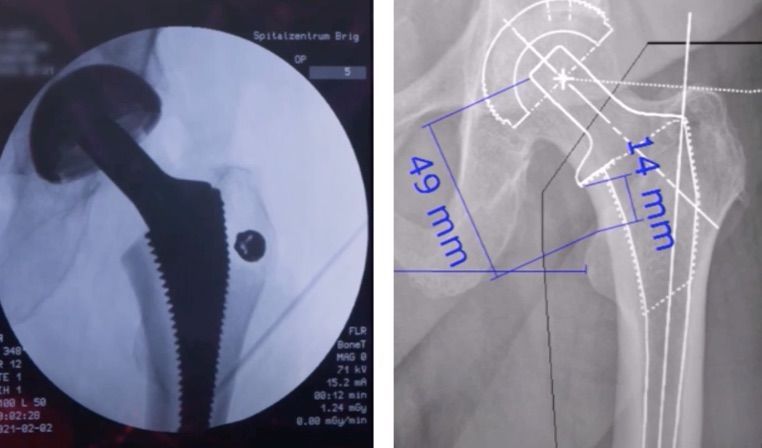
Leading Medicine Guide: You are considered a staunch advocate of the “Rapid Recovery” concept. Can you explain what this is all about?
Dr. Andreas Ottersbach: “Rapid Recovery” literally means “fast healing” and is a holistic concept. In principle, it means getting patients back on their feet as quickly as possible after joint surgery. This means that at our facility, the majority of patients are taking their first steps just six hours after surgery. As early as the next day, many are able to climb stairs, and after a short time, we can discharge them back home or to rehabilitation. The concept works because we have consistently focused on which treatment methods are truly effective and have moved away from traditional techniques that simply did not deliver the results we wanted. In interdisciplinary working groups, we have also developed standardized treatment pathways here, optimized pain management, and freed patients from unnecessary tubes and catheters. Here, too, the results are easily measurable, and the success of our work is clearly visible. Patients are delighted to regain their mobility so quickly, and this supports the entire healing process, including from a mental health perspective.
Dr. Ottersbach, thank you very much for these interesting insights into the innovative developments surrounding joint replacements, their use, and their replacement!
Anyone wishing to contact Dr. Andreas Ottersbach can easily do so via his profile page in the Leading Medicine Guide.
Share this article
About the medical author
Claudia Dechamps
Editor
Claudia Dechamps – medical author: expert articles, professional insights and medical knowledge in the Leading Medicine Guide.
More about the medical author →Valais Hospital – Upper Valais Hospital Center
ProfileExpert Interviews
Read next
- Expert interview
Cardiogeriatrics: Significance and benefits in the context of hospital reform
Sep 21, 2026
Cardiogeriatrics: Significance and benefits in the context of hospital reform
Read more - Expert interview
Expert Interview with Professor Dr. Amadeus Hornemann, MPH
Sep 18, 2026
Prof. Amadeus Hornemann on Precision Medicine in Gynecology: Modern Surgery, New Techniques, Better Quality of Life
Read more - Expert interview
Expert Interview with Professor Dr. Konstantinos Anagnostakos
Sep 15, 2026
Prof. Anagnostakos on Painful Knee Replacements
Read more