Expert Interviews
Prediction and Prevention of Preterm Births: A Complex Issue

Alexandra Pfitzmann ·
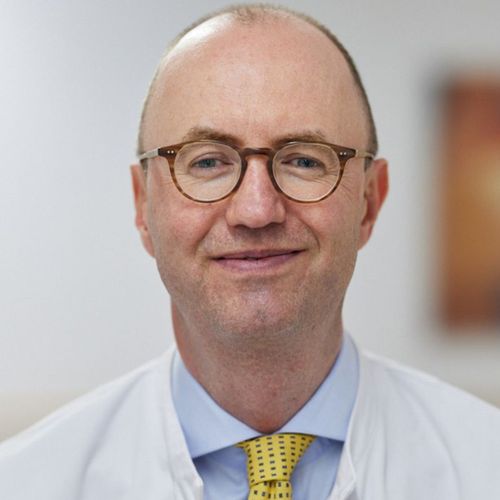
Professor Richard Berger, M.D., is a leading figure in the field of obstetrics and gynecology. As Chief of the Department of Obstetrics and Gynecology at Marienhaus Klinikum St. Elisabeth Neuwied, which handles nearly 2,000 births per year, it is the largest facility of its kind in northern Rhineland-Palatinate. The certified Gynecologic Cancer Center has established itself as the region’s leading center for patients with malignant diseases of the female reproductive tract. The Breast Center also offers optimal diagnostics and treatment. This exceptional quality is further guaranteed by comprehensive certification. Here, highly specialized and often complex treatments are performed to the highest medical standards. This is ensured by a carefully coordinated network of experts from various medical disciplines who collaborate within the center. Prof. Dr. Berger’s expertise focuses particularly on perinatal medicine, which encompasses specialized care for mothers and their unborn children during pregnancy and beyond. The Perinatal Center has a door-to-door collaboration with the Neonatal Intensive Care Unit, ensuring that high-risk and multiple pregnancies receive first-class care. This is particularly important, as approximately 50 children with a birth weight of less than 1,500 grams are born each year. Prof. Dr. Berger has established a working group on preterm birth research and coordinates the guidelines for the prevention and treatment of preterm birth for Germany, Austria, and Switzerland. This work represents an important contribution to improving healthcare for pregnant women. The prediction and prevention of preterm births are of great importance, as preterm births are associated with increased risks for the newborn. The editorial team of the Leading Medicine Guide spoke with Prof. Dr. Berger about this fascinating topic.
Preterm births are a medical phenomenon that poses a major challenge to healthcare systems worldwide. They occur when babies are born before the 37th week of pregnancy and can be associated with a variety of health risks for newborns. Understanding, predicting, and preventing preterm births are of great importance for protecting the health of both the mother and the child.
Predicting preterm births is crucial for enabling early interventions and minimizing the risk to both mother and child.
“A variety of predictive factors and early warning signs can help healthcare professionals identify preterm births early on. These include irregular or painful contractions before the 37th week of pregnancy, vaginal bleeding, premature rupture of membranes, and carrying twins, triplets, or multiple babies. Women who have already experienced a preterm birth are at increased risk of having another one. Sometimes even simple back pain or a hardening abdomen can be warning signs,” Prof. Dr. Berger begins our conversation. Uterine abnormalities, infections in the genital area or urinary tract, pregnancy complications such as preeclampsia or gestational diabetes, as well as tobacco, alcohol, and drug use during pregnancy are definite risk factors. “Psychosocial factors such as high stress and a lack of social support can also have a negative impact on the course of pregnancy. Women from socially disadvantaged backgrounds are also at higher risk of preterm birth. Given that COVID-19 cases are still prevalent, we also recommend that pregnant women get vaccinated against COVID-19 (and against the flu),” adds Prof. Dr. Berger.
A shortened cervix can also indicate an increased risk of preterm birth.
“The cervix plays a crucial role during pregnancy, as it protects the unborn child from infections. Normally, the cervix remains long and closed throughout pregnancy. This means that if the cervix shortens too early—to less than 25 mm before the 24th week—this can increase the risk of preterm birth, as there is a danger that the cervix will open too early and labor will begin before the baby is sufficiently developed. Therefore, it is important to measure the length of the cervix regularly. This is done using a special ultrasound procedure called transvaginal ultrasound, a non-invasive method in which an ultrasound device with a vaginal transducer is inserted into the vagina to visualize the cervix and the fetus,” explains Prof. Dr. Berger, highlighting the important role of the cervix.
Luteal hormones, also known as progesterone, play an important role in relation to the length of the cervix. “Progesterone is a hormone produced in a woman’s ovaries that helps relax the uterine muscles and keep the cervix stable and closed. This is important for preventing premature labor and a possible preterm birth. If an imbalance in progesterone metabolism occurs, this can lead to a shortening of the cervix, as the uterine muscles contract uncontrollably and shorten the cervix. “In such cases, hormonal therapy with progesterone may be considered to stabilize the cervix and reduce the risk of preterm birth,” explains Prof. Dr. Berger.
Cervical cerclage, a procedure known as cervical cerclage, may be considered in certain situations to minimize the risk of preterm birth.
“This procedure is typically performed when a woman has cervical insufficiency during pregnancy, a condition in which the cervix opens prematurely or shortens, which is a potential risk factor for preterm birth. Cervical cerclage may be used for women who have had preterm births in previous pregnancies or who have been diagnosed with cervical shortening. The procedure can help close or stabilize the cervix prematurely to prevent preterm labor and preterm birth. Cervical cerclage is typically performed starting in the 14th week of pregnancy, and the sutures are not removed after the procedure. “Suturing can help keep the cervix closed during pregnancy and minimize the risk of preterm birth,” Prof. Dr. Berger continues.
Another leading cause of preterm birth is bacterial infections of the vaginal region, also known as bacterial vaginosis.
“These infections allow bacteria to ascend into the uterus and can trigger premature labor or premature rupture of the amniotic sac,” explains Prof. Dr. Berger, outlining the risks. Predicting preterm births always requires an individualized assessment, as the risks vary depending on the pregnancy. Close collaboration between pregnant women and their healthcare providers is therefore crucial for assessing risks and taking appropriate measures.
Climate change has also led to an increase in preterm births. This is because it is causing more frequent and intense heat waves even in our latitudes. Excessive heat can cause stress and discomfort in pregnant women, which can increase the risk of pregnancy complications, including preterm births. Long-term exposure to air pollution can also increase the risk of preeclampsia and other health problems during pregnancy, which can contribute to preterm births.
Preterm births are classified into different stages depending on the stage of pregnancy in which they occur. This classification helps determine the necessary life-support measures.
Late preterm birth (birth between the 34th and 36th weeks of pregnancy): This stage is sometimes also referred to as “late preterm birth.” Babies born at this stage have generally already reached some important developmental milestones. They have a higher chance of survival and require little intensive care. Life-support measures may primarily focus on keeping the baby’s airways clear and supporting bodily functions.
Moderate preterm birth (birth between the 30th and 34th weeks of pregnancy): Babies born at this stage are even less developed. They typically require more intensive support, including respiratory assistance, monitoring, and medical care. The goal is to support vital organs and manage potential complications.
Extremely preterm birth (birth before the 30th week of pregnancy): At this stage, babies are particularly immature and highly vulnerable to health complications. Life-sustaining measures are extremely complex and may include the administration of medications to promote lung development, continuous ventilation, feeding via intravenous lines, and specialized care in neonatal units. “In the case of an extremely preterm birth, the risk is very high that the child will suffer lifelong damage. You have to realize that a preterm infant at just 22 weeks is theoretically viable outside the womb. However, this occurs in only 0.1% of all births and is therefore very rare,” comments Prof. Dr. Berger.
A preterm infant living in an incubator spends its first weeks or months in a special incubator that is medically monitored and controlled. These incubators create an environment that meets the needs of preterm infants and protects them from external influences.
Incubators, or incubators for premature infants, have been in use since the 1960s. Inside an incubator, the temperature, humidity, and oxygen concentration are precisely regulated to support the immature organism’s ability to adapt. Premature babies are placed on special mattresses or padding to prevent pressure sores and skin irritation. They receive nutrition and fluids via IVs or special feeding tubes. “We encourage parents to spend as much time as possible with their premature babies. By stroking and holding their babies in the incubator, they can form a close bond, even if the baby is very small. Direct contact—especially with the mother—is also important for the baby; that’s why we’ve developed the concept of ‘kangarooing.’ In this method, premature babies are placed, wearing only a diaper, on the bare chest of the mother or father for one to several hours. In addition, here at Marienhaus Klinikum, we provide digital cameras for parents so they can view their baby in the incubator from home via an app,” explains Prof. Dr. Berger, outlining the next steps, and adds: “We are a Level 1 Perinatal Center. This means that we specialize in the care of high-risk pregnancies and high-risk births and are able to provide comprehensive care for both the mother and the newborn if specific medical problems or complications arise during pregnancy or childbirth.”
Pregnant women have various options for minimizing the risk of preterm birth. A healthy diet is also crucial. Pregnant women should ensure they consume sufficient nutrients such as folic acid, iron, calcium, and protein. Maintaining a healthy weight before and during pregnancy is another key to minimizing risk. Being overweight or underweight can increase the risk of preterm birth, so appropriate weight gain is recommended. Quitting smoking and abstaining from alcohol are non-negotiable measures for reducing the risk of preterm birth. Both substances have been proven to have harmful effects on pregnancy. Managing stress is equally important. Chronic stress can contribute to preterm birth, so pregnant women should find ways to cope with stress. Infections, particularly urinary tract infections and sexually transmitted diseases, can also trigger preterm birth. Pregnant women should take precautions to protect themselves from infections. Caution is also advised to avoid injuries, as accidents and injuries can trigger preterm labor.
There are continuous advances in research and technology aimed at improving the prediction of preterm birth.
Genetic markers and biomarkers are being identified to create a more accurate risk profile. State-of-the-art imaging technologies allow for a more precise assessment of the cervix and fetal development. The application of artificial intelligence and machine learning to large datasets enables the detection of complex risk patterns. Telemedicine and wearable devices allow for the continuous monitoring of pregnant women. Predictive models are becoming increasingly sophisticated in forecasting individual risks. Personalized medicine integrates genetic information, medical data, and lifestyle factors. Automated early-warning systems use algorithms to identify risks in real time. These advances lead to more accurate predictions and better care for pregnant women at increased risk of preterm birth. Ongoing research in this area is crucial for protecting the health of mothers and newborns.
“We have developed a patient guideline in Neuwied and written it in layman’s terms (https://register.awmf.org/assets/guidelines/015-025p_S2k_Praevention-Therapie_Fruehgeburt_2022-08.pdf) to provide our patients with the best possible information. Furthermore, our clinic ranks among the top 10 of a total of 160 perinatal centers in Germany, and we are pleased to report an extremely low rate of brain damage among preterm infants. It would be desirable if there were even better predictors for asymptomatic patients, that is, for women who, despite having a shortened cervix and an increased risk of preterm birth, show no visible or noticeable symptoms or signs of an impending preterm birth. And I’d like to make one more appeal: ‘Germany, please do more to advocate for premature babies,’ says Prof. Dr. Berger, bringing our conversation to a close.
Dear Professor Dr. Berger, thank you very much for this insightful conversation and the important perspective you’ve shared on the lives of premature babies!
Share this article
Expert Interviews
Read next
- Expert interview
Expert interview with Professor Dr Elmar Herbst, PhD
Oct 15, 2026
Patient-centred and personalised knee surgery
Read more - Expert interview
Cardiogeriatrics: Significance and benefits in the context of hospital reform
Sep 21, 2026
Cardiogeriatrics: Significance and benefits in the context of hospital reform
Read more - Expert interview
Expert Interview with Professor Dr. Amadeus Hornemann, MPH
Sep 18, 2026
Prof. Amadeus Hornemann on Precision Medicine in Gynecology: Modern Surgery, New Techniques, Better Quality of Life
Read more