Expert Interviews
Expert Interview with Prof. Dr. med. Atesch Ateschrang: Knee Joint Preservation and Replacement

Alexandra Pfitzmann ·
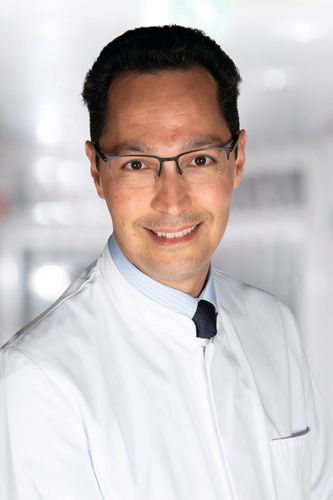
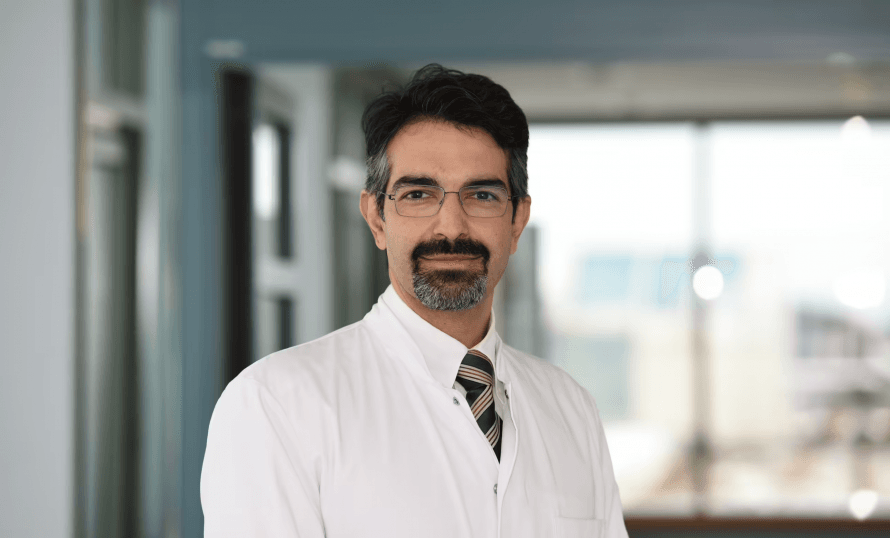
Since January 1, 2025, Professor Dr. med. Atesch Ateschrang has served as chief physician of the Department of Orthopedics and Traumatology at the Aarau Cantonal Hospital (KSA)—the largest medical care center in the canton of Aargau. With his extensive clinical experience and scientifically grounded expertise, he is considered one of the leading orthopedic surgeons and trauma surgeons in the German-speaking world. As a specialist in orthopedics, trauma surgery, and specialized trauma surgery, he offers a broad range of treatments—from acute injuries and fractures to complex joint surgeries and the care of critically injured patients (polytrauma).
His particular areas of focus include knee, hip, shoulder, and elbow surgery, complemented by many years of specialization in sports traumatology and reconstructive joint surgery. He has also been a certified foot and ankle surgeon since 2011. Before moving to Aarau, Prof. Ateschrang worked as a senior physician at the University Hospital of Tübingen and as director of the Trauma Center at the Evangelisches Stift Koblenz. There, he played a key role in the management of complex injuries and received numerous awards for his surgical excellence—including recognition from FOCUS and Stern.
At the KSA, he pursues a modern, interdisciplinary treatment approach: Patients benefit from highly specialized medicine, minimally invasive techniques, and close collaboration with partner centers such as the Center for Sports Medicine or the Center for Musculoskeletal Infections. In addition to his clinical work, Prof. Dr. Ateschrang is deeply involved in medical education and continuing professional development and is committed to fostering the next generation of surgeons. Through his dedication, he plays a decisive role in ensuring that the quality of orthopedic and trauma care in the canton of Aargau remains at the highest level—scientifically sound, patient-centered, and forward-looking.
In an interview with the editorial team of the Leading Medicine Guide, Prof. Dr. Ateschrang explained the measures available for joint preservation and the options for joint replacement.
The knee joint is one of the most heavily stressed joints in the human body—it not only bears the body’s weight but also enables essential movements such as walking, climbing stairs, or playing sports. Pain, instability, or wear and tear resulting from osteoarthritis, injuries, or misalignments can severely limit quality of life. The goal of modern knee surgery is therefore to preserve as much natural function as possible. Where possible, the focus is on joint-preserving procedures—such as axis corrections or cartilage reconstruction. If joint wear is already too advanced, a partial or total joint replacement (endoprosthesis) can restore long-term freedom from pain and mobility. Innovative surgical techniques, customized implant solutions, and close interdisciplinary follow-up care all contribute to achieving the best possible outcomes—for a better quality of life and greater mobility in everyday life.
Joint-preserving surgery on the knee is particularly preferable to a knee replacement when the arthritic changes are not yet very advanced or affect only certain parts of the knee joint. Joint preservation is the preferred option for patients who are very active in sports or whose occupations put their knees under significant strain.
“The topic of joint preservation versus replacement in the knee always begins with the question of what is actually wrong with the joint. Because before considering treatment or even joint replacement, one must understand which structures are affected and why. At the KSA Center for Orthopedics and Traumatology, we examine this very closely—all under one roof. This means we take into account each patient’s unique anatomy: the leg axis—that is, whether the leg is straight or has a misalignment such as bowlegs or knock-knees—as well as the so-called ligamentous situation—in other words, whether the ligaments sufficiently stabilize the knee. This combination often results in stress on the meniscus or the cartilage. And we know from experience that many patients come to us with meniscus damage, for example. In such cases, we always ask: Is this really just an isolated injury, or is there an underlying cause—such as a misalignment or mild instability that isn’t immediately noticeable? The meniscus can compensate well for such stress over years or even decades. But eventually, it reaches its limit—and then a tear or wear and tear occurs, such as in the form of root insufficiency. And this often sets off the next cascade of events: cartilage damage develops, the joint undergoes structural changes, and then—even with patients who are still relatively young—we face the challenge of how to preserve the joint for as long as possible. Especially with younger people, we naturally want to postpone joint replacement as long as possible. That’s why the question often arises: Is surgery even necessary, or is conservative therapy sufficient for now? There’s no one-size-fits-all answer to this, as it depends heavily on the cause. For example, if someone has a bowed leg—that is, a significant deviation from the normal axis—then purely conservative treatment—such as injections, physical therapy, or pain medication—may not only be of little help but could even be harmful. This is because, while you’re trying to alleviate the symptoms, the joint damage may continue to progress. And if you then decide to have surgery later on, the joint is already so damaged that the chances of success for joint-preserving procedures are lower,” explains Prof. Dr. Ateschrang at the beginning of our conversation, adding:
“It’s a completely different story if the alignment is correct and the ligaments are stable. In that case, a conservative approach is certainly possible for meniscus damage. This might involve, for example, injecting hyaluronic acid into the joint, possibly in combination with cortisone. Or one can use ACP—that is, processed autologous blood that is reinjected into the joint. If there is also a slight misalignment, an orthosis can be used—a so-called unloader orthosis, which relieves pressure on the joint. The effectiveness of this approach is well-documented scientifically. Of course, it cannot replace surgical correction of the bone, but it can help alleviate pain and slow the progression of the damage. Surgical alignment correction—known as a corrective osteotomy—is the treatment of choice when the joint is subjected to chronic biomechanical stress. In this procedure, the bone is cut and repositioned to stabilize it, thereby correcting the leg alignment. This may sound drastic at first, and many patients are hesitant to undergo it. In such cases, we often suggest a so-called brace test. During this test, the patient wears an orthosis that simulates the corrected leg alignment. And what we see time and again is that Patients notice that they feel noticeably better with it. This is often the decisive step—because suddenly they become convinced that surgery is sensible and effective. The test thus has therapeutic, diagnostic, and psychological benefits. Ultimately, it’s always about finding the best solution for each individual patient. We take a close look at what’s happening in the joint and then decide together whether conservative treatment is sufficient or whether surgery is advisable. Our focus is on preserving the joint for as long as possible—with the goal of ensuring quality of life and maintaining the knee’s natural function.”
Imaging techniques such as conventional X-rays in multiple planes, full-leg standing X-rays to assess leg alignment, magnetic resonance imaging (MRI) to visualize the cartilage, meniscus, and ligaments, as well as diagnostic arthroscopy in some cases, provide detailed information about the condition of the joint. Last but not least, the patient’s expectations play a central role: Those who wish to remain active and preserve their own joint for as long as possible benefit from early joint-preserving therapy—as long as the anatomical and functional conditions permit it. If, on the other hand, several parts of the joint are already severely damaged, the cartilage is extensively degraded, and the pain is persistent regardless of activity level, joint replacement is often the more sensible option.
Knee joint replacement can now be tailored very specifically to the individual—far more so than just a few years ago. In the past, prosthetic solutions were often standardized, so to speak “off-the-shelf,” without special consideration for the patient’s specific anatomy. Fortunately, things are different today.
“Our understanding and technical capabilities have advanced to the point where, for example, in cases of so-called medial osteoarthritis—that is, wear and tear on the inner side of the knee, which is the most common type—we can very precisely implant a partial joint replacement, such as a so-called medial slide. However, this requires that certain static conditions be met, such as the leg axis being within an acceptable range. In the case of significant bowlegs, for example, the planning must take into account that this axial deviation does not “remain too curved,” as otherwise the new partial joint replacement would be subjected to excessive stress. This is precisely where digital, computer-assisted surgical planning comes into play. In preparation for such procedures, we always perform what are known as full-leg standing X-rays—that is, an X-ray is taken from the hip joint to the ankle joint, revealing the entire bony structure. This allows us to assess pelvic alignment and precisely map the anatomy of the knee joint as well as the bone segments above and below it. Using this imaging data, we can then precisely analyze the individual situation and digitally plan the exact positioning and size of the prosthetic components. This planning is carried out with millimeter precision and also takes the necessary axial correction into account. “In principle, the surgery thus takes place virtually before the actual procedure—with the goal of then implementing this planned outcome as precisely as possible in the operating room,” says Prof. Dr. Ateschrang, adding the following about the support provided by robotic technology:
“Robot-assisted procedures are currently under discussion here and are the subject of intensive evaluation. We are not yet using them, primarily because, in the hands of experienced surgeons, the demonstrable benefit has not yet been shown to be significantly better than that of traditional manual surgery. According to studies, when performed by an experienced surgeon, there are no relevant differences in outcomes after three to six months. The costs must also be compared. In both cases, precise digital preparation is crucial. If this is done carefully and consistently implemented in the operating room, excellent results can be achieved even without robotic assistance. Nevertheless, there are various robot-assisted systems, such as CT-based procedures, which are designed to enable particularly precise implantation. However, it must be noted that these technologies have not yet become widely established—it is estimated that only about ten percent of clinics in Europe use these systems regularly. If the results were indeed measurably better, the technology would surely have become established more quickly and on a broader scale. For us, therefore, one thing is clear: As long as manual implantation, combined with modern digital planning and performed by experienced hands, leads to equally good results, we will rely on what brings the greatest benefit to our patients—tailored, precise, and sustainable.”
For larger or more complex cartilage defects, modern procedures such as autologous chondrocyte transplantation (ACT) are now used, in which the patient’s own cartilage cells are harvested, cultured in the laboratory, and later implanted into the defect. Alternatively, cartilage-bone grafts can be performed—either using the patient’s own tissue or a donor graft, particularly for deep defects. Matrix-associated procedures such as MACI, in which cells are impregnated onto biological scaffolds, enable uniform defect filling and better anchoring. In cases of misalignments such as bowlegs or knock-knees, a concomitant corrective osteotomy may be necessary to support healing. In addition, biological therapies such as PRP, growth factors, or stem cells are being tested to promote regeneration. All of these procedures aim to preserve joint function, relieve pain, and delay the need for joint replacement for as long as possible—provided that diagnosis and treatment are precisely coordinated.
Minimally invasive knee surgery has made significant advances over the past decade—both in surgical technique and in the use of modern instruments and technologies. For patients, these advances generally mean a significantly faster recovery: less pain, reduced need for pain medication, shorter hospital stays, and earlier mobilization.
Prof. Dr. Ateschrang explains: “After a partial or total knee replacement, patients typically stay in the hospital for three to five days—depending on the joint’s individual response to the procedure. Some people are prone to more severe swelling or experience even more pain, while others recover more quickly. These differences are, of course, taken into account when planning discharge. Depending on their condition, patients either go home immediately with outpatient physical therapy or are admitted to an inpatient rehabilitation program that follows directly after their hospital stay to support their continued rehabilitation. The return to normal daily life also depends on the type of procedure and the patient’s individual circumstances. After bony procedures, such as an axial correction, healing usually proceeds more quickly than with soft-tissue reconstructions, such as after a cruciate ligament tear. The reason: A soft-tissue graft takes significantly longer to heal biologically—this so-called remodeling process can take six to twelve months. However, this does not mean that athletic activities must be completely suspended for that long. “As early as two to three months after surgery, initial physical activity is usually possible, and this can then be gradually increased.”
Especially for people who are physically active or performance-oriented, movement coordination, muscle strength, and dynamic load-bearing capacity—for example, through jumping performance—are assessed in a side-by-side comparison.
“In some cases, this is done using modern technologies such as high-resolution cameras or computer-assisted analyses. In collaboration with experienced on-site physical therapists, such testing procedures can also be conducted directly at the KSA center. And even after surgery, care does not end with discharge. All patients are consistently followed up with during postoperative care appointments. These are tailored to each individual—sometimes at longer intervals, sometimes more frequently, depending on the patient’s progress and personal needs. Some people prefer a bit more consultation and support, while others manage just fine with fewer check-ins. In any case, we work together to find a suitable approach to ensure a safe return to daily life, work, and sports,” explains Prof. Dr. Ateschrang.
It usually takes about six to twelve weeks for patients to be able to move safely in their daily lives again. Light physical activities such as cycling or jogging are often possible again after three to four months, but contact sports should be avoided for a longer period.
Interdisciplinary collaboration plays a central role in the long-term success of treatment for knee joint problems. Knee conditions and injuries are complex and affect not only the joint itself but also the surrounding muscles, ligaments, the nervous system, and often the entire musculoskeletal system. Therefore, holistic care is essential to achieve optimal results.
“Our facility is equipped with state-of-the-art technology—featuring cutting-edge procedures such as 3D analyses, digital surgical planning, and excellent equipment both in the operating room and throughout the entire diagnostic and therapeutic process. We therefore offer medicine at the highest level—not only through surgery, but also, quite deliberately, through non-surgical treatments. Our guiding principle is this: Surgery is performed only when it is truly necessary and appropriate. That is why we always prioritize an individualized assessment. Each patient is analyzed on a strictly individual basis—taking into account both current symptoms and the long-term prognosis. Careful three-dimensional diagnostics are particularly crucial in more complex cases, such as patellofemoral instability. This is the only way to determine where the actual problem lies, how it might progress if left untreated, and whether surgery offers long-term benefits—or whether conservative measures are the better choice. We see our role as providing medically sound information, clearly explaining all options, and transparently weighing the benefits against the risks. Ultimately, of course, it is the patient who makes the decision. In doing so, we outline the so-called “gold standard”—that is, the optimal solution from a medical perspective—always supplemented by realistic alternatives. “Our goal is to advise each person individually, taking a holistic view of what is medically feasible but also what is truly appropriate for that individual’s life,” emphasizes Prof. Dr. Ateschrang, and with that, we conclude our conversation.
Thank you very much, Professor Dr. Ateschrang, for this informative conversation!
Share this article
Expert Interviews
Read next
- Expert interview
Expert interview with Professor Dr Elmar Herbst, PhD
Oct 15, 2026
Patient-centred and personalised knee surgery
Read more - Expert interview
Cardiogeriatrics: Significance and benefits in the context of hospital reform
Sep 21, 2026
Cardiogeriatrics: Significance and benefits in the context of hospital reform
Read more - Expert interview
Expert Interview with Professor Dr. Amadeus Hornemann, MPH
Sep 18, 2026
Prof. Amadeus Hornemann on Precision Medicine in Gynecology: Modern Surgery, New Techniques, Better Quality of Life
Read more