Expert Interviews
Future-Proof Cardiology, Expansion of Interventional Procedures, Strategic Partnerships, and Structural Strength in Hospital Reform: An Expert Interview with Prof. Frank Breuckmann

Alexandra Pfitzmann ·
With Professor Frank Breuckmann, M.D., Klinik Kitzinger Land has gained an internationally recognized cardiologist who brings world-class university-level cardiac care to the region. As Chief of the Department of Internal Medicine, he combines many years of clinical experience, in-depth scientific expertise, and an extraordinary passion for patient care. Prof. Dr. Breuckmann is one of the leading specialists in the field of cardiovascular medicine—with a particular focus on coronary heart disease, heart attack treatment, and modern cardiac imaging.
Early on, Prof. Dr. Breuckmann championed structured emergency care for cases of unexplained chest pain. As a co-author of the first official position paper on the establishment of so-called “Chest Pain Units” in Germany, he played a decisive role in driving this forward-looking development. His work continues to contribute to improved survival rates among heart attack patients to this day. The experienced intensive care and emergency medicine specialist also brings his extensive expertise to bear in the treatment of strokes: The close integration of cardiology and neurology—particularly in the hospital’s certified stroke unit—enables rapid, interdisciplinary care of the highest standard. Prof. Dr. Breuckmann places particular emphasis on modern diagnostics: cardiac CT, cardiac MRI, and other imaging techniques play a central role in his daily work.
Thanks to his international qualifications in this field, cardiovascular diseases can be detected early and treated on an individualized basis—including as part of preventive programs and check-ups. Patients benefit from first-class care based on the latest scientific findings—combined with personal attention and a deep understanding of individual needs. With his move to Klinik Kitzinger Land, Prof. Dr. Breuckmann has not only strengthened the region’s cardiology services but also made it clear: Highly specialized medicine at an international level is also possible outside of large university hospitals—right where people live.
The editorial team of the Leading Medicine Guide had the opportunity to speak with Prof. Dr. Breuckmann about innovations in cardiology as well as the restructuring of the entire hospital.

Kitzinger Land Clinic is sending a clear signal about the future of cardiovascular care: With the expansion of a state-of-the-art cardiac catheterization laboratory, the facility is significantly expanding its interventional capabilities—particularly in the areas of coronary heart disease and structural heart procedures. At the same time, the strategic merger with its partner hospital, Main-Klinik Ochsenfurt, effective January 1, 2026, marks a significant step toward an efficient, networked care structure that specifically harnesses medical synergies. Amid nationwide hospital reform, the hospital is thus not only adapting to structural change but is also actively taking on a pioneering role through innovation, interdisciplinary collaboration, and a future-proof care model that combines regional strength with university-level standards. 
The plan is to establish a joint municipal enterprise effective January 1, 2026. Regular operations are scheduled to begin on January 1, 2027. In the meantime, numerous organizational and conceptual issues must be resolved. The goal of the merger is to pool existing resources and tap into potential synergies. Both hospital sites are to continue to have central healthcare structures.
Plans call for maintaining emergency rooms, general surgery, internal medicine, and intensive care units in both Kitzingen and Ochsenfurt. Existing medical specialties—such as cardiology and obstetrics in Kitzingen, as well as urology in Ochsenfurt—are also to be retained. One of the reasons behind this decision is the upcoming nationwide hospital reform, which will take effect on January 1, 2027. This reform poses structural and economic challenges, particularly for smaller hospitals, and aims, among other things, to further specialize medical services. Since early 2025, Prof. Dr. Frank Breuckmann and his deputy, Dr. Andreas Cramer, have been responsible for medical management at Klinik Kitzinger Land. In light of the upcoming hospital reform, they face demanding structural and strategic challenges. 
Prof. Dr. Breuckmann explains: “The planned merger between our clinic and the partner clinic aims to create tangible added value for patients at both facilities. By combining medical expertise from different specialties, we will create a broader and higher-quality care structure. We can share state-of-the-art technology and better coordinate the range of treatments offered at both locations. Another advantage is that staff can be deployed across locations. This not only enables closer collaboration but also the joint treatment of complex cases. In this way, patients benefit from the highest level of professional and structural expertise at both hospitals—regardless of where they happen to be. Furthermore, the merger allows for a more efficient use of existing structures: duplicate facilities can be better utilized or phased out over time, thereby freeing up resources for new diagnostic or therapeutic services.
The goal is to manage patient care in a way that shortens travel distances while preserving both hospital locations. In this way, we ensure primary care close to home and supplement it with specialized services at the respective locations. Ultimately, we are implementing what is often called for in theory: greater centralization of medical services—but without relying on the structures and proximity of a university hospital. We are demonstrating that such a development can also be implemented at the local level. Only through such consolidation will it be possible in the future to sustain the current range of medical services on a long-term basis. This requires a hospital of a size that meets the needs of the various service groups. In this way, we can further expand and deepen specific areas in a targeted manner. Our catchment area primarily covers the Kitzingen district as well as parts of the neighboring Würzburg district. However, other major providers operate in the Würzburg area, including the University Hospital as a maximum-care facility and the Klinik Würzburg Mitte hospital. “With the merger, we would therefore integrate into an already diverse healthcare network and complement it in a meaningful way.” 
The Klinik Kitzinger Land has 200 beds and employs approximately 730 staff members. Each year, it provides inpatient care to about 10,000 patients and performs approximately 5,000 surgical procedures. The Main-Klinik Ochsenfurt has 140 beds and approximately 500 employees. Each year, it provides inpatient care to about 6,500 patients and performs approximately 4,000 surgeries.
The merger of Klinik Kitzinger Land with Main-Klinik Ochsenfurt opens up a wide range of opportunities for medical and structural synergies. A key advantage lies in the shared use of professional expertise: Specialized physicians and nursing staff can be deployed across both locations in the future, which improves the reliability of care while also enabling more efficient staff scheduling.
There are also technological benefits: large medical devices no longer need to be duplicated; instead, they can be used more strategically and maintained at a high standard through pooled investments. This increases cost-effectiveness and enables the expansion of state-of-the-art treatment methods. Structurally, both locations benefit from coordinated care models. For example, emergency rooms, intensive care units, and specialty departments can be specifically integrated to avoid excess capacity and direct patients more quickly to the most appropriate facility. Furthermore, the consolidation of administrative and logistical processes allows for streamlined structures without compromising the quality of care or accessibility. https://www.youtube.com/watch?v=hte-RxdS1OU
“A clear distinction along the lines of ‘Kitzinger Land Hospital offers what Ochsenfurt Hospital lacks—and vice versa’ cannot be drawn in this form. Rather, this is a partnership in which synergies and complementary structures are to be specifically leveraged. The goal is a merger on equal footing, in which both locations play an equal role. Both facilities will maintain a so-called minimum service level—which means that basic internal medicine care, general surgical care, emergency care, and related intensive care services will be permanently ensured.
These minimum service levels are already in place at both locations. In addition, the individual hospitals have established additional areas of specialization. For example, invasive cardiology is well-established at the Kitzingen location—including two cardiac catheterization labs—and would continue to be provided exclusively there as part of the merger, since the necessary infrastructure is already in place there. Similarly, the Kitzinger Land Clinic is structurally specialized in providing care in the field of gynecology and obstetrics. The merger is therefore not intended to result in services simply being eliminated or relocated, but rather to strengthen and continue them where solid structures are already in place. “This approach not only ensures high-quality medical care but also guarantees stable, locally accessible care for the population in both regions,” explains Prof. Dr. Breuckmann.
The hospital reform adopted by the Federal Ministry of Health in October 2024 aims to improve the quality of inpatient care while ensuring stable medical care, particularly in rural regions. At the same time, the reform is based on the assessment that the current number of approximately 1,700 hospitals in Germany—the highest density of hospitals and beds in Europe—is causing structural overcapacity, which is associated with considerable financial costs.
The new cardiac catheterization laboratory enables an expanded range of interventional procedures that significantly improve acute care for patients with coronary heart disease and structural heart defects. These include, among other things, complex coronary interventions such as the treatment of multivessel disease, chronic total occlusions, and high-risk stent implantations.
“The new cardiac catheterization lab represents a significant advance in regional cardiac care and is specifically designed to treat emergency patients even more quickly and comprehensively. A key aspect of this is 24/7 availability for acute heart attacks. The establishment of a second catheterization lab has ensured that sufficient capacity for emergency treatments is always available, even during longer electrophysiological or elective procedures. Whereas previously a single lab might have been occupied for hours at a time by complex procedures, both labs can now be used flexibly—one focusing on acute emergency and heart attack care, the other on elective and electrophysiological procedures.
The new lab’s proximity to the emergency department, the cardiology diagnostic suite, and the intensive care unit currently under construction creates a compact, highly specialized emergency unit. From a technical standpoint as well, both labs are state-of-the-art—they are equipped with identical major devices, allowing for the flexible performance of all types of cardiological interventions. New additions also include specialized therapeutic options such as the use of cardiac support systems, for example, so-called impeller therapy with a microaxial pump for the treatment of cardiogenic shock (a form of mechanical circulatory support). “Even for particularly complex procedures, such as those involving severely calcified vessels or chronic vascular occlusions, the lab offers new options with procedures like lithotripsy and dual intravascular imaging,” says Prof. Dr. Breuckmann, adding:
“In addition, the range of services is being further expanded. This includes not only the treatment of structural heart diseases—such as the interventional closure of small atrial septal defects—but also the planned introduction of interventional therapies for hypertension and the expansion into AV valve therapies. Also particularly noteworthy is the integration of surgical procedures into the catheterization lab: pacemakers, defibrillators, and complex device systems are now also implanted here. To meet these requirements, the new lab was designed not only as a conventional catheterization lab but also as a hybrid operating room with air purification class 1b—a combination of state-of-the-art interventional technology and surgical infrastructure. This positions the clinic for the future with a clear focus on the service areas of acute myocardial infarction care, coronary intervention, rhythm therapy (including ablation and EPU), and structural heart diseases—a comprehensive package that goes far beyond previous standards, both medically and in terms of infrastructure.” 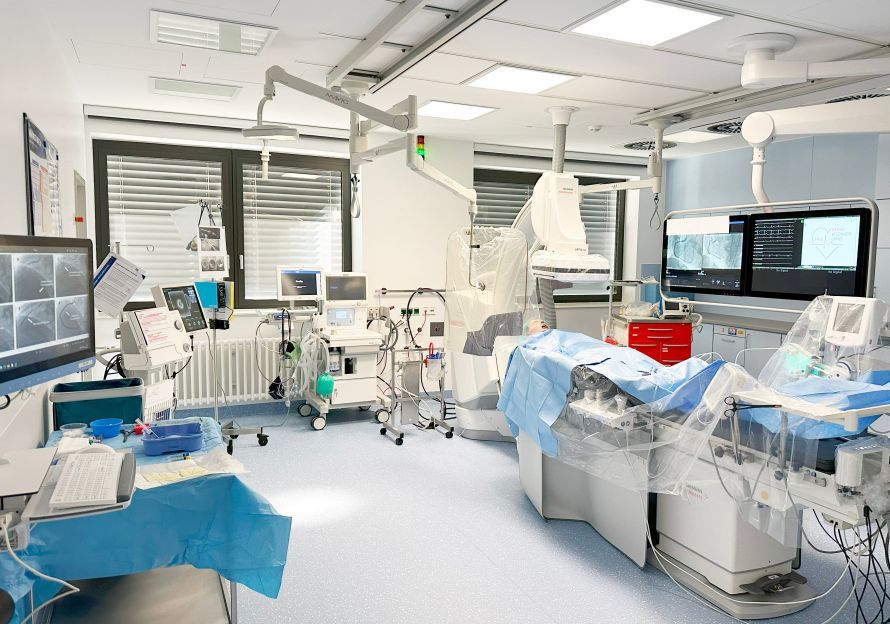
The majority of patients treated in the cardiac catheterization laboratory suffer from coronary artery disease or related circulatory disorders. This is precisely the department’s central mission: acute coronary syndromes and heart attacks must be diagnosed quickly and treated immediately.
Prof. Dr. Breuckmann elaborates: “This patient group forms the backbone of cardiological care, as they are admitted on an emergency basis and subsequently receive further inpatient care—depending on the severity of the condition and the type of intervention. As part of the planned merger, additional resources will be made available to support both the inpatient stay of these patients and targeted follow-up care. The exact allocation of patients to the respective locations is currently being determined as part of an overall medical plan. The goal is to design treatment pathways so that they are ideally suited to each facility’s area of expertise. This is intended to achieve even more efficient patient management between the two hospitals. Interestingly, patients are already coming not only from the Kitzingen district but increasingly also from the neighboring Würzburg area and its surroundings.
Given the increasing wait times and limited capacities at other facilities, there is good reason to believe that in the future, more patients from outside the region will also take advantage of the integrated, high-quality care offerings—especially when it comes to complex or specialized cardiological procedures. Thanks to the structural and technical changes in the new hospital setup, significant improvements in patient care are expected both in the short and long term. In the short term, the expanded technical equipment—particularly the new cardiac catheterization lab—will lead to faster and more precise diagnostics and treatment in emergency medicine. Patients with acute cardiac events, such as heart attacks or arrhythmias, will benefit from faster intervention, which increases their chances of survival and reduces complications.”
Current developments surrounding hospital reform and the accompanying trend toward centralization are viewed with concern in many places—particularly with regard to their feasibility for hospitals, physicians, and patients.
“While the goal of improving medical care by focusing on specific core competencies is fundamentally understandable, in practice, implementation is proving to be extremely complex. Many hospitals, especially those that are not maximum-care facilities, will likely not be able to maintain their full range of services as before. Instead, they are expected to focus on defined core services, in the hope that higher case volumes in these areas will also improve quality—though it remains to be seen whether this will actually succeed. These restrictions mean that the range of care offered by individual hospitals will vary significantly.
For patients, this sometimes means longer travel distances, because services that were previously offered close to home will in the future only be available at more distant specialized locations. At the same time, the question arises as to whether these centers even have the necessary capacity to accommodate additional patient groups—especially given the current acute shortage of skilled personnel, which no longer affects only primary and standard care providers, but equally impacts high-volume care providers and university hospitals,” explains Prof. Dr. Breuckmann, who also points out the problem with the required case numbers:
“Another point that has often been overlooked in the discussion so far concerns the interpretation of case numbers. People frequently fail to break down the case numbers to the actual number of surgeons or practitioners performing the procedures. As a result, it can happen that while a hospital reports high overall case numbers, these are spread across many surgeons—which means that, in the end, an individual practitioner may gain less surgical experience than a colleague at a smaller facility with fewer staff members.
While the introduction of minimum requirements for certain service groups is intended to counteract this problem, it does not prevent the actual reality of care from varying greatly from facility to facility. Furthermore, the service groups stipulated by law, along with their associated structural requirements, have still not been definitively defined. This uncertainty makes it considerably more difficult for hospitals to develop well-founded medical strategies for mergers or facility expansions. The reform has stalled, and as long as there are no clear guidelines, the future of many hospitals remains uncertain. The associated planning risks are high—both for the medical departments and for patient care as a whole.” 
Compared to the United States, where significantly more treatments have been performed on an outpatient basis in many specialties for quite some time, the situation in Germany is different. The structures here cannot be transferred one-to-one, as they are fundamentally different in design.
“Although the shift toward outpatient care is also playing an increasingly important role in Germany, it is not directly linked to the service groups as they are defined in the inpatient sector. Rather, the shift toward outpatient care is a parallel development that proceeds independently of the service groups in which a hospital operates. Nevertheless, there are now some areas of overlap—for example, with the so-called hybrid DRGs. These are services that can be provided both on an outpatient and inpatient basis. Depending on the care setting in which they are offered, the criteria of the service groups may or may not apply. This transitional zone poses significant challenges for hospitals, as it requires not only organizational adjustments but also a strategic realignment with a system that is currently still in flux.
This creates a certain pressure to offer certain services on an outpatient basis whenever possible—regardless of whether the practical conditions for doing so are already consistently in place. It is impossible to make a blanket statement as to whether this development should be viewed as fundamentally negative. One potential advantage is certainly that nursing staff, who are under heavy strain in inpatient settings—especially during night shifts—could be relieved through outpatient structures. The capacity freed up in this way could then be targeted toward areas where fully inpatient care is absolutely essential. “Ideally, this would lead to fewer cancellations due to staff shortages in these critical areas—a significant contribution to ensuring care,” Prof. Dr. Breuckmann remarks critically.
Discussions about a possible merger of the two hospitals date back several years—much longer than the federal government’s current reform plan might suggest.
“Discussions have become more concrete and intensive over the past two years, that is, since around 2022. Initially, the issue was largely independent of the planned hospital reform and the associated service group regulations. However, this reform has since noticeably accelerated the merger efforts and underscored the need for structural realignment. Even though the political bodies—the respective county councils as well as the joint county committee—have approved the establishment of a joint municipal enterprise (GKU) through which the merger is to be carried out, the process has not yet been formally completed. A certain residual risk remains until the final contract is signed. Nevertheless, the approval of the GKU represents an important milestone: it serves as the foundation upon which both hospital operators can integrate their facilities into a joint structure. The goal of this merger is not only to create synergies and pool expertise, but above all to ensure the long-term continuity of care in the region.
For cardiology in particular, this means a significant strengthening: The consolidation of staff, expertise, and technical infrastructure from both hospitals is intended to create an efficient, future-proof department capable of meeting the requirements of the new service group structure. Another key motivation is to secure the future of both hospital locations. For municipal hospitals in particular, this is a central mission in healthcare provision—especially given that many smaller hospitals with fewer than 200 beds are coming under increasing pressure. These hospitals often struggle to meet the structural and staffing requirements of the reform, which means that regional care can no longer be guaranteed everywhere. “The merger is therefore intended not only to make economic and medical sense, but above all to send a clear signal: Regional public service provision remains possible—if we break new ground together,” explains Prof. Dr. Breuckmann at the conclusion of our conversation.
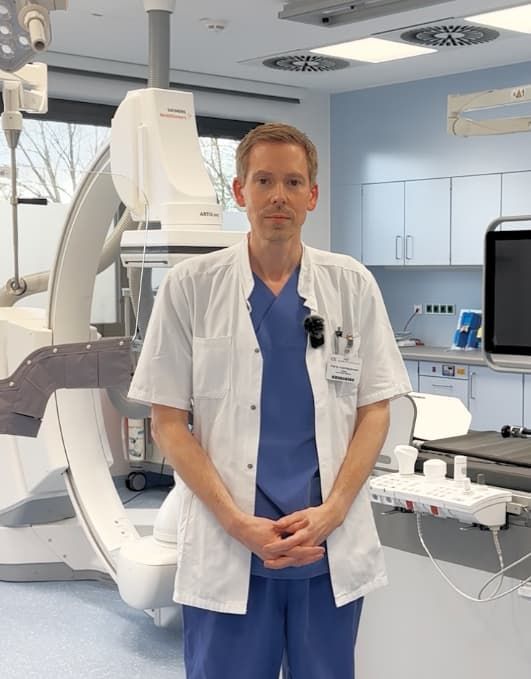
Thank you very much, Prof. Dr. Breuckmann, for this forward-looking insight!
Share this article
Expert Interviews
Read next
- Expert interview
Expert interview with Professor Dr Elmar Herbst, PhD
Oct 15, 2026
Patient-centred and personalised knee surgery
Read more - Expert interview
Cardiogeriatrics: Significance and benefits in the context of hospital reform
Sep 21, 2026
Cardiogeriatrics: Significance and benefits in the context of hospital reform
Read more - Expert interview
Expert Interview with Professor Dr. Amadeus Hornemann, MPH
Sep 18, 2026
Prof. Amadeus Hornemann on Precision Medicine in Gynecology: Modern Surgery, New Techniques, Better Quality of Life
Read more